


100 works - Belgian painting
Belgian painting: 100 famous paintings from Ensor to Magritte
One hundred distinct images to cross symbolism, neo-impressionism, Flemish expressionism and Belgian surrealism.
From Ensor's masks to Magritte's paradoxes, modern Belgian painting advances by bifurcations: coastal light, silent portraits, urban crowds, night stations and objects suddenly made foreign.
A modernity with several voices
Why Belgian painting never follows a single line
In Brussels, Ostend, Antwerp and Laethem-Saint-Martin, Belgian artists transformed European tensions into personal languages. Symbolism rubs shoulders with divisionism, expressionism responds to social realism and surrealism changes the very definition of the image.
Important information: the 75 works present in the store use Alpha Reproduction images and links. The 20 Magritte and 5 Delvaux are displayed for documentary purposes, are not offered for reproduction and redirect to the corresponding museums.
From the brilliance of the mask to the impossible logic of the object, Belgian painting is a form of precision.Enter the tables
The 100 paintings in pictures
From Ensor to Khnopff, Belgian images make identity, dreams and social spectacle their first laboratory.
#1
The Entry of Christ into Brussels
With "The Entry of Christ into Brussels", James Ensor condenses an essential part of modern Belgian painting into an immediately recognizable image. Ensor makes the mask an instrument of satire and unveiling: faces grimace, skeletons mingle with the living and color transforms the crowd into unstable theater. The composition balances observation and invention: the lines direct the eye, the intervals slow down reading and the color gives the motif an intensity that goes beyond its description. The associated sheet places it in James Ensor's journey and allows us to observe the relationship between subject, material and construction of space. The image and the link come from directly from the Alpha Reproduction store. The button allows you to open the file for this work and consult the reproduction formats currently offered. This ability to make the image both readable and unstable explains its place in this journey: the work does not close the meaning, it restarts attention.
Image: Alpha Reproduction · Image and link from the Alpha Reproduction catalog.
See this reproduction →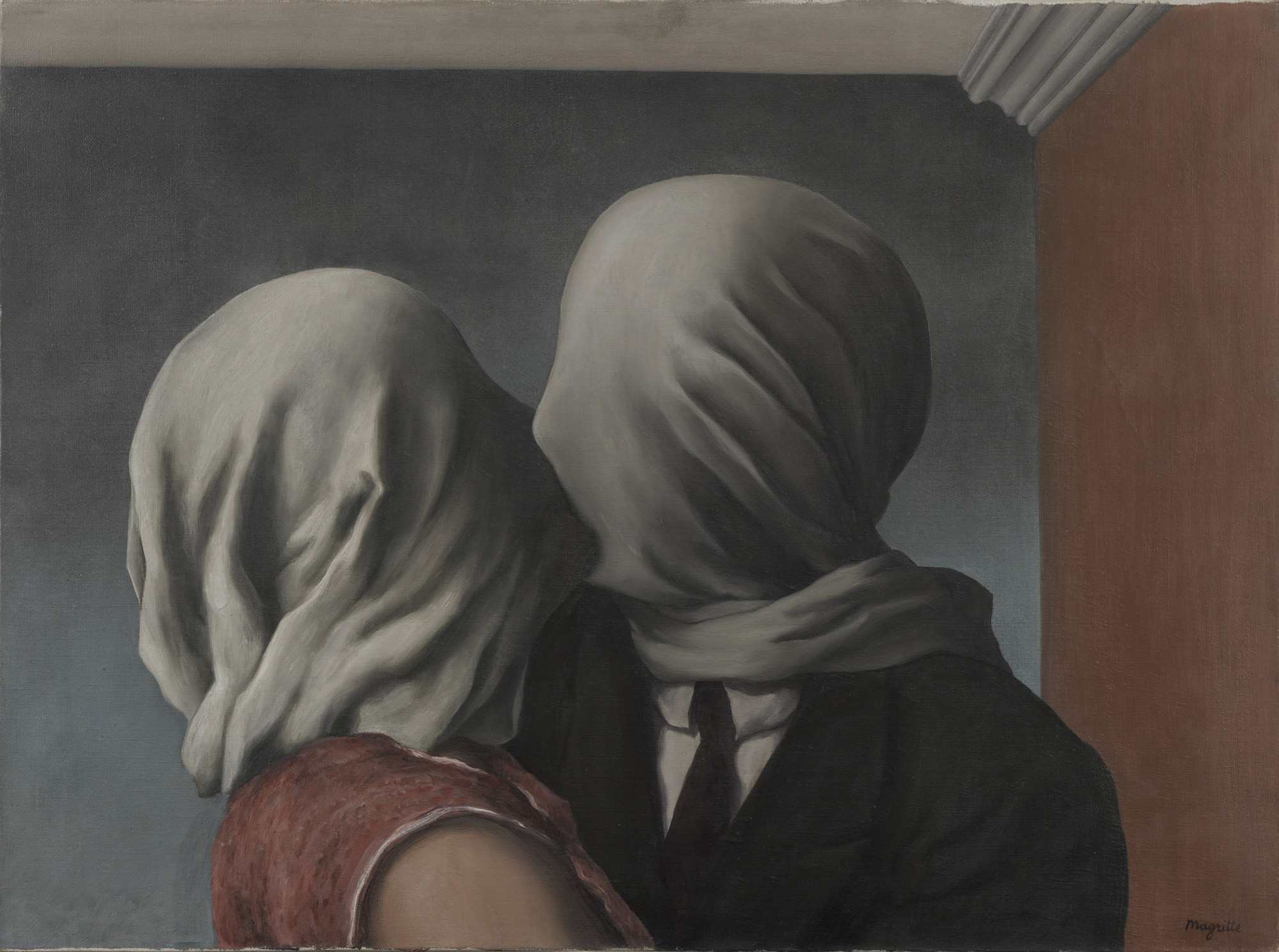 #2
#2
The lovers
"Les Amants" shows how René Magritte transforms a precise motif into an experience of gaze, rhythm and memory. Magritte paints with almost neutral precision so that the impossible retains the appearance of a fact: the gap between objects, words and their representation becomes the real subject. The image brings familiar elements together without explaining their encounter. This paradoxical clarity keeps the viewer between immediate recognition and lasting doubt. Dated 1928, the work is documented as oil on canvas in the collection of Museum of Modern Art, New York. The image brings together familiar elements without explaining their encounter. This paradoxical clarity keeps the viewer between immediate recognition and lasting doubt. Dated 1928, the work is documented as oil on canvas in the collection of Museum of Modern Art, New York. The image is presented for documentary purposes and refers to the notice from Museum of Modern Art, New York. Alpha Reproduction does not offer a reproduction of this work by René Magritte; the conditions of use are the responsibility of the museum and the rights holders. The painting thus remains attached to its time while going beyond the illustration of a current; it offers a unique way of making the eye last.
Image: Museum of Modern Art, New York · © C. Herscovici, Brussels /Artists Rights Society (ARS), New York
See the museum notice → #3
#3
The Plot
In "The Plot", James Ensor constructs a tension between what we first identify and what the painting leaves deliberately unresolved. Ensor makes the mask an instrument of satire and unveiling: faces grimace, skeletons mingle with the living and color transforms the crowd into unstable theater. The composition balances observation and invention: the lines direct the eye, the intervals slow down reading and the color gives the motif an intensity that goes beyond its description. The associated sheet places it in James Ensor's journey and allows us to observe the relationship between subject, material and construction of space. The image and the link come directly from the Alpha Reproduction store. The button allows you to open the file for this work and consult the reproduction formats currently offered. The work therefore deserves to be compared to the other pieces in the corpus: the same questions of light, identity and space change shape without disappearing.
Image: Alpha Reproduction · Image and link from the Alpha Reproduction catalog.
See this reproduction → #4
#4
Caresses
The strength of "Des caresses" lies in a composition where each visible detail modifies the reading of the whole. Khnopff constructs a symbolism of interiority: restrained gestures, distant glances, precious surfaces and enclosed spaces keep the image on the threshold of confession. The composition balances observation and invention: the lines direct the eye, the intervals slow down reading and the color gives the pattern an intensity that goes beyond its description. The associated sheet places it in Fernand Khnopff's journey and allows us to observe the relationship between subject, material and construction of space. The image and the link come directly from the Alpha Reproduction store. The button allows you to open the file for this work and consult the reproduction formats currently offered. This tension between precision and ambiguity gives it its lasting strength and allows us to understand why it remains an important stage in Belgian painting.
Image: Alpha Reproduction · Image and link from the Alpha Reproduction catalog.
See this reproduction → #5
#5
The Betrayal of Images
Beneath its apparent evidence, "The Betrayal of Images" organizes a very calculated relationship between presence, distance and imagination. Magritte paints with almost neutral precision so that the impossible retains the appearance of a fact: the gap between objects, words and their representation becomes the real subject. The image brings familiar elements together without explaining their encounter. This paradoxical clarity keeps the viewer between immediate recognition and lasting doubt. Dated 1952, the work is documented as gouache on card in The Menil Collection, Houston. The image is documented as gouache on card in The Menil Collection, Houston. The image is presented for documentary purposes and refers to the notice from The Menil Collection, Houston Houston. Alpha Reproduction does not offer reproductions of this work by René Magritte; the conditions of use are the responsibility of the museum and the rights holders. This ability to make the image both readable and unstable explains its place in this journey: the work does not close the meaning, it restarts attention.
Image: The Menil Collection, Houston · © C. Herscovici /Artists Rights Society (ARS), New York
See the museum notice →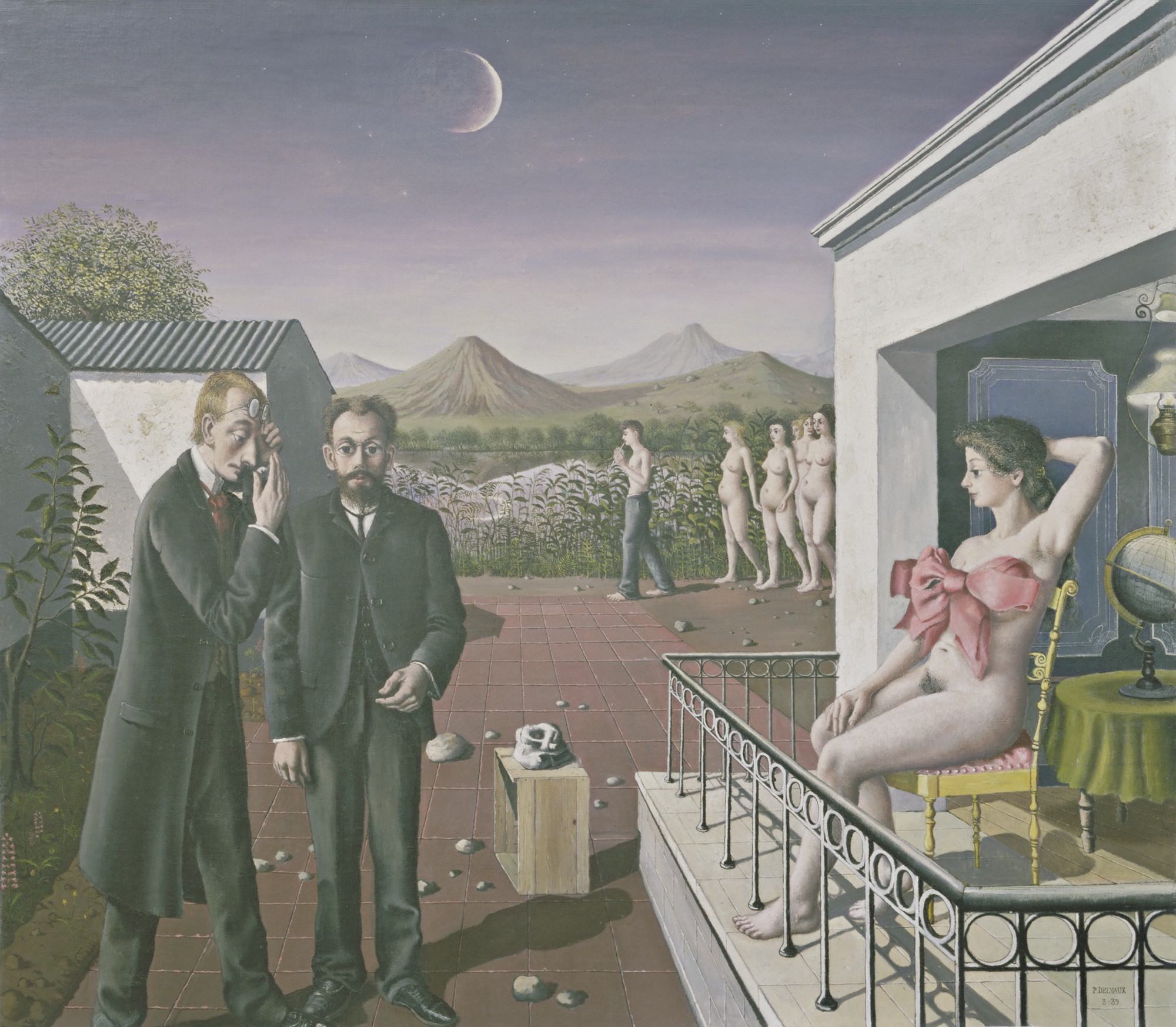 #6
#6
The Phases of the Moon
With "The Phases of the Moon", Paul Delvaux condenses an essential part of modern Belgian painting into an immediately recognizable image. Delvaux installs his figures in stations, ancient architecture and silent nights where time seems suspended between memory, desire and worry. The coastline is not a simple setting. The horizon, reflections and atmospheric changes give a measure to the gaze and make light a pictorial event. Dated 1939, the work is documented as oil on canvas in the collection of Museum of Modern Art, New York. The image is presented for documentary purposes and refers to the notice from Museum of Modern Art, New York. Alpha Reproduction does not offer a reproduction of this work by Paul Delvaux; the conditions of use are the responsibility of the museum and the rights holders. The painting thus remains attached to its time while going beyond the illustration of a current; it offers a unique way of making the eye last.
Image: Museum of Modern Art, New York · Documentary image; rights to be verified with the museum and rights holders.
See the museum notice → #7
#7
Portrait of Irma Sèthe
"Portrait of Irma Sèthe" shows how Théo van Rysselberghe transforms a precise motif into an experience of gaze, rhythm and memory. Van Rysselberghe organizes light in divided touches without sacrificing the presence of bodies, the depth of the landscape or the psychological singularity of his models. The coastline is not a simple setting. The horizon, reflections and atmospheric changes give a measure to the gaze and make light a pictorial event. The associated sheet places it in Théo van Rysselberghe's journey and allows us to observe the relationship between subject, material and construction of space. The image and the link come directly from the Alpha store Reproduction. The button allows you to open the file for this work and consult the reproduction formats currently offered. The work therefore deserves to be compared to the other pieces in the corpus: the same questions of light, identity and space change shape without disappearing.
Image: Alpha Reproduction · Image and link from the Alpha Reproduction catalog.
See this reproduction → #8
#8
The Empire of Lights
In "The Empire of Lights", René Magritte constructs a tension between what we first identify and what the painting leaves deliberately unresolved. Magritte paints with almost neutral precision so that the impossible retains the appearance of a fact: the gap between objects, words and their representation becomes the real subject. The image brings familiar elements together without explaining their encounter. This paradoxical clarity keeps the viewer between immediate recognition and lasting doubt. Dated 1954, the work is documented as oil on canvas in the collection of Royal Museums of Fine Arts of Belgium, Brussels. The image is presented for documentary purposes and refers to the notice of Royal Museums of Fine Arts of Belgium, Brussels. Alpha Reproduction does not offer a reproduction of this work by René Magritte; the conditions of use are the responsibility of the museum and the rights holders. This tension between precision and ambiguity gives it its lasting strength and allows us to understand why it remains an important stage in Belgian painting.
Image: Royal Museums of Fine Arts of Belgium, Brussels · © Ch. Herscovici, with kind permission c/o SABAM Belgium
See the museum notice → #9
#9
Death and masks
The strength of "Death and the Masks" lies in a composition where each visible detail modifies the reading of the whole. Ensor makes the mask an instrument of satire and unveiling: faces grimace, skeletons mingle with the living and color transforms the crowd into unstable theater. The scene must be read in layers: behind the black humor and visual excess, the carnival accessories shift the boundaries between identity, social role and disappearance. The associated sheet places it in James Ensor's journey and allows us to observe the relationship between subject, material and construction of space. The associated sheet places it in James Ensor's journey and allows us to observe the relationship between subject, material and construction of space. The image and link come directly from the Alpha Reproduction store. THE button allows you to open the file for this work and consult the reproduction formats currently offered. This ability to make the image both readable and unstable explains its place in this journey: the work does not close the meaning, it restarts attention.
Image: Alpha Reproduction · Image and link from the Alpha Reproduction catalog.
See this reproduction → #10
#10
I close my door on myself
Beneath its apparent evidence, "I close my door on myself" organizes a very calculated relationship between presence, distance and imagination. Khnopff constructs a symbolism of interiority: restrained gestures, distant glances, precious surfaces and enclosed spaces keep the image on the threshold of confession. The coastline is not a simple setting. The horizon, reflections and atmospheric spaces give a measure to the gaze and make light a pictorial event. The associated sheet places it in Fernand Khnopff's journey and allows us to observe the relationship between subject, material and construction of space. The associated sheet places it in Fernand Khnopff's journey and makes light a pictorial event. The associated sheet places it in Fernand Khnopff's journey and makes light a pictorial event. The associated sheet places it in Fernand Khnopff's journey and allows us to observe the relationship between subject, material and construction of space. The image and the link come directly from the Alpha Reproduction store. THE button allows you to open the file for this work and consult the reproduction formats currently offered. The painting thus remains attached to its time while going beyond the illustration of a current; it offers a unique way of making the eye last.
Image: Alpha Reproduction · Image and link from the Alpha Reproduction catalog.
See this reproduction →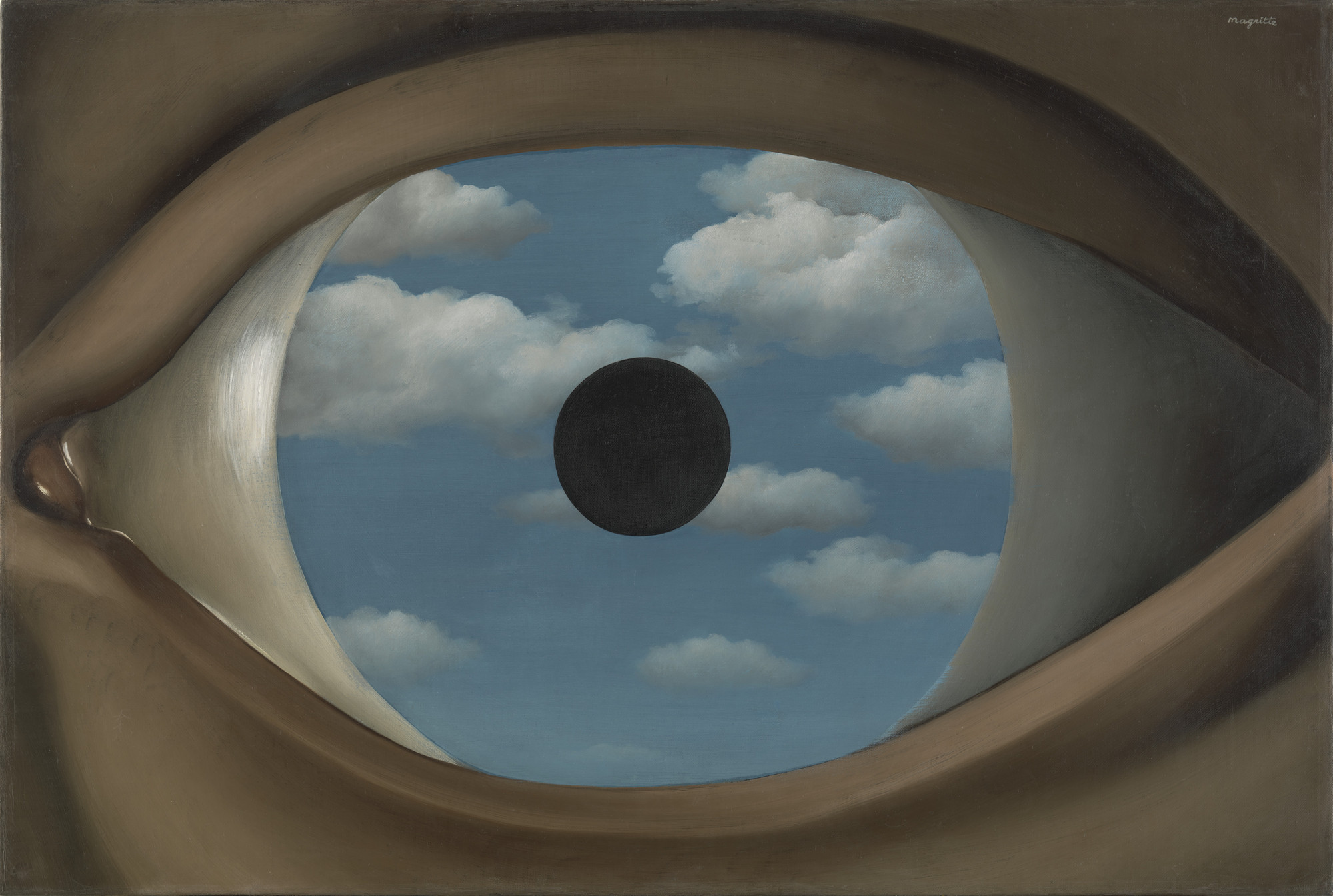 #11
#11
The False Mirror
With "The False Mirror", René Magritte condenses an essential part of modern Belgian painting into an immediately recognizable image. Magritte paints with almost neutral precision so that the impossible retains the appearance of a fact: the gap between objects, words and their representation becomes the real subject. The image brings familiar elements together without explaining their encounter. This paradoxical clarity keeps the viewer between immediate recognition and lasting doubt. Dated 1929, the work is documented as oil on canvas in the collection of Museum of Modern Art, New York. The image brings together familiar elements without explaining their encounter. This paradoxical clarity keeps the viewer between immediate recognition and lasting doubt. Dated 1929, the work is documented as oil on canvas in the collection of Museum of Modern Art, New York. The image is presented for documentary purposes and refers to the Museum of Modern notice Art, New York. Alpha Reproduction does not offer reproductions of this work by René Magritte; the conditions of use are the responsibility of the museum and the rights holders. The work therefore deserves to be compared to the other pieces in the corpus: the same questions of light, identity and space change form without disappearing.
Image: Museum of Modern Art, New York · © C. Herscovici, Brussels /Artists Rights Society (ARS), New York
See the museum notice → #12
#12
Reading by Émile Verhaeren
"Reading by Émile Verhaeren" shows how Théo van Rysselberghe transforms a precise motif into an experience of gaze, rhythm and memory. Van Rysselberghe organizes light in divided touches without sacrificing the presence of bodies, the depth of the landscape or the psychological singularity of his models. The composition balances observation and invention without sacrificing the presence of bodies, the depth of the landscape or the psychological singularity of its models. The composition balances observation and invention: the lines direct the eye, the intervals slow down reading and the color gives the pattern an intensity that goes beyond its description. The associated sheet places it in Théo van Rysselberghe's journey and allows us to observe the relationship between subject, matter and construction of space. The image and the link come from directly from the Alpha Reproduction store. The button allows you to open the file for this work and consult the reproduction formats currently offered. This tension between precision and ambiguity gives it its lasting strength and allows us to understand why it remains an important stage in Belgian painting.
Image: Alpha Reproduction · Image and link from the Alpha Reproduction catalog.
See this reproduction → #13
#13
Self-portrait with flowered hat
In "Self-portrait with a flowered hat", James Ensor constructs a tension between what we first identify and what the painting leaves deliberately unresolved. Ensor makes the mask an instrument of satire and unveiling: faces grimace, skeletons mingle with the living and color transforms the crowd into unstable theater. The coastline is not a simple setting. The horizon, reflections and atmospheric changes give a measure to the gaze and make the light an unstable theater. The coastline is not a simple setting. The horizon, reflections and atmospheric changes give a measure to the gaze and make light a pictorial event. The associated sheet places it in James Ensor's journey and allows us to observe the relationship between subject, material and construction of space. The image and the link come directly from the Alpha Reproduction store. The button allows you to open the file for this work and consult the reproduction formats currently offered. This ability to make the image both readable and unstable explains its place in this journey: the work does not close the meaning, it restarts attention.
Image: Alpha Reproduction · Image and link from the Alpha Reproduction catalog.
See this reproduction →The Great Mermaids
The strength of "The Great Sirens" lies in a composition where each visible detail modifies the reading of the whole. Delvaux installs his figures in stations, ancient architecture and silent nights where time seems suspended between memory, desire and worry. The architecture orders an apparently stable space, but the night light and the isolation of the figures shift the scene towards a dream temporality. Dated 1947, the work orders an apparently stable space, but the night light and the isolation of the figures shift the scene towards a dream temporality. Dated 1947, the work is documented as oil on canvas in the collection of Metropolitan Museum of Art, New York. The image is documented as oil on canvas in the collection of Metropolitan Museum of Art, New York. The work is documented as oil on canvas in the collection of Metropolitan Museum of Art, New York. The work is documented as oil on canvas in the collection of Metropolitan Museum of Art, New York. The work is documented as oil on canvas in the collection of Metropolitan Museum of Art, New York. The work is documented as oil on canvas in the collection of Metropolitan Museum of Art, New York. The work is documented as oil on canvas in the collection of Metropolitan Museum of Art, New reproduction of this work by Paul Delvaux; the conditions of use are the responsibility of the museum and the rights holders. The painting thus remains attached to its time while going beyond the illustration of a current; it offers a unique way of making the eye last.
Image: Metropolitan Museum of Art, New York · Documentary image; rights to be verified with the museum and rights holders.
See the museum notice → #15
#15
Golconda
Beneath its apparent evidence, "Golconda" organizes a very calculated relationship between presence, distance and imagination. Magritte paints with almost neutral precision so that the impossible retains the appearance of a fact: the gap between objects, words and their representation becomes the real subject. The image brings familiar elements together without explaining their encounter. This paradoxical clarity keeps the viewer between immediate recognition and lasting doubt. Dated 1953, the work is documented as oil on canvas in The Menil Collection, Houston. This paradoxical clarity keeps the viewer between immediate recognition and lasting doubt. Dated 1953, the work is documented as oil on canvas in The Menil Collection, Houston. The image is presented for documentary purposes and refers to the notice from The Menil Collection, Houston. Alpha Reproduction does not offer a reproduction of this work by René Magritte; the conditions of use are the responsibility of the museum and the rights holders. The work therefore deserves to be compared to the other pieces in the corpus: the same questions of light, identity and space change shape without disappearing.
Image: The Menil Collection, Houston · © C. Herscovici /Artists Rights Society (ARS), New York
See the museum notice → #16
#16
Memories (Tennis on the grass)
With "Souvenirs (Tennis on the lawn)", Fernand Khnopff condenses an essential part of modern Belgian painting into an immediately recognizable image. Khnopff constructs a symbolism of interiority: restrained gestures, distant glances, precious surfaces and enclosed spaces keep the image on the threshold of confession. The composition balances observation and invention: the lines direct the eye, the intervals slow down reading and the color gives the pattern an intensity that goes beyond its description. The associated sheet places it in Fernand Khnopff's journey and allows us to observe the relationship between subject, material and construction of space. The image and the link come from directly from the Alpha Reproduction store. The button allows you to open the file for this work and consult the reproduction formats currently offered. This tension between precision and ambiguity gives it its lasting strength and allows us to understand why it remains an important stage in Belgian painting.
Image: Alpha Reproduction · Image and link from the Alpha Reproduction catalog.
See this reproduction → #17
#17
Skeletons fighting over a herring saur
"Skeletons vying for a herring saur" shows how James Ensor transforms a specific motif into an experience of gaze, rhythm and memory. Ensor makes the mask an instrument of satire and unveiling: faces grimace, skeletons mingle with the living and color transforms the crowd into unstable theater. The scene must be read in layers: behind the black humor and visual excess, the carnival accessories shift the boundaries between identity, social role and disappearance. The associated sheet places it in James Ensor's journey and allows us to observe the relationship between subject, matter and construction of space. The image and the link come directly from the alpha Reproduction Shop. The button allows you to open the file for this work and consult the reproduction formats currently offered. This ability to make the image both readable and unstable explains its place in this journey: the work does not close the meaning, it restarts attention.
Image: Alpha Reproduction · Image and link from the Alpha Reproduction catalog.
See this reproduction →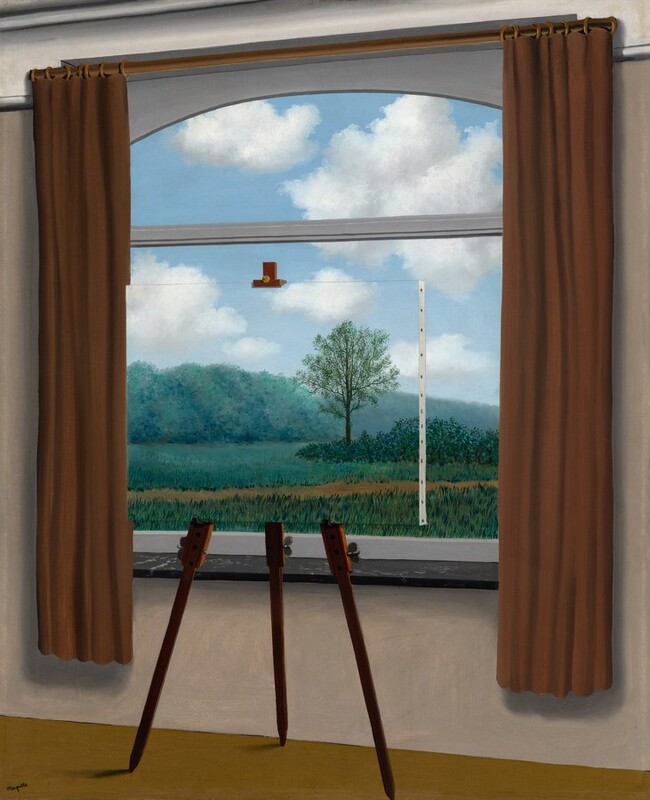 #18
#18
The human condition
In "The Human Condition", René Magritte constructs a tension between what we first identify and what the painting leaves deliberately unresolved. Magritte paints with almost neutral precision so that the impossible retains the appearance of a fact: the gap between objects, words and their representation becomes the real subject. The image brings familiar elements together without explaining their encounter. This paradoxical clarity keeps the viewer between immediate recognition and lasting doubt. Dated 1933, the work is documented as oil on canvas in the collection of National Gallery of Art, Washington. The image is presented for documentary purposes and refers to the notice of National Gallery of Art, Washington. Alpha Reproduction does not offer reproductions of this work by René Magritte; the conditions of use are the responsibility of the museum and the rights holders. The painting thus remains attached to its time while going beyond the illustration of a current; it offers a unique way of making the eye last.
Image: National Gallery of Art, Washington · Media not downloadable; contact the NGA for image use
See the museum notice → #19
#19
The Man at the Bar
The strength of "The Man at the Bar" lies in a composition where each visible detail modifies the reading of the whole. Van Rysselberghe organizes the light in divided touches without sacrificing the presence of bodies, the depth of the landscape or the psychological singularity of his models. The portrait is not reduced to resemblance: posture, distance, decor and colorful rhythm construct a presence whose identity remains partially open. The associated sheet places it in Théo van Rysselberghe's journey and allows us to observe the relationship between subject, material and construction of space. The image and link come directly from the Alpha Reproduction store. The button allows to open the file for this work and consult the reproduction formats currently offered. The work therefore deserves to be compared to the other pieces in the corpus: the same questions of light, identity and space change shape without disappearing.
Image: Alpha Reproduction · Image and link from the Alpha Reproduction catalog.
See this reproduction → #20
#20
Moonlight and lights
Beneath its apparent evidence, "Moonlight and Lights" organizes a very calculated relationship between presence, distance and imagination. Spilliaert transforms coastal nights, interiors and solitary figures into mental spaces where shadow, emptiness and line carry emotion. The coastline is not a simple setting. The horizon, reflections and atmospheric changes give a measure to the gaze and make light a pictorial event. The horizon, the reflections and the atmospheric changes give a measure to the gaze and make light a pictorial event. The associated sheet places it in Léon Spilliaert's journey and allows us to observe the relationship between subject, material and construction of space. The image and the link come directly from the Alpha Reproduction store. The button allows you to open the file for this work and consult the reproduction formats currently offered. This tension between precision and ambiguity gives it its lasting strength and allows us to understand why it remains an important stage in Belgian painting.
Image: Alpha Reproduction · Image and link from the Alpha Reproduction catalog.
See this reproduction → #21
#21
Skeleton stopping masks
With "Skeleton Stopping Masks", James Ensor condenses an essential part of modern Belgian painting into an instantly recognizable image. Ensor makes the mask an instrument of satire and unveiling: faces grimace, skeletons mingle with the living and color transforms the crowd into unstable theater. The scene must be read in layers: behind the black humor and visual excess, the carnival accessories shift the boundaries between identity, social role and disappearance. The associated sheet places it in James Ensor's journey and allows us to observe the relationship between subject, matter and construction of space. The associated sheet places it in James Ensor's journey and allows us to observe the relationship between subject, matter and construction of space. The image and the link come directly from the Alpha Reproduction store. The button allows you to open the file for this work and consult the reproduction formats currently offered. This ability to make the image both readable and unstable explains its place in this journey: the work does not close the meaning, it restarts attention.
Image: Alpha Reproduction · Image and link from the Alpha Reproduction catalog.
See this reproduction → #22
#22
Duration stabbed
"The Stabbed Duration" shows how René Magritte transforms a precise motif into an experience of gaze, rhythm and memory. Magritte paints with almost neutral precision so that the impossible retains the appearance of a fact: the gap between objects, words and their representation becomes the real subject. The composition balances observation and invention: lines direct the eye, intervals slow down reading, and color gives the motif an intensity beyond its description. The composition balances observation and invention: lines direct the eye, intervals slow down reading, and color gives the motif an intensity that exceeds its description. Dated 1938, the work balances observation and invention: lines direct the eye, intervals slow down reading, and color gives the motif an intensity that exceeds its description. The composition balances observation and invention: lines direct the eye, intervals slow down reading, and color gives the motif an intensity that exceeds its description. Dated 1938, the work is documented as oil on canvas in the collection of The Art Institute of Chicago. The image is documented as oil on canvas in the collection of The Art Institute of Chicago. The work is documented as oil on canvas in the collection of The Art Institute of Chicago. The work is documented as oil on canvas in the Institute of Chicago. Alpha Reproduction does not offer reproductions of this work by René Magritte; the conditions of use are the responsibility of the museum and the rights holders. The painting thus remains attached to its time while going beyond the illustration of a current; it offers a unique way of making the eye last.
Image: The Art Institute of Chicago · © 2018 C. Herscovici, London /Artists Rights Society (ARS), New York
See the museum notice →Ancient city
In "Ancient City", Paul Delvaux constructs a tension between what we first identify and what the painting leaves deliberately unresolved. Delvaux installs his figures in stations, ancient architecture and silent nights where time seems suspended between memory, desire and worry. The architecture orders a seemingly stable space, but the night light and the isolation of the figures shift the scene towards a dream temporality. Dated 1941, the work orders a seemingly stable space, but the night light and the isolation of the figures shift the scene towards a dream temporality. Dated 1941, the work is documented as oil on canvas in the collection of Metropolitan Museum of Art, New York. The image is documented as oil on canvas in the collection of Metropolitan Museum of Art, New York. The work is documented as oil on canvas in the collection of Metropolitan Museum of Art, New York. The work is documented as oil on canvas in the collection of Metropolitan Museum of Art, New York. The work is documented as oil on canvas in the collection of Metropolitan Museum of Art, New York. The image is presented for documentary purposes and refers to the notice of Metropolitan Museum of Art, New York. Alpha Reproduction does not offer a reproduction of this work by Paul Delvaux; the conditions of use are the responsibility of the museum and the rights holders. The work therefore deserves to be compared to the other pieces in the corpus: the same questions of light, identity and space change shape without disappearing.
Image: Metropolitan Museum of Art, New York · Documentary image; rights to be verified with the museum and rights holders.
See the museum notice → #24
#24
The silence
The strength of "The Silence" lies in a composition where each visible detail modifies the reading of the whole. Khnopff constructs a symbolism of interiority: restrained gestures, distant glances, precious surfaces and enclosed spaces keep the image on the threshold of confession. The composition balances observation and invention: the lines direct the eye, the intervals slow down reading and the color gives the pattern an intensity that goes beyond its description. The associated sheet places it in Fernand Khnopff's journey and allows us to observe the relationship between subject, material and construction of space. The image and link come directly from the Alpha Reproduction store. The button allows you to open the file for this work and consult the reproduction formats currently offered. This tension between precision and ambiguity gives it its lasting strength and allows us to understand why it remains an important stage in Belgian painting.
Image: Alpha Reproduction · Image and link from the Alpha Reproduction catalog.
See this reproduction → #25
#25
Portrait of Emile Verhaeren
Beneath its apparent evidence, "Portrait of Émile Verhaeren" organizes a very calculated relationship between presence, distance and imagination. Lemmen uses the neo-impressionist touch as a sensitive framework; neighboring colors make the light vibrate while stabilizing the composition. The coastline is not a simple setting. The horizon, reflections and atmospheric changes give a measure to the gaze and make the light a pictorial event. The associated sheet places it in Georges Lemmen's journey and allows us to observe the relationship between subject, material and construction of space. The associated sheet places it in Georges Lemmen's journey and makes it possible to observe the relationship between subject, material and construction of space. The image and the link come directly from the Alpha Reproduction store. The button allows to open the file for this work and consult the reproduction formats currently offered. This ability to make the image both readable and unstable explains its place in this journey: the work does not close the meaning, it restarts attention.
Image: Alpha Reproduction · Image and link from the Alpha Reproduction catalog.
See this reproduction →Van Rysselberghe, Lemmen, Anna Boch and Spilliaert show how the coast, the garden and the city renew the color.
 #26
#26
Death pursuing the herd of humans
With "Death Pursuing the Herd of Humans", James Ensor condenses an essential part of modern Belgian painting into an instantly recognizable image. Ensor makes the mask an instrument of satire and unveiling: faces grimace, skeletons mingle with the living and color transforms the crowd into unstable theater. The scene must be read in layers: behind the black humor and visual excess, the carnival accessories shift the boundaries between identity, social role and disappearance. The associated sheet places it in layers: behind the black humor and visual excess, the carnival accessories shift the boundaries between identity, social role and disappearance. The associated sheet places it in James Ensor's journey and allows us to observe the relationship between subject, matter and construction of space. The image and the link come from directly from the Alpha Reproduction store. The button allows you to open the file for this work and consult the reproduction formats currently offered. The painting thus remains attached to its time while going beyond the illustration of a current; it offers a unique way of making the eye last.
Image: Alpha Reproduction · Image and link from the Alpha Reproduction catalog.
See this reproduction → #27
#27
Ensor and the masks
"Ensor and the Masks" shows how James Ensor transforms a specific motif into an experience of gaze, rhythm and memory. Ensor makes the mask an instrument of satire and unveiling: faces grimace, skeletons mingle with the living and color transforms the crowd into unstable theater. The scene must be read in layers: behind the black humor and visual excess, the carnival accessories shift the boundaries between identity, social role and disappearance. The associated sheet places it in James Ensor's journey and allows us to observe the relationship between subject, material and construction of space. The associated sheet places it in James Ensor's journey and allows us to observe the relationship between subject, material and construction of space. The image and the link come directly from the Alpha store Reproduction. The button allows you to open the file for this work and consult the reproduction formats currently offered. The work therefore deserves to be compared to the other pieces in the corpus: the same questions of light, identity and space change shape without disappearing.
Image: Alpha Reproduction · Image and link from the Alpha Reproduction catalog.
See this reproduction → #28
#28
Mask meeting
In "Meeting of Masks", James Ensor constructs a tension between what we first identify and what the painting leaves deliberately unresolved. Ensor makes the mask an instrument of satire and unveiling: faces grimace, skeletons mingle with the living and color transforms the crowd into unstable theater. The scene must be read in layers: behind the black humor and visual excess, the carnival accessories shift the boundaries between identity, social role and disappearance. The associated sheet places it in James Ensor's journey and allows us to observe the relationship between subject, matter and construction of space. The associated sheet places it in James Ensor's journey and allows us to observe the relationship between subject, matter and construction of space. The image and the link come directly from the alpha Reproduction Shop. The button allows you to open the file for this work and consult the reproduction formats currently offered. This tension between precision and ambiguity gives it its lasting strength and allows us to understand why it remains an important stage in Belgian painting.
Image: Alpha Reproduction · Image and link from the Alpha Reproduction catalog.
See this reproduction → #29
#29
Masks and dancers
The strength of "Masks and Dancers" lies in a composition where each visible detail modifies the reading of the whole. Ensor makes the mask an instrument of satire and unveiling: faces grimace, skeletons mingle with the living and color transforms the crowd into unstable theater. The scene must be read in layers: behind the black humor and visual excess, the carnival accessories shift the boundaries between identity, social role and disappearance. The associated sheet places it in James Ensor's journey and allows us to observe the relationship between subject, material and construction of space. The associated sheet places it in James Ensor's journey and allows us to observe the relationship between subject, material and construction of space. The image and link come directly from the Alpha Reproduction store. THE button allows you to open the file for this work and consult the reproduction formats currently offered. This ability to make the image both readable and unstable explains its place in this journey: the work does not close the meaning, it restarts attention.
Image: Alpha Reproduction · Image and link from the Alpha Reproduction catalog.
See this reproduction → #30
#30
Masks playing cards
Beneath its apparent evidence, "Masks playing cards" organizes a very calculated relationship between presence, distance and imagination. Ensor makes the mask an instrument of satire and unveiling: faces grimace, skeletons mingle with the living and color transforms the crowd into unstable theater. The scene must be read in layers: behind the black humor and visual excess, the carnival accessories shift the boundaries between identity, social role and disappearance. The associated sheet places it in James Ensor's journey and allows us to observe the relationship between subject, material and construction of space. The associated sheet places it in James Ensor's journey and allows us to observe the relationship between subject, material and construction of space. The image and the link come directly from the Alpha store Reproduction. The button allows you to open the file for this work and consult the reproduction formats currently offered. The painting thus remains attached to its time while going beyond the illustration of a current; it offers a unique way of making the eye last.
Image: Alpha Reproduction · Image and link from the Alpha Reproduction catalog.
See this reproduction → #31
#31
Masks looking at a turtle
With "Masks Looking at a Turtle", James Ensor condenses an essential part of modern Belgian painting into an instantly recognizable image. Ensor makes the mask an instrument of satire and unveiling: faces grimace, skeletons mingle with the living and color transforms the crowd into unstable theater. The scene must be read in layers: behind the black humor and visual excess, the carnival accessories shift the boundaries between identity, social role and disappearance. The associated sheet places it in James Ensor's journey and allows us to observe the relationship between subject, matter and construction of space. The associated sheet places it in James Ensor's journey and allows us to observe the relationship between subject, matter and construction of space. The image and the link come directly from the Alpha Reproduction store. The button allows you to open the file for this work and consult the reproduction formats currently offered. The work therefore deserves to be compared to the other pieces in the corpus: the same questions of light, identity and space change shape without disappearing.
Image: Alpha Reproduction · Image and link from the Alpha Reproduction catalog.
See this reproduction → #32
#32
Mask duel
"Duel of Masks" shows how James Ensor transforms a specific motif into an experience of gaze, rhythm and memory. Ensor makes the mask an instrument of satire and unveiling: faces grimace, skeletons mingle with the living and color transforms the crowd into unstable theater. The scene must be read in layers: behind the black humor and visual excess, carnival accessories shift the boundaries between identity, social role and disappearance. The associated sheet places it in James Ensor's journey and allows us to observe the relationship between subject, material and construction of space. The associated sheet places it in James Ensor's journey and allows us to observe the relationship between subject, material and construction of space. The associated sheet places it in James Ensor's journey and allows us to observe the relationship between subject, material and construction of space. The image and the link come directly from the Alpha Reproduction store. The button allows you to open the file for this work and consult the reproduction formats currently offered. This tension between precision and ambiguity gives it its lasting strength and allows us to understand why it remains an important stage in Belgian painting.
Image: Alpha Reproduction · Image and link from the Alpha Reproduction catalog.
See this reproduction → #33
#33
Ostend masks
In "Masks of Ostend", James Ensor constructs a tension between what we first identify and what the painting leaves deliberately unresolved. Ensor makes the mask an instrument of satire and unveiling: faces grimace, skeletons mingle with the living and color transforms the crowd into unstable theater. The scene must be read in layers: behind the black humor and visual excess, the carnival accessories shift the boundaries between identity, social role and disappearance. The associated sheet places it in James Ensor's journey and allows us to observe the relationship between subject, matter and construction of space. The associated sheet places it in James Ensor's journey and allows us to observe the relationship between subject, matter and construction of space. The image and the link come directly from the alpha Reproduction Shop. The button allows you to open the file for this work and consult the reproduction formats currently offered. This ability to make the image both readable and unstable explains its place in this journey: the work does not close the meaning, it restarts attention.
Image: Alpha Reproduction · Image and link from the Alpha Reproduction catalog.
See this reproduction → #34
#34
Carnival in Ostend
The strength of "Carnival in Ostend" lies in a composition where each visible detail modifies the reading of the whole. Ensor makes the mask an instrument of satire and unveiling: faces grimace, skeletons mingle with the living and color transforms the crowd into unstable theater. The scene must be read in layers: behind the black humor and visual excess, carnival accessories shift the boundaries between identity, social role and disappearance. The associated sheet places it in James Ensor's journey and allows us to observe the relationship between subject, material and construction of space. The associated sheet places it in James Ensor's journey and allows us to observe the relationship between subject, material and construction of space. The image and link come directly from the Alpha Reproduction store. THE button allows you to open the file for this work and consult the reproduction formats currently offered. The painting thus remains attached to its time while going beyond the illustration of a current; it offers a unique way of making the eye last.
Image: Alpha Reproduction · Image and link from the Alpha Reproduction catalog.
See this reproduction → #35
#35
Skeletons bathing
Beneath its apparent evidence, "Skeletons bathing" organizes a very calculated relationship between presence, distance and imagination. Ensor makes the mask an instrument of satire and unveiling: faces grimace, skeletons mingle with the living and color transforms the crowd into unstable theater. The scene must be read in layers: behind the black humor and visual excess, the carnival accessories shift the boundaries between identity, social role and disappearance. The associated sheet places it in James Ensor's journey and allows us to observe the relationship between subject, material and construction of space. The associated sheet places it in James Ensor's journey and allows us to observe the relationship between subject, material and construction of space. The image and the link come directly from the Alpha store Reproduction. The button allows you to open the file for this work and consult the reproduction formats currently offered. The work therefore deserves to be compared to the other pieces in the corpus: the same questions of light, identity and space change shape without disappearing.
Image: Alpha Reproduction · Image and link from the Alpha Reproduction catalog.
See this reproduction → #36
#36
Demons tormenting me
With "Demons Tormenting Me", James Ensor condenses an essential part of modern Belgian painting into an instantly recognizable image. Ensor makes the mask an instrument of satire and unveiling: faces grimace, skeletons mingle with the living and color transforms the crowd into unstable theater. The scene must be read in layers: behind the black humor and visual excess, the carnival accessories shift the boundaries between identity, social role and disappearance. The associated sheet places it in James Ensor's journey and allows us to observe the relationship between subject, matter and construction of space. The associated sheet places it in James Ensor's journey and allows us to observe the relationship between subject, matter and construction of space. The image and the link come directly from the alpha Reproduction Shop. The button allows you to open the file for this work and consult the reproduction formats currently offered. This tension between precision and ambiguity gives it its lasting strength and allows us to understand why it remains an important stage in Belgian painting.
Image: Alpha Reproduction · Image and link from the Alpha Reproduction catalog.
See this reproduction → #37
#37
From laughter to tears
"From Laughter to Tears" shows how James Ensor transforms a specific motif into an experience of gaze, rhythm and memory. Ensor makes the mask an instrument of satire and unveiling: faces grimace, skeletons mingle with the living and color transforms the crowd into unstable theater. The composition balances observation and invention: the lines direct the eye, the intervals slow down reading and the color gives the motif an intensity that goes beyond its description. The associated sheet places it in James Ensor's journey and allows us to observe the relationship between subject, material and construction of space. The image and the link come directly from the store Alpha Reproduction. The button allows you to open the file for this work and consult the reproduction formats currently offered. This ability to make the image both readable and unstable explains its place in this journey: the work does not close the meaning, it restarts attention.
Image: Alpha Reproduction · Image and link from the Alpha Reproduction catalog.
See this reproduction → #38
#38
Book, mask and skull
In "Book, Mask and Skull", James Ensor constructs a tension between what we first identify and what the painting leaves deliberately unresolved. Ensor makes the mask an instrument of satire and unveiling: faces grimace, skeletons mingle with the living and color transforms the crowd into unstable theater. The scene must be read in layers: behind the black humor and visual excess, the carnival accessories shift the boundaries between identity, social role and disappearance. The associated sheet places it in layers: behind the black humor and visual excess, the carnival accessories shift the boundaries between identity, social role and disappearance. The associated sheet places it in James Ensor's journey and allows us to observe the relationship between subject, matter and construction of space. The image and the link come directly from the Alpha Reproduction store. The button allows you to open the file for this work and consult the reproduction formats currently offered. The painting thus remains attached to its time while going beyond the illustration of a current; it offers a unique way to make the eye last.
Image: Alpha Reproduction · Image and link from the Alpha Reproduction catalog.
See this reproduction → #39
#39
Mona Lisa among the masks
The strength of "Mona Lisa among the masks" lies in a composition where each visible detail modifies the reading of the whole. Ensor makes the mask an instrument of satire and unveiling: faces grimace, skeletons mingle with the living and color transforms the crowd into unstable theater. The scene must be read in layers: behind the black humor and visual excess, the carnival accessories shift the boundaries between identity, social role and disappearance. The associated sheet places it in James Ensor's journey and allows us to observe the relationship between subject, material and construction of space. The associated sheet places it in James Ensor's journey and allows us to observe the relationship between subject, material and construction of space. The image and the link come directly from the Alpha store Reproduction. The button allows you to open the file for this work and consult the reproduction formats currently offered. The work therefore deserves to be compared to the other pieces in the corpus: the same questions of light, identity and space change shape without disappearing.
Image: Alpha Reproduction · Image and link from the Alpha Reproduction catalog.
See this reproduction → #40
#40
Self-portrait (1884)
Beneath its apparent evidence, "Self-portrait (1884)" organizes a very calculated relationship between presence, distance and imagination. Ensor makes the mask an instrument of satire and unveiling: faces grimace, skeletons mingle with the living and color transforms the crowd into unstable theater. The coastline is not a simple setting. The horizon, reflections and atmospheric changes give a measure to the gaze and make light a pictorial event. The horizon is not a simple setting. The horizon, reflections and atmospheric changes give a measure to the gaze and make light a pictorial event. The associated sheet places it in James Ensor's journey and allows us to observe the relationship between subject, material and construction of space. The associated sheet places it in James Ensor's journey and allows us to observe the relationship between subject, material and construction of space. The image and the link come directly from the Alpha Reproduction store. The button allows you to open the file for this work and consult the reproduction formats currently offered. This tension between precision and ambiguity gives it its lasting strength and allows us to understand why it remains an important stage in Belgian painting.
Image: Alpha Reproduction · Image and link from the Alpha Reproduction catalog.
See this reproduction → #41
#41
Boulevard Van Iseghem (The roofs)
With "Boulevard Van Iseghem (The Roofs)", James Ensor condenses an essential part of modern Belgian painting into an immediately recognizable image. Ensor makes the mask an instrument of satire and unveiling: faces grimace, skeletons mingle with the living and color transforms the crowd into unstable theater. The composition balances observation and invention: the lines direct the eye, the intervals slow down reading and the color gives the motif an intensity that goes beyond its description. The associated sheet places it in James Ensor's journey and allows us to observe the relationship between subject, material and construction of space. The image and the link come directly from the Alpha Reproduction store. The button allows you to open the file for this work and consult the reproduction formats currently offered. This ability to make the image both readable and unstable explains its place in this journey: the work does not close the meaning, it restarts attention.
Image: Alpha Reproduction · Image and link from the Alpha Reproduction catalog.
See this reproduction → #42
#42
Ostend Port, twilight in stormy weather
"Port of Ostend, Twilight in Stormy Weather" shows how James Ensor transforms a specific motif into an experience of gaze, rhythm and memory. Ensor makes the mask an instrument of satire and unveiling: faces grimace, skeletons mingle with the living and color transforms the crowd into unstable theater. The coastline is not a simple setting. The horizon, reflections and atmospheric changes give a measure to the gaze and make the light an unstable theater. The coastline is not a simple setting. The horizon, reflections and atmospheric changes give a measure to the gaze and make light a pictorial event. The associated sheet places it in James Ensor's journey and allows us to observe the relationship between subject, matter and construction of space. The image and the link come directly from the alpha Reproduction Shop. The button allows you to open the file for this work and consult the reproduction formats currently offered. The painting thus remains attached to its time while going beyond the illustration of a current; it offers a unique way of making the eye last.
Image: Alpha Reproduction · Image and link from the Alpha Reproduction catalog.
See this reproduction → #43
#43
Bright sea
In "Luminous Sea", James Ensor constructs a tension between what we first identify and what the painting leaves deliberately unresolved. Ensor makes the mask an instrument of satire and unveiling: faces grimace, skeletons mingle with the living and color transforms the crowd into unstable theater. The coastline is not a simple setting. The horizon, reflections and atmospheric changes give a measure to the gaze and make the light a pictorial event. The horizon is not a simple setting. The horizon, reflections and atmospheric changes give a measure to the gaze and make light a pictorial event. The associated sheet places it in James Ensor's journey and allows us to observe the relationship between subject, material and construction of space. The image and the link come directly from the store Alpha Reproduction. The button allows you to open the file for this work and consult the reproduction formats currently offered. The work therefore deserves to be compared to the other pieces in the corpus: the same questions of light, identity and space change shape without disappearing.
Image: Alpha Reproduction · Image and link from the Alpha Reproduction catalog.
See this reproduction → #44
#44
Still life with red cabbages, masks and vases
The strength of "Still Life with Red Cabbages, Masks and Vases" lies in a composition where each visible detail modifies the reading of the whole. Ensor makes the mask an instrument of satire and unveiling: faces grimace, skeletons mingle with the living and color transforms the crowd into unstable theater. The scene must be read in layers: behind the black humor and visual excess, the carnival accessories shift the boundaries between identity, social role and disappearance. The associated sheet places it in layers: behind the black humor and visual excess, carnival accessories shift the boundaries between identity, social role and disappearance. The associated sheet places it in James Ensor's journey and allows us to observe the relationship between subject, matter and construction of space. The image and the link come directly from the alpha Reproduction Shop. The button allows you to open the file for this work and consult the reproduction formats currently offered. This tension between precision and ambiguity gives it its lasting strength and allows us to understand why it remains an important stage in Belgian painting.
Image: Alpha Reproduction · Image and link from the Alpha Reproduction catalog.
See this reproduction → #45
#45
The Hour on Fire
Beneath its apparent evidence, "L’Heure flambé" organizes a very calculated relationship between presence, distance and imagination. Van Rysselberghe organizes the light in divided touches without sacrificing the presence of bodies, the depth of the landscape or the psychological singularity of his models. The composition balances observation and invention without sacrificing the presence of bodies, the depth of the landscape or the psychological singularity of its models. The composition balances observation and invention: the lines direct the eye, the intervals slow down reading and the color gives the pattern an intensity that goes beyond its description. The associated sheet places it in Théo van Rysselberghe's journey and allows us to observe the relationship between subject, material and construction of space. The image and the link come directly from the store Alpha Reproduction. The button allows you to open the file for this work and consult the reproduction formats currently offered. This ability to make the image both readable and unstable explains its place in this journey: the work does not close the meaning, it restarts attention.
Image: Alpha Reproduction · Image and link from the Alpha Reproduction catalog.
See this reproduction → #46
#46
Woman lying with red hair
With "Lying Woman with Red Hair", Théo van Rysselberghe condenses an essential part of modern Belgian painting into an immediately recognizable image. Van Rysselberghe organizes the light in divided touches without sacrificing the presence of bodies, the depth of the landscape or the psychological singularity of his models. The portrait is not reduced to resemblance: posture, distance, decor and colorful rhythm construct a presence whose identity remains partially open. The associated sheet places it in Théo van Rysselberghe's journey and allows us to observe the relationship between subject, material and construction of space. The image and the link come directly from the alpha Reproduction Shop. The button allows you to open the file for this work and consult the reproduction formats currently offered. The painting thus remains attached to its time while going beyond the illustration of a current; it offers a unique way of making the eye last.
Image: Alpha Reproduction · Image and link from the Alpha Reproduction catalog.
See this reproduction → #47
#47
Lady in white reading in Mortgat Garden
"Lady in White Reading in the Mortgat Garden" shows how Théo van Rysselberghe transforms a precise motif into an experience of gaze, rhythm and memory. Van Rysselberghe organizes the light in divided touches without sacrificing the presence of bodies, the depth of the landscape or the psychological singularity of his models. The scene must be read in layers: behind the black humor and visual excess, carnival accessories shift the boundaries between identity, social role and disappearance. The associated sheet places it in the journey of Théo van Rysselberghe and allows us to observe the relationship between subject, matter and construction of space. The image and the link come from directly from the Alpha Reproduction store. The button allows you to open the file for this work and consult the reproduction formats currently offered. The work therefore deserves to be compared to the other pieces in the corpus: the same questions of light, identity and space change shape without disappearing.
Image: Alpha Reproduction · Image and link from the Alpha Reproduction catalog.
See this reproduction → #48
#48
Regatta
In "Regate", Théo van Rysselberghe constructs a tension between what we first identify and what the painting leaves deliberately unresolved. Van Rysselberghe organizes the light in divided touches without sacrificing the presence of bodies, the depth of the landscape or the psychological singularity of his models. The composition balances observation and invention without sacrificing the presence of bodies, the depth of the landscape or the psychological singularity of its models. The composition balances observation and invention: the lines direct the eye, the intervals slow down reading and the color gives the pattern an intensity that goes beyond its description. The associated sheet places it in Théo van Rysselberghe's journey and allows us to observe the relationship between subject, material and construction of space. The image and the link come from directly from the Alpha Reproduction store. The button allows you to open the file for this work and consult the reproduction formats currently offered. This tension between precision and ambiguity gives it its lasting strength and allows us to understand why it remains an important stage in Belgian painting.
Image: Alpha Reproduction · Image and link from the Alpha Reproduction catalog.
See this reproduction → #49
#49
Flotilla in Arnemuiden
The strength of "Arnemuiden Flotilla" lies in a composition where each visible detail modifies the reading of the whole. Van Rysselberghe organizes the light in divided touches without sacrificing the presence of bodies, the depth of the landscape or the psychological singularity of his models. The coastline is not a simple setting. The horizon, reflections and atmospheric changes give a measure to the gaze and make the light a pictorial event. The associated sheet places it in Théo van Rysselberghe's journey and makes it possible to observe the relationship between subject, material and construction of space. The image and link come directly from the Alpha Reproduction store. The button allows you to open the file for this work and consult the reproduction formats currently offered. This ability to make the image both readable and unstable explains its place in this journey: the work does not close the meaning, it restarts attention.
Image: Alpha Reproduction · Image and link from the Alpha Reproduction catalog.
See this reproduction → #50
#50
The Scheldt upstream of Antwerp, in the evening
Beneath its apparent evidence, "The Scheldt upstream of Antwerp, in the evening" organizes a very calculated relationship between presence, distance and imagination. Van Rysselberghe organizes light in divided touches without sacrificing the presence of bodies, the depth of the landscape or the psychological singularity of his models. The coastline is not a simple setting. The horizon, reflections and atmospheric changes give a measure to the gaze and make light a pictorial event. The associated sheet places it in Théo van Rysselberghe's journey and allows us to observe the relationship between subject, material and construction of space. The associated sheet places it in Théo van Rysselberghe's journey and makes light a pictorial event. The associated sheet places it in Théo van Rysselberghe's journey and makes it possible to observe the relationship between subject, material and construction of space. The image and the link come directly from the Alpha store Reproduction. The button allows you to open the file for this work and consult the reproduction formats currently offered. The painting thus remains attached to its time while going beyond the illustration of a current; it offers a unique way of making the eye last.
Image: Alpha Reproduction · Image and link from the Alpha Reproduction catalog.
See this reproduction →Portraits, urban scenes and Flemish expressionism give new weight to bodies and daily life.
 #51
#51
Moonlight in Boulogne-sur-Mer
With "Clair de lune à Boulogne-sur-Mer", Théo van Rysselberghe condenses an essential part of modern Belgian painting into an immediately recognizable image. Van Rysselberghe organizes light in divided touches without sacrificing the presence of bodies, the depth of the landscape or the psychological singularity of his models. The coastline is not a simple setting. The horizon, reflections and atmospheric changes give a measure to the gaze and make light a pictorial event. The associated sheet places it in the journey of Théo van Rysselberghe and allows us to observe the relationship between subject, matter and construction of space. The image and the link come from directly from the Alpha Reproduction store. The button allows you to open the file for this work and consult the reproduction formats currently offered. The work therefore deserves to be compared to the other pieces in the corpus: the same questions of light, identity and space change shape without disappearing.
Image: Alpha Reproduction · Image and link from the Alpha Reproduction catalog.
See this reproduction → #52
#52
Bathers at Cap Bénat
"Bathers at Cap Bénat" shows how Théo van Rysselberghe transforms a precise motif into an experience of gaze, rhythm and memory. Van Rysselberghe organizes light in divided touches without sacrificing the presence of bodies, the depth of the landscape or the psychological singularity of his models. The composition balances observation and invention without sacrificing the presence of bodies, the depth of the landscape or the psychological singularity of its models. The composition balances observation and invention: the lines direct the eye, the intervals slow down reading and the color gives the pattern an intensity that goes beyond its description. The associated sheet places it in Théo van Rysselberghe's journey and allows us to observe the relationship between subject, matter and construction of space. The image and the link come directly from the alpha Reproduction Shop. The button allows you to open the file for this work and consult the reproduction formats currently offered. This tension between precision and ambiguity gives it its lasting strength and allows us to understand why it remains an important stage in Belgian painting.
Image: Alpha Reproduction · Image and link from the Alpha Reproduction catalog.
See this reproduction → #53
#53
Fishing boats in the Mediterranean
In "Fishing Boats in the Mediterranean", Théo van Rysselberghe constructs a tension between what we first identify and what the painting leaves deliberately unresolved. Van Rysselberghe organizes light in divided touches without sacrificing the presence of bodies, the depth of the landscape or the psychological singularity of his models. The coastline is not a simple setting. The horizon, reflections and atmospheric changes give a measure to the gaze and make light a pictorial event. The associated sheet places it in Théo van Rysselberghe's journey and allows us to observe the relationship between subject, matter and construction of space. The image and the link come from directly from the Alpha Reproduction store. The button allows you to open the file for this work and consult the reproduction formats currently offered. This ability to make the image both readable and unstable explains its place in this journey: the work does not close the meaning, it restarts attention.
Image: Alpha Reproduction · Image and link from the Alpha Reproduction catalog.
See this reproduction → #54
#54
View of Veere
The strength of "Vue de Veere" lies in a composition where each visible detail modifies the reading of the whole. Van Rysselberghe organizes the light in divided touches without sacrificing the presence of bodies, the depth of the landscape or the psychological singularity of his models. The coastline is not a simple setting. The horizon, reflections and atmospheric changes give a measure to the gaze and make the light a pictorial event. The associated sheet places it in Théo van Rysselberghe's journey and makes it possible to observe the relationship between subject, material and construction of space. The image and link come directly from the Alpha Reproduction store. The button allows to open the file for this work and consult the reproduction formats currently offered. The painting thus remains attached to its time while going beyond the illustration of a current; it offers a unique way of making the eye last.
Image: Alpha Reproduction · Image and link from the Alpha Reproduction catalog.
See this reproduction → #55
#55
La Toilette, academy for women in the mirror
Beneath its apparent evidence, "La Toilette, academy of women in the mirror" organizes a very calculated relationship between presence, distance and imagination. Van Rysselberghe organizes the light in divided touches without sacrificing the presence of bodies, the depth of the landscape or the psychological singularity of his models. The portrait is not reduced to resemblance: posture, distance, decor and colorful rhythm construct a presence whose identity remains partially open. The associated sheet places it in Théo van Rysselberghe's journey and allows us to observe the relationship between subject, material and construction of space. The image and link come directly from the Alpha store Reproduction. The button allows you to open the file for this work and consult the reproduction formats currently offered. The work therefore deserves to be compared to the other pieces in the corpus: the same questions of light, identity and space change shape without disappearing.
Image: Alpha Reproduction · Image and link from the Alpha Reproduction catalog.
See this reproduction → #56
#56
Self-portrait with palette
With "Self-portrait with palette", Théo van Rysselberghe condenses an essential part of modern Belgian painting into an immediately recognizable image. Van Rysselberghe organizes light in divided touches without sacrificing the presence of bodies, the depth of the landscape or the psychological singularity of his models. The coastline is not a simple setting. The horizon, reflections and atmospheric changes give a measure to the gaze and make light a pictorial event. The associated sheet places it in Théo van Rysselberghe's journey and allows us to observe the relationship between subject, material and construction of space. The image and the link come directly from the Alpha Reproduction store. The button allows you to open the file for this work and consult the reproduction formats currently offered. This tension between precision and ambiguity gives it its lasting strength and allows us to understand why it remains an important stage in Belgian painting.
Image: Alpha Reproduction · Image and link from the Alpha Reproduction catalog.
See this reproduction → #57
#57
Portrait of Marguerite Khnopff
"Portrait of Marguerite Khnopff" shows how Fernand Khnopff transforms a precise motif into an experience of gaze, rhythm and memory. Khnopff constructs a symbolism of interiority: restrained gestures, distant glances, precious surfaces and enclosed spaces keep the image on the threshold of confession. The coastline is not a simple setting. The horizon, reflections and atmospheric changes give a measure to the gaze and make light a pictorial event. The associated sheet places it in Fernand Khnopff's journey and allows us to observe the relationship between subject, material and construction of space. The associated sheet places it in Fernand Khnopff's journey and makes light a pictorial event. The associated sheet places it in Fernand Khnopff's journey and makes light a pictorial event. The associated sheet places it in Fernand Khnopff's journey and makes it possible to observe the relationship between subject, material and construction of space. The image and the link come directly from the Alpha Reproduction store. The button allows you to open the file for this work and consult the reproduction formats currently offered. This ability to make the image both readable and unstable explains its place in this journey: the work does not close the meaning, it restarts attention.
Image: Alpha Reproduction · Image and link from the Alpha Reproduction catalog.
See this reproduction → #58
#58
Jeanne Kefer
In "Jeanne Kéfer", Fernand Khnopff constructs a tension between what we first identify and what the painting leaves deliberately unresolved. Khnopff constructs a symbolism of interiority: restrained gestures, distant glances, precious surfaces and enclosed spaces keep the image on the threshold of confession. The portrait is not reduced to resemblance: posture, distance, decor and colorful rhythm construct a presence whose identity remains partially open. The associated sheet places it in Fernand Khnopff's journey and allows us to observe the relationship between subject, material and construction of space. The image and the link come directly from the Alpha Reproduction store. The button allows you to open the file for this work and consult the reproduction formats currently offered. The painting thus remains attached to its time while going beyond the illustration of a current; it offers a unique way of making the eye last.
Image: Alpha Reproduction · Image and link from the Alpha Reproduction catalog.
See this reproduction → #59
#59
Listening to Schumann
The strength of "By listening to Schumann" lies in a composition where each visible detail modifies the reading of the whole. Khnopff constructs a symbolism of interiority: restrained gestures, distant glances, precious surfaces and enclosed spaces keep the image on the threshold of confession. The composition balances observation and invention: the lines direct the eye, the intervals slow down reading and the color gives the pattern an intensity that goes beyond its description. The associated sheet places it in Fernand Khnopff's journey and allows us to observe the relationship between subject, material and construction of space. The image and the link come directly from the Alpha Reproduction store. THE button allows you to open the file for this work and consult the reproduction formats currently offered. The work therefore deserves to be compared to the other pieces in the corpus: the same questions of light, identity and space change shape without disappearing.
Image: Alpha Reproduction · Image and link from the Alpha Reproduction catalog.
See this reproduction → #60
#60
Acrasia
Beneath its apparent evidence, "Acrasie" organizes a very calculated relationship between presence, distance and imagination. Khnopff constructs a symbolism of interiority: restrained gestures, distant glances, precious surfaces and enclosed spaces keep the image on the threshold of confession. The composition balances observation and invention: the lines direct the eye, the intervals slow down reading and the color gives the pattern an intensity that goes beyond its description. The associated sheet places it in Fernand Khnopff's journey and allows us to observe the relationship between subject, material and construction of space. The image and the link come directly from the Alpha Reproduction store. THE button allows you to open the file for this work and consult the reproduction formats currently offered. This tension between precision and ambiguity gives it its lasting strength and allows us to understand why it remains an important stage in Belgian painting.
Image: Alpha Reproduction · Image and link from the Alpha Reproduction catalog.
See this reproduction → #61
#61
Who will deliver me?
With "Who will deliver me?", Fernand Khnopff condenses an essential part of modern Belgian painting into an immediately recognizable image. Khnopff constructs a symbolism of interiority: restrained gestures, distant glances, precious surfaces and enclosed spaces keep the image on the threshold of confession. The composition balances observation and invention: the lines direct the eye, the intervals slow down reading and the color gives the pattern an intensity that goes beyond its description. The associated sheet places it in Fernand Khnopff's journey and allows us to observe the relationship between subject, material and construction of space. The image and the link come directly from the alpha Reproduction Shop. The button allows you to open the file for this work and consult the reproduction formats currently offered. This ability to make the image both readable and unstable explains its place in this journey: the work does not close the meaning, it restarts attention.
Image: Alpha Reproduction · Image and link from the Alpha Reproduction catalog.
See this reproduction → #62
#62
Hydrangea
"Hortensia" shows how Fernand Khnopff transforms a precise motif into an experience of gaze, rhythm and memory. Khnopff constructs a symbolism of interiority: restrained gestures, distant glances, precious surfaces and enclosed spaces keep the image on the threshold of confession. The composition balances observation and invention: the lines direct the eye, the intervals slow down reading and the color gives the pattern an intensity that goes beyond its description. The associated sheet places it in Fernand Khnopff's journey and allows us to observe the relationship between subject, material and construction of space. The image and the link come directly from the Alpha Reproduction store. The button allows you to open the file for this work and consult the reproduction formats currently offered. The painting thus remains attached to its time while going beyond the illustration of a current; it offers a unique way of making the eye last.
Image: Alpha Reproduction · Image and link from the Alpha Reproduction catalog.
See this reproduction → #63
#63
Landscape in Fosset
In "Landscape at Fosset", Fernand Khnopff constructs a tension between what we first identify and what the painting leaves deliberately unresolved. Khnopff constructs a symbolism of interiority: restrained gestures, distant glances, precious surfaces and enclosed spaces keep the image on the threshold of confession. The composition balances observation and invention: the lines direct the eye, the intervals slow down reading and the color gives the pattern an intensity that goes beyond its description. The associated sheet places it in Fernand Khnopff's journey and allows us to observe the relationship between subject, material and construction of space. The image and the link come directly from the Alpha Reproduction store. The button allows you to open the file for this work and consult the reproduction formats currently offered. The work therefore deserves to be compared to the other pieces in the corpus: the same questions of light, identity and space change shape without disappearing.
Image: Alpha Reproduction · Image and link from the Alpha Reproduction catalog.
See this reproduction → #64
#64
Flat water
The strength of "Eau plate" lies in a composition where each visible detail modifies the reading of the whole. Khnopff constructs a symbolism of interiority: restrained gestures, distant glances, precious surfaces and enclosed spaces keep the image on the threshold of confession. The composition balances observation and invention: the lines direct the eye, the intervals slow down reading and the color gives the pattern an intensity that goes beyond its description. The associated sheet places it in Fernand Khnopff's journey and allows us to observe the relationship between subject, material and construction of space. The image and the link come directly from the Alpha Reproduction store. The button allows you to open the file for this work and consult the reproduction formats currently offered. This tension between precision and ambiguity gives it its lasting strength and allows us to understand why it remains an important stage in Belgian painting.
Image: Alpha Reproduction · Image and link from the Alpha Reproduction catalog.
See this reproduction → #65
#65
The Coast at Heyst, falling tide
Beneath its apparent evidence, "The Coast at Heyst, descending tide" organizes a very calculated relationship between presence, distance and imagination. Lemmen uses the neo-impressionist touch as a sensitive framework; neighboring colors make the light vibrate while stabilizing the composition. The coastline is not a simple setting. The horizon, reflections and atmospheric changes give a measure to the gaze and make the light a pictorial event. The associated sheet places it in Georges Lemmen's journey and allows us to observe the relationship between subject, material and construction of space. The associated sheet places it in Georges Lemmen's journey and makes it possible to observe the relationship between subject, material and construction of space. The image and the link come directly from the Alpha Reproduction store. The button allows you to open the file for this work and consult the reproduction formats currently offered. This ability to make the image both readable and unstable explains its place in this journey: the work does not close the meaning, it restarts attention.
Image: Alpha Reproduction · Image and link from the Alpha Reproduction catalog.
See this reproduction → #66
#66
The Beach in Heyst
With "La Plage à Heyst", Georges Lemmen condenses an essential part of modern Belgian painting into an immediately recognizable image. Lemmen uses the neo-impressionist touch as a sensitive framework; neighboring colors make the light vibrate while stabilizing the composition. The coastline is not a simple setting. The horizon, reflections and atmospheric changes give a measure to the gaze and make the light a pictorial event. The associated sheet places it in the journey of Georges Lemmen and allows us to observe the relationship between subject, material and construction of space. The associated sheet places it in the journey of Georges Lemmen and allows us to observe the relationship between subject, material and construction of space. The image and the link come directly from the Alpha Reproduction store. THE button allows you to open the file for this work and consult the reproduction formats currently offered. The painting thus remains attached to its time while going beyond the illustration of a current; it offers a unique way of making the eye last.
Image: Alpha Reproduction · Image and link from the Alpha Reproduction catalog.
See this reproduction → #67
#67
La Digue and Ostend beach
"The Dike and the Beach of Ostend" shows how Georges Lemmen transforms a precise motif into an experience of gaze, rhythm and memory. Lemmen uses the neo-impressionist touch as a sensitive framework; neighboring colors make the light vibrate while stabilizing the composition. The coastline is not a simple setting. The horizon, reflections and atmospheric changes give a measure to the gaze and make the light a pictorial event. The associated sheet places it in Georges Lemmen's journey and allows us to observe the relationship between subject, material and construction of space. The associated sheet places it in Georges Lemmen's journey and makes it possible to observe the relationship between subject, material and construction of space. The image and the link come directly from the Alpha Reproduction store. The button allows you to open the file for this work and consult the reproduction formats currently offered. The work therefore deserves to be compared to the other pieces in the corpus: the same questions of light, identity and space change shape without disappearing.
Image: Alpha Reproduction · Image and link from the Alpha Reproduction catalog.
See this reproduction → #68
#68
Young girl with cherries
In "Young Girl with Cherries", Georges Lemmen constructs a tension between what we first identify and what the painting leaves deliberately unresolved. Lemmen uses the neo-impressionist touch as a sensitive framework; neighboring colors make the light vibrate while stabilizing the composition. The composition balances observation and invention: the lines direct the eye, the intervals slow down reading and the color gives the pattern an intensity that goes beyond its description. The associated sheet places it in Georges Lemmen's journey and allows us to observe the relationship between subject, material and construction of space. The image and the link come directly from the alpha Reproduction Shop. The button allows you to open the file for this work and consult the reproduction formats currently offered. This tension between precision and ambiguity gives it its lasting strength and allows us to understand why it remains an important stage in Belgian painting.
Image: Alpha Reproduction · Image and link from the Alpha Reproduction catalog.
See this reproduction → #69
#69
The Two Serruys Sisters
The strength of "The Two Serruys Sisters" lies in a composition where each visible detail modifies the reading of the whole. Lemmen uses the neo-impressionist touch as a sensitive framework; neighboring colors make the light vibrate while stabilizing the composition. The portrait is not reduced to resemblance: posture, distance, decor and colorful rhythm construct a presence whose identity remains partially open. The associated sheet places it in Georges Lemmen's journey and allows us to observe the relationship between subject, material and construction of space. The image and link come directly from the Alpha Reproduction store. The button allows you to open the file this work and consult the reproduction formats currently offered. This ability to make the image both readable and unstable explains its place in this journey: the work does not close the meaning, it restarts attention.
Image: Alpha Reproduction · Image and link from the Alpha Reproduction catalog.
See this reproduction → #70
#70
The Cliffs of Dover
Beneath its apparent evidence, "The Cliffs of Dover" organizes a very calculated relationship between presence, distance and imagination. Lemmen uses the neo-impressionist touch as a sensitive framework; neighboring colors make the light vibrate while stabilizing the composition. The coastline is not a simple setting. The horizon, reflections and atmospheric changes give a measure to the gaze and make the light a pictorial event. The associated sheet places it in Georges Lemmen's journey and allows us to observe the relationship between subject, material and construction of space. The associated sheet places it in Georges Lemmen's journey and makes light a pictorial event. The associated sheet places it in Georges Lemmen's journey and allows us to observe the relationship between subject, material and construction of space. The image and the link come directly from the Alpha Reproduction store. The button allows to open the file for this work and consult the reproduction formats currently offered. The painting thus remains attached to its time while going beyond the illustration of a current; it offers a unique way of making the eye last.
Image: Alpha Reproduction · Image and link from the Alpha Reproduction catalog.
See this reproduction → #71
#71
Portrait of Grégoire Le Roy
With "Portrait of Grégoire Le Roy", Georges Lemmen condenses an essential part of modern Belgian painting into an immediately recognizable image. Lemmen uses the neo-impressionist touch as a sensitive framework; neighboring colors make the light vibrate while stabilizing the composition. The coastline is not a simple setting. The horizon, reflections and atmospheric changes give a measure to the gaze and make the light a pictorial event. The horizon, reflections and atmospheric changes give a measure to the gaze and make the light a pictorial event. The associated sheet places it in Georges Lemmen's journey and allows us to observe the relationship between subject, material and construction of space. The image and the link come directly from the Alpha store Reproduction. The button allows you to open the file for this work and consult the reproduction formats currently offered. The work therefore deserves to be compared to the other pieces in the corpus: the same questions of light, identity and space change shape without disappearing.
Image: Alpha Reproduction · Image and link from the Alpha Reproduction catalog.
See this reproduction → #72
#72
Bouquet, The Benedictine
"Bouquet, The Benedictine" shows how Anna Boch transforms a precise motif into an experience of gaze, rhythm and memory. Anna Boch observes familiar landscapes, gardens and scenes with a light color that connects direct experience of the motif to neo-impressionist research. The composition balances observation and invention: lines direct the eye, intervals slow down reading and color gives the motif an intensity that goes beyond its description. The associated sheet places it in Anna Boch's journey and allows us to observe the relationship between subject, material and construction of space. The image and the link come directly from the Alpha store Reproduction. The button allows you to open the file for this work and consult the reproduction formats currently offered. This tension between precision and ambiguity gives it its lasting strength and allows us to understand why it remains an important stage in Belgian painting.
Image: Alpha Reproduction · Image and link from the Alpha Reproduction catalog.
See this reproduction → #73
#73
The picking
In "The Pick", Anna Boch constructs a tension between what we first identify and what the painting leaves deliberately unresolved. Anna Boch observes familiar landscapes, gardens and scenes with a light color that connects direct experience of the motif to neo-impressionist research. The composition balances observation and invention: the lines direct the eye, the intervals slow down reading and the color gives the motif an intensity that goes beyond its description. The associated sheet places it in Anna Boch's journey and allows us to observe the relationship between subject, material and construction of space. The image and the link come directly from the alpha Reproduction Shop. The button allows you to open the file for this work and consult the reproduction formats currently offered. This ability to make the image both readable and unstable explains its place in this journey: the work does not close the meaning, it restarts attention.
Image: Alpha Reproduction · Image and link from the Alpha Reproduction catalog.
See this reproduction → #74
#74
Cliffs in Sanary, Provence
The strength of "Falaises à Sanary, Provence" lies in a composition where each visible detail modifies the reading of the whole. Anna Boch observes the familiar landscapes, gardens and scenes with a light color that connects the direct experience of the motif to neo-impressionist research. The coastline is not a simple setting. The horizon, reflections and atmospheric changes give a measure to the gaze and make light a pictorial event. The associated sheet places it in Anna Boch's journey and allows us to observe the relationship between subject, material and construction of space. The image and the link come directly from the Alpha Reproduction store. The button allows you to open the file for this work and consult the reproduction formats currently offered. The painting thus remains attached to its time while going beyond the illustration of a current; it offers a unique way of making the eye last.
Image: Alpha Reproduction · Image and link from the Alpha Reproduction catalog.
See this reproduction → #75
#75
Shores of Brittany
Beneath its apparent evidence, "Rivages de Bretagne" organizes a very calculated relationship between presence, distance and imagination. Anna Boch observes the familiar landscapes, gardens and scenes with a light color that connects direct experience of the motif to neo-impressionist research. The coastline is not a simple setting. The horizon, reflections and atmospheric changes give a measure to the gaze and make light a pictorial event. The associated sheet places it in Anna Boch's journey and allows us to observe the relationship between subject, material and construction of space. The associated sheet places it in Anna Boch's journey and makes light a pictorial event. The associated sheet places it in Anna Boch's journey and allows us to observe the relationship between subject, material and construction of space. The image and link come directly from the Alpha Reproduction store. The button allows you to open the file for this work and consult the reproduction formats currently offered. The work therefore deserves to be compared to the other pieces in the corpus: the same questions of light, identity and space change shape without disappearing.
Image: Alpha Reproduction · Image and link from the Alpha Reproduction catalog.
See this reproduction →Magritte, Delvaux and Ensor's latest visions move the image towards silence, paradox and waking dreams.
 #76
#76
Quay in Mechelen
With "Quai à Mechelen", Anna Boch condenses an essential part of modern Belgian painting into an instantly recognizable image. Anna Boch observes familiar landscapes, gardens and scenes with a light color that connects direct experience of the motif to neo-impressionist research. The composition balances observation and invention: the lines direct the eye, the intervals slow down reading and the color gives the motif an intensity that goes beyond its description. The associated sheet places it in Anna Boch's journey and allows us to observe the relationship between subject, material and construction of space. The image and the link come directly from the store Alpha Reproduction. The button allows you to open the file for this work and consult the reproduction formats currently offered. This tension between precision and ambiguity gives it its lasting strength and allows us to understand why it remains an important stage in Belgian painting.
Image: Alpha Reproduction · Image and link from the Alpha Reproduction catalog.
See this reproduction → #77
#77
View of Veere, Zeeland
"View of Veere, Zeeland" shows how Anna Boch transforms a precise pattern into an experience of gaze, rhythm and memory. Anna Boch observes familiar landscapes, gardens and scenes with a light color that connects direct experience of the pattern to neo-impressionist research. The coastline is not a simple setting. The horizon, reflections and atmospheric changes give a measure to the gaze and make light a pictorial event. The associated sheet places it in Anna Boch's journey and allows us to observe the relationship between subject, material and construction of space. The associated sheet places it in Anna Boch's journey and allows us to observe the relationship between subject, material and construction of space. The image and the link come directly from the Alpha Reproduction store. The button allows you to open the file for this work and consult the reproduction formats currently offered. This ability to make the image both readable and unstable explains its place in this journey: the work does not close the meaning, it restarts attention.
Image: Alpha Reproduction · Image and link from the Alpha Reproduction catalog.
See this reproduction → #78
#78
The Absinthe Drinker
In "The Absinthe Drinker", Léon Spilliaert constructs a tension between what we first identify and what the painting leaves deliberately unresolved. Spilliaert transforms coastal nights, interiors and solitary figures into mental spaces where shadow, emptiness and line carry emotion. The portrait is not reduced to resemblance: posture, distance, decor and colorful rhythm construct a presence whose identity remains partially open. The associated sheet places it in Léon Spilliaert's journey and allows us to observe the relationship between subject, material and construction of space. The image and the link come directly from the Alpha store Reproduction. The button allows you to open the file for this work and consult the reproduction formats currently offered. The painting thus remains attached to its time while going beyond the illustration of a current; it offers a unique way of making the eye last.
Image: Alpha Reproduction · Image and link from the Alpha Reproduction catalog.
See this reproduction → #79
#79
Maternity
The strength of "Maternity" lies in a composition where each visible detail modifies the reading of the whole. Permeke gives bodies and gestures an earth density: massive volumes and dark matter make ordinary life a monumental presence. The portrait is not reduced to resemblance: posture, distance, decor and colorful rhythm construct a presence whose identity remains partially open. The associated sheet places it in Constant Permeke's journey and allows us to observe the relationship between subject, material and construction of space. The image and link come directly from the Alpha Reproduction store. The button allows you to open the file for this work and consult the reproduction formats currently offered. The work therefore deserves to be compared to the other pieces in the corpus: the same questions of light, identity and space change shape without disappearing.
Image: Alpha Reproduction · Image and link from the Alpha Reproduction catalog.
See this reproduction → #80
#80
Afternoon in Amsterdam
Beneath its apparent evidence, "Afternoon in Amsterdam" organizes a very calculated relationship between presence, distance and imagination. Wouters combines movement, light and free color; the daily scene gains a spontaneity which never destroys the balance of the composition. The composition balances observation and invention: the lines direct the eye, the intervals slow down reading and the color gives the pattern an intensity that goes beyond its description. The associated sheet places it in Rik Wouters' journey and allows us to observe the relationship between subject, material and construction of space. The image and the link come directly from the Alpha Reproduction store. THE button allows you to open the file for this work and consult the reproduction formats currently offered. This tension between precision and ambiguity gives it its lasting strength and allows us to understand why it remains an important stage in Belgian painting.
Image: Alpha Reproduction · Image and link from the Alpha Reproduction catalog.
See this reproduction → #81
#81
In the square
With "Au square", Henri Evenepoel condenses an essential part of modern Belgian painting into an immediately recognizable image. Evenepoel captures urban modernity through frank silhouettes, lively framing and a color capable of bringing together portrait and spectacle of the street. The composition balances observation and invention: the lines direct the eye, the intervals slow down reading and the color gives the pattern an intensity that goes beyond its description. The associated sheet places it in Henri Evenepoel's journey and allows us to observe the relationship between subject, material and construction of space. The image and the link come directly from the store Alpha Reproduction. The button allows you to open the file for this work and consult the reproduction formats currently offered. This ability to make the image both readable and unstable explains its place in this journey: the work does not close the meaning, it restarts attention.
Image: Alpha Reproduction · Image and link from the Alpha Reproduction catalog.
See this reproduction → #82
#82
Sunday in the Bois de Boulogne
"Sunday in the Bois de Boulogne" shows how Henri Evenepoel transforms a precise motif into an experience of gaze, rhythm and memory. Evenepoel captures urban modernity through frank silhouettes, lively framing and a color capable of bringing together portrait and spectacle of the street. The composition balances observation and invention: the lines direct the eye, the intervals slow down reading and the color gives the pattern an intensity that goes beyond its description. The associated sheet places it in Henri Evenepoel's journey and allows us to observe the relationship between subject, material and construction of space. The image and the link come directly from the store Alpha Reproduction. The button allows you to open the file for this work and consult the reproduction formats currently offered. The painting thus remains attached to its time while going beyond the illustration of a current; it offers a unique way of making the eye last.
Image: Alpha Reproduction · Image and link from the Alpha Reproduction catalog.
See this reproduction → #83
#83
The Spaniard in Paris
In "The Spaniard in Paris", Henri Evenepoel constructs a tension between what we first identify and what the painting leaves deliberately unresolved. Evenepoel captures urban modernity through frank silhouettes, lively framing and a color capable of bringing together portrait and street spectacle. The portrait is not reduced to resemblance: posture, distance, decor and colorful rhythm construct a presence whose identity remains partially open. The associated sheet places it in Henri Evenepoel's journey and allows us to observe the relationship between subject, material and construction of space. The image and the link come directly from the Alpha store Reproduction. The button allows you to open the file for this work and consult the reproduction formats currently offered. The work therefore deserves to be compared to the other pieces in the corpus: the same questions of light, identity and space change shape without disappearing.
Image: Alpha Reproduction · Image and link from the Alpha Reproduction catalog.
See this reproduction → #84
#84
The Cloud Man
The strength of "Man in the Clouds" lies in a composition where each visible detail modifies the reading of the whole. Van den Berghe pushes expressionism towards a hallucinatory vision where the human figure, the dream and the pictorial material become contaminated. The portrait is not reduced to resemblance: posture, distance, decor and colorful rhythm construct a presence whose identity remains partially open. The associated sheet places it in the journey of Frits Van den Berghe and allows us to observe the relationship between subject, material and construction of space. The image and link come directly from the Alpha Reproduction store. The button allows you to open the file for this work and consult the reproduction formats currently offered. This tension between precision and ambiguity gives it its lasting strength and allows us to understand why it remains an important stage in Belgian painting.
Image: Alpha Reproduction · Image and link from the Alpha Reproduction catalog.
See this reproduction → #85
#85
Emigrants
Beneath its apparent evidence, "Les Émigrants" organizes a very calculated relationship between presence, distance and imagination. Laermans simplifies silhouettes and landscapes to give the popular condition collective gravity, without dissolving individuals in the anecdote. The composition balances observation and invention: the lines direct the eye, the intervals slow down reading and the color gives the pattern an intensity that goes beyond its description. The associated sheet places it in the journey of Eugène Laermans and allows us to observe the relationship between subject, material and construction of space. The image and the link come directly from the Alpha Reproduction store. THE button allows you to open the file for this work and consult the reproduction formats currently offered. This ability to make the image both readable and unstable explains its place in this journey: the work does not close the meaning, it restarts attention.
Image: Alpha Reproduction · Image and link from the Alpha Reproduction catalog.
See this reproduction →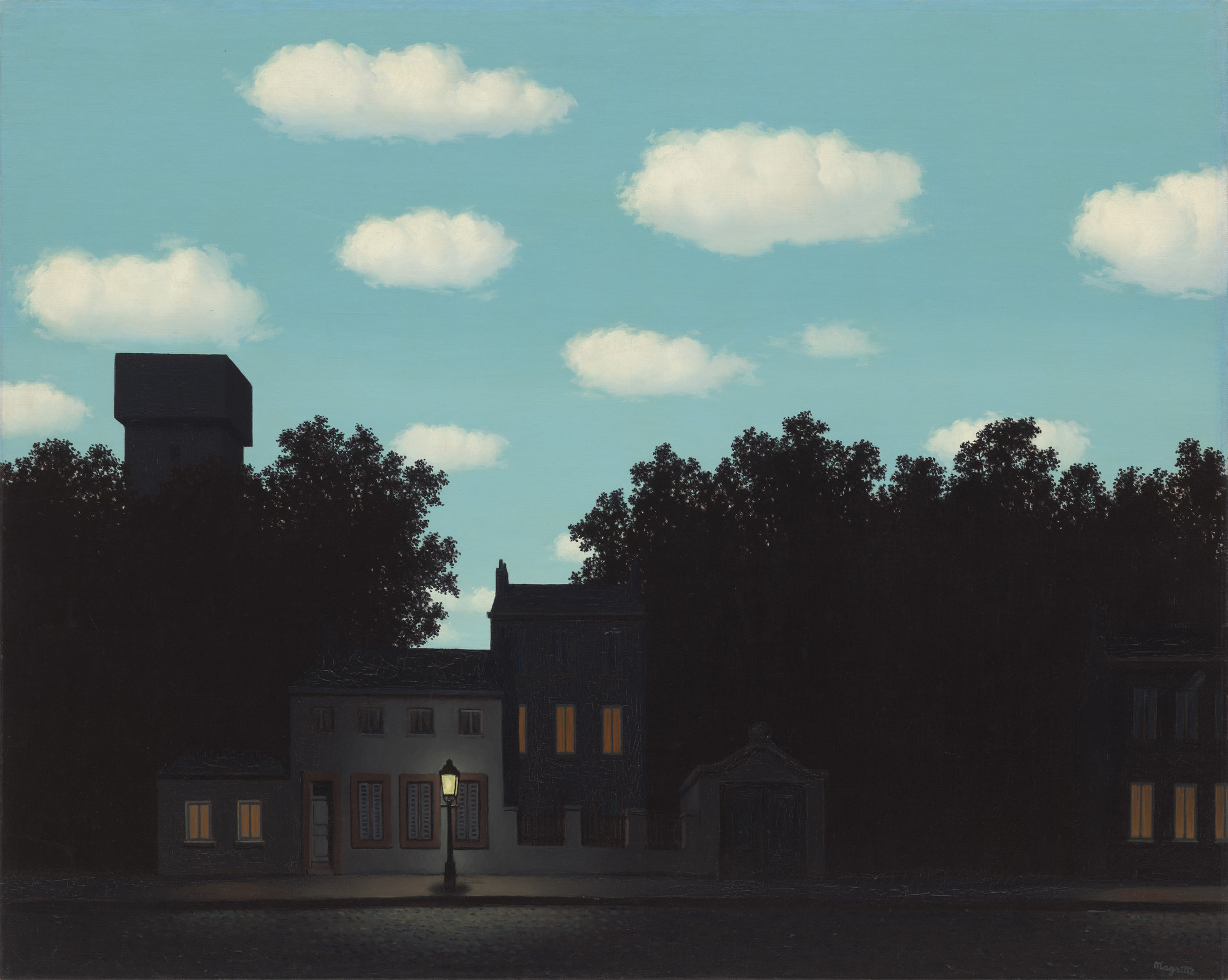 #86
#86
The Empire of Enlightenment II
With "The Empire of Lights II", René Magritte condenses an essential part of modern Belgian painting into an instantly recognizable image. Magritte paints with almost neutral precision so that the impossible retains the appearance of a fact: the gap between objects, words and their representation becomes the real subject. The image brings familiar elements together without explaining their encounter. This paradoxical clarity keeps the viewer between immediate recognition and lasting doubt. Dated 1950, the work is documented as oil on canvas in the collection of Museum of Modern Art, New York. The image brings together familiar elements without explaining their encounter. This paradoxical clarity keeps the viewer between immediate recognition and lasting doubt. Dated 1950, the work is documented as oil on canvas in the collection of Museum of Modern Art, New York. The image is presented for documentary purposes and refers to the Museum notice of Modern Art, New York. Alpha Reproduction does not offer reproductions of this work by René Magritte; the conditions of use are the responsibility of the museum and the rights holders. The painting thus remains attached to its time while going beyond the illustration of a current; it offers a unique way of making the eye last.
Image: Museum of Modern Art, New York · © C. Herscovici, Brussels /Artists Rights Society (ARS), New York
See the museum notice →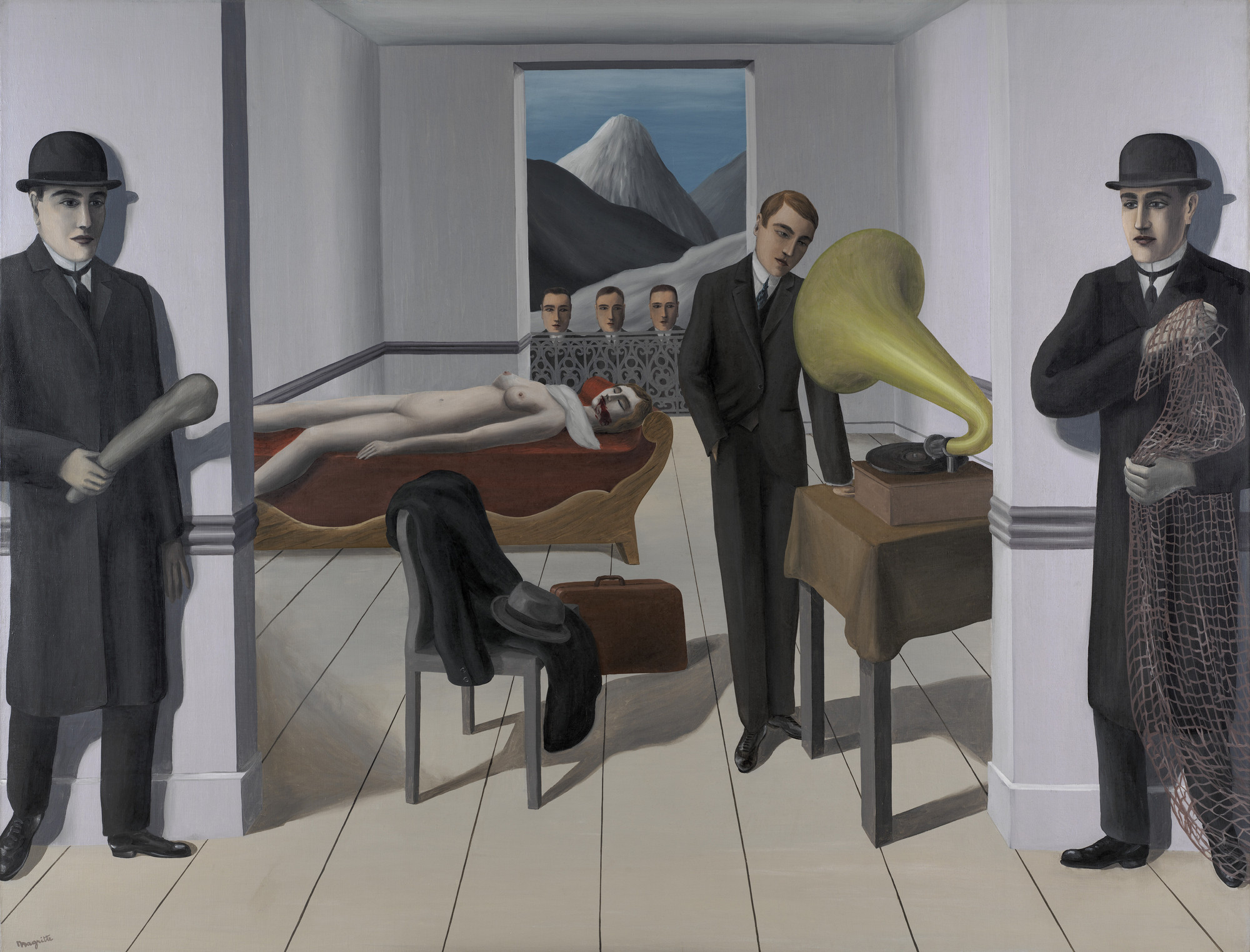 #87
#87
The Assassin Threatened
"The Threatened Assassin" shows how René Magritte transforms a precise motif into an experience of gaze, rhythm and memory. Magritte paints with almost neutral precision so that the impossible retains the appearance of a fact: the gap between objects, words and their representation becomes the real subject. The composition balances observation and invention: lines direct the eye, intervals slow down reading, and color gives the motif an intensity beyond its description. Dated 1927, the work balances observation and invention: lines direct the eye, intervals slow down reading, and color gives the motif an intensity beyond its description. The composition balances observation and invention: lines direct the eye, intervals slow down reading, and color gives the motif an intensity beyond its description. Dated 1927, the work is documented as oil on canvas in the collection of Museum of Modern Art, New York. The work is documented as oil on canvas in the collection of Museum of Modern Art, New York. The work is documented as oil on canvas in the collection of Museum of Modern Art, New York. The work is documented as oil on canvas in the collection of Museum of Modern Art, New York. The image is presented Modern Art, New York. Alpha Reproduction does not offer reproductions of this work by René Magritte; the conditions of use are the responsibility of the museum and the rights holders. The work therefore deserves to be compared to the other pieces in the corpus: the same questions of light, identity and space change form without disappearing.
Image: Museum of Modern Art, New York · © C. Herscovici, Brussels /Artists Rights Society (ARS), New York
See the museum notice → #88
#88
The Listening Chamber
In "The Listening Chamber", René Magritte constructs a tension between what we first identify and what the painting leaves deliberately unresolved. Magritte paints with almost neutral precision so that the impossible retains the appearance of a fact: the gap between objects, words and their representation becomes the real subject. The image brings familiar elements together without explaining their encounter. This paradoxical clarity keeps the viewer between immediate recognition and lasting doubt. Dated 1952, the work is documented as oil on canvas in The Menil Collection, Houston. The image is presented for documentary purposes and refers to The's notice Menil Collection, Houston. Alpha Reproduction does not offer reproductions of this work by René Magritte; the conditions of use are the responsibility of the museum and the rights holders. This tension between precision and ambiguity gives it its lasting strength and allows us to understand why it remains an important stage in Belgian painting.
Image: The Menil Collection, Houston · © C. Herscovici /Artists Rights Society (ARS), New York
See the museum notice →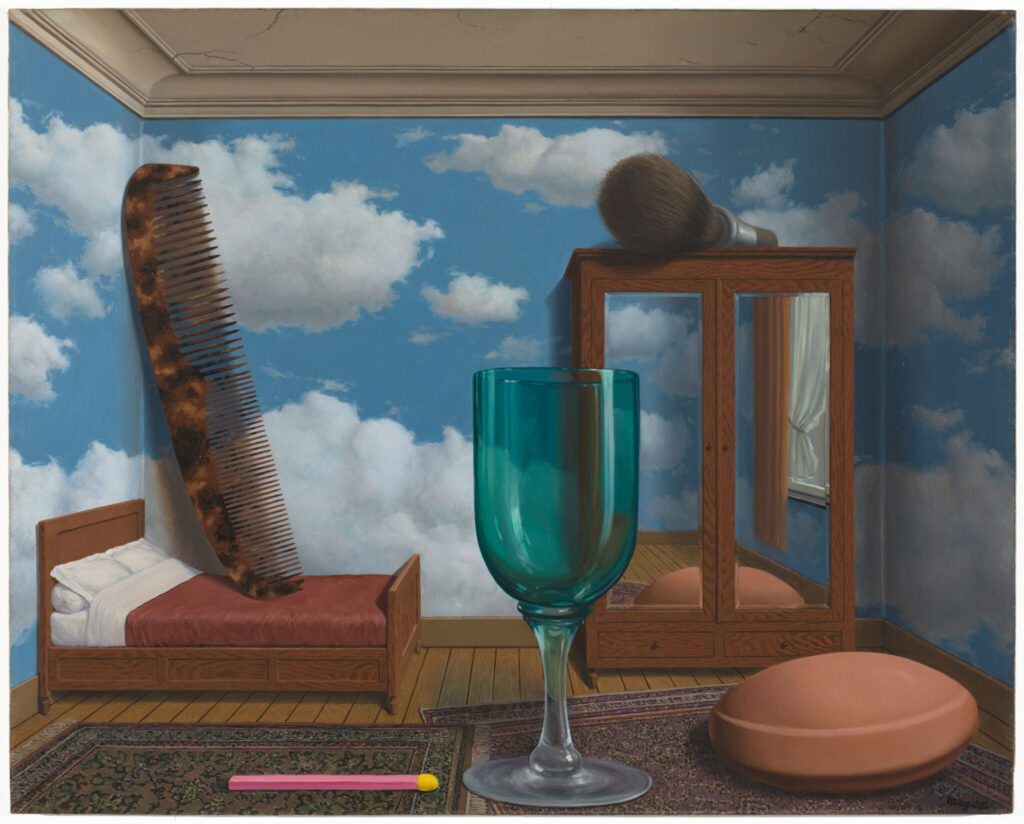 #89
#89
Personal Values
The strength of "Personal Values" lies in a composition where every visible detail modifies the reading of the whole. Magritte paints with almost neutral precision so that the impossible retains the appearance of a fact: the gap between objects, words and their representation becomes the real subject. The composition balances observation and invention: lines direct the eye, intervals slow down reading, and color gives the pattern an intensity beyond its description. Dated 1952, the work balances observation and invention: lines direct the eye, intervals slow down reading, and color gives the pattern an intensity beyond its description. Dated 1952, the work is documented as oil on canvas in the San Francisco Museum of Modern Art collection. The image is presented for documentary purposes and refers to San's notice Francisco Museum of Modern Art. Alpha Reproduction does not offer reproductions of this work by René Magritte; the conditions of use are the responsibility of the museum and the rights holders. This ability to make the image both readable and unstable explains its place in this journey: the work does not close the meaning, it rekindles attention.
Image: San Francisco Museum of Modern Art · © Charly Herscovici, Brussels /Artists Rights Society (ARS), New York
See the museum notice →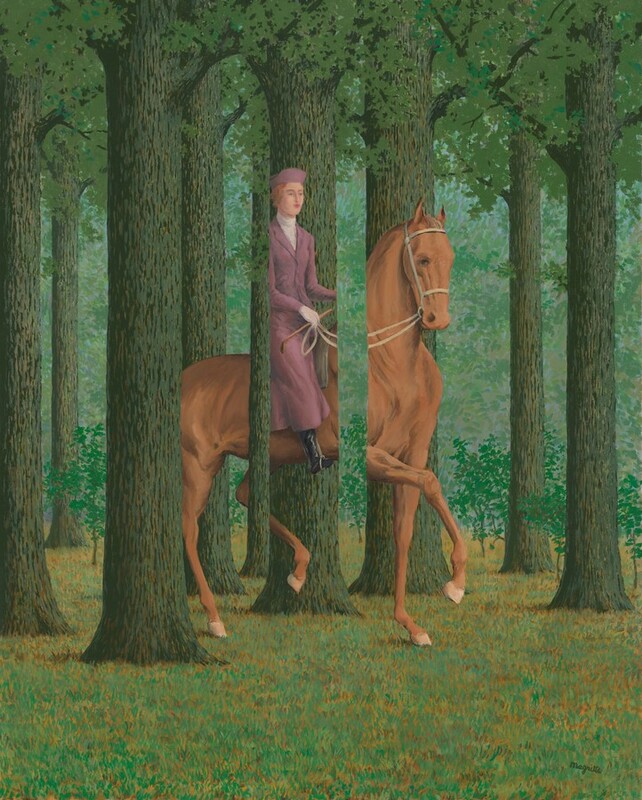 #90
#90
The Signature in white
Beneath its apparent evidence, "La Signature en blanc" organizes a very calculated relationship between presence, distance and imagination. Magritte paints with almost neutral precision so that the impossible retains the appearance of a fact: the gap between objects, words and their representation becomes the real subject. The image brings familiar elements together without explaining their encounter. This paradoxical clarity keeps the viewer between immediate recognition and lasting doubt. Dated 1965, the work is documented as oil on canvas in the collection of National Gallery of Art, Washington. The image is presented for documentary purposes and refers to the National Gallery of Art notice, Washington. Alpha Reproduction does not offer a reproduction of this work by René Magritte; the conditions of use are the responsibility of the museum and the rights holders. The painting thus remains attached to its time while going beyond the illustration of a current; it offers a unique way of making the eye last.
Image: National Gallery of Art, Washington · Media not downloadable; contact the NGA for image use
See the museum notice → #91
#91
On the threshold of freedom
With "On the Threshold of Freedom", René Magritte condenses an essential part of modern Belgian painting into an instantly recognizable image. Magritte paints with almost neutral precision so that the impossible retains the appearance of a fact: the gap between objects, words and their representation becomes the real subject. The composition balances observation and invention: lines direct the eye, intervals slow down reading, and color gives the pattern an intensity that exceeds its description. The composition balances observation and invention: lines direct the eye, intervals slow down reading, and color gives the pattern an intensity that exceeds its description. Dated 1937, the work balances observation and invention: lines direct the eye, intervals slow down reading, and color gives the pattern an intensity that exceeds its description. Dated 1937, the work balances observation and invention: lines direct the eye, intervals slow down reading, and color gives the pattern an intensity that exceeds its description. The composition balances observation and invention: lines direct the eye, intervals slow down reading, and color gives the pattern an intensity that exceeds its description. Dated 1937, the work is documented as oil on canvas in the collection of The Art Institute of Chicago. The image is presented for documentary notice from The Art Institute of Chicago. Alpha Reproduction does not offer a reproduction of this work by René Magritte; the conditions of use are the responsibility of the museum and the rights holders. The work therefore deserves to be compared to the other pieces in the corpus: the same questions of light, identity and space change form without disappearing.
Image: The Art Institute of Chicago · © 2018 C. Herscovici, London /Artists Rights Society (ARS), New York
See the museum notice → #92
#92
The Six Elements
"The Six Elements" shows how René Magritte transforms a precise motif into an experience of gaze, rhythm and memory. Magritte paints with almost neutral precision so that the impossible retains the appearance of a fact: the gap between objects, words and their representation becomes the real subject. The composition balances observation and invention: lines direct the eye, intervals slow down reading, and color gives the pattern an intensity beyond its description. Dated 1929, the work balances observation and invention: lines direct the eye, intervals slow down reading, and color gives the pattern an intensity beyond its description. The composition balances observation and invention: lines direct the eye, intervals slow down reading, and color gives the pattern an intensity beyond its description. Dated 1929, the work is documented as oil on canvas in the collection of the Philadelphia Museum of Art. The work is documented as oil on canvas in the collection of Philadelphia Museum of Art. The work is documented as oil on canvas in the Philadelphia Museum of Art collection. The image is presented for documentary purposes and refers to the Philadelphia notice Museum of Art. Alpha Reproduction does not offer reproductions of this work by René Magritte; the conditions of use are the responsibility of the museum and the rights holders. This tension between precision and ambiguity gives it its lasting strength and allows us to understand why it remains an important stage in Belgian painting.
Image: Philadelphia Museum of Art · Image reserved for educational use; rights to check with the museum
See the museum notice →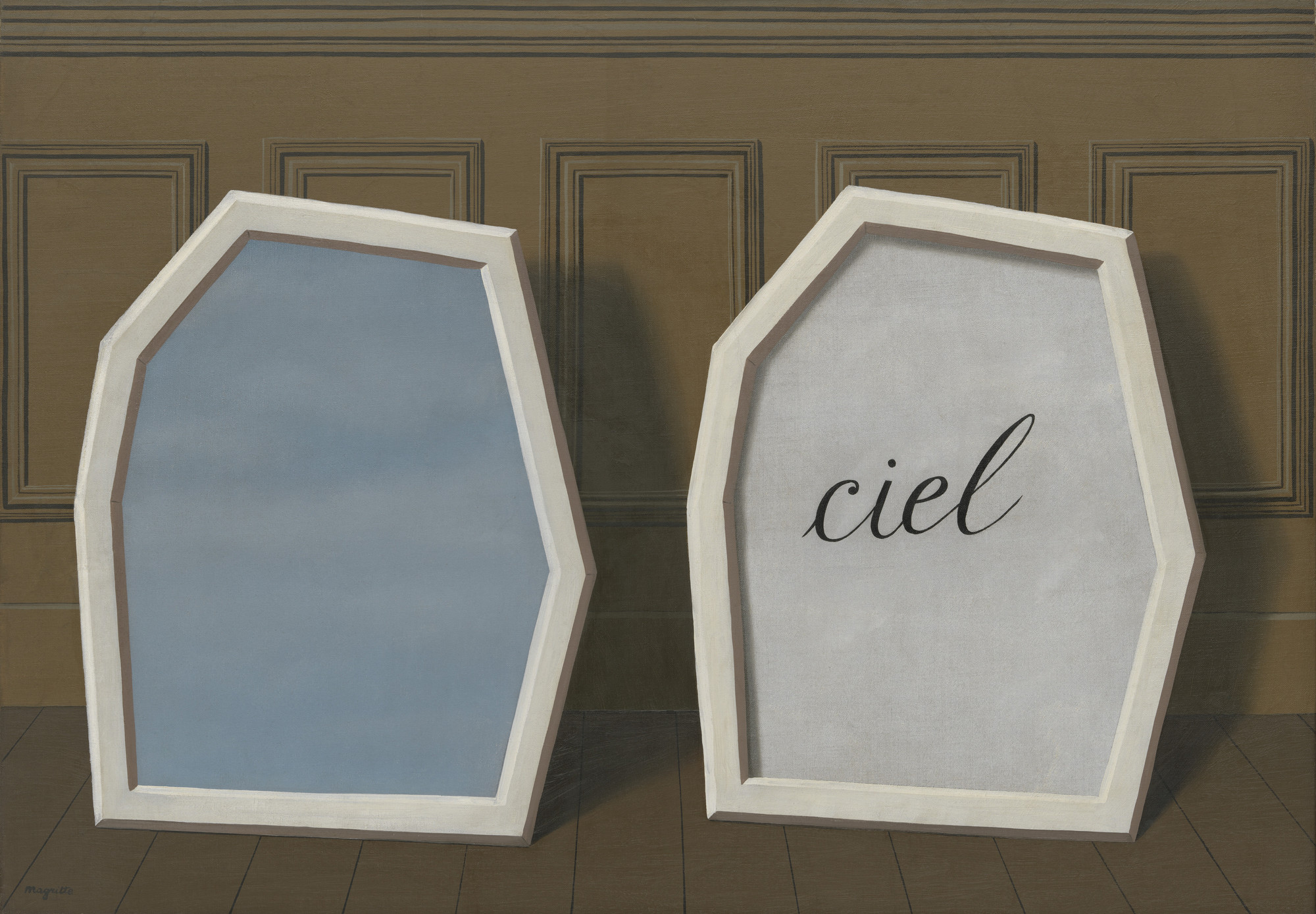 #93
#93
The Palace of Curtains III
In "The Palace of Curtains III", René Magritte constructs a tension between what we first identify and what the painting leaves deliberately unresolved. Magritte paints with almost neutral precision so that the impossible retains the appearance of a fact: the gap between objects, words and their representation becomes the real subject. The image brings familiar elements together without explaining their encounter. This paradoxical clarity keeps the viewer between immediate recognition and lasting doubt. Dated 1928 -1929, the work is documented as oil on canvas in the collection of Museum of Modern Art, New York. The image brings together familiar elements without explaining their encounter. This paradoxical clarity keeps the viewer between immediate recognition and lasting doubt. Dated 1928 -1929, the work is documented as oil on canvas in the collection of Museum of Modern Art, New York. The image is presented for documentary purposes and refers to the notice from Museum of Modern Art, New York. Alpha Reproduction does not offer reproductions of this work by René Magritte; the conditions of use are the responsibility of the museum and the rights holders. This ability to make the image both readable and unstable explains its place in this journey: the work does not close the meaning, it restores attention.
Image: Museum of Modern Art, New York · © C. Herscovici, Brussels /Artists Rights Society (ARS), New York
See the museum notice →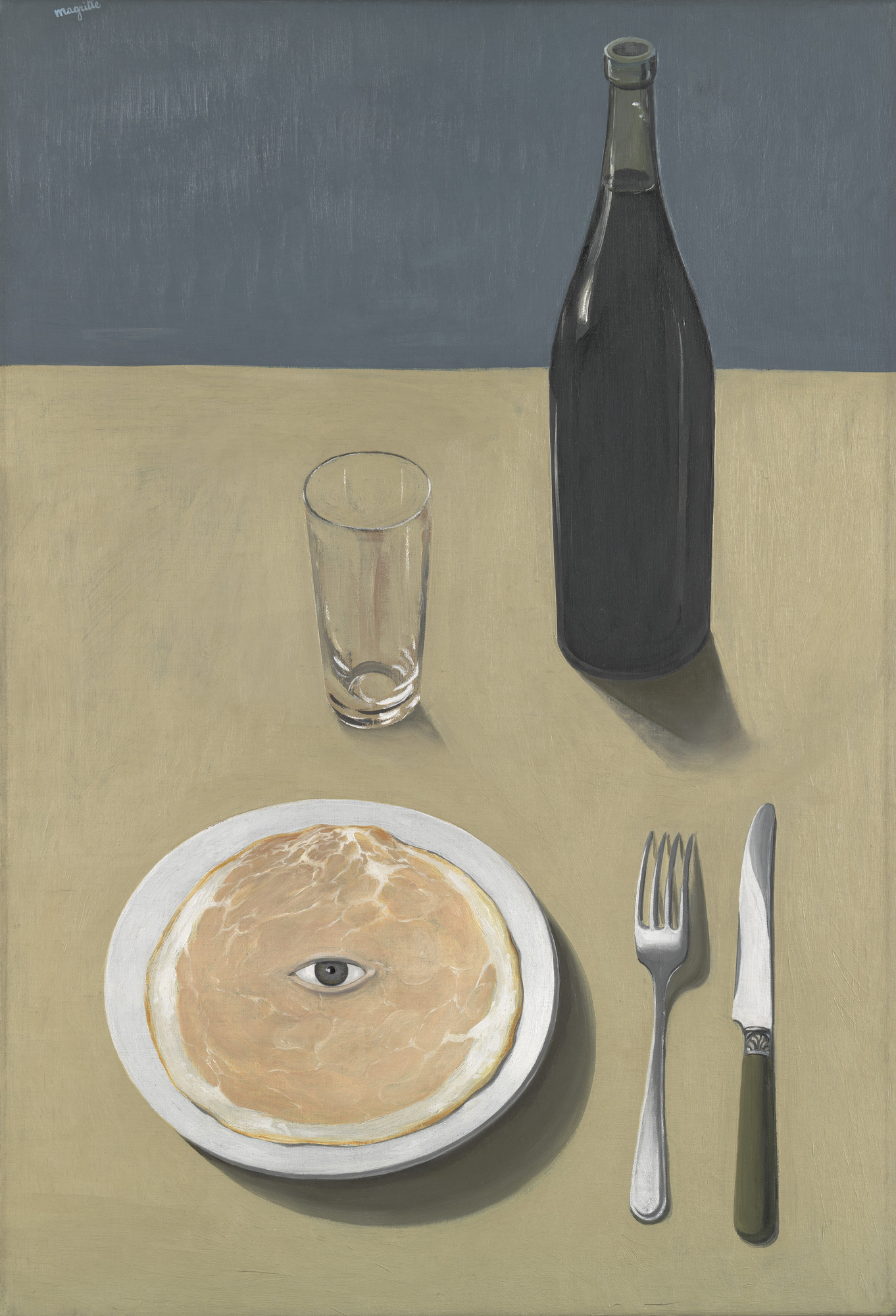 #94
#94
The portrait
The strength of "The Portrait" lies in a composition where each visible detail modifies the reading of the whole. Magritte paints with almost neutral precision so that the impossible retains the appearance of a fact: the gap between objects, words and their representation becomes the real subject. The coastline is not a simple setting. The horizon, reflections and atmospheric changes give a measure to the gaze and make light a pictorial event. Dated 1935, the work is documented as oil on canvas in the collection of Museum of Modern Art, New York. The image is presented for documentary purposes and refers to the notice from Museum of Modern Art, New York. Alpha Reproduction does not offer a reproduction of this work by René Magritte; the conditions of use are the responsibility of the museum and the rights holders. The painting thus remains attached to its time while going beyond the illustration of a current; it offers a unique way of making the eye last.
Image: Museum of Modern Art, New York · © C. Herscovici, Brussels /Artists Rights Society (ARS), New York
See the museum notice → #95
#95
The Rape
Beneath its apparent evidence, "The Rape" organizes a very calculated relationship between presence, distance and imagination. Magritte paints with almost neutral precision so that the impossible retains the appearance of a fact: the gap between objects, words and their representation becomes the real subject. The image brings familiar elements together without explaining their encounter. This paradoxical clarity keeps the viewer between immediate recognition and lasting doubt. Dated 1934, the work is documented as oil on canvas in The Menil Collection, Houston. This paradoxical clarity keeps the viewer between immediate recognition and lasting doubt. Dated 1934, the work is documented as oil on canvas in The Menil Collection, Houston. The image is presented for documentary purposes and refers to the notice from The Menil Collection, Houston. Alpha Reproduction does not offer a reproduction of this work by René Magritte; the conditions of use are the responsibility of the museum and the rights holders. The work therefore deserves to be compared to the other pieces in the corpus: the same questions of light, identity and space change shape without disappearing.
Image: The Menil Collection, Houston · © C. Herscovici /Artists Rights Society (ARS), New York
See the museum notice → #96
#96
The Arnheim Estate
With "Le Domaine d'Arnheim", René Magritte condenses an essential part of modern Belgian painting into an immediately recognizable image. Magritte paints with almost neutral precision so that the impossible retains the appearance of a fact: the gap between objects, words and their representation becomes the real subject. The image brings familiar elements together without explaining their encounter. This paradoxical clarity keeps the viewer between immediate recognition and lasting doubt. Dated 1962, the work is documented as oil on canvas in the collection of Royal Museums of Fine Arts of Belgium, Brussels. The image is presented for documentary purposes and refers to the notice from Royal Museums of Fine Arts of Belgium, Brussels. Alpha Reproduction does not offer a reproduction of this work by René Magritte; the conditions of use are the responsibility of the museum and the rights holders. This tension between precision and ambiguity gives it its lasting strength and allows us to understand why it remains an important stage in Belgian painting.
Image: Royal Museums of Fine Arts of Belgium, Brussels · © Ch. Herscovici, with kind permission c/o SABAM Belgium
See the museum notice → #97
#97
Black Magic
"Black Magic" shows how René Magritte transforms a precise motif into an experience of gaze, rhythm and memory. Magritte paints with almost neutral precision so that the impossible retains the appearance of a fact: the gap between objects, words and their representation becomes the real subject. The image brings familiar elements together without explaining their encounter. This paradoxical clarity keeps the viewer between immediate recognition and lasting doubt. Dated 1945, the work is documented as oil on canvas in the collection of Royal Museums of Fine Arts of Belgium, Brussels. The image is presented as a documentary and refers to the notice of Royal Museums fine Arts of Belgium, Brussels. Alpha Reproduction does not offer reproductions of this work by René Magritte; the conditions of use are the responsibility of the museum and the rights holders. This ability to make the image both readable and unstable explains its place in this journey: the work does not close the meaning, it rekindles attention.
Image: Royal Museums of Fine Arts of Belgium, Brussels · © Ch. Herscovici, with kind permission c/o SABAM Belgium
See the museum notice → #98
#98
The Unforeseen Response
In "The Unforeseen Response", René Magritte constructs a tension between what we first identify and what the painting leaves deliberately unresolved. Magritte paints with almost neutral precision so that the impossible retains the appearance of a fact: the gap between objects, words and their representation becomes the real subject. The image brings familiar elements together without explaining their encounter. This paradoxical clarity keeps the viewer between immediate recognition and lasting doubt. Dated 1932, the work is documented as oil on canvas in the collection of Royal Museums of Fine Arts of Belgium, Brussels. The image is presented as documentary and returns in the notice of the Royal Museums of Fine Arts of Belgium, Brussels. Alpha Reproduction does not offer a reproduction of this work by René Magritte; the conditions of use are the responsibility of the museum and the rights holders. The painting thus remains attached to its time while going beyond the illustration of a current; it offers a unique way of making the eye last.
Image: Royal Museums of Fine Arts of Belgium, Brussels · © Ch. Herscovici, with kind permission c/o SABAM Belgium
See the museum notice →Small night station
The strength of "Little Night Station" lies in a composition where each visible detail modifies the reading of the whole. Delvaux installs his figures in stations, ancient architecture and silent nights where time seems suspended between memory, desire and worry. The architecture orders a seemingly stable space, but the night light and the isolation of the figures shift the scene towards a dream temporality. Dated 1959, the work is documented as oil on canvas in the collection of Metropolitan Museum of Art, New York. The work is documented as oil on canvas in the collection of Metropolitan Museum of Art, New York. The image is documented as oil on canvas in the collection of Metropolitan Museum of Art, New York. The work is documented as oil on canvas in the collection of Metropolitan Museum of Art, New York. The work is documented as oil on canvas in the collection of Metropolitan Museum of Art, New York. The work is documented as oil on canvas in the collection of Metropolitan Museum of Art, New York. The work is documented as oil on canvas in the collection of Metropolitan Museum of Art, New York. The work is documented as oil on canvas in the collection of Metropolitan Museum of Art, New York. The work is documented as oil on canvas in reproduction of this work by Paul Delvaux; the conditions of use are the responsibility of the museum and the rights holders. The work therefore deserves to be compared to the other pieces in the corpus: the same questions of light, identity and space change shape without disappearing.
Image: Metropolitan Museum of Art, New York · Documentary image; rights to be verified with the museum and rights holders.
See the museum notice → #100
#100
The Night Call
Beneath its apparent evidence, "The Call of the Night" organizes a very calculated relationship between presence, distance and imagination. Delvaux installs his figures in stations, ancient architecture and silent nights where time seems suspended between memory, desire and worry. The architecture orders a seemingly stable space, but the night light and the isolation of the figures shift the scene towards a dream temporality. Dated 1938, the work orders a seemingly stable space, but the night light and the isolation of the figures shift the scene towards a dream temporality. Dated 1938, the work is documented as oil on canvas in the collection of National Galleries of Scotland, Edinburgh. The work is documented as oil on canvas in the collection of National Galleries of Scotland, Edinburgh. The work is documented as oil on canvas in the collection of National Galleries of Scotland, Edinburgh. The work is documented as oil on canvas in the collection of National Galleries of Scotland, Edinburgh. The work is documented as oil on canvas in the collection of National Galleries of Scotland, Edinburgh. The image is presented for documentary purposes and refers to the notice from National Galleries of Scotland, Edinburgh. Alpha Reproduction does not offer a reproduction of this work by Paul Delvaux; the conditions of use are the responsibility of the museum and the rights holders. This tension between precision and ambiguity gives it its lasting strength and allows us to understand why it remains an important stage in Belgian painting.
Image: National Galleries of Scotland, Edinburgh · Documentary image; rights to be verified with the museum and rights holders.
See the museum notice →What the journey reveals
Three gestures of Belgian modernity
The artists gathered here shift the function of the face, light and object.
Hide
At Ensor and Khnopff, the visible face never guarantees a transparent identity.
Divide
Van Rysselberghe, Lemmen and Anna Boch make the light vibrate through the relationship of colors.
Move
Magritte and Delvaux install the familiar in relationships that thwart any immediate explanation.
One story, five landmarks
From Brussels to surrealism
The Brussels circle opens the Belgian scene to the most new research and international exchanges.
Ensor completes his immense Brussels entrance, a satire of crowds and a manifesto of color.
The new group extends the debates on symbolism and affirms the diversity of Belgian modernities.
Magritte radicalizes the relationship between words and images with The Betrayal of Images.
Delvaux develops vast scenes where figures, architecture and desire seem timeless.
Belgium in depth
A small geography, several avant-gardes
Belgian modernity is formed in a dense territory, crossed by exchanges with Paris, London, the Netherlands and Germany. Brussels becomes a place of confrontation, while Ostend offers Ensor and Spilliaert a theater of light, crowds and solitude.
The XX play a decisive role. The group does not define a single style: it organizes the meeting between Belgian artists and European research. This opening explains the coexistence of Khnopff's symbolism and Van Rysselberghe's divisionism.
At Ensor, carnival ceases to be picturesque. The mask shows the violence of social roles, the skeleton brings collective agitation back to its fragility and the color produces an energy which announces the expressionisms of the 20th century.
Van Rysselberghe, Lemmen and Anna Boch study sensation differently. The divided touch analyzes the light without erasing the portrait, the landscape or the activities of the coastline. The method becomes a means of constructing the duration of the gaze.
Flemish expressionism gives bodies and rural scenes a new gravity. Permeke, Van den Berghe and Laermans simplify volumes, darken or release material and make everyday life a collective issue.
Magritte and Delvaux do not entirely break with these legacies. The first transforms painting into a philosophical instrument; the second extends the power of silence and mental decor. Both make the visible a question rather than an answer.
Four reading keys
How to look at Belgian painting
Comparing works by visual gestures allows you to go beyond movement labels.
Identify the mask
Observe when the portrait reveals a person and when, on the contrary, it constructs a distance.
Follow the keys
Color can analyze the atmosphere, cut out a volume or produce an autonomous shock.
Measure silence
Beaches, rooms, streets and train stations give concrete form to waiting and absence.
Doubt the familiar
At Magritte, a pipe, a mirror or a curtain is enough to disrupt representation habits.
Works and institutions
Continue after the hundredth painting
Each image opens either the corresponding file in the Alpha Reproduction store, or the museum notice when no reproduction is offered.
Frequently asked questions
Belgian painting, movements and rights of images
The essential benchmarks for understanding the corpus and using its links correctly.
Which painters best represent modern Belgian painting?
James Ensor, Théo van Rysselberghe, Fernand Khnopff, Léon Spilliaert, Constant Permeke, Paul Delvaux and René Magritte constitute several major lines, from symbolism to surrealism via neo-impressionism and Flemish expressionism.
Why start with James Ensor?
Ensor connects carnival tradition, social satire, symbolism and a freedom of color that announces expressionism. Its masks allow us to open the journey to a Belgian identity that is both local and radically modern.
What role does the group of XX play?
The XX offered Brussels a decisive space of circulation for European research. Ensor, Khnopff, Anna Boch and Van Rysselberghe confronted their works with symbolism, neo-impressionism and international avant-gardes.
What is Belgian luminism?
The term designates a painting attentive to the effects of light and color, particularly in Émile Claus and around him. In this corpus, this sensitivity dialogues with the divisionism of Van Rysselberghe, Lemmen and Anna Boch.
How does Belgian surrealism differ?
In Magritte, the image directly questions words, objects and representation. Delvaux favors more nocturnal cities, train stations and immobile figures. Both make a world painted with great clarity strange.
Are all 100 works available for reproduction?
No. Seventy-five works refer to a file from the Alpha Reproduction store. The twenty works of René Magritte and the five works of Paul Delvaux are presented for documentary purposes and refer only to the corresponding museums.
Why do images sometimes open a museum?
When no reproduction is offered by Alpha Reproduction, the image and the button open the institutional notice to allow verification of the title, date, collection and conditions of use.
Are the images of Magritte and Delvaux royalty free?
No. They are displayed for documentary purposes. Works, photographs and their reproductions can be protected; any reuse must respect the conditions of the museum and the rights holders.
0 comments