

Top 50 · Mexican painting
From Kahlo and Rivera to contemporary voices from Mexico
Muralism, landscape, surrealism, engraving and generation of rupture: one hundred and fifty years of visual inventions.
Modern Mexican painting is built between pre-Hispanic legacies, colonial experience, independence, revolution and urbanization. Mexico City becomes a major home thanks to its academies, museums and public walls; Oaxaca, Jalisco, Guanajuato and the Valley of Mexico bring their landscapes, graphic traditions and local cultures. The classification combines historical influence, plastic invention, quality of work, collective role and international posterity.

Identity, revolution, territory, myth and experimentation.
Before muralism
From the academic landscape to the visual revolution
In the 19th century, José Maria Velasco made the Valley of Mexico a territory observed with as much rigor as emotion. Posada simultaneously broadcasts calaveras and satires in the street. After 1910, artists and institutions sought a language capable of telling the story of a revolutionized society without renouncing popular traditions, indigenous cultures or international avant-gardes.
The wall as a civic space
Rivera, Orozco and Siqueiros do not tell the same revolution
Rivera organizes history into accessible cycles, Orozco insists on violence and the contradictions of power, while Siqueiros experiments with projections, photography and industrial materials. Around them, Montenegro, Charlot, Leal, Guerrero and Revueltas show that muralism is a collective project, crossed by aesthetic and political debates.
From workshops to exiles
Women painters, surrealists and the generation of rupture
Kahlo and Izquierdo assert personal stories in the face of major public programs. Varo, Carrington and Paalen found a fertile space of exile in Mexico. After 1950, Tamayo, Soriano, Rojo, Cuevas and Toledo proved that abstraction, figuration and local memory could dialogue without reproducing the heroic model of the first walls.
The figures that changed the look
Top 10 - From Kahlo to the surrealists of Mexico
Self-portrait, public wall, volcanic landscape and surrealist imagination: these ten artists gave Mexican painting its international reach.
#1
Frida Kahlo
Kahlo transforms pain, identity, desire and Mexicanness into self-portraits of symbolic precision where the body becomes at the same time subject, landscape and memory.
See the Frida Kahlo collection #2
#2
Diego Rivera
Rivera gives the social history of Mexico a monumental scale, mixing archeology, work, revolution and pedagogy in frescoes readable by all.
Read Diego Rivera's Wikipedia entry #3
#3
Jose Clemente Orozco
More tragic than celebratory, Orozco paints revolution, machine and sacrifice with powerful bodies, burning light and deep skepticism.
See the José Clemente Orozco collection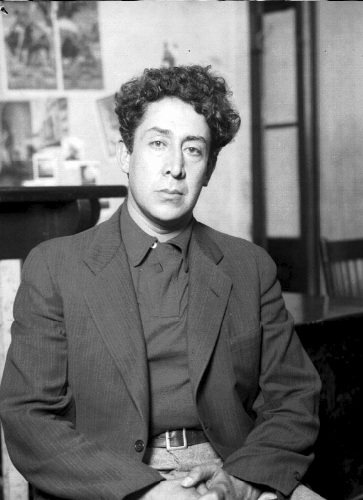 #4
#4
David alfaro siqueiros
Siqueiros combines political commitment, dynamic perspectives and industrial materials to make the wall an enveloping, almost cinematic space.
Read the Wikipedia entry by David Alfaro Siqueiros #5
#5
Rufino Tamayo
Tamayo condenses figures, animals and cosmos into deep chromatic material, reconciling pre-Columbian legacies and international research without adopting the muralist narrative.
Read Rufino Tamayo's Wikipedia entry #6
#6
Jose Maria Velasco
Its rigorous panoramas of the Valley of Mexico unite science, atmosphere and territorial construction, making the landscape an emblem of the modern nation.
See the José Maria Velasco collection #7
#7
Gerardo Murillo (Dr. Atl)
Under the name Dr. Atl, Murillo renews the landscape with dizzying volcanic views, mineral colors and a passionate defense of Mexican public art.
Read the Wikipedia entry by Gerardo Murillo (Dr. Atl) #8
#8
Maria Izquierdo
Altars, circuses, still lifes and portraits compose a dense and personal world for Izquierdo, freed from the male monopoly of official muralism.
See the Maria Izquierdo collection #9
#9
Remedios Varo
Varo builds dreamlike laboratories where scientists, machines and creatures cross meticulous architecture, between alchemy, humor and the quest for emancipation.
Read the Wikipedia entry for Remedios Varo #10
#10
Leonora Carrington
Carrington people banquets and metamorphoses of animals, magicians and hybrid mythologies, making Mexican exile a source of radical invention.
Read Leonora Carrington's Wikipedia entryModernity before and around the walls
Ranks 11 to 20 - Landscape, symbolism and avant-garde
Clausell, Herran and the painters of the interwar period show that Mexican modernity was also born in the studio, the press, portraits and outdoor schools.
 #11
#11
Joaquin Clausell
Clausell translates lagoons, forests and valleys with a fragmented and luminous touch; his wall workshop also reveals an intimate experimentation, free from any official program.
See the Joaquin Clausell collection #12
#12
Saturnino Herran
Herran monumentalizes workers, saleswomen and popular traditions in a flexible painting that prepares national iconography without sacrificing the singularity of the models.
See the Saturnino Herran collection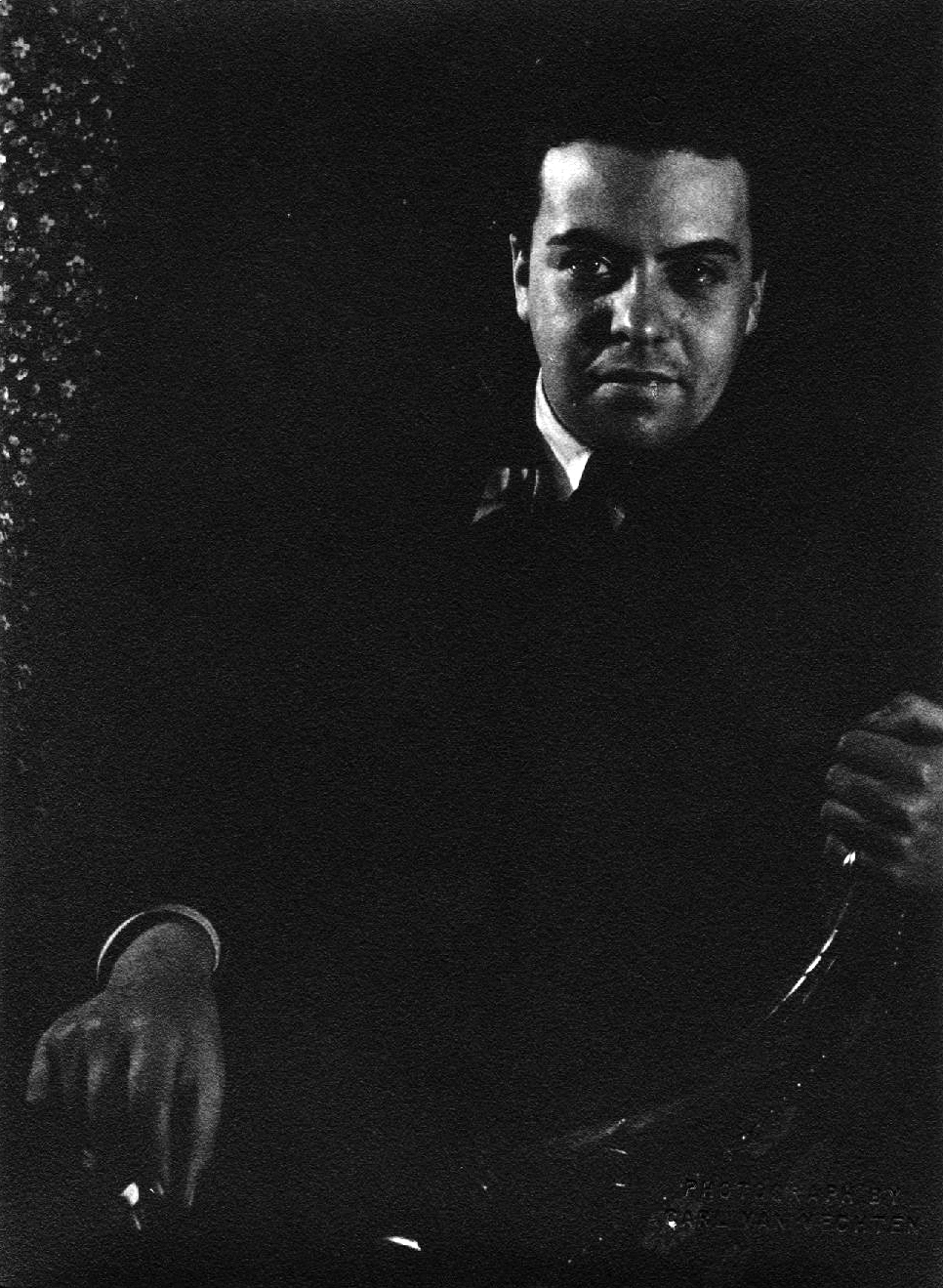 #13
#13
Miguel Covarrubias
Caricaturist, painter and cartographer, Covarrubias observes cultures and societies with a synthetic line whose elegance circulates between press, stage and anthropology.
Read the Wikipedia entry by Miguel Covarrubias #14
#14
Roberto Montenegro
Montenegro connects art nouveau, popular traditions and early wall programs; his decorative compositions give a central place to motifs and applied arts.
Read Roberto Montenegro's Wikipedia entry #15
#15
Carlos Merida
Mérida transforms Mesoamerican rhythms, textiles and figures into colorful geometries, opening a path between muralism, abstraction and architectural integration.
Read the Wikipedia entry by Carlos Mérida #16
#16
Juan O'Gorman
A functionalist architect turned muralist, O'Gorman condenses knowledge, landscapes and history into mosaics where each surface participates in the narration of the building.
Read Juan O'Gorman's Wikipedia entry #17
#17
Nahui Olin
Nahui Olin asserts her gaze with frontal self-portraits and colorful landscapes; his painting extends a life of writing, performance and provocative independence.
Read the Wikipedia entry by Nahui Olin #18
#18
Manuel Rodriguez Lozano
Rodriguez Lozano reduces architecture and bodies to silent volumes, giving solitude, mourning and social drama a restrained monumentality.
Read the Wikipedia entry by Manuel Rodriguez Lozano #19
#19
Julio Castellanos
His suspended scenes, hieratic figures and stripped-down spaces explore childhood, family and everyday strangeness with melancholy precision.
See the Julio Castellanos collection #20
#20
Abraham Angel
Died at nineteen, Abraham Angel left self-portraits and landscapes with clear flat areas, whose apparent simplicity concentrates a surprisingly modern emotion.
See the Abraham Angel collectionThe construction sites of the revolution
Ranks 21 to 30 - First muralists and parallel routes
This generation is experimenting with frescoes, engraving, cubism and architectural integration, while giving collective work a new place.
 #21
#21
Ramon Alva of the Canal
A player in the first wall projects, Alva de la Canal organizes conquest, revolution and collective life in clear language nourished by engraving.
Read the Wikipedia entry for Ramon Alva de la Canal #22
#22
Fermin Revueltas
Revueltas combines emerging muralism and stridentist energy; cafes, scaffolding and popular scenes become constructions with bright colors and oblique rhythms.
See the Fermin Revueltas collection #23
#23
Fernando Leal
Leal is one of the pioneers of post-revolutionary frescoes, addressing festivals, religious conflicts and indigenous memory with strongly architectural compositions.
Read the Wikipedia entry by Fernando Leal #24
#24
Jean Charlot
Charlot brought a synthesis of engraving, archeology and fresco to the first Mexican walls, then disseminated this experience in Hawaiian teaching and art.
Read the Wikipedia entry for Jean Charlot #25
#25
Angel Zarraga
Zarraga moves from symbolism to cubizing construction, giving athletes, portraits and religious subjects a sculptural presence of very personal elegance.
See the Angel Zarraga collection #26
#26
Alfredo Ramos Martinez
A reforming educator, Ramos Martinez favors rural figures, flowers and large drawings on raw support, in a monumental line which will accompany his Californian exile.
See the Alfredo Ramos Martinez collection #27
#27
Jorge Gonzalez Camarena
His powerful allegories extend muralism with angular anatomy, sharp diagonals and color designed for vast civic spaces.
Read the Wikipedia entry by Jorge Gonzalez Camarena #28
#28
Pablo O'Higgins
Based in Mexico, O'Higgins puts drawing and fresco at the service of workers, social struggles and the collective workshop without losing the strength of individual faces.
Read the Wikipedia entry for Pablo O'Higgins #29
#29
Xavier Guerrero
Painter and wall craftsman, Guerrero brought to the first post-revolutionary projects a concrete knowledge of materials, pigments and decorative traditions.
Read Xavier Guerrero's Wikipedia entry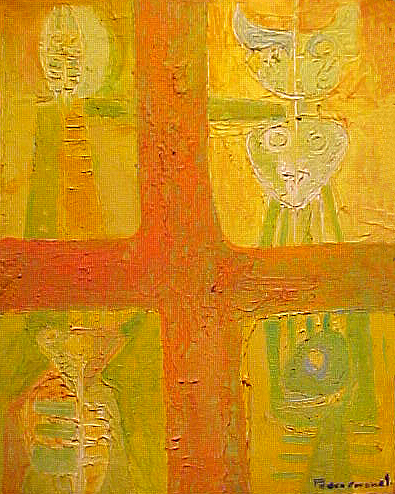 #30
#30
Pedro Coronel
Coronel combines chromatic masses, archaic signs and dense matter in a telluric abstraction where color appears cut like a stone.
Read Pedro Coronel's Wikipedia entryBreak without erasing history
Ranks 31 to 40 - Free representation, abstraction and new stories
After muralist domination, Soriano, Rojo, Cuevas and Toledo defended more personal writings while engraving and feminism renewed public art.
 #31
#31
Juan Soriano
Soriano refuses collective programs in favor of poetic figuration: portraits, birds and myths evolve with a constantly reinvented freedom of line.
Read Juan Soriano's Wikipedia entry #32
#32
Vicente Rojo
Rojo constructs pictorial series, covers and typographies in modules, frames and reliefs, bringing together rigorous abstraction and Mexican editorial culture.
Read Vicente Rojo's Wikipedia entry #33
#33
Jose Luis Cuevas
Cuevas opposes the wall heroes with a fragile and grotesque humanity; its sharp design transforms confinement, desire and marginality into psychological theater.
Read the Wikipedia entry by José Luis Cuevas #34
#34
Francisco Toledo
Toledo transforms insects, iguanas, bodies and Zapotec myths into inventive material, while consistently defending the cultural heritage of Oaxaca.
Read the Wikipedia entry by Francisco Toledo #35
#35
Carmen Parra
Parra reactive butterflies, birds, architecture and baroque symbols to connect nature conservation, colonial memory and pictorial virtuosity.
Read the Wikipedia entry for Carmen Parra #36
#36
Wolfgang Paalen
Paalen invented smoking and made Mexico a place for reflection on Native American art, automatism and space, preparing certain debates on post-war abstraction.
Read Wolfgang Paalen's Wikipedia entry #37
#37
Rina Lazo
A collaborator of Rivera and then an independent muralist, Lazo links Mayan history, social struggles and narrative precision in long-term public works.
Read Rina Lazo's Wikipedia entry #38
#38
Adolfo Mexiac
Mexiac condenses protest and solidarity into immediately readable engravings, whose hands, chains and profiles have circulated well beyond the Mexican workshops.
Read the Wikipedia entry for Adolfo Mexiac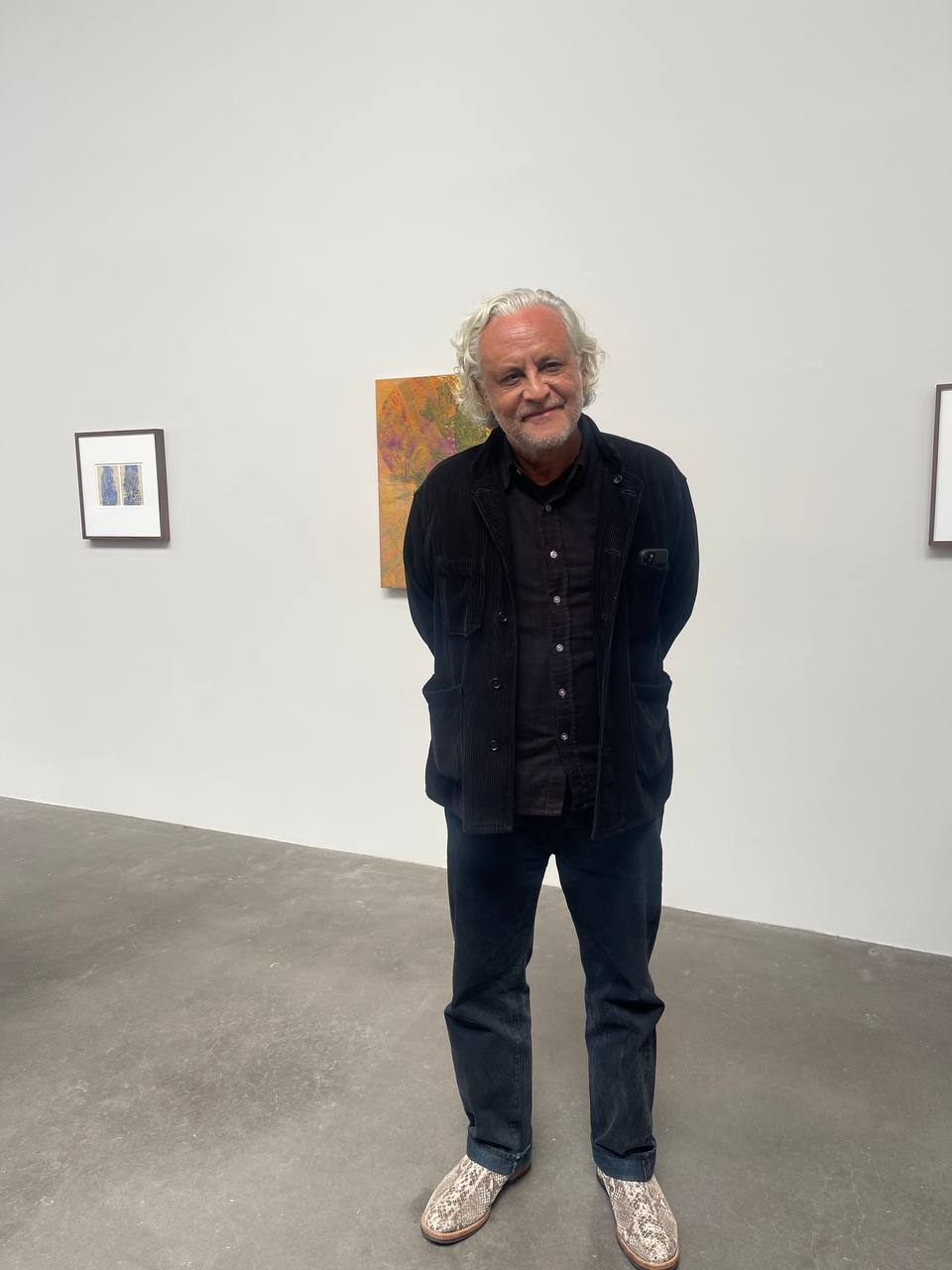 #39
#39
Gabriel Orozco
Orozco starts with a gesture, an object or a circular pattern to move the boundaries between drawing, painting, sculpture and photography with a playful economy.
Read the Wikipedia entry by Gabriel Orozco #40
#40
Monica Mayer
Mayer transforms participation, archives and daily experience into feminist visual tools, questioning who speaks, who looks and how the work circulates socially.
Read the Wikipedia entry for Mónica MayerAn open and international scene
Ranks 41 to 50 - Emotional architecture, neomuralism and contemporary
Painting, design, drawing and urban intervention intersect in a Mexico that has become a home of welcome, teaching and experimentation for several generations.
 #41
#41
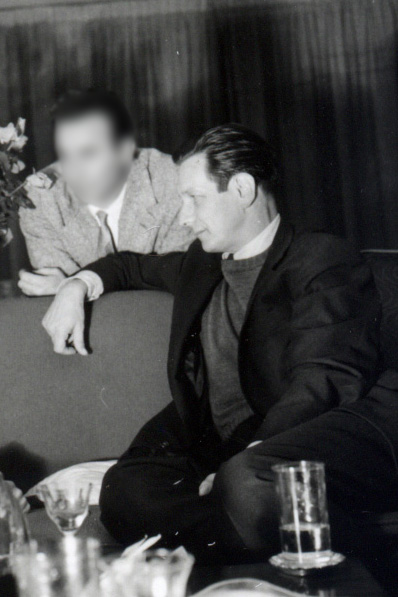
Mathias Goeritz
Goeritz defends emotional architecture where color, sign and monumentality produce a spiritual experience, from the Torres of Satellite to the golden surfaces.
Read the Wikipedia entry by Mathias Goeritz #42
#42
Gilberto Aceves Navarro
Aceves Navarro fractures silhouettes, horses and crowds with rapid drawing; his painting retains the energy of the studio, theater and teaching.
Read the Wikipedia entry by Gilberto Aceves Navarro #43
#43
Sergio Hernandez
Hernandez works with oil, encaustic and metal to bring out animals, signs and stories from Oaxaca into dark, sensual and often mysterious surfaces.
Read Sergio Hernandez's Wikipedia entry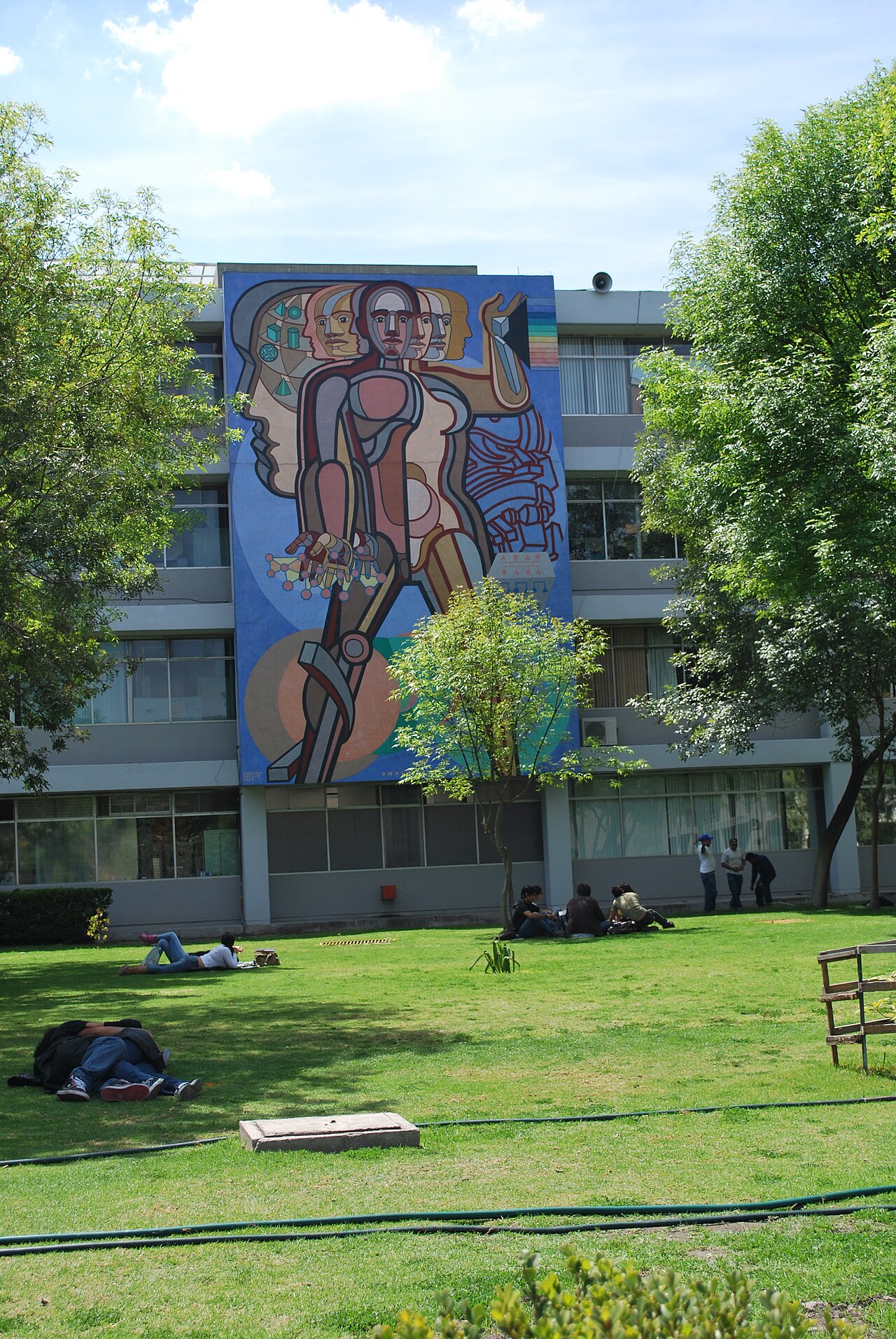 #44
#44
Arnold Belkin
Belkin renews painted history with sequential compositions and mechanical bodies, linking the muralist legacy to contemporary political conflicts.
Read Arnold Belkin's Wikipedia entry #45
#45
Vlady
Vlady combines fresco tradition, revolutionary memory and expressionist gesture in cycles where intellectual history becomes a dramaturgy of colors.
Read Vlady's Wikipedia entry #46
#46
Luis nishizawa
Nishizawa unites Japanese and Mexican heritages in volcanoes, sober lands and skies, moving with ease from easels to wall techniques.
Read the Wikipedia entry by Luis Nishizawa #47
#47
Jose Chavez Morado
Chavez Morado articulates civic history, satire and popular observation in frescoes and engravings whose narrative clarity remains open to irony.
Read the Wikipedia entry by José Chavez Morado #48
#48
Adolfo Best Maugard
Best Maugard systematizes motifs from popular and pre-Hispanic arts into a graphic method that will mark the artistic education of post-revolutionary Mexico.
Read the Wikipedia entry for Adolfo Best Maugard #49
#49
Jose Guadalupe Posada
His calaveras, catastrophes and printed satires give an unforgettable form to popular chronicle; muralists will recognize Posada as a major ancestor.
See the José Guadalupe Posada collection #50
#50
Leopoldo Mendez
Méndez brings political engraving to a monumental force, linking anti-fascism, the peasant world and the collective workshop in images intended to circulate widely.
Read the Wikipedia entry for Leopoldo MéndezSources and extensions
View works in Mexican institutions
The dates, movements and landmarks were cross-checked with the major institutions preserving Mexican art. The Museo Nacional de Arte illuminates the 19th century and the beginnings of modernity; the Museo Mural Diego Rivera, the Museo Frida Kahlo, the Museo de Arte Moderno and the Museo Tamayo allow us to follow muralism, the surrealists and the generation of rupture.
Explore Alpha Reproduction
Mexican painting unites collective narrative and intimate experience
A Velasco landscape defines a territory; an engraving of Posada crosses the street; a Rivera wall organizes the story; an Orozco figure reveals the wounds. Kahlo returns this narrative power to the body, while Varo, Carrington, Tamayo and Toledo open other passages between myth, matter and imagination.
To continue the discovery, compare the scales: the printed image, the studio painting, the public fresco and contemporary intervention. The fifty notices show less a single school than a lasting conversation between territory, political memory, popular cultures and individual freedom.
0 comments