

Top 100 · Surrealism
One hundred artists to cross the modern dream
Dalí, Magritte, Ernst, Miro, Carrington, Varo and a global movement that liberates the image.
Born in the post-European war, formalized by André Breton's Surrealism Manifesto in 1924, the movement seeks less to illustrate dreams than to short-circuit reason. Automatic writing, chance, collage, found object and impossible associations open painting to the unconscious, to desire and to revolt. Paris plays a central role, but Brussels, Prague, London, Mexico, Cairo, Tokyo, Buenos Aires and Port-au-Prince quickly shift its issues.

Painting, collage, automatism, object and fantastic realism.
Understand movement
Surrealism doesn't just paint dreams
The project is political, poetic and collective: abolishing the oppositions between wakefulness and sleep, art and life, reason and desire. Some works describe impossible scenes with classic clarity; others let the hand, the stain or the material produce unforeseen forms. This tension between mastery and automatism explains the diversity of the movement.
Artistic homes
Paris, Brussels, Prague, London, Mexico and Cairo
The Parisian group provides manifestos, magazines and exhibitions, but each home transforms its tools. Belgium cultivates the conceptual enigma; Prague combines eroticism, poetry and photomontage; Great Britain rereads the landscape; Mexico welcomes exiles; Art and Liberty in Cairo fights fascism and academicism. Colonial and diasporic circulations make this history profoundly global.
Classification method
Influence, visual invention and international reach
The classification combines historical importance, singularity of the work, role in surrealist networks, subsequent influence and museum presence. The fifty artists in the original article are all preserved. Fifty names added complete the precursors, extra-European scenes, women artists and legacies after 1945.
Images that have become universal
Top 10 - The masters who define surrealism
Dalí, Magritte, Ernst, Miro and their peers give movement its most fruitful methods: movement, automatism, metamorphosis and precision of dreams.
 #1
#1
Salvador Dali
He transforms dreams into exact theater: soft watches, Catalan horizons, impossible objects and cold virtuosity.
Read the biography of Salvador Dalí #2
#2
René Magritte
He moves the simplest things to the point of dizziness: pipe, apple, blue sky, curtain, man in a bowler hat.
Read the biography of René Magritte #3
#3
Max Ernst
Rubbing, collage, mental forests: it brings out elegant monsters in the secret mechanics of images.
Read the biography of Max Ernst #4
#4
Joan Miro
It gives the signs cosmic freedom: stars, birds, women and constellations become a language of painting.
Read Joan Miro's biography #5
#5
Giorgio de Chirico
Its empty squares, statues and silent perspectives open the mental door that the surrealists will then cross.
Read the biography of Giorgio de Chirico #6
#6
Yves Tanguy
He invents landscapes without geography, populated with mineral forms like memories from another planet.
See the Yves Tanguy collection #7
#7
André Masson
Its nervous automatism, its lines of desire and its mythological scenes give surrealism a volcanic energy.
Read the biography of André Masson #8
#8
Paul Delvaux
He installs sleepwalking women in train stations, ruins and classic nights where everything seems calm and disturbing.
Read the biography of Paul Delvaux #9
#9
Leonora Carrington
She populates the movement of hybrid creatures, rituals, magical cuisines and independent female mythology.
Read Leonora Carrington's biography #10
#10
Remedios Varo
She paints intimate alchemy laboratories, where machines, dresses and architecture serve the inner metamorphosis.
Read the biography of Remedios VaroObjects, bodies and constellations
Ranks 11 to 25 - The surrealist laboratory is expanding
Photography, sculpture, collage and painting blur their borders while Prague, Brussels, London, Cuba and Mexico reinvent Parisian proposals.
 #11
#11
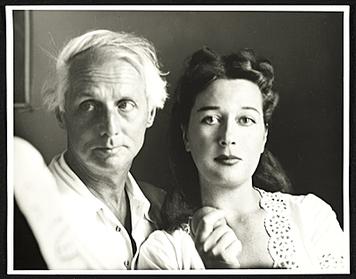
Dorothea Tanning
It opens rooms where childhood, desire and textile bodies disturb the limits of reality.
Read Dorothea Tanning's biography #12
#12
Man Ray
Painter, photographer and inventor of images, he takes everyday objects from the studio to waking dreams.
Read Man Ray's biography #13
#13
Francis Picabia
A chameleon of the avant-garde, he blurs machine, irony, transparency and desire with an almost insolent freedom.
See the Francis Picabia collection #14
#14
Jean Arp
Its organic forms seem to grow on their own, between chance, abstract humor and biomorphic poetry.
Read the biography of Jean Arp #15
#15
Victor Brauner
He mixes myths, occult signs and visionary self-portraits in a painting of omens and doubles.
Read the biography of Victor Brauner #16
#16
Wifredo Lam
It connects the European avant-garde to Afro-Cuban mythologies, with hybrid figures of ritual force.
Read Wifredo Lam's biography #17
#17
Roberto Matta
Its psychological spaces explode into networks, machines and mental galaxies which announce post-war abstraction.
Read the biography of Roberto Matta #18
#18
Kay Sage
It creates deserted, veiled, almost military architecture, where solitude becomes a constructed landscape.
Read Kay Sage's biography #19
#19
Ôscar Dominguez
He brings to the group decals, volcanic visions of the Canaries and a very physical taste for chance.
Read the biography of Ôscar Dominguez #20
#20
Eileen Agar
She mixes collage, painting and found objects with a marine, funny, sensual and experimental grace.
Read the biography of Eileen Agar #21
#21
Toyen
A major figure in Prague, Toyen paints desire, night and war with a precision that is both tender and cutting.
Read Toyen's biography #22
#22
Meret Oppenheim
She changes a cup into a tactile trap and makes the surreal object an elegant weapon against habits.
Read the biography of Meret Oppenheim #23
#23
Hans Bellmer
Her disjointed dolls move the body towards the disturbing, between sculpture, drawing and critical fantasy.
Read the biography of Hans Bellmer #24
#24
Alberto Giacometti
Before its filiform silhouettes, its surreal objects give desire a hard, fragile and threatening presence.
Read the biography of Alberto Giacometti #25
#25
Frida Kahlo
She refuses etiquette, but her wounded self-portraits join the dream with the intensity of the symbol experienced.
See the Frida Kahlo collectionNetworks, exiles and unique paths
Ranks 26 to 50 - Historical constellations
Women artists, smugglers, magazines and local groups show that surrealism was an international circulation much more than a homogeneous school.
 #26
#26
Kurt Seligmann
It brings armor, rituals and esoteric figures to the movement, like a heraldic theater of the subconscious.
Read the biography of Kurt Seligmann #27
#27
Wolfgang Paalen
He invents smoking, animates surfaces with the trace of fire and connects surrealism, Mexico and abstraction.
Read Wolfgang Paalen's biography #28
#28
Jacqueline Lamba
Painter and swimmer of light, she constructs interior landscapes where color maintains an aquatic vibration.
Read the biography of Jacqueline Lamba #29
#29
Alice Rahon
A poet turned painter, she transforms signs, sand, myths and Mexican memory into mysterious surfaces.
Read Alice Rahon's biography #30
#30
Ithell Colquhoun
It unites automatism, occultism and interior landscape in an intensely symbolic painting.
Read the biography of Ithell Colquhoun #31
#31
Valentine Hugo
His drawings and portraits give the surrealist circle a nocturnal, precise and almost mediumistic elegance.
Read the biography of Valentine Hugo #32
#32
Leonor Finished
She reigns over sphinxes, masks and androgynous figures, outside the male hierarchies of the group.
Read Leonor Fini's biography #33
#33
Pablo Picasso
His detour through distorted figures, Minotaurs and metamorphosed bodies connects great modern painting to the concerns of surrealism.
Read the biography of Pablo Picasso #34
#34
Marcel Duchamp
Its objects, its optical machines and its conceptual humor move the image towards the mental trap, at the heart of the surrealist spirit.
Read the biography of Marcel Duchamp #35
#35
Pierre Roy
He places sharp objects in absurd compositions, with a coldness that makes everyday life suspect.
See the Pierre Roy collection #36
#36
Jacques Hérold
Its burst bodies and crystallizations give the dream a sharp and luminous anatomy.
Read the biography of Jacques Hérold #37
#37
Max Morise
He accompanies the group's beginnings with sober, mental images, often more secret than spectacular.
Read the biography of Max Morise #38
#38
Felix Labisse
His blue, theatrical and disturbing figures extend surrealism towards an almost cinematic scene.
Read the biography of Félix Labisse #39
#39
Simon Hantaï
Before abstract folding, he crossed surrealism with organic, violent and very material forms.
Read the biography of Simon Hantaï #40
#40
Arshile Gorky
He transformed automatism into lyrical painting, a major gateway to abstract expressionism.
See the Arshile Gorky collection #41
#41
Paul Klee
Its fragile signs, creatures and architecture have nourished the surrealist imagination even without strict belonging to the group.
See the Paul Klee collection #42
#42
Dora Maar
Photographer and painter, she brings to surrealism a tension between fragmented face, social document and photomontage.
Read Dora Maar's biography #43
#43
Mimi Parent
She works on reliefs, boxes and object images with erotic intensity and staging precision.
Read Mimi Parent's biography #44
#44
Claude Cahun
His self-portraits and productions make identity an unstable, hidden and deeply surreal territory.
See the Claude Cahun collection #45
#45
Rachel Baes
His solitary figures and sharp scenes maintain a silent strangeness, between childhood and threat.
Read Rachel Baes' biography #46
#46
Jindrich Štyrskʼ
It connects Prague, poetry and erotic image with an experimental audacity close to mental collage.
See the Jindrich Štyrskʼ collection #47
#47
Lee Miller
His photographic work links surrealist experimentation, cutting gaze and historical presence.
Read Lee Miller's biography #48
#48
Juan Batlle Planas
He transposes surrealism to Argentina through mental figures, signs and dream architecture.
Read the biography of Juan Batlle Planas #49
#49
Gordon Onslow Ford
He explores the inner worlds through floating forms, between automatism, cosmology and visual meditation.
Read the biography of Gordon Onslow Ford #50
#50
Roland Penrose
Painter, collector and smuggler, he spread surrealism in Great Britain with collages and enigmatic images.
Read the biography of Roland PenrosePrecursors and global geographies
Ranks 51 to 75 - Before the manifesto, beyond Paris
From Goya's visions to the avant-gardes of Japan, Prague, Haiti, Mexico and Brazil, this part places the dream in a long and polycentric history.
 #51
#51
Odilon Redon
Its blacks, unreal flowers and floating creatures make symbolism an essential laboratory for the surreal mental image.
See the Odilon Redon collection #52
#52
Gustave Moreau
Its heroines, gems and saturated myths offer the surrealists a model of scholarly painting delivered to the powers of desire.
See the Gustave Moreau collection #53
#53
Arnold Boecklin
The Island of the Dead and its haunted landscapes create a silent worry that Dalí, Ernst and De Chirico will look at attentively.
See the Arnold Böcklin collection #54
#54
Giuseppe Arcimboldo
Its faces composed of fruits, books or fish announce the metamorphic object and the visual logic of surrealist collage.
See the Giuseppe Arcimboldo collection #55
#55
William blake
Visionary poet-painter, he gives a precise form to interior appearances and makes imagination a faculty of knowledge.
See the William Blake collection #56
#56
Francisco de Goya
The Caprices and the Black Paintings reveal the violence of dreams, superstitions and reason when it breeds its monsters.
See the Francisco de Goya collection #57
#57
Henri Rousseau
Its workshop-built jungles transform apparent innocence into hypnotic theater, admired by the Parisian avant-gardes.
See the Henri Rousseau collection #58
#58
Marc Chagall
Reversed lovers, musical animals and hanging villages give the memory a new heaviness, close to a dream without belonging to the group.
Read the biography of Marc Chagall #59
#59
Paul Nash
He converted megaliths, trees and war wrecks into psychic presences, giving the English landscape a singular surrealist intensity.
See the Paul Nash collection #60
#60
Koga Harue
His painted montages assemble machines, bodies and scientific imagery to translate the disturbing accelerations of modern Japan.
See the Koga Harue collection #61
#61
Maria Izquierdo
Domestic altars, horses and circuses become fragments of an intimate Mexican memory, independent of dominant muralist stories.
See the Maria Izquierdo collection #62
#62
Karel Teige
A theorist of poeticism, he composes photomontages where architecture, body and typography freely circulate modern desire.
See the Karel Teige collection #63
#63
František Janoušek
Its unstable organisms and hallucinatory anatomy give the Prague avant-garde an organic, anxious and premonitory dimension.
See the František Janoušek collection #64
#64
Alfonso Ponce de Leon
Its sharp and deserted scenes shift daily life towards a silent threat, on the border of metaphysics and dreams.
See the Alfonso Ponce de Leon collection #65
#65
Hector Hyppolite
Voodoo deities, birds and spiritual figures form a pictorial cosmology whose strength impressed André Breton during his stay in Haiti.
See the Hector Hyppolite collection #66
#66
René Portocarrero
Its cities, faces and baroque interiors condense Havana into colorful architecture where ornament becomes vision.
Read the biography of René Portocarrero #67
#67
Xul Solar
Invented languages, celestial maps and levitating cities make his watercolors an esoteric system as playful as it is rigorous.
Read Xul Solar's biography #68
#68
Maruja Mallo
It unites popular festivals, cosmic geometries and sporting figures in a Spanish painting which rejects folklore as much as gender assignment.
Read the biography of Maruja Mallo #69
#69
Tarsila do Amaral
Its monumental bodies and tropical landscapes nourish cultural cannibalism, reinventing the European avant-gardes from Brazil.
Read the biography of Tarsila do Amaral #70
#70
Antonio Berni
From surrealism to the stories of Juanito Laguna, he transforms collage and industrial waste into a biting social chronicle of Argentina.
Read the biography of Antonio Berni #71
#71
Rufino Tamayo
Its colorful material, its cosmic silhouettes and its howling animals offer an autonomous Mexican path between myth, abstraction and modernity.
Read Rufino Tamayo's biography #72
#72
Gunther Gerzso
Cinema decorator then painter, he buried landscapes and pre-Columbian architecture in abstract shots with secret tensions.
Read Gunther Gerzso's biography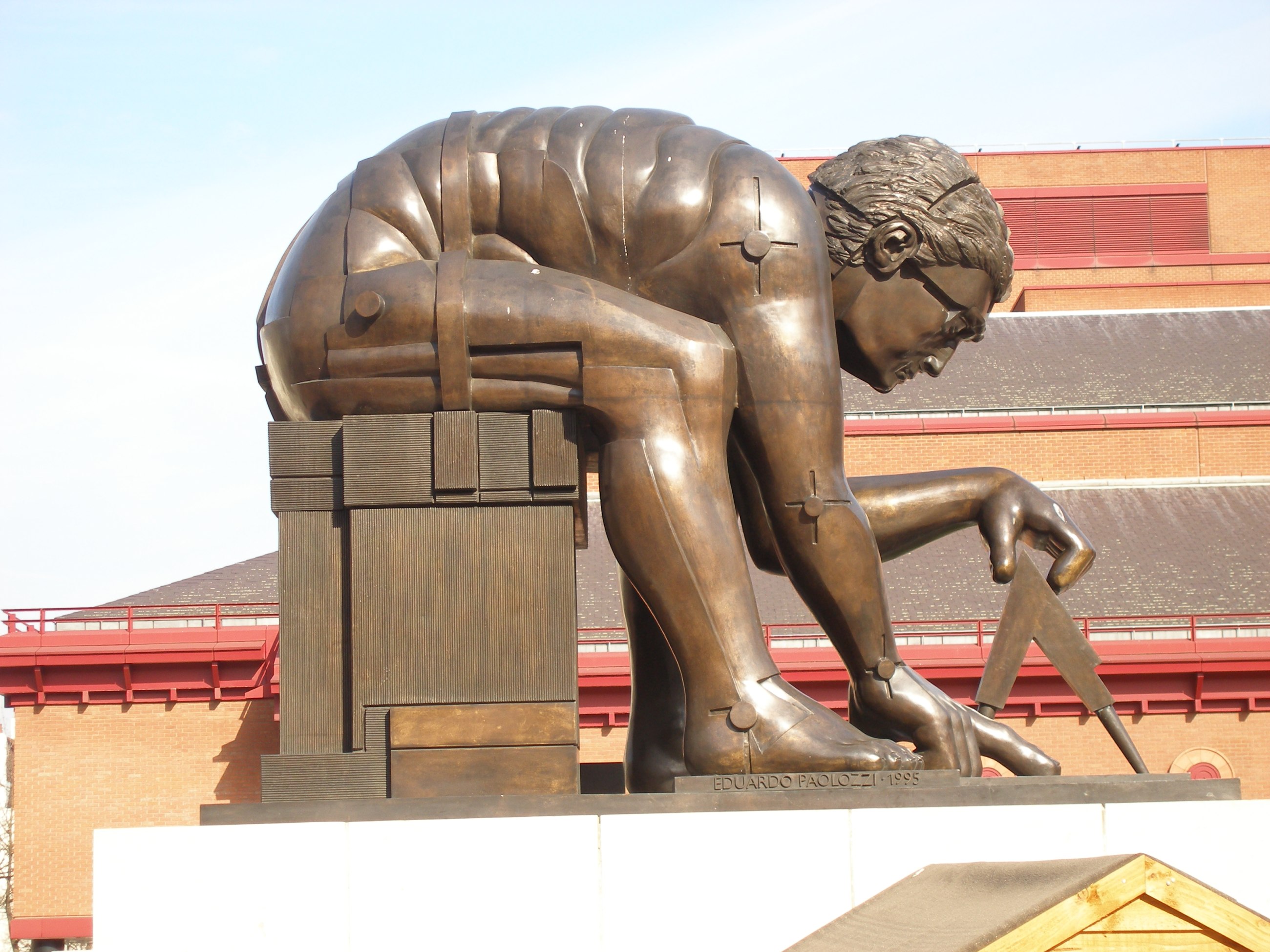 #73
#73
Eduardo Paolozzi
His magazine collages extend the surrealist method of chance encounters and prepare a pop visual culture made of machines and desire.
Read the biography of Eduardo Paolozzi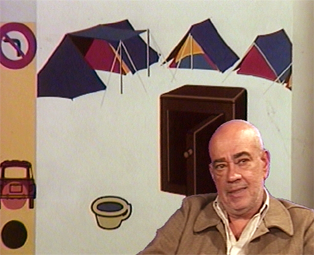 #74
#74
Hervé Télémaque
Floating objects, political signs and advertising images compose a critical narrative marked by Haiti, exile and surrealist heritage.
Read the biography of Hervé Télémaque #75
#75
Jean Dubuffet
By promoting graffiti, poor materials and creations outside institutions, it opens up an outside of culture that extends surrealist anti-academism.
Read the biography of Jean DubuffetMatter, fantasy and posterities
Ranks 76 to 100 - Inheritances after 1945
Informal art, fantastic realism, critical figuration and contemporary practices extend automatism, collage and strangeness without repeating historical recipes.
 #76
#76
Antoni Tàpies
Designer walls, crosses, prints and dust transform the surface into bodily memory, between automatism, spirituality and Catalan resistance.
Read the biography of Antoni Tàpies #77
#77
Alberto Burri
Sewn bags, burns and melted plastics give the material a wounded life that moves the unconscious from the pattern to the skin of the painting.
Read the biography of Alberto Burri #78
#78
Niki de Saint Phalle
From Tirs aux Nanas, she converts violence, storytelling and the female body into exuberant public forms, heirs of a surrealist freedom of association.
Read the biography of Niki de Saint Phalle #79
#79
Yayoi Kusama
Infinite peas, obsessive nets and immersive environments materialize his hallucinations with a repetitive method that has become a global language.
Read the biography of Yayoi Kusama #80
#80
Zdzisław Beksiransski
Organic ruins, fossilized bodies and funeral horizons compose a virtuoso fantastic realism, without imposed narrative but charged with anguish.
Read the biography of Zdzisław Beksiÿski #81
#81
Marcel Mariën
Photomontages, objects and aphorisms turn ordinary signs with a dry humor that keeps alive the critical spirit of Belgian surrealism.
Read the biography of Marcel Mariën #82
#82
Mario Cesariny
Poet and painter, he makes collage, stain and humor a lasting insubordination against the cultural order of the Portuguese dictatorship.
Read the biography of Mario Cesariny #83
#83
Graham Sutherland
Thorns, roots and mineral forms transform the British landscape into a tense, familiar and yet difficult to name organism.
Read Graham Sutherland's biography #84
#84
Edward Burra
Bars, streets, skeletons and grotesque crowds give his watercolors a social theatricality where observation shifts without warning into nightmare.
Read the biography of Edward Burra #85
#85
Enrico Baj
His generals in trimmings and his grotesque assemblages combine political satire, found materials and irreverence inherited from Dada and surrealism.
Read the biography of Enrico Baj #86
#86
Judit Reigl
Part of surrealism, it then releases the gesture, the flow and the body in vast paintings where automatism becomes physical energy.
Read Judit Reigl's biography #87
#87
Francis Bacon
Its cages, distorted faces and moving flesh move the disturbing surreal strangeness towards an existential painting of immediate intensity.
Read the biography of Francis Bacon #88
#88
Konrad Klapheck
Typewriters, irons and taps become monumental portraits, cold and sensual, in the object lineage of Magritte.
Read Konrad Klapheck's biography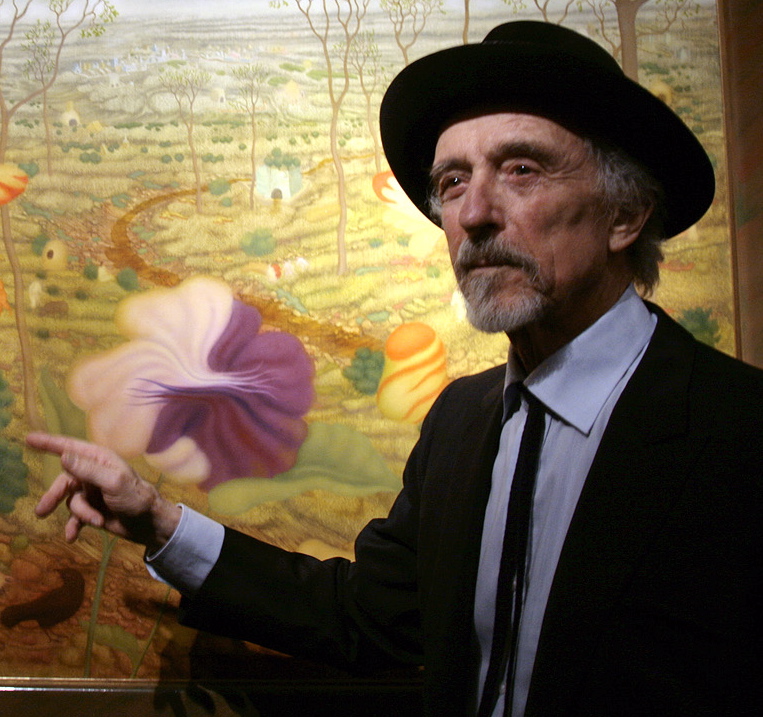 #89
#89
Arik Brauer
Co-founder of the Viennese School of Fantastic Realism, he populates meticulous surfaces with fabulous figures and ecological allegories.
Read Arik Brauer's biography #90
#90
Ernst Fuchs
His ancient glacis technique serves biblical, erotic and mythological visions that renew the fantastic imagination after 1945.
Read the biography of Ernst Fuchs #91
#91
Philip Guston
From abstract gestures to hoods and clumsy objects, he reintroduces the political nightmare into a deliberately unstable and personal painting.
Read Philip Guston's biography #92
#92
Gertrude Abercrombie
She paints herself as a lonely witch among owls, gates and nocturnal landscapes, with a formal economy that intensifies each symbol.
Read the biography of Gertrude Abercrombie #93
#93
Arnulf Rainer
His coverings, scratches and interventions on photography transform the self-portrait into an instinctual field, between erasure and revelation.
Read Arnulf Rainer's biography #94
#94
Mati Klarwein
Its lush worlds merge religious iconographies, psychedelia and Flemish precision in images that have become emblematic of the counterculture.
Read Mati Klarwein's biography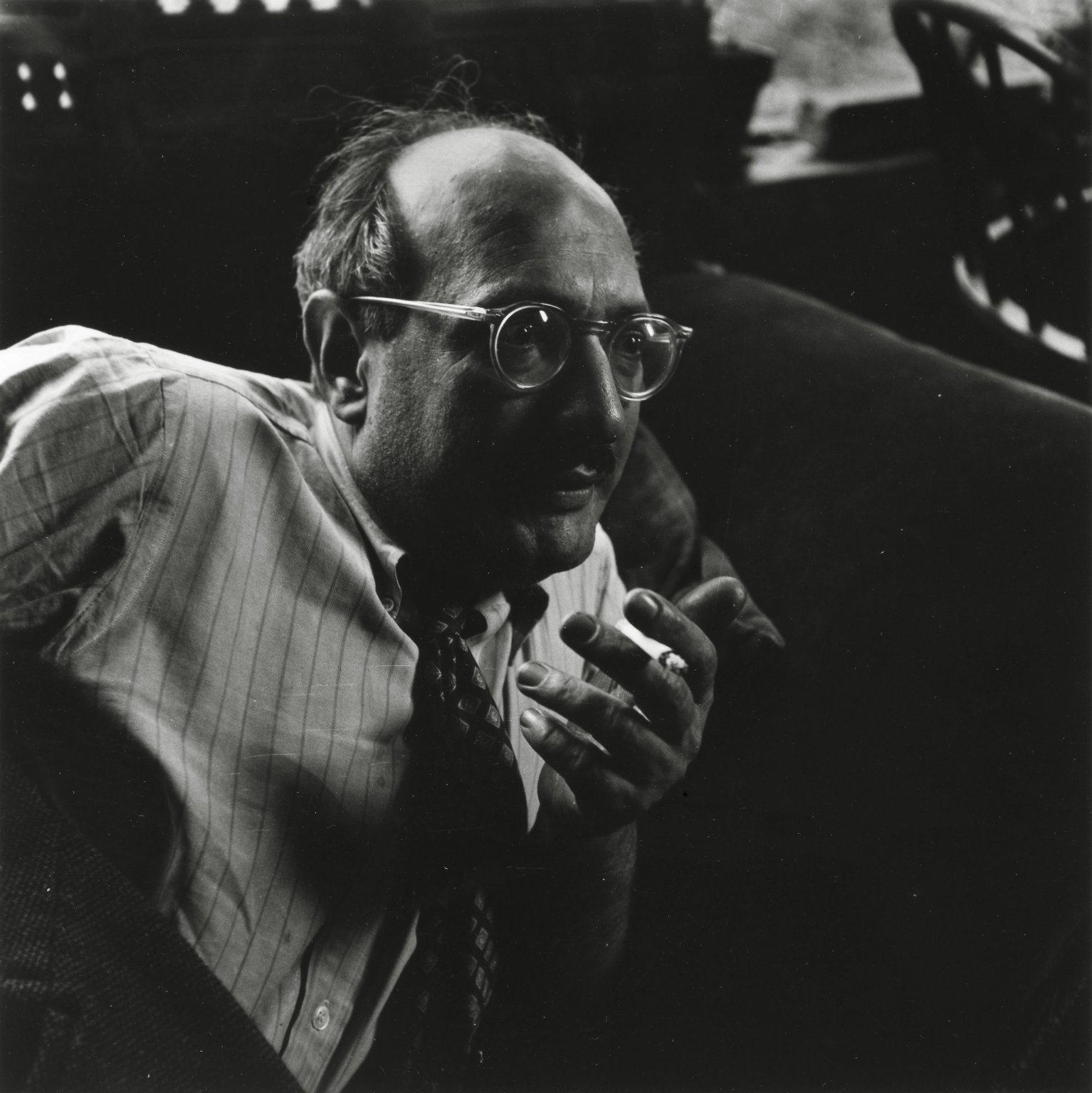 #95
#95
Mark Rothko
Before his colorful fields, his biomorphic figures draw on myth and automatism; their psychic silence remains at the heart of his work.
Read Mark Rothko's biography #96
#96
Inji Efflatoun
Trained in the Art and Freedom circle, she connects surrealist imagination, prison experience and feminist struggle in committed Egyptian painting.
Read the biography of Inji Efflatoun #97
#97
Friedensreich Hundertwasser
Spirals, organic houses and saturated colors make his work an ecological manifesto where pictorial imagination and architecture refuse the straight line.
Read the biography of Friedensreich Hundertwasser #98
#98
Neo Rauch
Workers, machines and out-of-phase architectures come together in narrative scenes whose suspended logic renews the surreal strangeness.
Read Neo Rauch's biography #99
#99
Julius Perahim
His creatures, political landscapes and fantastic metamorphoses extend the Romanian avant-garde into a fruitful French exile.
Read the biography of Jules Perahim #100
#100
Vladimir Kush
Butterflies-veils, fruit-landscapes and hybrid objects take up the meticulous illusion to construct metaphors immediately readable by the general public.
Read Vladimir Kush's biographySources and extensions
Return to works, archives and public collections
Biographical and historical landmarks have been cross-checked with the collections and resources of major institutions.
Explore Alpha Reproduction
Surrealism remains a method of freedom
His legacy is not a few soft watches or impossible landscapes, but a way of moving the obvious. Magritte disturbs language, Masson abandons the line to gesture, Carrington and Varo rewrite myths, Lam and Efflatoun connect the unconscious to colonial history. The movement remains alive every time an image shakes our habits of seeing.
To continue the discovery, choose an entry: the enigmatic precision of Tanguy, the irony of Picabia, the symbolic intimacy of Kahlo or the visions of Redon. The linked historical collections allow you to directly explore artists whose works belong to the public domain.
0 comments