

Classicism, neoclassicism and great style
Top 50 famous classicist painters: order, measure and great style
A guide to understanding Poussin, Claude Lorrain, Le Brun, David, Ingres, Bouguereau, Gérôme and the great defenders of the line.
Classicism is not just a wise style. It is an ambitious way of organizing the world: giving the story a clear structure, the body a nobility, the light a function, the drawing an authority. From Rome to Paris, from Bologna to Victorian London, these artists seek the balance between ideal beauty, discipline of the eye and the power of great painting.

Before the grid
Why classicism remains essential
In the history of painting, classicism designates less a closed date than a requirement: composing with order, measuring expression, choosing noble subjects, giving drawing a structuring force. At Poussin, this requirement becomes almost philosophical. At Claude Lorrain, it transforms the landscape into luminous architecture. At Claude Lorrain, it transforms the landscape into luminous architecture. At Claude Lorrain, it transforms the landscape into luminous architecture. At Claude Lorrain, it transforms the landscape into luminous architecture. At Le Brun, David or Ingres, it serves the monarchy, the Republic, Empire or academic ideal.
This Top 50 therefore follows several families: Bolognese and Roman classicism of the 17th century, the French Grand Siècle, European neoclassicism, then the academic heirs of the 19th century. There are austere, decorative, political, religious, sensual or archaeological painters, but all share confidence in the composition, the line and the great tradition.
Top 1 to 10
The pillars of European classicism
The ranking begins with the artists who best define the classical order: Poussin, Claude Lorrain, the Carracci, Le Brun, David, Ingres and the great theorists of the return to Antiquity.
#1
Nicolas Poussin
Poussin gives classicism its most demanding ideal: ancient narrative, clear architecture, measured gestures and composition governed by reason.
See the Nicolas Poussin collection #2
#2
Claude Lorrain
Claude invents a landscape of light, ancient ports and ordered horizons, where nature becomes noble and meditative theater.
See the Claude Lorrain collection #3
#3
Annibale Carracci
Carracci reconciles study of reality, ancient grandeur and narrative clarity, opening the way to the great classical setting of the 17th century.
See the Annibale Carracci collection #4
#4
Guido Reni
Reni imposes a clear grace: idealized figures, religious gentleness, elegant lines and contained feeling.
See the Guido Reni collection #5
#5
Domenichino
Domenichino takes the classic ideal towards a calm, precise, almost musical narration, where each figure has its function.
See the Domenichino collection #6
#6
Charles Le Brun
Le Brun establishes the official language of the Grand Siècle: allegory, authority, discipline of drawing and decorative majesty.
See the Charles Le Brun collection #7
#7
Jacques-Louis David
David transforms Antiquity into political morality: firm contours, heroic scenes, republican virtues and austere dramatization.
See the Jacques-Louis David collection #8
#8
Jean-Auguste-Dominique Ingres
Ingres defends line, drawing and the ideal against romantic turbulence, with cold sensuality and sovereign precision.
See the Jean-Auguste-Dominique Ingres collection #9
#9
Anton raphael mengs
Mengs theorizes and paints the return to Raphael, to Antiquity and to the regulated beauty which will nourish all of neoclassical Europe.
See the Anton Raphael Mengs collection #10
#10
Andrea Sacchi
Sacchi favors sobriety, the hierarchy of figures and narrative balance, against the decorative excesses of the Baroque.
See the Andrea Sacchi collectionRanks 11 to 20
Grand Siècle, Atticism and French Academy
This part follows the construction of a French taste: sobriety, clear narration, official portrait, noble decor and balance between spirituality and prestige.
 #11
#11
Carlo Maratta
Maratta extends Raphael's tradition in an elegant, devout and perfectly constructed painting.
See the Carlo Maratta collection #12
#12
Eustache Le Sueur
Le Sueur embodies a sober and spiritual French path, based on the clarity of the story and the silent nobility of attitudes.
See the Eustache Le Sueur collection #13
#13
Philippe de Champaigne
Champaigne unites French rigor, truth of portraiture and Jansenist depth in a painting of luminous austerity.
See the Philippe de Champaigne collection #14
#14
Laurent de La Hyre
The Hyre seeks a clear elegance, restrained colors and ancient poetry that announce French classicism.
See the Laurent de La Hyre collection #15
#15
Simon Vouet
Vouet brings back from Rome a synthesis between baroque scale, clear drawing and noble decor which will form several French painters.
See the Simon Vouet collection #16
#16
Pierre Mignard
Mignard combines court portrait, decorative softness and classic ambition in a brilliant and very readable painting.
See the Pierre Mignard collection #17
#17
Sébastien Bourdon
Bourdon moves from landscape to history with great flexibility, always attentive to composition and restraint.
See the Sébastien Bourdon collection #18
#18
Jacques Stella
Stella represents Atticist elegance: small mythological scenes, clean drawing, balance and intellectual refinement.
See the Jacques Stella collection #19
#19
Noel Coypel
Coypel belongs to the great French academic system, where history, allegory and ordered composition dominate.
See the Noël Coypel collection #20
#20
Antoine Coypel
Antoine Coypel softens classicism towards a more expressive theater, but retains a taste for drawing and great history.
See the Antoine Coypel collectionRanks 21 to 30
Portrait, decor and European neoclassicism
From the royal portrait to the Grand Tour, classicism becomes a European language: Rome, Paris, London and Vienna respond to each other through Antiquity.
 #21
#21
Jean Jouvenet
Jouvenet gives the great French religious style a clear, ample, monumental and strongly structured energy.
See the Jean Jouvenet collection #22
#22
Hyacinthe Rigaud
Rigaud fixes the image of monarchical power: draperies, column, sovereign attitude and psychological precision beneath the pageantry.
See the Hyacinthe Rigaud collection #23
#23
François Lemoyne
Lemoyne makes the transition between decorative classicism and rockery grace, with a spectacular science of composition.
See the François Lemoyne collection #24
#24
Joseph-Marie Vien
Vien prepares David with a disciplined return to Antiquity, to simple lines and morally readable subjects.
See the Joseph-Marie Vien collection #25
#25
Pompeo Batoni
Batoni combines aristocratic portraiture, ancient culture and Roman elegance, becoming a model for Grand Tour travelers.
See the Pompeo Batoni collection #26
#26
Angelica Kauffman
Kauffman imposes a major female voice of neoclassicism, mixing ancient heroines, moral gentleness and refined composition.
See the Angelica Kauffman collection #27
#27
Gavin Hamilton
Hamilton distributed in Rome a painting of ancient, scholarly, archaeological history that was decisive for British taste.
See the Gavin Hamilton collection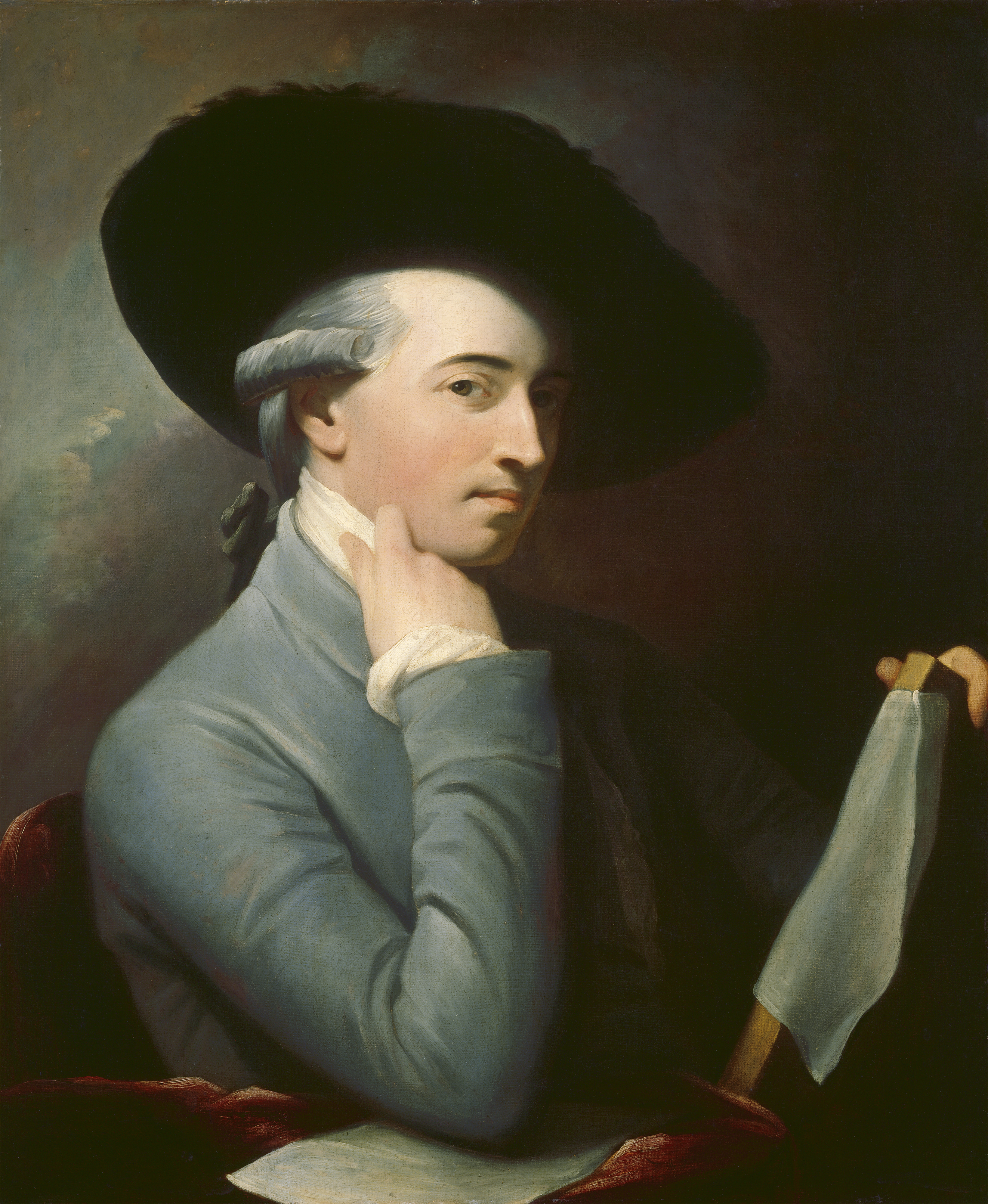 #28
#28
Benjamin West
West modernizes great history painting by linking classical nobility, contemporary narrative and institutional ambition.
See the Benjamin West collection #29
#29
François-André Vincent
David's rival, Vincent defends a clear, moral and skillfully composed history painting.
See the François-André Vincent collection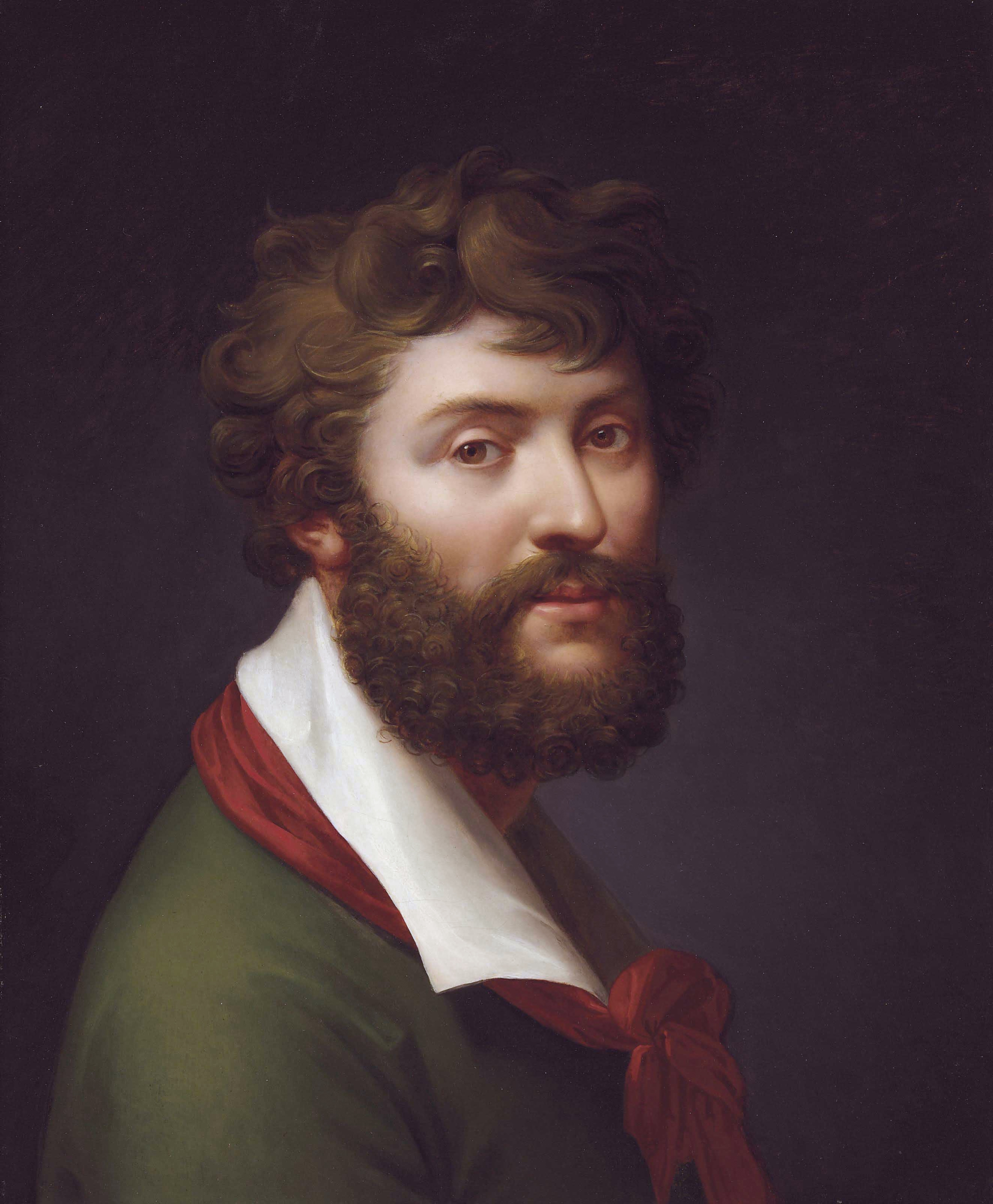 #30
#30
Jean-Baptiste Regnault
Regnault represents an elegant, balanced neoclassicism, focused on great ancient and allegorical subjects.
See the Jean-Baptiste Regnault collectionRanks 31 to 40
David's workshops, Empire and Ingresque line
Neoclassicism crosses the Revolution, the Empire and romanticism: it keeps the drawing, but absorbs more drama and poetry.
 #31
#31
Pierre Peyron
Peyron announces Davidian severity through a stripped-down, ancient painting attentive to moral gravity.
See the Pierre Peyron collection #32
#32
Pierre-Narcisse Guérin
Guérin forms an entire generation while maintaining the solemnity of the drawing, the heroic subject and the pathetic content.
See the Pierre-Narcisse Guérin collection #33
#33
Anne-Louis Girodet
Girodet starts from David but adds dream, strangeness and literary sensuality to the neoclassical order.
See the Anne-Louis Girodet collection #34
#34
François Gérard
Gérard embodies the official elegance of the Empire: worldly portraits, heroic subjects and academic drawing.
See the François Gérard collection #35
#35
Antoine-Jean Gros
Gros retains the neoclassical framework while introducing movement, color and Napoleonic intensity.
See the Antoine-Jean Gros collection #36
#36
Jean Broc
Broc belongs to the Davidian circle and develops a clear, ideal painting, often bathed in melancholic poetry.
See the Jean Broc collection #37
#37
Merry-Joseph Blondel
Blondel represents academic continuity: setting, history, mythology and impeccable order of drawing.
See the Merry-Joseph Blondel collection #38
#38
Paul Delaroche
Delaroche adapts classical heritage to romantic and historical taste, with a powerful sense of the dramatic scene.
See the Paul Delaroche collection #39
#39
Hippolyte Flandrin
Flandrin extends Ingres into a calm, linear, religious and perfectly ordered mural.
See the Hippolyte Flandrin collection #40
#40
Théodore Chassériau
Chassériau unites the Ingresque line with romantic color, creating a more sensual and restless classicism.
See the Théodore Chassériau collectionRanks 41 to 50
Academicism, Dream Antiquity and Late Classicism
The 19th century extended the great style into academicism: mythology, fresco, archeology, ideal beauty and technical virtuosity.
 #41
#41
Alexandre Cabanel
Cabanel sums up the academic ideal of the Second Empire: polished beauty, seductive mythology and impeccable technique.
See the Alexandre Cabanel collection #42
#42
William-Adolphe Bouguereau
Bouguereau brings the classic figure to extreme virtuosity, between perfect drawing, smooth flesh and mythological or pastoral subjects.
See the William-Adolphe Bouguereau collection #43
#43
Jean-Leon Gérôme
Gérôme combines archaeological precision, clear narration and theatrical staging in the heritage of the great style.
See the Jean-Léon Gérôme collection #44
#44
Pierre Puvis de Chavannes
Puvis simplifies large painting into calm, pale, monumental, almost timeless frescoes.
See the Pierre Puvis de Chavannes collection #45
#45
Anselm Feuerbach
Feuerbach seeks a melancholic ancient nobility, far from the picturesque, with serious and sculptural figures.
See the Anselm Feuerbach collection #46
#46
Frederic Leighton
Leighton transforms classicism into a Victorian ideal: refined surfaces, antique subjects and masterful decorative composition.
See the Frederic Leighton collection #47
#47
Lawrence Alma-Tadema
Alma-Tadema makes Antiquity almost tactile, with marbles, fabrics, archaeological details and luxurious scenes of life.
See the Lawrence Alma-Tadema collection #48
#48
John william godward
Godward extends the Greco-Roman dream with immobile female figures, precise marbles and suspended beauty.
See the John William Godward Collection #49
#49
Henryk Siemiradzki
Siemiradzki paints antiquity with spectacular luxury, theatrical light and remarkable academic science.
See the Henryk Siemiradzki collection #50
#50
Jean-Joseph Benjamin-Constant
Benjamin-Constant applies great academic composition to historical and orientalist splendor, with a strong decorative ambition.
See the Jean-Joseph Benjamin-Constant collectionMethod
How the 50 artists were selected
The ranking favors historical importance, consistency with the idea of classicism, the quality of the works, academic influence and readability for a reader who discovers the subject. The first ranks go to the founders or the summits: Poussin, Claude Lorrain, Carracci, Reni, Domenichino, Le Brun, David, Ingres, Mengs and Sacchi.
The sequel broadens the perspective to the French painters of the Grand Siècle, to the theorists and practitioners of neoclassicism, to the students or heirs of David and Ingres, then to the academicians of the 19th century who extend the great style through mythology, history, 'Dreamed Antiquity or monumental fresco.
Choose a reproduction
Where to start?
For a very pure entry into classicism, start with Poussin, Claude Lorrain, Le Sueur, La Hyre or Philippe de Champaigne. For political and moral power, David, Gros, Gérard, Girodet and Guérin give a spectacular vision of French neoclassicism.
If you're looking for more decorative academic beauty, look at Ingres, Cabanel, Bouguereau, Gérôme, Leighton, Alma-Tadema or Godward. For a broader European touch, Mengs, Kauffman, Batoni, Feuerbach and Siemiradzki show how the classical ideal circulates between Rome, Paris, London, Munich and Warsaw.
Continue
Guides, rankings and references
Explore Alpha Reproduction
Museum landmarks
Quick markers
The art of holding form
Classicist painters remind us that an image can move without apparent disorder. For them, intensity often comes from restraint: a placed gesture, a sure line, an architecture of bodies and looks, a light that orders more than it overflows.
From Poussin to Ingres, from David to Bouguereau, this Top 50 shows a long tradition, sometimes contested, but decisive: that of a painting which seeks beauty in measure, ancient memory and great style.
0 comments