

Top 30 · Bauhaus
Painting, color and design
From Gropius, Klee and Kandinsky to Moholy-Nagy, Anni Albers, Breuer and Mies van der Rohe.
Founded by Walter Gropius in Weimar in 1919, Bauhaus is a school before being a style. For only fourteen years, in Weimar, Dessau then Berlin, he brought together painters, architects, sculptors, photographers, typographers, weavers, scenographers and designers around the same project: rethinking artistic training and the modern living environment. The history of the Bauhaus combines the heritage of crafts, study of color and shape, research on materials, openness to industry and social debates in the Weimar Republic. This ranking measures educational importance, quality of works, technical invention, responsibility in workshops, institutional role and international influence after the school closed in 1933.
Shape, color, material, space, object and pedagogy.
A school rather than a unique aesthetic
Three cities, three directions, several Bauhaus
The Bauhaus opened in Weimar under the direction of Gropius with the ambition of bringing together the arts in a common construction. The first years gave a large place to personal expression, profession and spirituality, notably with Johannes Itten. From 1923, the formula "art and technique, a new unity" affirmed a rapprochement with modern production. In Dessau, the a building designed by Gropius, the masters' houses and better-equipped workshops give the school its most famous form. Hannes Meyer then emphasizes social and functional analysis; Mies van der Rohe refocuses teaching on architecture before the Berlin closure imposed by the Nazi context.
Learn to see before specializing
The preliminary course, shape and color
The Vorkurs, or preliminary course, constitutes one of the school's major innovations. Itten works on contrasts, rhythm and material properties; Moholy-Nagy introduces a culture of light, metal and photography; Josef Albers pushes students to discover what paper, glass or sheet metal can do with a minimum of means. Klee and Kandinsky at the same time, they construct very structured teachings on line, plan, movement and color. These approaches diverge, but they share the same requirement: understanding visual and material relationships before producing a definitive form.
Workshops, women artists and international distribution
From weaving to photography, collective modernity
The workshops make the project concrete: textile, metal, carpentry, typography, theater, mural painting, ceramics and architecture. Women play a decisive role despite the restrictions that often direct them towards weaving. Gunta Stölzl runs the textile workshop; Anni Albers, Otti Berger, Benita Koch-Otte and Gertrud Arndt transform grid, material and color; Marianne Brandt imposes itself in metal; Lucia Moholy constructs the visual memory of the school through her photographs. After 1933, exile dispersed students and teachers to Switzerland, France, Great Britain, Palestine and especially the United States. Chicago, Yale, Harvard, Black Mountain College and the Ulm school then became major relays.
The Top 10
The ten figures that give the Bauhaus its global reach
From Gropius, Klee and Kandinsky to Moholy-Nagy, Schlemmer, Feininger, Breuer and Mies, this first ensemble brings together direction, pedagogy, painting, stage, photography, furniture and architecture.
#1
Walter Gropius
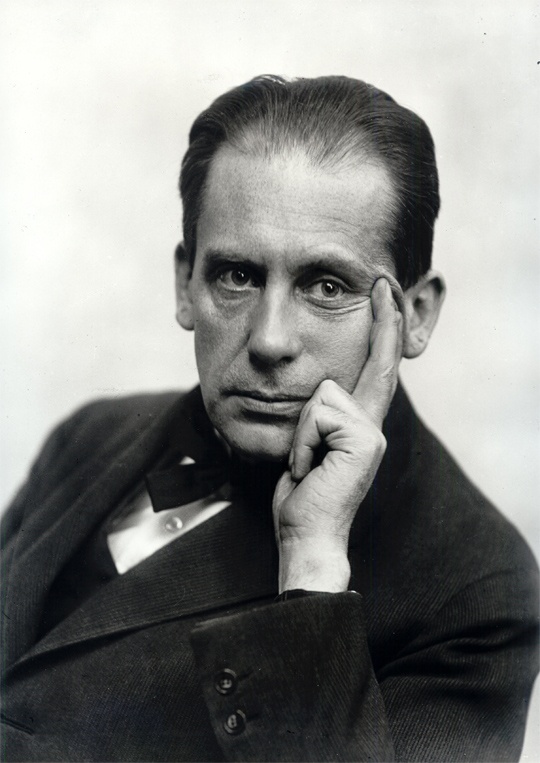
Founder of the Bauhaus in 1919, Walter Gropius designed less a style than a working method. He brought together artists and craftsmen around workshops, then brought the school closer to industry under the slogan "art and technique". The Dessau building makes this organization visible through its functional volumes, its circulation and its glass facade.
Read Walter Gropius' biography on Wikipedia #2
#2
Paul Klee
Paul Klee teaches at the Bauhaus as a researcher attentive to training processes. His courses analyze the point, line, plan, movement and metamorphoses of nature without imposing a formula. In his watercolors and paintings, color constructs poetic architectures where signs, landscapes and figures seem to be born.
See the Paul Klee collection #3
#3
Wassily Kandinsky
Wassily Kandinsky brings to the Bauhaus an ambitious theory of abstraction. His teaching connects elementary forms, directional tensions and color effects, while maintaining an inner and spiritual dimension. "Composition VIII" shows how circles, diagonals and signs can produce precise space without representing a visible scene.
See the Wassily Kandinsky collection #4
#4
Laszlo Moholy-Nagy
Laszló Moholy-Nagy renews the preliminary course with an approach based on materials and perception. It treats the photogram, the book, the metal, the film and the scenography as elements of the same visual culture. Its "Space-light Modulator" replaces the stable object with an event of reflections, shadows and movement.
See the Laszló Moholy-Nagy collection #5
#5
Josef Albers
First a student then a young master, Josef Albers made concrete experimentation the heart of the preliminary course. Paper, glass, wire or sheet metal must reveal their own possibilities before any search for style. Later, the "Homage to the Square" series demonstrates that the color constantly changes according to its neighbors and its extent.
Read Josef Albers' biography on Wikipedia #6
#6
Anni Albers
Anni Albers transforms the constraints of the weaving workshop into a field of invention. She studies the acoustic, luminous and tactile properties of fibers as much as their visual rhythms. Her fabrics and writings will make textiles an autonomous modern language, capable of dialoguing with architecture without being reduced to ornament.
Read Anni Albers' biography on Wikipedia #7
#7
Oskar Schlemmer
Oskar Schlemmer places the human figure at the center of a geometricized world. In the theater workshop, costumes, gestures and volumes transform dancers into mobile architectures. "Triadic Ballet" and "Escalier du Bauhaus" express a modernity where the body is neither suppressed nor naturalistic, but measured by space.
See the Oskar Schlemmer collection #8
#8
Lyonel Feininger
Lyonel Feininger created the engraving of the cathedral which opened the founding manifesto of the Bauhaus. Responsible for the printing workshop, he combines artisanal craftsmanship and modern vision. Its churches, towns and navies are crossed by transparent plans which transform architecture into a crystal of light.
See the Lyonel Feininger collection #9
#9
Marcel Breuer
Marcel Breuer goes from student status to that of young master of the carpentry workshop. Inspired by the metal frame of the bicycle, it radically lightens the armchair with the steel tube. The B3 armchair, known as "Wassily", and the Cesca chair become durable models with a clear industrial design but attentive to comfort.
Read Marcel Breuer's biography on Wikipedia #10
#10
Ludwig Mies van der Rohe
The last director of the Bauhaus, Mies van der Rohe refocused the school on architecture before its closure in 1933. His demand for a readable structure and carefully articulated materials appeared in the Barcelona pavilion. It will then give international modernism a sober monumentality, far from any applied decoration.
Read the biography of Ludwig Mies van der Rohe on WikipediaChapter I · Ranks 11 to 20
Color, workshops and visual communication
Itten, Stölzl, Brandt, Bayer, Marcks, Muche, Meyer, Moholy, Schmidt and Schreyer show how courses and workshops transform matter, body, page and habitat.
 #11
#11
Johannes Itten
Johannes Itten establishes the preliminary course which deeply marked the first years of Weimar. Body exercises, study of materials, color contrasts and analysis of teachers must unleash individual abilities. His expressive and spiritual approach, however, opposes the industrial orientation that Gropius gradually gives to the school.
Read Johannes Itten's biography on Wikipedia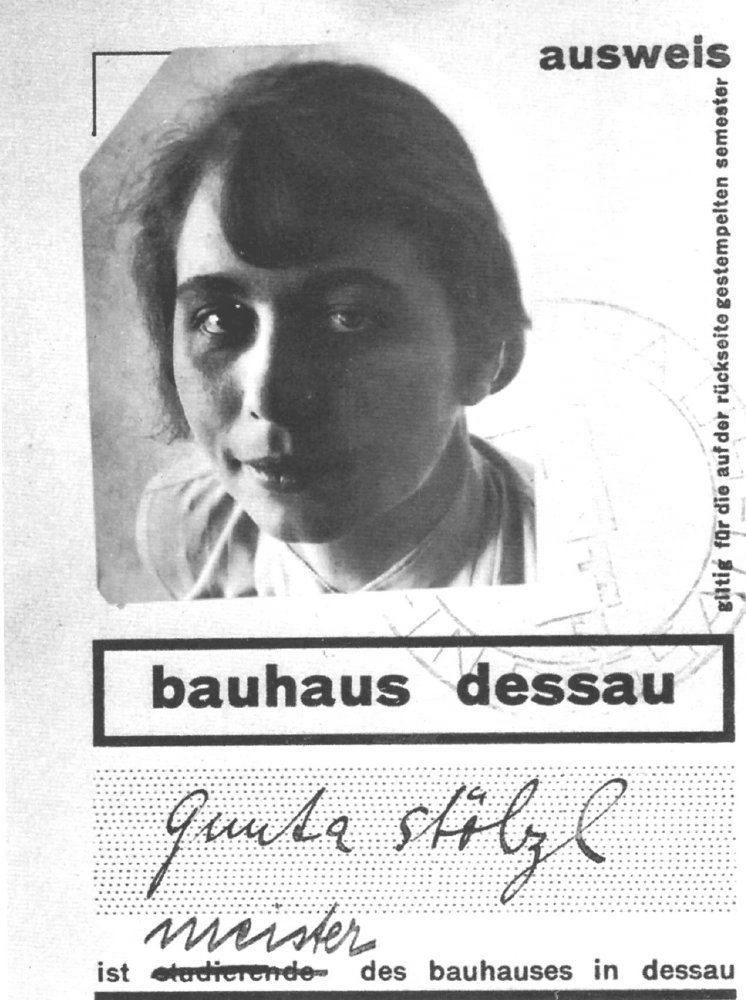 #12
#12
Gunta Stolzl
Gunta Stölzl becomes the only woman officially appointed master at the Bauhaus. She modernizes the weaving workshop, develops reproducible prototypes and links colorful composition, technique and function. Its fabrics show that the textile grid can produce an abstraction as complex as paint, while meeting usage.
Read the biography of Gunta Stölzl on Wikipedia #13
#13
Marianne Brandt
Marianne Brandt establishes herself in the metal workshop despite a largely masculine environment. Her teapots, ashtrays and lamps combine elementary shapes, precise use and industrial manufacturing. At the same time, her photomontages and self-portraits reveal a critical look at modern women, advertising and media culture.
Read Marianne Brandt's biography on Wikipedia #14
#14
Herbert Bayer
Herbert Bayer runs the printing and advertising workshop in Dessau. He eliminates capitals in his universal alphabet project and composes pages with characters, lines, colors and photography. His work helped capture the public image of the Bauhaus and then spread that graphic clarity in American exhibitions and advertising.
Read Herbert Bayer's biography on Wikipedia #15
#15
Gerhard Marcks
Gerhard Marcks is one of the first masters called by Gropius. In Dornburg, he developed with master potter Max Krehan a teaching closely linked to the lathe, the oven and the material. His attachment to the figure and the manual profession reminds us that the initial Bauhaus is not yet confused with the aesthetics of the machine.
Read Gerhard Marcks' biography on Wikipedia #16
#16
Georg Muche
Georg Muche led several workshops and designed the Am Horn house for the 1923 exhibition. This compact prototype organized the rooms around a central living room and hosted the school's collective creations. A painter by training, Muche combines abstract research, pedagogy and practical reflection on housing.
Read Georg Muche's biography on Wikipedia #17
#17
Hannes Meyer
Second director, Hannes Meyer asserts that building consists of organizing biological, social and economic functions. Under his leadership, the Bauhaus developed architecture, collective orders and more accessible products. Its political and social orientation strengthens the school, but also provokes the conflicts which lead to its dismissal.
See the Hannes Meyer collection #18
#18
Lucia Moholy
Lucia Moholy's photographs have shaped the global image of the Bauhaus. Architecture, objects and portraits are illuminated with a precision that makes volumes, surfaces and materials readable. Long broadcast without sufficient recognition, its negatives constitute an autonomous work and an irreplaceable documentary source.
Read Lucia Moholy's biography on Wikipedia #19
#19
Joost Schmidt
Joost Schmidt created the iconic poster for the 1923 Bauhaus exhibition, where mechanical face and typography fit together. In Dessau, he taught letters, advertising and exhibition design. His practice demonstrates that graphics are not just a printed surface, but a spatial organization of information.
See the Joost Schmidt collection #20
#20
Lothar Schreyer
First manager of the theater workshop, Lothar Schreyer developed expressionist shows close to ritual. Masks, sounds, colors and codified movements must go beyond individual psychology. His mystical orientation meets with little support and gives way to Schlemmer's more spatial and choreographic approach.
Read Lothar Schreyer's biography on WikipediaChapter II · Ranks 21 to 30
Creators, students and inheritances after closure
Textiles, toys, ceramics, photography, industrial design and concrete art extend the Bauhaus experience well beyond Weimar, Dessau and Berlin.
 #21
#21
Lilly Reich
Lilly Reich joined the Bauhaus under the direction of Mies van der Rohe and took charge of the weaving and finishing workshops. His long collaboration with Mies contributes to furniture and exhibition spaces long attributed to the architect alone. It organizes materials, curtains, glass and furniture as a complete interior architecture.
See the Lilly Reich collection #22
#22
Alma Siedhoff-Buscher
Alma Siedhoff-Buscher leaves weaving for the wood workshop and develops objects intended for children. Its shipbuilding game offers simple shapes that the child can recombine without an imposed model. The bedroom at Am Horn combines convertible furniture, storage and freedom of movement with rare educational attention.
See the Alma Siedhoff-Buscher collection #23
#23
Otti Berger
Otti Berger considers textiles with her hands as much as with her eyes. She analyzes elasticity, noise, light, resistance and touch to create fabrics adapted to modern architecture. His patented research and independent activity were among the most innovative in the Bauhaus, before Nazi persecution shattered his career.
See the Otti Berger collection #24
#24
Benita Koch-Otte
Benita Koch-Otte combines solid educational training with research into modern weaving. Her rug for the Am Horn children's bedroom balances geometric patterns, softness and use. After the Bauhaus, she pursued rigorous teaching which helped to spread her methods beyond school.
Read Benita Koch-Otte's biography on Wikipedia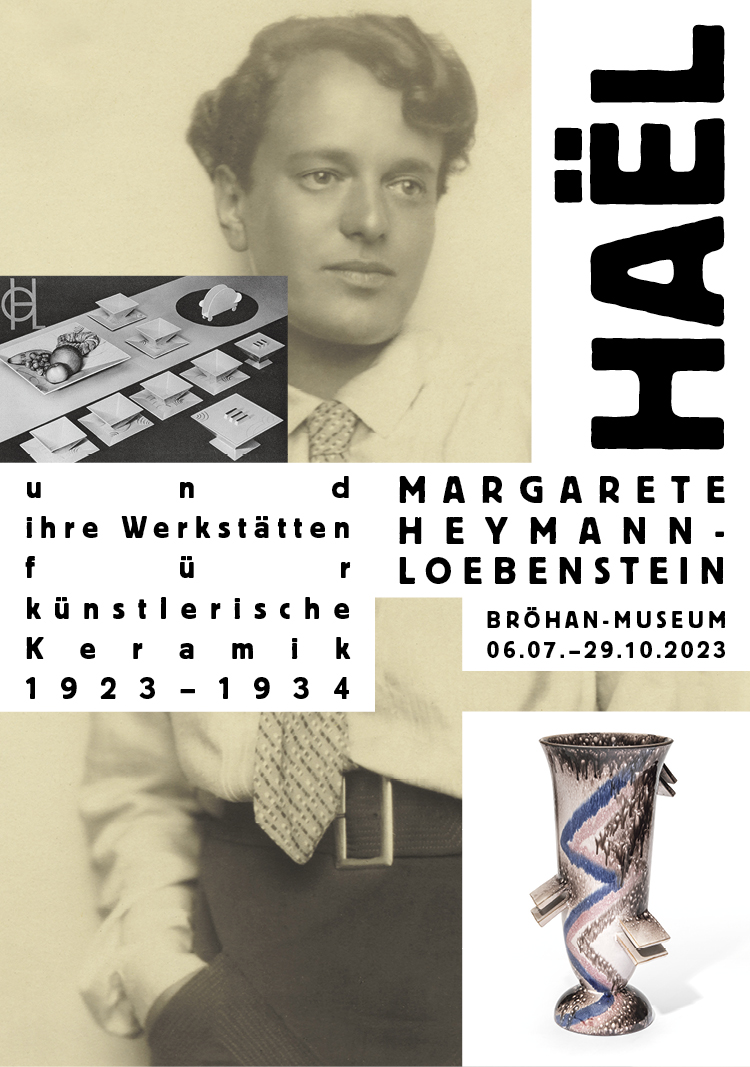 #25
#25
Margarete Heymann
Margarete Heymann studied briefly at the Bauhaus before founding the Haël workshops with Gustav Loebenstein. Its angular shapes, bold handles and abstract decorations give domestic ceramics an energy very different from austere functionalism. Its success shows how the experimental spirit of the school also circulates through its former students.
Read Margarete Heymann's biography on Wikipedia #26
#26
Wilhelm Wagenfeld
The lamp designed by Wilhelm Wagenfeld in the metal workshop has become a Bauhaus icon. Its clear geometry assembles glass and metal without masking the function of each part. Wagenfeld will pursue an industrial design attentive to use, price and manufacturing quality throughout its life.
Read Wilhelm Wagenfeld's biography on Wikipedia #27
#27
Max Bill
A student in Dessau with Albers, Klee and Kandinsky, Max Bill extended the Bauhaus into Swiss concrete art. He conceives painting, sculpture, posters, architecture and objects as coherent problems of proportion. Co-founder of the Ulm school, he transmitted a rational conception of design after the war without renouncing beauty.
Read Max Bill's biography on Wikipedia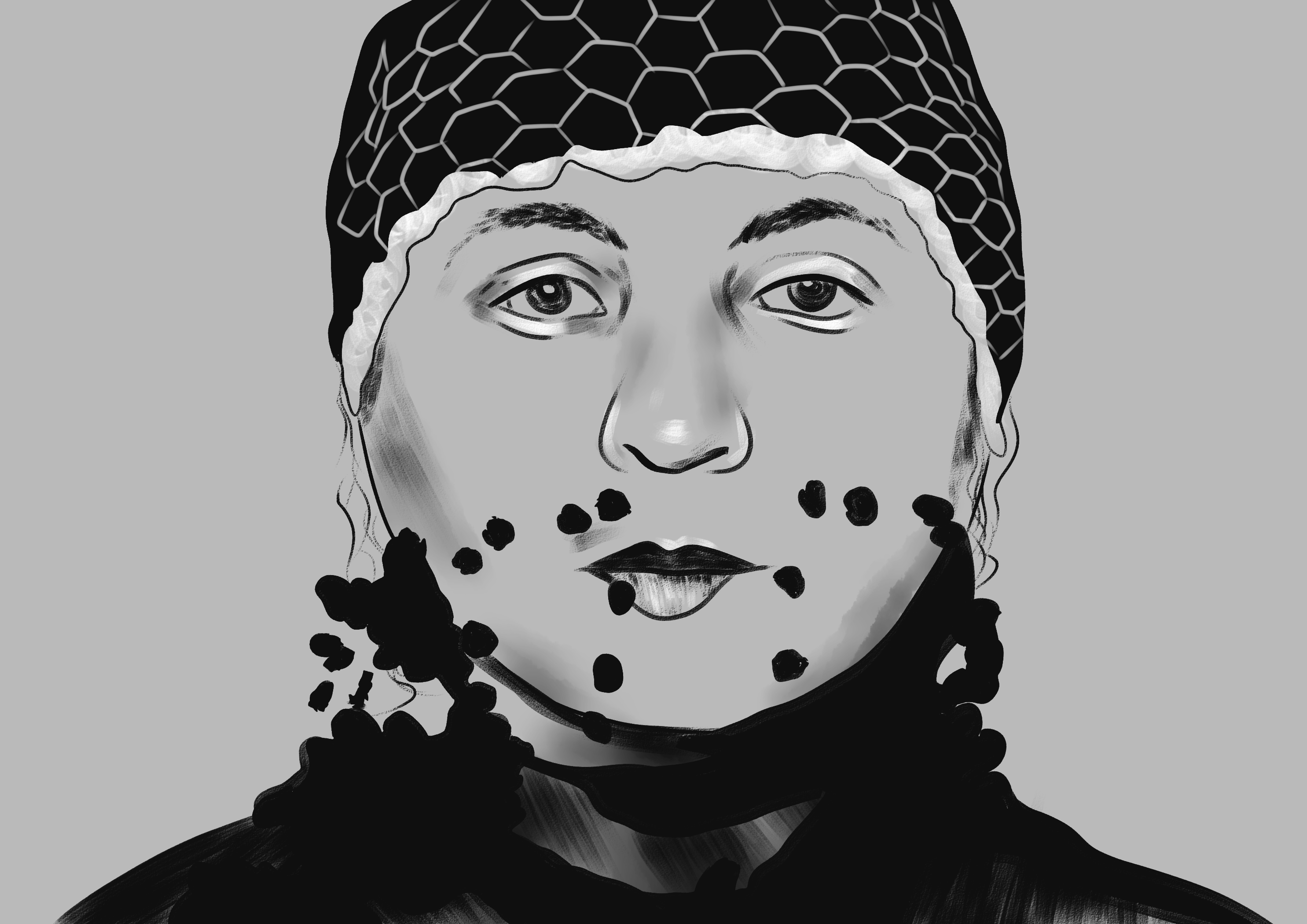 #28
#28
Gertrud Arndt
Trained in weaving due to a lack of an accessible architectural studio, Gertrud Arndt also produced a remarkable series of self-portraits. The "Maskenporträts" use veil, hat, hairstyle and expression to play with feminine identities. These images anticipate much later performative practices and correct an overly exclusively masculine vision of the Bauhaus.
Read Gertrud Arndt's biography on Wikipedia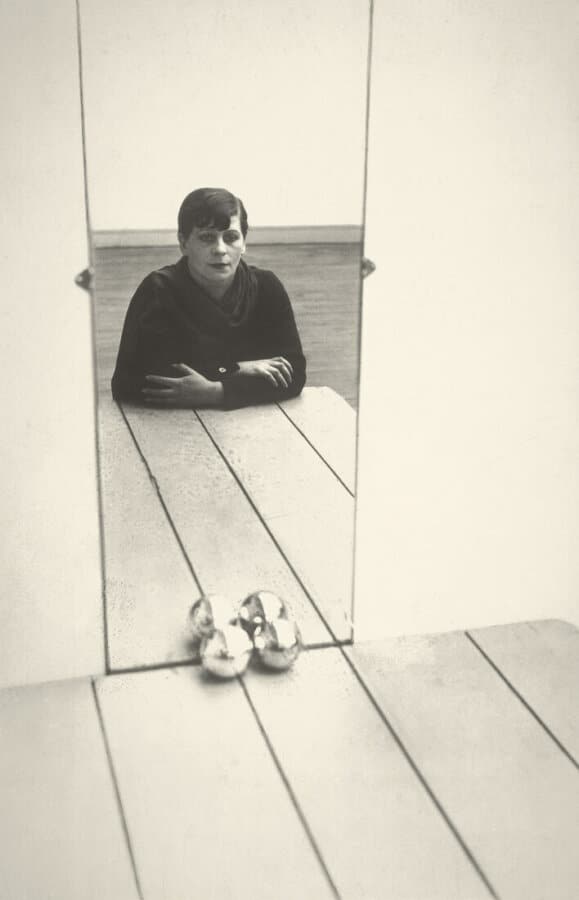 #29
#29
Florence Henry
After a stay at the Bauhaus in 1927, Florence Henri gradually abandoned painting for photography. Mirrors and frames multiply points of view, blur space and transform the portrait into construction. His Parisian studio then became an important place of training for new European photography.
Read the biography of Florence Henri on Wikipedia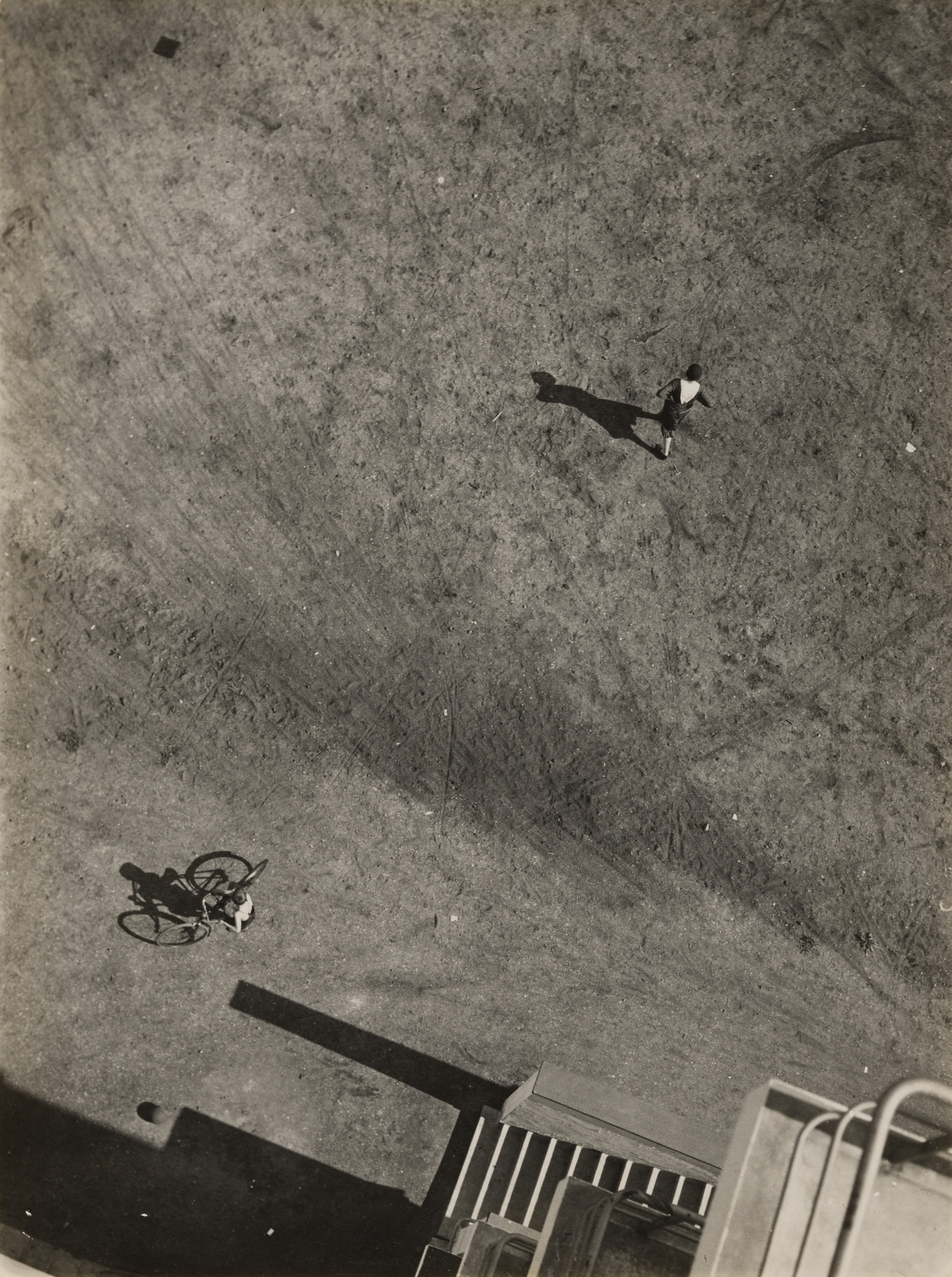 #30
#30
T. Lux Feininger
Son of Lyonel Feininger and student at the Bauhaus, T. Lux Feininger photographs the school from the inside. His images of balconies, orchestras, parties and sporting activities show a young, inventive and sometimes irreverent community. He then pursued a career as a painter, particularly around ships and maritime architecture.
Read the biography of T. Lux Feininger on WikipediaSources and routes
Extend the discovery of the Bauhaus
Explore Alpha Reproduction
Bauhaus remains a method for connecting art to life
The strength of the Bauhaus is not a single visual formula. Klee, Kandinsky and Schlemmer do not paint in the same way; Stölzl and Anni Albers approach color through textile structure; Brandt and Breuer think of the object from gesture and manufacturing; Gropius, Meyer and Mies defend different conceptions of architecture and society. However, the school remains coherent in its way of making perception, matter, function and space work together.
To go through this classification, observe the passages from one discipline to another: the grid becomes fabric, the line becomes letter, the circle becomes luminary, the costume transforms the body and photography constructs a new vision of architecture.
0 comments