

Latin American painting
Top 100 famous Latin American painters: from muralism to the avant-gardes
A living panorama of pictorial Latin America, from muralist Mexico to Brazilian modernisms, from Rio de la Plata to the Andes and the Caribbean.
Latin American painting is not a single school: it is a constellation of visual revolutions. It mixes public fresco, national identity, indigenous memory, Baroque Catholicism, European modernism, geometric abstraction, popular art, social criticism and radical experimentation. This Top 100 offers a clear entry into this richness, with an image and a useful link for every artist.

Before the grid
Understand Latin American painting in a few points of reference
The common thread of this classification is simple: look at how Latin American painters transformed their era into visual language. Diego Rivera, José Clemente Orozco and Siqueiros give painting a public and political dimension; Frida Kahlo makes self-portraiture a mental territory; Tarsila do Amaral, Wifredo Lam, Torres-García, Xul Solar, Matta or Clark open paths to the avant-garde, the sign, abstraction and the body.
The ranking crosses several countries rather than reducing the continent to a few famous names. It includes academic founders, modernists, muralists, social painters, abstracts, kinetics and artists who linked local traditions to international debates.
Top 1 to 20
Muralism, icons and founding modernisms
The ranking opens with the figures who brought Latin American painting into the global imagination: public frescoes, self-portraits, national modernisms and transatlantic avant-gardes.
 #1
#1
Diego Rivera
Rivera imposes Mexican muralism as public art: historical frescoes, workers, indigenous memory and revolutionary narrative.
Read Diego Rivera's biography on Wikipedia#2
Frida Kahlo
Kahlo transforms Mexican pain, identity, body and symbols into self-portraits of universal intensity.
See the Frida Kahlo collection #3
#3
Jose Clemente Orozco
Orozco gives muralism a tragic, humanist and critical force, far from any simply heroic imagery.
See the José Clemente Orozco collection #4
#4
David alfaro siqueiros
Siqueiros pushes the fresco towards technical experimentation, politics and dramatic monumentality.
Read the biography of David Alfaro Siqueiros on Wikipedia #5
#5
Rufino Tamayo
Tamayo unites international modernism, colorful material and Mexican heritage in a vibrant and dense painting.
Read Rufino Tamayo's biography on Wikipedia #6
#6
Tarsila do Amaral
Tarsila gives Brazilian modernism its cannibalistic icons, between tropical colors and radical simplification.
Read the biography of Tarsila do Amaral on Wikipedia #7
#7
Candido Portinari
Portinari paints workers, migrations, childhood and large frescoes with major social scope.
Read Candido Portinari's biography on Wikipedia #8
#8
Wifredo Lam
Lam merges surrealism, cubism, Afro-Cuban world and myths into a hybrid and powerful painting.
Read Wifredo Lam's biography on Wikipedia #9
#9
Joaquin Torres-Garcia
Torres-García founded a constructive, symbolic and Latin American universe, from plan to universal grid.
See the Joaquin Torres-Garcia collection #10
#10
Fernando Botero
Botero makes volume, irony, power and sensuality instantly recognizable in a monumental figuration.
Read Fernando Botero's biography on Wikipedia #11
#11
Roberto Matta
Matta opens psychic, cosmic and political spaces that shift surrealism to Latin America.
Read Roberto Matta's biography on Wikipedia #12
#12
Xul Solar
Xul Solar invents languages, signs, mystical architectures and colorful visions in a unique avant-garde.
Read Xul Solar's biography on Wikipedia #13
#13
Antonio Berni
Berni connects social criticism, collage, popular material and iconic characters like Juanito Laguna.
Read Antonio Berni's biography on Wikipedia #14
#14
Armando Reveron
Reveron explores Caribbean light to the point of dazzling, between landscape, figures and mythical workshop.
See the Armando Reveron collection #15
#15
Oswaldo Guayasamin
Guayasamin paints suffering, injustice, Andean peoples and human dignity with expressionist force.
Read the biography of Oswaldo Guayasamin on Wikipedia #16
#16
Jose Maria Velasco
Velasco monumentalizes the Valley of Mexico and gives the national landscape a scientific and poetic grandeur.
See the José Maria Velasco collection #17
#17
Pedro Figari
Figari paints candombes, rural scenes and rioplatenses memories with a warm and memorial freedom.
See the Pedro Figari collection #18
#18
Emilio Pettoruti
Pettoruti introduced cubism, music, harlequins and European modernity into Argentine art.
Read Emilio Pettoruti's biography on Wikipedia #19
#19
Anita Malfatti
Malfatti unleashes Brazilian modernism with expressive, colorful and courageous painting.
Read Anita Malfatti's biography on Wikipedia #20
#20
Emiliano Di Cavalcanti
Di Cavalcanti paints parties, women, music and Brazilian city with modernist sensuality.
Read the biography of Emiliano Di Cavalcanti on WikipediaRanks 21 to 40
Brazil, Mexico and abstraction
This part shows the extent of Brazilian and Mexican modernities: neoconcret, abstraction, late academicism, volcanic landscape and major female voices.
 #21
#21
Lygia Clark
Clark moves painting toward the object, body, participation, and sensory experience.
Read Lygia Clark's biography on Wikipedia #22
#22
Helio Oiticica
Oiticica extends color, space, samba and participation in a radically experimental work.
Read the biography of Hélio Oiticica on Wikipedia #23
#23
Mira Schendel
Schendel works on signs, papers, transparency and silence in a philosophical abstraction.
Read Mira Schendel's biography on Wikipedia #24
#24
Alfredo Volpi
Volpi transforms facades, flags and popular colors into constructed and luminous painting.
Read Alfredo Volpi's biography on Wikipedia #25
#25
Lasar Segall
Segall brings expressionism, migration, dark figures and Jewish memory to Brazilian modernism.
Read Lasar Segall's biography on Wikipedia #26
#26
Tomie Ohtake
Ohtake develops a fluid, colorful and meditative abstraction, between gesture and architecture.
Read Tomie Ohtake's biography on Wikipedia #27
#27
Mathias Goeritz
Goeritz connects emotional architecture, abstraction, sculpture and spirituality in modern Mexico.
Read the biography of Mathias Goeritz on Wikipedia #28
#28
Adriana Varejao
Varejao questions azulejos, coloniality, flesh, fissure and history in a material painting.
Read Adriana Varejao's biography on Wikipedia #29
#29
Rodolfo Amoedo
Amoedo occupies a major place in Brazilian painting, between academic training, portraiture and historical scenes.
See the Rodolfo Amoedo collection #30
#30
Fayga Ostrower
Ostrower develops a graphic, sensitive and intellectual abstraction, essential in 20th century Brazilian art.
Read Fayga Ostrower's biography on Wikipedia #31
#31
Vicente do Rego Monteiro
Rego Monteiro stylizes bodies, indigenous myths and Art Deco forms in a singular modernism.
Read the biography of Vicente do Rego Monteiro on Wikipedia #32
#32
Eliseu Visconti
Visconti brings impressionism, symbolism and modern decor into Brazilian painting.
See the Eliseu Visconti collection #33
#33
Victor Meirelles
Meirelles embodies the great Brazilian historical painting, between empire, battles and founding scenes.
See the Victor Meirelles collection #34
#34
Pedro Américo
Américo creates major historical images of Brazil, between academic virtuosity and national narrative.
See the Pedro Américo collection #35
#35
Almeida Junior
Almeida Junior gives a modern presence to the rural Paulista world, with simple gestures and popular figures.
See the Almeida Junior collection #36
#36
Georgina of Albuquerque
Georgina de Albuquerque occupies a pioneering place among Brazilian painters of the early 20th century.
Read Georgina de Albuquerque's biography on Wikipedia #37
#37
Maria Izquierdo
Izquierdo asserts a personal Mexican painting: circus, women, altars, still life and solitude.
See the Maria Izquierdo collection #38
#38
Abraham Angel
Abraham Angel embodies a brief, intense and intimate Mexican modernity, between self-portrait and poetic sensitivity.
See the Abraham Angel collection #39
#39
Angelina Beloff
Beloff crosses Paris and Mexico with a work of painting, engraving and artistic pedagogy.
Read Angelina Beloff's biography on Wikipedia #40
#40
Luis nishizawa flores
Nishizawa connects landscape, material, Mexican and Japanese heritage in a contemplative painting.
Read the biography of Luis Nishizawa Flores on WikipediaRanks 41 to 60
Argentina, Uruguay and Rio de la Plata
From the port of La Boca to the workshops of Montevideo, these painters connect popular memory, constructivism, social figuration and cosmopolitan experiments.
 #41
#41
Adolfo Mexiac
Mexiac gives Mexican engraving social, graphic and militant strength.
Read the biography of Adolfo Mexiac on Wikipedia #42
#42
Dr. Atl
Dr. Atl paints volcanoes, Mexican landscapes and terrestrial energy with volcanic freedom.
Read Dr. Atl's biography on Wikipedia #43
#43
Saturnino Herran
Herran gives Mexico a symbolist, indigenous and modern image of early intensity.
See the Saturnino Herran collection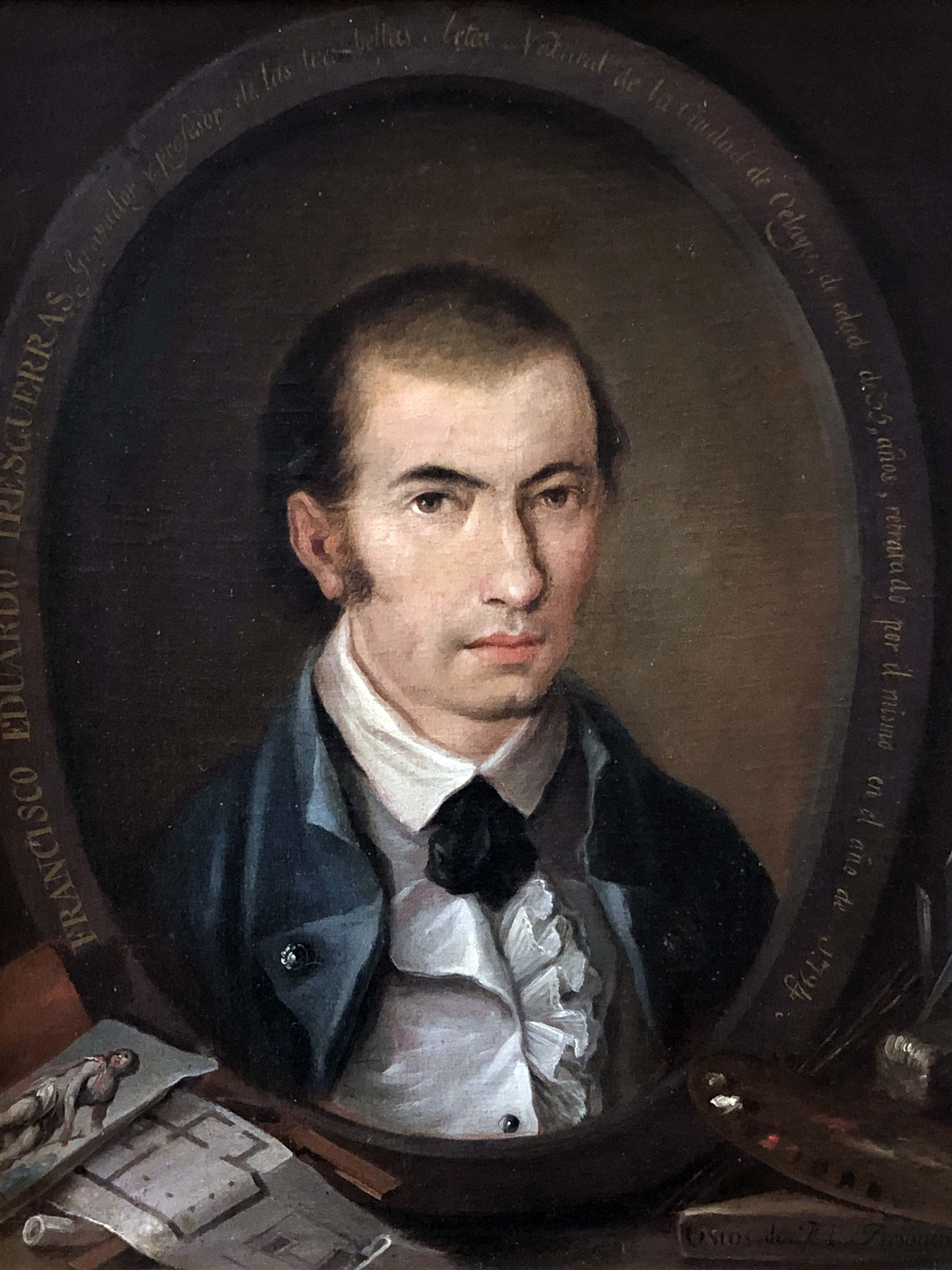 #44
#44
Francisco Eduardo Tresguerras
Tresguerras brings together architecture, painting and drawing in the Mexican neoclassical transition.
See the Francisco Eduardo Tresguerras collection #45
#45
Nahui Olin
Nahui Olin paints and performs a free, flamboyant modernity deeply linked to artistic Mexico.
Read Nahui Olin's biography on Wikipedia #46
#46
Angel Zarraga
Zárraga connects Mexico City and Paris, portraits, sport, symbolism and decorative modernity.
See the Angel Zarraga collection #47
#47
Carlos Merida
Mérida unites abstraction, rhythm, Mayan heritage and graphic modernity between Guatemala and Mexico.
Read the biography of Carlos Mérida on Wikipedia #48
#48
Eduardo Schiaffino
Schiaffino plays a key role in the institutionalization of Argentine art and local pictorial modernity.
See the Eduardo Schiaffino collection #49
#49
Benito Quinquela Martin
Quinquela Martin makes the port of La Boca a colorful, working-class and legendary theater.
Read the biography of Benito Quinquela Martin on Wikipedia #50
#50
Lino Enea Spilimbergo
Spilimbergo constructs figures, landscapes and frescoes with modern and social classicism.
Read the biography of Lino Enea Spilimbergo on Wikipedia #51
#51
Prilidiano Pueyrredon
Pueyrredon is a founding figure in Argentine painting, between portraits, rural scenes and society.
See the Prilidiano Pueyrredon collection #52
#52
Eduardo Sivori
Sivori introduced naturalism, social criticism and modern painting to 19th-century Argentina.
See the Eduardo Sivori collection #53
#53
Fernando Fader
Fader paints light, mountains and Argentine landscapes with an impressionist sensitivity.
See the Fernando Fader collection #54
#54
Leonor Finished
Fini invents powerful, theatrical and surrealist female figures in a cosmopolitan work.
Read Leonor Fini's biography on Wikipedia #55
#55
Marta Minujin
Minujin explodes art, performance, color, media and pop culture in the Argentine avant-garde.
Read Marta Minujin's biography on Wikipedia #56
#56
Guillermo Kuitca
Kuitca paints plans, maps, theaters and mental spaces with contemporary tension.
Read Guillermo Kuitca's biography on Wikipedia #57
#57
Antonio Segui
Segui develops an ironic urban representation, populated by walkers and social signs.
Read Antonio Segui's biography on Wikipedia #58
#58
Rafael Barradas
Barradas invents a fast and modern urban vibrationism between Barcelona, Madrid and Montevideo.
See the Rafael Barradas collection #59
#59
Juan Manuel Blanes
Blanes gives Uruguay its great historical stories, national portraits and founding scenes.
See the Juan Manuel Blanes collection #60
#60
Carlos Maria Herrera
Herrera occupies an important place in Uruguayan painting through his portraits and symbolic scenes.
See the Carlos Maria Herrera collectionRanks 61 to 80
Chile, Colombia, Cuba and kineticism
The route crosses the Chilean, Colombian and Cuban scenes, then the major optical and kinetic research that marked Venezuela.
 #61
#61
Carlos Paez Vilaro
Páez Vilaró connects candombe, sun, murals and Afro-Uruguayan imagination.
Read the biography of Carlos Paez Vilaró on Wikipedia #62
#62
Pedro Subercaseaux
Subercaseaux paints historical, religious and national scenes with clear and popular narration.
See the Pedro Subercaseaux collection #63
#63
Nemesio Antunez
Antúnez connects engraving, painting, landscape and institutions in Chilean modernism.
Read the biography of Nemesio Antunez on Wikipedia #64
#64
Gracia Barrios
Barrios paints crowds, memory, violence and the human condition with social gravity.
Read Gracia Barrios' biography on Wikipedia #65
#65
Camilo Mori
Mori brings color, portrait and Parisian modernity to Chilean painting.
Read Camilo Mori's biography on Wikipedia #66
#66
Juan Francisco Gonzalez
Gonzalez releases touch and light in pre-modern Chilean landscapes and scenes.
See the Juan Francisco Gonzalez collection #67
#67
Pedro Lira
Lira structures Chilean teaching and academism, between history, portrait and European painting.
See the Pedro Lira collection #68
#68
Alfredo valenzuela puelma
Valenzuela Puelma combines academic virtuosity, orientalism and powerful figures.
See the Alfredo Valenzuela Puelma collection #69
#69
Matilde Perez
Pérez developed a kinetic, optical and rigorous abstraction in Chile.
Read the biography of Matilde Pérez on Wikipedia #70
#70
Alejandro Obregon
Obregon paints condors, violence, Caribbean and figurative abstraction with Colombian energy.
Read Alejandro Obregon's biography on Wikipedia #71
#71
Debora Arango
Arango confronts politics, the body, religion and social hypocrisy in a courageous painting.
Read Débora Arango's biography on Wikipedia #72
#72
Jose Maria Espinosa Prieto
Espinosa is a founding figure in Colombian historical portraiture and iconography.
See the José Maria Espinosa Prieto collection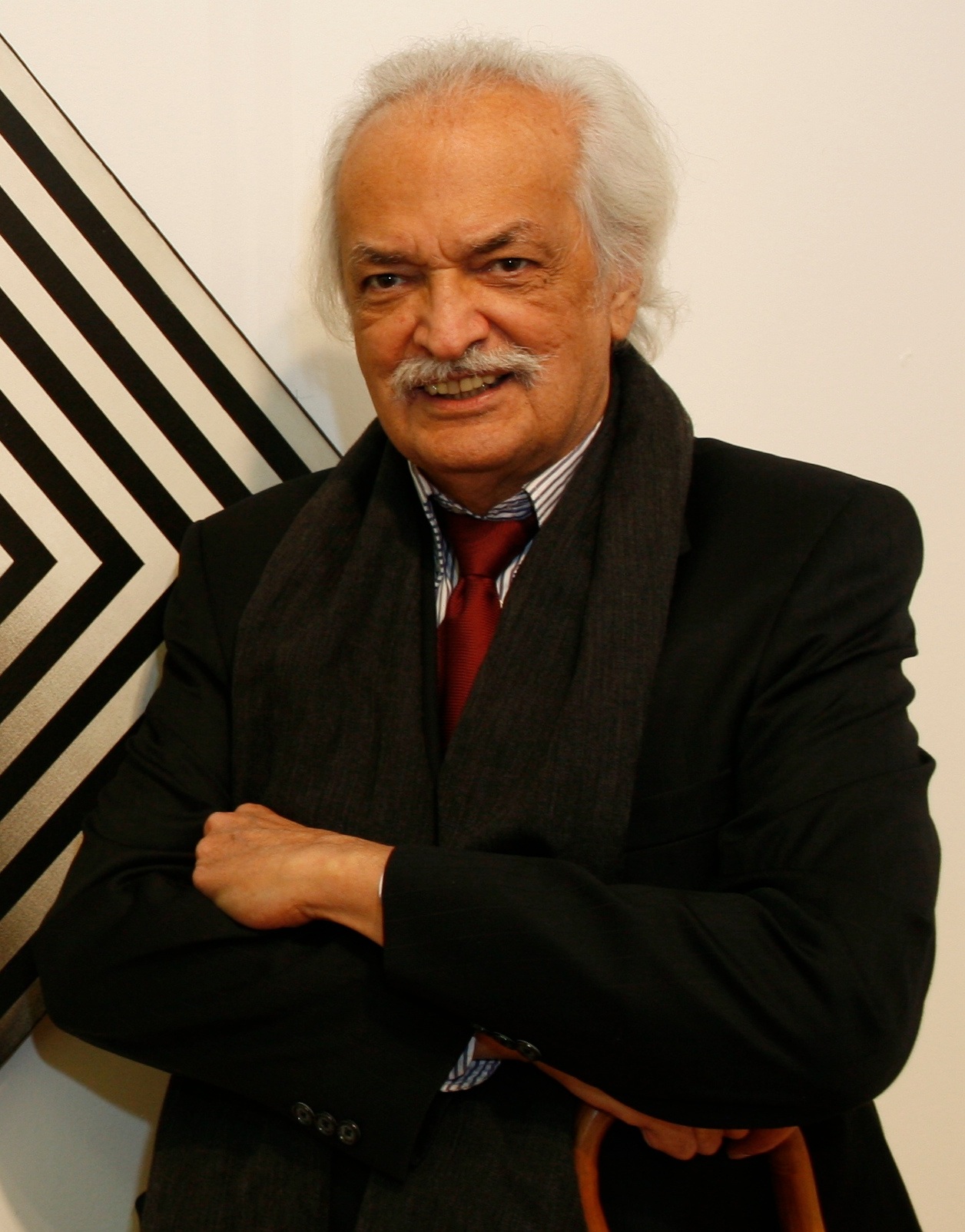 #73
#73
Omar Rayo
Rayo develops a black and white optical abstraction, folded, geometric and incisive.
Read Omar Rayo's biography on Wikipedia #74
#74
Andrés de Santa Maria
Santa Maria introduces modern and impressionist painting into Colombian art.
See the Andrés de Santa Maria collection #75
#75
Guillermo Wiedemann
Wiedemann renews Colombian painting through color, abstraction and tropical landscapes.
Read Guillermo Wiedemann's biography on Wikipedia #76
#76
Amelia Pelaez
Pelaez transforms stained glass windows, interiors, fruits and Cuban baroque into modernist compositions.
Read Amelia Pelaez's biography on Wikipedia #77
#77
René Portocarrero
Portocarrero paints towns, women, carnivals and ornaments in abundant Cuban baroque.
Read the biography of René Portocarrero on Wikipedia #78
#78
Carlos Enriquez
Enriquez gives the Cuban landscape and body a sensual, lyrical and national movement.
Read Carlos Enriquez's biography on Wikipedia #79
#79
Eduardo Abela
Abela participates in Cuban modernity through satire, painting and popular figuration.
Read the biography of Eduardo Abela on Wikipedia #80
#80
Carlos Valenti
Valenti, meteor of Guatemalan modernism, leaves a brief, expressive and very singular work.
See the Carlos Valenti collectionRanks 81 to 100
Andes, Caribbean and Central America
The last section brings together indigenousisms, founding portraits, Haitian naive art, Puerto Rican school and historical figures from the Andes and the Caribbean.
 #81
#81
Jesus Rafael Soto
Soto transforms painting, vibration, line and space into kinetic experience.
Read the biography of Jesus Rafael Soto on Wikipedia #82
#82
Carlos Cruz Diez
Cruz-Diez makes color an unstable, optical and spatial event.
Read the biography of Carlos Cruz-Diez on Wikipedia #83
#83
Alejandro Otero
Otero leads Venezuelan abstraction towards series, color and architectural integration.
Read Alejandro Otero's biography on Wikipedia #84
#84
Emilio Boggio
Boggio connects Venezuela and European impressionism in bright landscapes and scenes.
See the Emilio Boggio collection #85
#85
Arturo Michelena
Michelena embodies the great Venezuelan historical painting with pathos, technique and national narrative.
See the Arturo Michelena collection #86
#86
Cristobal Rojas
Rojas paints illness, poverty and social drama with poignant realism.
See the Cristobal Rojas collection #87
#87
Martin Tovar y Tovar
Tovar y Tovar fixes the portraits and battles of the Venezuelan national narrative.
See the Martin Tovar y Tovar collection #88
#88
Fernando de Szyszlo
Szyszlo connects abstraction, archaeology, Andean myth and tragedy in a dark and noble painting.
Read the biography of Fernando de Szyszlo on Wikipedia #89
#89
Jose Sabogal
Sabogal founded modern Peruvian indigenism, between Andes, popular figures and cultural identity.
See the José Sabogal collection #90
#90
Pancho Fierro
Fierro documents Lima, trades, costumes and popular scenes through a vivid watercolor.
See the Pancho Fierro collection #91
#91
Julia Codesido
Codesido brings a strong and stylized voice to Peruvian indigenism.
Read Julia Codesido's biography on Wikipedia #92
#92
Eduardo Kingman
Kingman paints hands, hard work and indigenous dignity with social force.
Read the biography of Eduardo Kingman on Wikipedia #93
#93
Camilo Egas
Egas brings indigenism, modernism and muralism into dialogue in Ecuadorian art.
Read Camilo Egas' biography on Wikipedia #94
#94
Francisco Oller
Oller connects Puerto Rico, Paris, impressionism and Caribbean social realism.
See the Francisco Oller collection #95
#95
Jose Campeche
Campeche is a colonial master of Puerto Rican portraiture and religious image.
See the José Campeche collection #96
#96
Rafael Tufiño
Tufiño famous workers, posters, engravings and modern Puerto Rican identity.
Read Rafael Tufiño's biography on Wikipedia #97
#97
Cecilio Guzman de Rojas
Guzman de Rojas founded a Bolivian national image, between Andes, portraits and indigenism.
See the Cecilio Guzman de Rojas collection #98
#98
Hector Hyppolite
Hyppolite gives Haitian art a Vodou, visionary and popular power.
See the Hector Hyppolite collection #99
#99
Philome Obin
Obin paints Haitian history, cities and society with narrative precision.
Read the biography of Philomé Obin on Wikipedia #100
#100
Ignacio Merino
Merino connects Peruvian painting, European training and romantic historical scenes.
See the Ignacio Merino collectionMethod
How the 100 artists were selected
The selection favors historical influence, museum recognition, the strength of the works, the place in national or continental history, and usefulness for a reader who wants to discover the big names in Latin American painting. The first ranks go to artists whose impact goes far beyond their country: Mexican muralism, Brazilian modernisms, Caribbean surrealism, uruguayan constructivism, Argentine avant-gardes and abstraction/kineticism.
To respect the editorial rule, artists who died after 1956 or were still alive refer to Wikipedia.
Choose a reproduction
Which universe to look at first?
For monumental and historical painting, start with Rivera, Orozco, Siqueiros, Portinari or Subercaseaux. For intimate intensity, Frida Kahlo, Maria Izquierdo, Nahui Olin or Leonor Fini offer very different doors. For modern color, look at Tarsila, Tamayo, Di Cavalcanti, Amelia Peláez or Portocarrero. For abstraction and movement, Clark, Oiticica, Soto, Cruz-Diez, Rayo and Szyszlo move painting towards space, sign and perception.
This diversity is precisely the strength of the ranking: Latin America is neither muralism nor surrealism. She invents several modernities at once.
Continue
Guides, rankings and references
Explore Alpha Reproduction
Museum landmarks
Quick markers
A story of frescoes, myths, bodies and light
From Mexican muralism to constructive avant-gardes, from Andean indigenism to Venezuelan kineticism, Latin American painting transforms the continent's tensions into powerful images. She knows how to be public, intimate, political, mystical, popular or abstract, sometimes all of these at once.
This Top 100 serves as an entry map: you can follow a country, a movement, a generation or simply an image. And behind each map, a collection or a biography allows you to extend the discovery.
0 comments