

Top 50 · School of Paris
Artists, exiles and modernity
From Picasso, Chagall, Modigliani and Soutine to Vieira da Silva, Zao Wou-Ki and Poliakoff.
The School of Paris designates neither an academy, nor a manifesto, nor a unique style. The expression, popularized by the critic André Warnod in 1925, describes the extraordinary concentration of French and foreign artists who choose Paris as a place of learning, work and confrontation with modernity. Montmartre, Montparnasse, La Ruche, the Falguière city, the free academies and the cafés became meeting points for artists from Spain, Russia, Italy, Poland, Central Europe, Japan, then after 1945 from Portugal, China, Germany or North Africa. This ranking combines historical importance, originality, the role played in these Parisian networks, international influence, the strength of major works and the way in which each trajectory illuminates the experience of exile, migration or voluntary displacement.

Avant-gardes, portraits, exiles, memory and abstraction.
A historical situation, not a style
Why do we talk about the School of Paris?
The term brings together artists who do not paint in the same way and do not belong to a common organization. Picasso and Juan Gris participate in the Cubist revolution; Modigliani invents an immediately recognizable portrait line; Soutine pushes the material towards expressionism; Chagall transforms memory into colorful poetry; Foujita combines Japanese drawing and Western nude culture. Their common point is Paris, then the center of trade fairs, merchants, magazines, collections and international debates. The classification therefore considers the School of Paris as a network of presences, circulations and emulations rather than as a uniform aesthetic.
Montmartre, Montparnasse and La Ruche
Free workshops for artists from all over the world
Private academies accept foreigners and women more easily than official institutions. In Montparnasse, La Rotonde, Le Dôme and La Coupole extend the workshops with daily exchanges; La Ruche offers modest spaces to Chagall, Soutine, Kikoine, Krémègne, Epstein and many others. A strong presence of Jewish artists from Central and Eastern Europe can be explained by the desire to work freely, but also by the restrictions, anti-Semitism and violence encountered in their countries of origin. Exile does not produce a single iconography: it can nourish memory, melancholy, formal invention, humor or the refusal of any assigned identity.
War, dispersion and New School of Paris
After 1945, Paris remained a crossroads of abstraction
The crisis of the 1930s, persecution and the Second World War broke the first constellation: some artists fled, others were deported or murdered, and several workshops disappeared. After the Liberation, the expression "New School of Paris" served to bring together, again in a flexible manner, painters of lyrical abstraction, informal art or constructed abstraction. Nicolas de Staël, Vieira da Silva, Szenes, Zao Wou-Ki, Hartung, Wols, Poliakoff, the Van Velde brothers and Atlan showed that Paris remained a place of welcome and confrontation, even when New York in turn became a dominant center of international art.
The Top 10
The ten figures who made Paris the capital of modern art
Picasso, Chagall, Modigliani, Soutine and Foujita opened a constellation where cubism, color, portraiture, Montmartre and Montparnasse profoundly renewed the painting of the first 20th century.
#1
Pablo Picasso
Pablo Picasso occupies a major place in this collective history. The artist explores the freedom with which he crosses blue and pink periods, cubism, classicism and political commitment. "Les Demoiselles d’Avignon", "Portrait of Gertrude Stein", "Guernica" give three complementary benchmarks.
Read the biography of Pablo Picasso on Wikipedia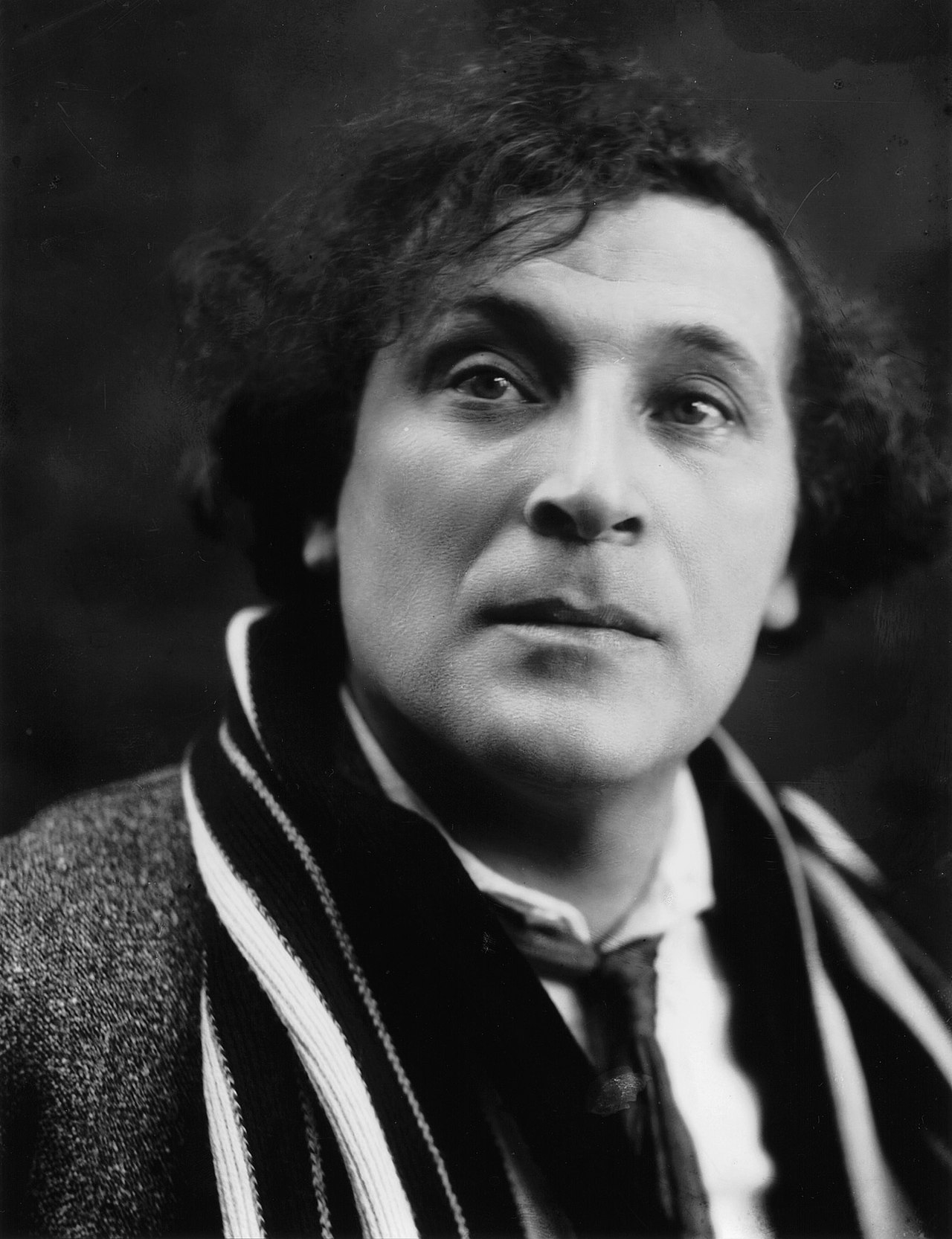 #2
#2
Marc Chagall
Arriving in the Paris of the avant-gardes, Marc Chagall constructs an immediately recognizable voice. His research combines memories of Vitebsk, Jewish culture, weightless couples and a color that transforms exile into poetic space. From "Me and the village" to "Above the city", modernity remains linked to a very personal experience.
Read Marc Chagall's biography on Wikipedia #3
#3
Amedeo Modigliani
Amedeo Modigliani's artistic contribution is based on stretched faces, often pupil-free looks and a line nourished by Italian art as much as by the Parisian avant-gardes. "Jeanne Hébuterne with the big hat" offers an essential milestone, to be compared to "Nu couch" and "Portrait of Chaïm Soutine".
See the Amedeo Modigliani collection #4
#4
Chaïm Soutine
At Chaïm Soutine, the School of Paris is not an imposed style but a space of freedom. His work involves tormented dough, unstable landscapes, carcasses and portraits of people on duty captured with physical intensity, as shown by "Le Petit Pâtissier", "Le Bœuf écorché" and "Paysage à Céret".
See the Chaïm Soutine collection #5
#5
Tsugouharu Foujita
Tsugouharu Foujita broadens the definition of Parisian modernity. The artist highlights the precise drawing, the pearly whites and the very personal encounter between Japanese tradition, Western nude and sociability of Montparnasse. His journey links "Nude lying in the toile de Jouy" to "Café" without erasing the movements, encounters and ruptures in his trajectory.
Read Tsugouharu Foujita's biography on Wikipedia #6
#6
Moses Kisling
The pictorial language adopted by Moïse Kisling is formed at the crossroads of origins, exile and Parisian debates. His practice combines frontal portraits, enlarged eyes and bouquets in bold colors which have earned him a central place in cosmopolitan Paris. "Kiki de Montparnasse" and "Woman in the Red Sweater" allow us to measure its singularity.
See the Moïse Kisling collection #7
#7
Jules Pascin
With Jules Pascin, Parisian painting finds a specific inflection. His work brings together studio scenes, fragile bodies and a nervous line coming from satirical drawing, always attentive to the solitude behind the party. The works "Hermine in Bed", "Les Petites Américaines" and "Portrait of Lucy Krohg" show how this research evolves without losing its coherence.
See the Jules Pascin collection #8
#8
Suzanne Valadon
Suzanne Valadon cannot be reduced to a single label. Most of his research concerns the uncompromising look at nudes, family portraits and interiors, since constructed from a singular experience as a model who became a painter, an orientation visible in "The Blue Room" then deepened by "Adam and Eve" and "Portrait of Maurice Utrillo".
See the Suzanne Valadon collection #9
#9
Maurice Utrillo
The singular character of Maurice Utrillo's work appears in his way of associating the streets of Montmartre, the white facades and the silent squares of which he makes the melancholic signs of a Paris experienced on a daily basis. This sensitivity gives "La Maison Bernot" a special place and also illuminates "Le Lapin Agile" as well as "Rue du Mont-Cenis".
See the Maurice Utrillo collection #10
#10
Robert Delaunay
In this cosmopolitan constellation, Robert Delaunay asserts a distinct position thanks to his way of bringing together the colorful decomposition of the modern city, the Eiffel Tower and simultaneous disks which leads cubism towards the luminous rhythm. The comparison of "The Eiffel Tower", "Circular Shapes" and "The Cardiff Team" reveals its amplitude.
See the Robert Delaunay collectionChapter I · Ranks 11 to 25
Avant-gardes, portraits and memories of exile
From Delaunay to Kupka, Marcoussis, Survage, Kikoine and Mela Muter, artists move Russian, Polish, Italian, Spanish, Japanese and Dutch traditions to Paris, without ever adopting a common style.
 #11
#11
Sonia Delaunay
Sonia Delaunay occupies a major place in this collective history. The artist explores the simultaneous color extended from canvas to textile, book, clothing and decor, abolishing the border between fine arts and modern life. "Electric Prisms", "Bal Bullier", "Colored Rhythm" give three complementary benchmarks.
Read Sonia Delaunay's biography on Wikipedia #12
#12
Fernand Léger
Arriving in the Paris of the avant-gardes, Fernand Léger constructs an immediately recognizable voice. His research combines tubular volumes, mechanics, popular leisure and a clear color that gives modern life an accessible monumentality. From "The City" to "The Card Game", modernity remains linked to a very personal experience.
See the Fernand Léger collection #13
#13
Frantisek Kupka
František Kupka's artistic contribution is based on the transition from figure to pure movement through colorful shots, music and the study of the invisible forces that organize the world. "Amorpha, fugue with two colors" offers an essential milestone, to be compared to "Plans by colors" and "La Gamme jaune".
Read František Kupka's biography on Wikipedia #14
#14
Kees van Dongen
At Kees van Dongen, the School of Paris is not an imposed style but a space of freedom. Her work involves wild colors, smoky eyes and portraits of women that connect bohemia, spectacle and high society, as shown by "The Woman in the Black Hat", "Anita en almée" and "The Poppy".
Read Kees van Dongen's biography on Wikipedia #15
#15
Juan Grey
Juan Gris broadens the definition of Parisian modernity. The artist highlights the rigor of synthetic cubism, its readable architecture of paper, glass and musical instruments, as well as a color brighter than that of his elders. His journey links "Portrait of Picasso" to "Still Life with a Checkered Tablecloth" without erasing the movements, encounters and ruptures in his trajectory.
See the Juan Gris collection #16
#16
Marie Laurencin
The pictorial language adopted by Marie Laurencin is formed at the crossroads of origins, exile and Parisian debates. His practice combines female groups, powdery hues and an independent elegance which resists its reduction to the Cubist entourage alone. "Apollinaire and his friends" and "Le Bal elegant" allow us to measure its singularity.
See the Marie Laurencin collection #17
#17
Louis Marcoussis
With Louis Marcoussis, Parisian painting finds a specific inflection. His work brings together the cubist construction of still lifes, portraits and musical scenes, extended by a demanding practice of engraving. The works "Le Bar du port", "Violin, bottles and cards" and "Portrait d’Apollinaire" show how this research evolves without losing its coherence.
See the Louis Marcoussis collection #18
#18
Tamara de Lempicka
Tamara de Lempicka cannot be reduced to a single label. Most of her research concerns the sculptural portraits, smooth surfaces and confidence of modern women translated into a language that has become emblematic of Art Deco, an orientation visible in "Self-portrait in the green Bugatti" then deepened by "La Belle Rafaëla " and "Young Girl in Green".
Read Tamara de Lempicka's biography on Wikipedia #19
#19
Eugene Zak
The singular character of Eugène Zak's work appears in his way of associating elongated figures, acrobat families and stylized landscapes which combine Renaissance, symbolism and modern melancholy. This sensitivity gives "The Shepherd" a special place and also illuminates "Maternity" as well as "The Drinker".
See the Eugène Zak collection #20
#20
Leopold Survival
In this cosmopolitan constellation, Léopold Survage asserts a distinct position thanks to his way of bringing together colorful rhythms, dream cities and an early project of animated painting which brings cubism, music and cinema into dialogue. The comparison of "Colored Rhythm", "The City" and "Man in the City" reveals its amplitude.
Read the biography of Léopold Survage on Wikipedia #21
#21
Jean Pougny
Jean Pougny occupies a major place in this collective history. The artist explores the transition from the Russian avant-gardes to a Parisian painting of streets, objects and interiors where geometry retains a sensitive vibration. "The Violin", "The White Ball", "Parisian Interior" give three complementary benchmarks.
See the Jean Pougny collection #22
#22
Michel Kikoine
Arriving in the Paris of the avant-gardes, Michel Kikoine constructs an immediately recognizable voice. His research combines the landscapes of Céret and Burgundy, nudes and portraits constructed by thick color and an energy close to Soutine without ever imitating it. From "Landscape in Céret" to "Self-portrait", modernity remains linked to a very personal experience.
Read the biography of Michel Kikoine on Wikipedia #23
#23
Pinchus Kremègne
Pinchus Krémègne's artistic contribution is based on the landscapes of the South, the gnarled trees and the dark still lifes in which the pictorial material carries the memory of uprooting. "Landscape of Céret" offers an essential milestone, to be compared to "Le Poisson" and "Still life with a pitcher".
Read the biography of Pinchus Krémègne on Wikipedia #24
#24
Mane-Katz
At Mane-Katz, the School of Paris is not an imposed style but a space of freedom. His work involves musicians, rabbis and party scenes from Eastern European Jewish culture, translated by a full touch and warm color, as shown by "The Violinist", "The Torah Festival" and "The Rabbi".
Read Mane-Katz's biography on Wikipedia #25
#25
Mela Muter
Mela Muter broadens the definition of Parisian modernity. The artist highlights psychological portraits, maternity wards and landscapes whose fragmented touch gives faces a presence that is both vulnerable and determined. His journey links "Portrait of Rainer Maria Rilke" to "Vue de Collioure" without erasing the movements, encounters and ruptures of his trajectory.
Read Mela Muter's biography on WikipediaChapter II · Ranks 26 to 50
The Hive, forgotten trajectories and the New School of Paris
The cosmopolitan workshops, the destinies shattered by war and abstraction after 1945 extend the role of Paris. From Vieira da Silva to Zao Wou-Ki, Hartung, Poliakoff and Atlan, exile also becomes a new geography of painting.
 #26
#26
Alice Halicka
The pictorial language adopted by Alice Halicka is formed at the crossroads of origins, exile and Parisian debates. His practice combines cubist still lifes, textile collages and decorations which reveal a more diverse career than his frequent association with Marcoussis. "Cubist still life" and "Padded romances" allow us to measure its singularity.
Read Alice Halicka's biography on Wikipedia #27
#27
Osip Lubitch
With Ossip Lubitch, Parisian painting finds a specific inflection. His work brings together clowns, musicians, workshops and bouquets enveloped in a dull light where Montparnasse's life takes on a meditative tone. The works "Le Clown", "L'Atelier" and "Bouquet sur fond bleu" show how this research evolves without losing its coherence.
Read Ossip Lubitch's biography on Wikipedia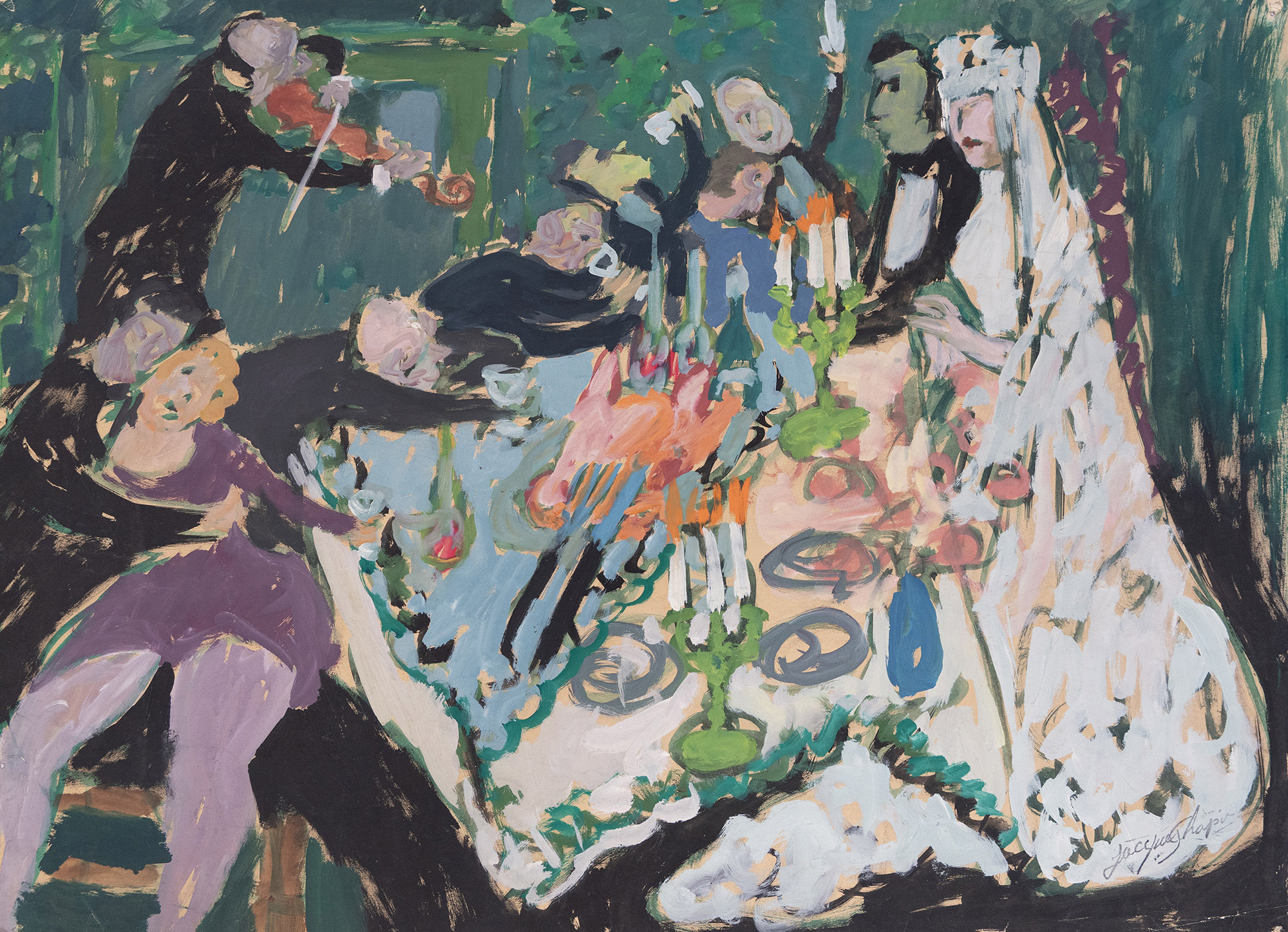 #28
#28
Jacques Chapiro
Jacques Chapiro does not allow himself to be reduced to a single label. Most of his research concerns portraits, circus scenes and views of Paris worked with dense material, as well as his role in safeguarding the city of La Ruche, an orientation visible in "Le Clown rouge" then deepened by "Portrait of a woman" and "The Hive".
Read the biography of Jacques Chapiro on Wikipedia #29
#29
Henry Epstein
The singular character of Henri Epstein's work appears in his way of associating Breton ports, landscapes and market scenes whose quick touch and contrasting colors carry a trajectory broken by the Shoah. This sensitivity gives "Port en Bretagne" a special place and also illuminates "Breton Market" as well as "Landscape of Provence".
See the Henri Epstein collection #30
#30
Adolphe Feder
In this cosmopolitan constellation, Adolphe Feder asserts a distinct position thanks to his way of bringing together portraits, street scenes and travel memories which combine incisive drawing, light colors and observation of the cultures encountered. The comparison of "Portrait of a Woman", "Musician" and "Market Scene" reveals its amplitude.
See the Adolphe Feder collection #31
#31
George Kars
Georges Kars occupies a major place in this collective history. The artist explores rural scenes, portraits and landscapes whose sober construction unites the Prague experience, Munich and Parisian modernity. "Les Baigneuses", "Landscape of Tossa", "Portrait of a Woman" give three complementary benchmarks.
See the Georges Kars collection #32
#32
Abraham Minchin
Arriving in the Paris of the avant-gardes, Abraham Mintchine constructs an immediately recognizable voice. His research combines interiors, angels, maternity wards and landscapes painted in a fiery range, as if each ordinary scene could shift towards vision. From "The Angel on the Violin" to "Interior at the Table", modernity remains linked to a very personal experience.
See the Abraham Mintchine collection #33
#33
Roman Kramsztyk
Roman Kramsztyk's artistic contribution is based on the firmly drawn portraits, nudes and scenes of the Warsaw ghetto which give his modern classicism a tragic significance. "Old Jewish Man" offers an essential milestone, to be compared to "Portrait of a Woman" and "Family in the Ghetto".
See the Roman Kramsztyk collection #34
#34
Tadeusz Makowski
At Tadeusz Makowski, the School of Paris is not an imposed style but a space of freedom. His work involves children with geometric faces, peasants and masquerades where cubist influence is transformed into tender and slightly disturbing theater, as shown by "Les Petits Écoliers", "Les Sabotiers" and "Le Carnaval des enfants".
See the Tadeusz Makowski collection #35
#35
Henryk Hayden
Henryk Hayden broadens the definition of Parisian modernity. The artist highlights Cubist still lifes then freer landscapes and figures, witnesses of lasting fidelity to Paris despite war exile. His journey links "Cubist still life" to "Landscape of Brittany" without erasing the movements, encounters and ruptures of its trajectory.
Read Henryk Hayden's biography on Wikipedia #36
#36
Józef Pankiewicz
The pictorial language adopted by Józef Pankiewicz is formed at the crossroads of origins, exile and Parisian debates. His practice combines the discovery of French impressionism, Mediterranean landscapes and teaching that directs an entire Polish generation towards Paris. "Flower market in front of the Madeleine" and "Port de Saint-Tropez" allow us to measure its singularity.
See the Józef Pankiewicz collection #37
#37
Simon Mondzain
With Simon Mondzain, Parisian painting finds a specific inflection. His work brings together portraits and landscapes from Brittany then Algeria, constructed by dense color and a search for calm monumentality. The works "Port of Algiers", "Portrait of a Woman" and "Breton Landscape" show how this research evolves without losing its coherence.
Read the biography of Simon Mondzain on Wikipedia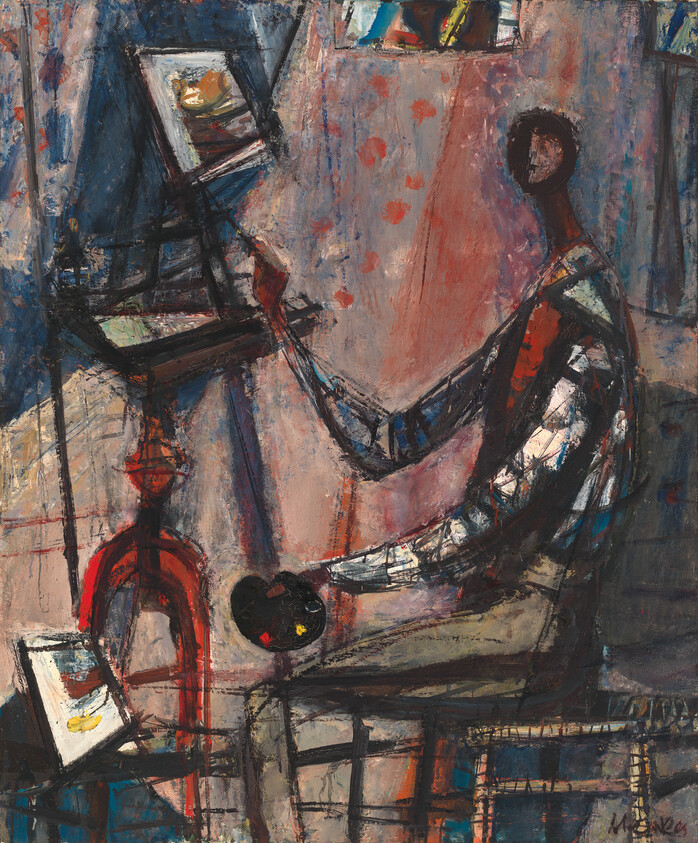 #38
#38
Zygmunt Menkes
Zygmunt Menkes does not allow himself to be reduced to a single label. Most of his research concerns melancholic figures, musicians and still lifes with deep reds, before American exile extended his Parisian language, an orientation visible in "The Musician" then deepened by "Woman in the Hat" and "Still Life red".
Read Zygmunt Menkes' biography on Wikipedia #39
#39
Vladimir Baranov-Rossiné
The singular character of Vladimir Baranov-Rossiné's work appears in his way of associating cubo-futuristic research, painted sculpture and the optophonic piano which combines color, light, movement and music. This sensitivity gives "Symphony No. 1" a special place and also illuminates "Adam and Eve" as well as "Optophonic rhythm".
See the Vladimir Baranov-Rossiné collection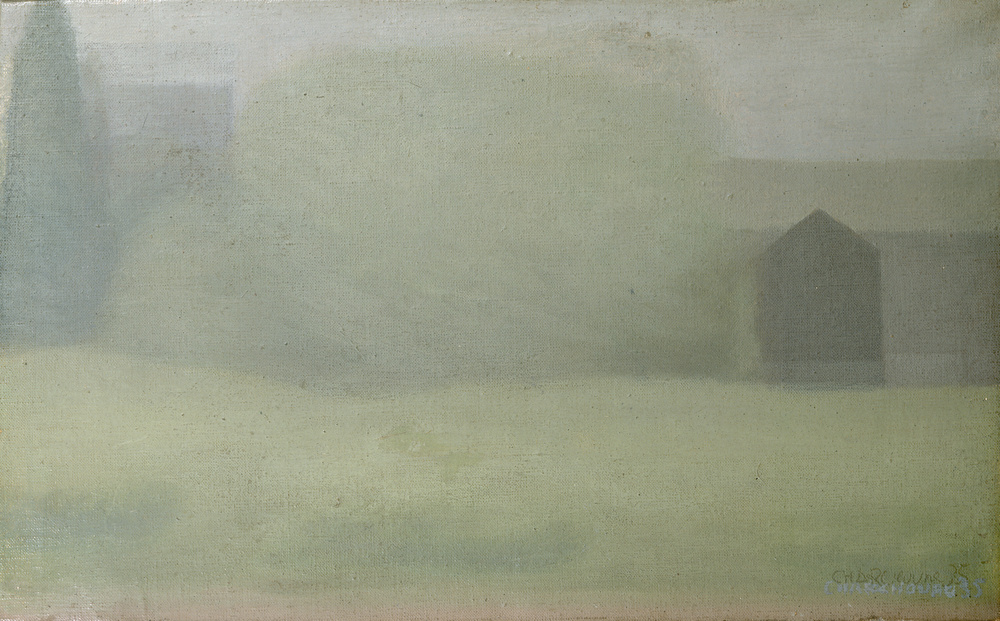 #40
#40
Serge Charchoune
In this cosmopolitan constellation, Serge Charchoune asserts a distinct position thanks to his way of bringing together Dada's transition to monochrome abstractions inspired by water and music, in a discreet but deeply coherent work. The comparison of "Water Landscape", "Sonata" and "White Composition" reveals its amplitude.
Read the biography of Serge Charchoune on Wikipedia #41
#41
Nicholas of Stael
Nicolas de Staël occupies a major place in this collective history. The artist explores the blocks of material and color which maintain a fruitful tension between abstraction, landscape, still life and sporting spectacle. "Parc des Princes", "Agrigento", "Le Concert" give three complementary benchmarks.
See the Nicolas de Staël collection #42
#42
Maria Helena Vieira da Silva
Arriving in the Paris of the avant-gardes, Maria Helena Vieira da Silva constructs an immediately recognizable voice. His research combines maze cities, libraries and unstable perspectives where the grid becomes an experience of memory, space and movement. From "The Library" to "The Card Game", modernity remains linked to a very personal experience.
Read the biography of Maria Helena Vieira da Silva on Wikipedia #43
#43
Arpad Szenes
The artistic contribution of Arpád Szenes is based on horizontal landscapes, the series of portraits of Vieira da Silva and a meditative abstraction based on almost imperceptible passages of light. "Portrait of Vieira da Silva" offers an essential milestone, to be compared to "The Banquets" and "Horizontal Landscape".
Read the biography of Arpád Szenes on Wikipedia #44
#44
Zao Wou-Ki
For Zao Wou-Ki, the School of Paris is not an imposed style but a space of freedom. His work involves the meeting between Western painting, Chinese calligraphy and large atmospheric spaces where signs seem to be born and then dissolve, as shown by "Homage to Edgar Varèse", "01.29.64" and "June-October 1985".
Read Zao Wou-Ki's biography on Wikipedia #45
#45
Hans Hartung
Hans Hartung broadens the definition of Parisian modernity. The artist highlights the methodically prepared scratches, sweeps and dazzling signs, as well as a trajectory of exile and resistance that has become central in European abstraction. His journey links "T 1947-8" to "T 1989-K 12" without erasing the movements, encounters and ruptures of his trajectory.
Read Hans Hartung's biography on Wikipedia #46
#46
Wols
The pictorial language adopted by Wols is formed at the crossroads of origins, exile and Parisian debates. His practice combines microscopic drawings, spots and organic networks which make material fragility a decisive laboratory of informal art. "It's All Over" and "La Ville" allow us to measure its singularity.
See the Wols collection #47
#47
Serge Poliakoff
With Serge Poliakoff, Parisian painting finds a specific inflection. His work brings together interlocking forms and muted chords of color, organized like musical architecture without center or figure. The works "Blue Abstract Composition", "Red Composition" and "Grey and Yellow Composition" show how this research evolves without losing its coherence.
Read Serge Poliakoff's biography on Wikipedia #48
#48
Bram van Velde
Bram van Velde cannot be reduced to a single label. Most of his research concerns large open shapes, dissonant colors and a slow practice of painting where the image always remains appearing, an orientation visible in "Untitled, Montrouge" then deepened by "Composition 1958" and "Untitled 1970".
Read Bram van Velde's biography on Wikipedia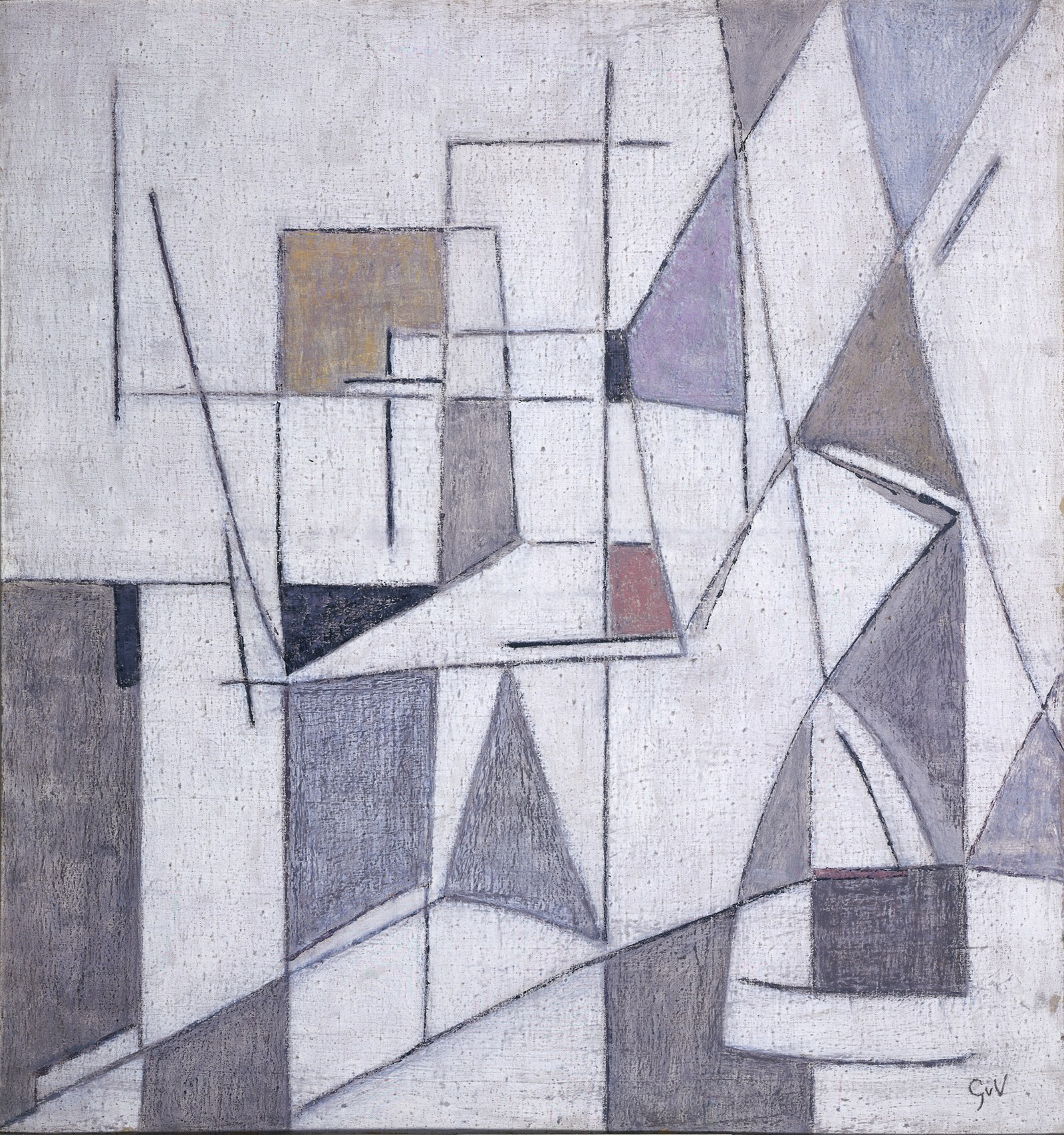 #49
#49
Geer van Velde
The singular character of Geer van Velde's work appears in his way of associating interiors, workshops and reduced beaches with luminous planes, in a silent balance between geometric construction and perception. This sensitivity gives "L'Atelier" a special place and also illuminates "Mediterranean" as well as "Composition".
Read Geer van Velde's biography on Wikipedia #50
#50
Jean-Michel Atlan
In this cosmopolitan constellation, Jean-Michel Atlan asserts a distinct position thanks to his way of bringing together totemic signs, black rhythms and earthy colors which connect poetry, North African memory and post-war abstraction. The comparison of "Composition", "Character" and "Le Kahena" reveals its amplitude.
Read the biography of Jean-Michel Atlan on WikipediaSources and routes
Extend the discovery of the School of Paris
Explore Alpha Reproduction
The School of Paris tells of a modernity made of encounters
From Montmartre to Montparnasse, then from post-war workshops to major international abstractions, Paris did not impose a single way of painting. Rather, the city offers a space where artists move their languages, their memories, their techniques and their ambitions. Cubism, expressive figuration, portraiture, simultaneous color and abstraction become different answers to the same question: how to invent a modern work far from any stable center?
To choose a reproduction, start from the desired atmosphere: the line of Modigliani, the material of Soutine, the color of Kisling, the streets of Utrillo, the rhythm of Delaunay, the geometry of Juan Gris or the masses of Nicolas de Staël The admissible collections and biographies linked to each notice allow us to continue this exploration without confusing the trajectories.
0 comments