

Top 50 · Belgian painting
Fifty painters, six centuries of Belgian invention
From Ensor to Magritte, Delvaux and Spilliaert: Flemish primitives, baroque, symbolism, surrealism and contemporary painting.
The history of Belgian painting goes beyond the borders of the state born in 1830. It begins with the Flemish workshops of Bruges, Ghent, Brussels and Antwerp, where Van Eyck, Van der Weyden, Bruegel and Rubens renew the European image. In the 19th century, Brussels, Ostend and Laethem-Saint-Martin became centers of realism, symbolism, luminism and expressionism. Ensor and Spilliaert moved the portrait and the city in the 19th century; Magritte and Delvaux gave Belgian surrealism its enigmatic logic; Magritte and Delvaux gave Belgian surrealism its enigmatic logic; Alechinsky, Raveel and Tuymans extended this freedom after 1945.

Color, society, dreams and memory.
Before and after 1830
A Belgian history built in the ancient Netherlands
Van Eyck, Van der Weyden, Bruegel, Rubens and Van Dyck worked well before the creation of Belgium. They nevertheless belong to the artistic heritage of the cities and territories that make up the country today. The ranking links them to modern Belgian artists in order to show the continuities of workshop, collection and visual culture.
Brussels, Antwerp, Ghent and Ostend
Close homes, very different languages
Antwerp carries the baroque tradition, Brussels brings together trade fairs, avant-garde groups and institutions, Ghent nourishes luminism and Laethem-Saint-Martin, while Ostend gives Ensor and Spilliaert a singular horizon. This dense geography promotes exchanges with Paris, London, the Netherlands and Germany without erasing local identities.
The ranking criteria
Influence, invention, preserved works and international scope
The rank combines historical importance, the originality of the language, the quality of the preserved ensembles and the influence on subsequent generations. It brings together old masters, international figures, women artists who have long been less visible and contemporary painters in order to restore the real diversity of the Belgian scene.
The Top 10
Ten masters who made Belgian art universal
Magritte, Ensor, Delvaux and Spilliaert meet Bruegel, Van Eyck, Rubens, Van der Weyden, Van Dyck and Khnopff here.
 #1
#1
René Magritte
René Magritte places the gap between words, objects and ordinary appearances at the center of his work. The Betrayal of Images, The Son of Man and The Empire of Lights allow us to follow its choices without reducing the artist to a single image.
Read the biography of René Magritte on Wikipedia#2
James Ensor
In James Ensor, masks, satire and luminous material that has become social vision organize both the composition and the relationship with the spectator. From The Entry of Christ into Brussels to The Scandalized Masks, then to Self-portrait with Masks, language evolves while maintaining a clear identity.
See the James Ensor collection #3
#3
Paul Delvaux
The Worried City reveals the essentials of Paul Delvaux: silent cities populated by sleepwalking figures and trains. The Sleeping Venus and Congress show how this research expands and changes scale.
Read the biography of Paul Delvaux on Wikipedia #4
#4
Leon Spilliaert
Léon Spilliaert's strength lies in the nocturnal solitude, the self-portrait and the bare horizons of Ostend, conducted with great coherence. Self-portrait in the mirror offers direct entry, while Vertige and La Digue at night illuminate other dimensions.
See the Léon Spilliaert collection #5
#5
Pieter Bruegel the Elder
Pieter Bruegel the Elder occupies a unique place in Belgian art through the collective life, landscape and parable observed with an encyclopedic breadth. The comparison of The Hunters in the Snow, The Tower of Babel and The Triumph of Death reveals a work more diverse than a single masterpiece.
See the Pieter Bruegel the Elder collection #6
#6
Jan van Eyck
Rather than an effect of style, the light of the oil, the precision of the materials and the presence of the portrait become for Jan van Eyck a way of thinking about the image. The Arnolfini Husbands, The Mystical Lamb and The Virgin of Chancellor Rolin highlight the tensions between observation, invention and memory.
See the Jan van Eyck collection #7
#7
Peter paul rubens
With The Descent from the Cross, Pierre Paul Rubens imposes a vision based on movement, color and the narrative power of the great baroque decor. The Three Graces and The Garden of Love confirm his ability to renew his subjects without losing his personal construction.
See the Pierre Paul Rubens collection #8
#8
Rogier van der Weyden
Rogier van der Weyden transforms a religious emotion constructed by gestures, folds and looks into complete pictorial vocabulary. The Descent from the Cross, The Last Judgment and Portrait of a Lady clearly mark this evolution.
See the Rogier van der Weyden collection #9
#9
Antoine van Dyck
Antoine van Dyck's work can be recognized by the elegance of the aristocratic portrait and a sustained psychology, never treated as a formula. Between Charles I on the hunt and Self-portrait with a sunflower, then with The Lomellini Family, it gained in intensity and historical significance.
See the Antoine van Dyck collection #10
#10
Fernand Khnopff
Fernand Khnopff deserves to be looked at beyond labels thanks to silence, the double and the ideal image in closed compositions. Caresses constitute a major landmark; I close my door on myself and Portrait of Marguerite Khnopff reveal other aspects of her ambition.
See the Fernand Khnopff collectionChapter I · Ranks 11 to 25
From Flemish Baroque to Belgian avant-gardes
Jordaens, Brueghel, Teniers, Rops, Van Rysselberghe, Claus, Permeke and Alechinsky show the continuity of a culture of color and invention.
 #11
#11
Jacob Jordaens
Jacob Jordaens places a popular abundance where mythology, proverbs and family life meet at the center of his work. The King drinks, As the old people sang and Prometheus chained allow us to follow his choices without reducing the artist to a single image.
See the Jacob Jordaens collection #12
#12
Jan Brueghel the Elder
In Jan Brueghel the Elder, the meticulousness of the landscapes, flowers and allegorical scenes organizes both the composition and the relationship with the spectator. From the terrestrial Paradise to Bouquet of Flowers, then to The Grand Fish Market, the language evolves while maintaining a clear identity.
See the Jan Brueghel the Elder collection #13
#13
Pieter Brueghel the Younger
The Count of Bethlehem reveals the essentials of Pieter Brueghel the Younger: the inventive diffusion of peasant festivals and family compositions. The Village Lawyer and Open-Air Wedding Dance show how this research expands and changes scale.
See the Pieter Brueghel the Younger collection #14
#14
David Teniers the Younger
The strength of David Teniers the Younger lies in the tavern scenes, the festivals and the collections painted with vivacity, conducted with great coherence. Village festival offers direct entry, while Archduke Leopold-Guillaume in his gallery and The Temptations of Saint Anthony shed light on other dimensions.
See the David Teniers the Younger collection #15
#15
Felicien Rops
Félicien Rops occupies a unique place in Belgian art through a graphic irony which confronts desire, hypocrisy and fin-de-siecle imagination. The comparison of Pornokratès, The Temptation of Saint Anthony and Mors syphilitica reveals a work more diverse than a single masterpiece.
See the Félicien Rops collection #16
#16
Theo van Rysselberghe
Rather than an effect of style, the division of color applied to portraiture, the coastline and Mediterranean light becomes for Théo van Rysselberghe a way of thinking about images. Portrait of Alice Sèthe, La Lecture and Voiliers et estuaire break down the tensions between observation, invention and memory.
See the Théo van Rysselberghe collection #17
#17
Emile Claus
With La Récolte des beets, Émile Claus imposes a vision based on solar light which crosses the countryside, rivers and rural work. Cows crossing the Lily and Sunny Day confirm his ability to renew his subjects without losing his personal construction.
See the Émile Claus collection #18
#18
Constant Permeke
Constant Permeke transforms earthy and monumental volumes devoted to fishermen and peasants into complete pictorial vocabulary. The Soup Eaters, The Fiancé and Sailors clearly mark this evolution.
See the Constant Permeke collection #19
#19
Rik Wouters
Rik Wouters' work can be recognized by a spontaneous color that transforms domestic intimacy into pictorial joy, never treated as a formula. Between The Mad Virgin and Woman in Blue in front of a mirror, then with Self-portrait with a black headband, it gains in intensity and historical significance.
See the Rik Wouters collection #20
#20
Peter Alechinsky
Pierre Alechinsky deserves to be looked beyond labels thanks to a free calligraphic gesture surrounded by marginal stories and signs. Central Park constitutes a major landmark; The Last Day and Stars and Disasters reveal other aspects of his ambition.
Read the biography of Pierre Alechinsky on Wikipedia #21
#21
Gustave De Smet
Gustave De Smet places simplified figures and interiors constructed from dense material at the center of his work. Les Amants, Le Port d'Ostende and La Femme au café allow you to follow the choices without reducing the artist to a single image.
See the Gustave De Smet collection #22
#22
Frits Van den Berghe
In Frits Van den Berghe, a restless imagination which leads expressionism towards the fantastic organizes both the composition and the relationship with the spectator. From The Eternal Wanderer to The Painter and his model, then to Sunday, language evolves while maintaining a clear identity.
See the Frits Van den Berghe collection #23
#23
Anna Boch
During the elevation reveals the essentials of Anna Boch: a light color applied to coasts, gardens and travel landscapes. Woman reading in a rhododendron massif and Côte de Bretagne show how this research broadens and changes scale.
See the Anna Boch collection #24
#24
Jean Delville
Jean Delville's strength lies in an idealist ambition where monumental figures, mysticism and academic drawing dialogue, conducted with great coherence. Plato's School offers direct entry, while The Treasures of Satan and Orpheus Death shed light on other dimensions.
See the Jean Delville collection #25
#25
Antoine Wiertz
Antoine Wiertz occupies a unique place in Belgian art through the very large format and philosophical drama pushed to the point of excess. The comparison of Two Young Girls or Belle Rosine, The Revolt of Hell and The Triumph of Christ reveals a work more diverse than a single masterpiece.
See the Antoine Wiertz collectionChapter II · Ranks 26 to 50
Symbolism, luminism, expressionism and the contemporary scene
From Stevens and Laethem-Saint-Martin to Donas, Raveel, Tuymans, Borremans and Alÿs, Belgian painting multiplies the passages between intimacy, society and experimentation.
 #26
#26
Alfred Stevens
Rather than an effect of style, elegant interiors and modern life observed through feminine gestures become for Alfred Stevens a way of thinking about images. What we call vagrancy, The Lady in Pink and In the Workshop reveal the tensions between observation, invention and memory.
See the Alfred Stevens collection #27
#27
Gustave Van de Woestyne
With The Porridge Eater, Gustave Van de Woestyne imposes a vision based on frontal portraits and a rural spirituality with deliberately archaic forms. Portrait of Valerius De Saedeleer and Les Deux Printemps confirm his ability to renew his subjects without losing his personal construction.
See the Gustave Van de Woestyne collection #28
#28
Valerius De Saedeleer
Valerius De Saedeleer transforms silent landscapes where snow, trees and hills take on spiritual gravity into complete pictorial vocabulary. Winter in Flanders, La Lys in Laethem and Spring Landscape clearly mark this evolution.
See the Valerius De Saedeleer collection #29
#29
Leon Frederick
Léon Frédéric's work can be recognized by social polyptychs where the naturalist detail joins the allegory, never treated as a formula. Between The Ages of the Peasant and The Chalk Merchants, then with Nature, it gains in intensity and historical significance.
See the Léon Frédéric collection #30
#30
William Degouve de Nuncques
William Degouve de Nuncques deserves to be looked beyond labels thanks to nocturnal gardens, houses and canals bathed in mental light. The Blind House constitutes a major landmark; The Peacocks and Canal in Bruges reveal other aspects of his ambition.
See the William Degouve collection by Nuncques #31
#31
Eugene Laermans
Eugène Laermans places rural and working crowds rendered by a broad and dark line at the center of his work. Les Émigrants, Le Mort and Le Soir de strike allow us to follow the choices without reducing the artist to a single image.
See the Eugène Laermans collection #32
#32
Henri Evenepoel
At Henri Evenepoel, modern portraits and Parisian scenes uniting flat areas, light and intimacy organize both the composition and the relationship with the spectator. From La Promenade du Dimanche to the Bois de Boulogne to L'Espagne in Paris, then to Charles in striped jersey, the language evolves while maintaining a clear identity.
See the Henri Evenepoel collection #33
#33
Constantin Meunier
The Broken Crucible reveals the essentials of Constantin Meunier: the monumental dignity of industrial work, miners and docks. The Casting at Ougrée and Return of the Mine show how this research expands and changes scale.
See the Constantin Meunier collection #34
#34
Xavier Mellery
Xavier Mellery's strength lies in silent interiors and wall allegories where daily life becomes mystery, conducted with great coherence. The Soul of Things offers a direct entrance, while The Round of Hours and Interior on the Staircase illuminate other dimensions.
See the Xavier Mellery collection #35
#35
Jules Schmalzigaug
Jules Schmalzigaug occupies a unique place in Belgian art through the decomposition of movement and light in a singular futuristic painting. The comparison of Impression in a Dance Hall, Rhythm of Light and The Dynamism of Dance reveals a work more diverse than a single masterpiece.
See the Jules Schmalzigaug collection #36
#36
Martha Donas
Rather than an effect of style, a cubist synthesis of colorful shots, figures and still lifes becomes for Marthe Donas a way of thinking about images. Abstract composition, The Musician and Cubist Still Life break down the tensions between observation, invention and memory.
Read the biography of Marthe Donas on Wikipedia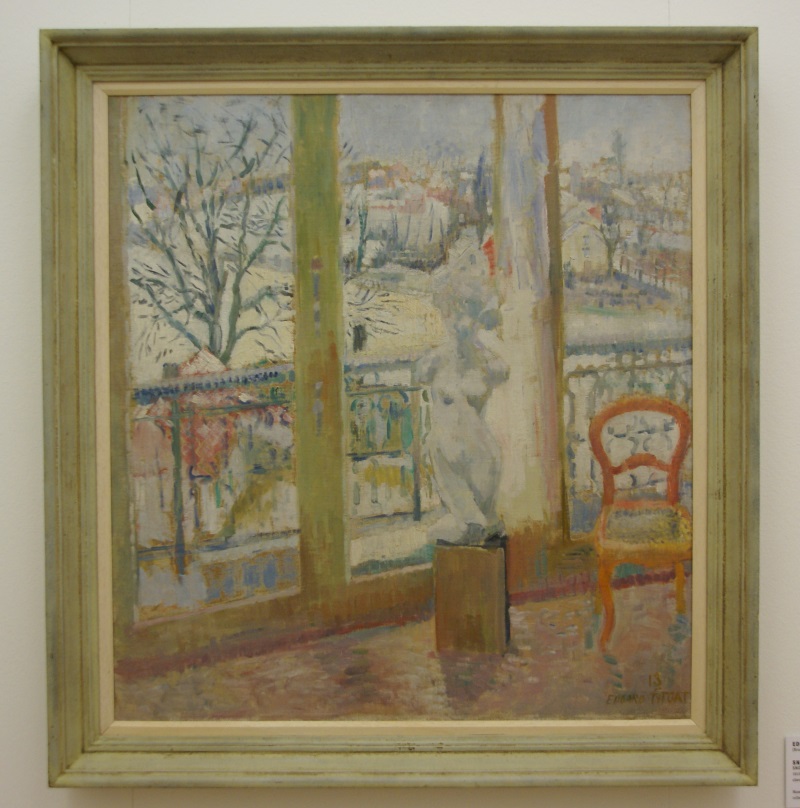 #37
#37
Edgard Tytgat
With The Card Game, Edgard Tytgat imposes a vision based on familiar and legendary stories carried by a deliberately naive color. Fairy Tale and The Circus confirm his ability to renew his subjects without losing his personal construction.
Read Edgard Tytgat's biography on Wikipedia #38
#38
Albert Servaes
Albert Servaes transforms a dramatic spirituality translated by austere bodies and dark landscapes into complete pictorial vocabulary. Stations of the Cross by Luithagen, Dying Peasant and The Last Supper clearly mark this evolution.
Read the biography of Albert Servaes on Wikipedia #39
#39
Jean Brusselmans
Jean Brusselmans' work can be recognized by a stable architecture of colorful shapes applied to landscapes and interiors, never treated as a formula. Between The Tempest and View of Dilbeek, then with Still Life, it gains in intensity and historical significance.
See the Jean Brusselmans collection #40
#40
Jenny Montigny
Jenny Montigny deserves to be looked beyond labels with a clear touch attentive to children, gardens and rural scenes. Kindergarten is a major landmark; Children playing and Orchards in bloom reveal other aspects of his ambition.
See the Jenny Montigny collection #41
#41
Louise De Hem
Louise De Hem places confident portraits and interiors where light reveals fabrics and faces at the center of her work. Pandora's Box, Japanese Woman and Portrait of the Artist's Sister allow you to follow the choices without reducing the artist to a single image.
See the Louise De Hem collection #42
#42
Juliet Wytsman
At Juliette Wytsman, luminous gardens and landscapes constructed by a colorful and attentive touch organize both the composition and the relationship with the viewer. From Spirées to Jardin fleur, then to Matin à Linkebeek, the language evolves while maintaining a clear identity.
See the Juliette Wytsman collection #43
#43
Marie Collart
Orchard in spring reveals the essentials of Marie Collart: the paths, orchards and edges observed with atmospheric sobriety. Hollow Path and Landscape of Brabant show how this research expands and changes scale.
See the Marie Collart collection #44
#44
Cécile Douard
Cécile Douard's strength lies in the women of Borinage and the industrial work described with force and precision, conducted with great coherence. Hiercheuses offers direct entry, while Femme du peuple and Au charbonnage shed light on other dimensions.
See the Cécile Douard collection #45
#45
Louis Gallait
Louis Gallait occupies a singular place in Belgian art through the great Belgian history painting constructed by drama, costume and national memory. The comparison of The Abdication of Charles V, The Last Honors rendered to the Counts of Egmont and Hornes and Job on his Manure reveals a work more diverse than a single masterpiece.
See the Louis Gallait collection #46
#46
Roger Raveel
Rather than an effect of style, familiar objects, silhouettes and abstract flat areas opening everyday life onto space become for Roger Raveel a way of thinking about images. Man with a Wire, The Garden and Presence of the Void reveal the tensions between observation, invention and memory.
Read Roger Raveel's biography on Wikipedia #47
#47
Raoul De Keyser
With Come on, play it again, Raoul De Keyser imposes a vision based on modest signs and colorful fields that renew abstract painting. Dalton and Front confirm his ability to renew his subjects without losing his personal construction.
Read the biography of Raoul De Keyser on Wikipedia #48
#48
Luc Tuymans
Luc Tuymans transforms pale and fragmentary images that question memory, photography and power into complete pictorial vocabulary. Gaskamer, Der Architekt and Mwana Kitoko clearly mark this evolution.
Read Luc Tuymans' biography on Wikipedia #49
#49
Michael Borremans
Michaël Borremans' work can be recognized by an ambiguous figuration where ancient precision and disturbing scenarios meet, never treated as a formula. Between The Angel and The Avoider, then with The Devil's Dress, it gains in intensity and historical scope.
Read the biography of Michaël Borremans on Wikipedia #50
#50
Francis Alÿs
Francis Alÿs deserves to be looked beyond labels through the painting, walking and poetic action used to read urban tensions. The Green Line constitutes a major landmark; When Faith Moves Mountains and Sleep Time reveal other aspects of his ambition.
Read the biography of Francis Alÿs on WikipediaSources and routes
Extend the visit to Belgian painting
The dates, schools and landmarks were compared with the resources of the main Belgian museums preserving the Flemish primitives, the Baroque, Ensor, Magritte, Delvaux and the avant-gardes.
Explore Alpha Reproduction
Belgian painting makes the familiar a territory of strangeness
From the optical detail of Van Eyck to the masks of Ensor, from the silences of Spilliaert to the impossible objects of Magritte, this story constantly transforms what we think we know. Even the simplest everyday life can become theater, symbol, memory or enigma.
To choose a reproduction, start from the desired atmosphere: the profusion of Rubens, the crowd of Bruegel, the irony of Ensor, the mystery of Khnopff, the logic of Magritte or the silence of Delvaux. Each eligible file directly opens the artist's verified collection.
0 comments