

Top 100 · Women painters
The 100 women painters who changed art history
From Artemisia Gentileschi to Berthe Morisot, from Hilma af Klint to Frida Kahlo: five centuries of painting finally reunited.
For centuries, women have painted, led workshops, received commissions, exhibited at Salons and invented new forms, while facing limited access to academies, the living model, the market and posterity. This Top 100 does not tell a parallel story: it restores their place at the heart of the Renaissance, the Baroque, Impressionism, the avant-garde and modern art.

Workshops, academies, avant-gardes and modernities across five centuries.
Understand before classifying
Another history of painting, finally visible
The artists in this ranking have never formed a single group. Some work for European courts, others exhibit at trade fairs, found an independent workshop, join impressionism or participate in ruptures in abstraction and surrealism. Their common point is less a style than a story of creation carried out despite long unequal institutions.
During the Renaissance, Sofonisba Anguissola and Lavinia Fontana transformed portraiture and obtained international recognition. In the 17th century, Artemisia Gentileschi, Judith Leyster, Clara Peeters and Rachel Ruysch established themselves in history painting, the genre scene and still life. The 19th century then saw the possibilities of exhibition and training expand, without removing obstacles.
It not only measures current fame: it also takes into account the rediscoveries that corrected the museum narrative.
Conquer
Create despite exclusion from academies and workshops
Access to the living model, competitions and large commissions has long conditioned the hierarchy of genres. To get around these barriers, many painters develop family networks, choose portraiture or still life, travel, open their own workshops and use self-portraiture as proof of their professional status.
Represent yourself
The self-portrait becomes a declaration of authority
From Catharina van Hemessen to Sofonisba Anguissola, from Artemisia Gentileschi to Frida Kahlo and Helene Schjerfbeck, painting means controlling one's image. The easel, the direct gaze and the tools of the trade affirm an identity as an artist that history has often tried to reduce to the muse or the model.
Transform
The avant-gardes can no longer be told without them
Morisot and Cassatt shift impressionism, Hilma af Klint anticipates abstraction, Popova and Exter build the Russian avant-garde, while Carrington, Varo, Fini and Tanning redefine surrealism. After 1945, Krasner, Mitchell, Frankenthaler, Martin, Thomas and Kusama in turn changed the scale and language of painting.
The essentials
Ten artists who summarize five centuries of pictorial conquests
From Artemisia Gentileschi to Rosa Bonheur, these figures have profoundly modified portraiture, history painting, landscape and modernity.
 #1
#1
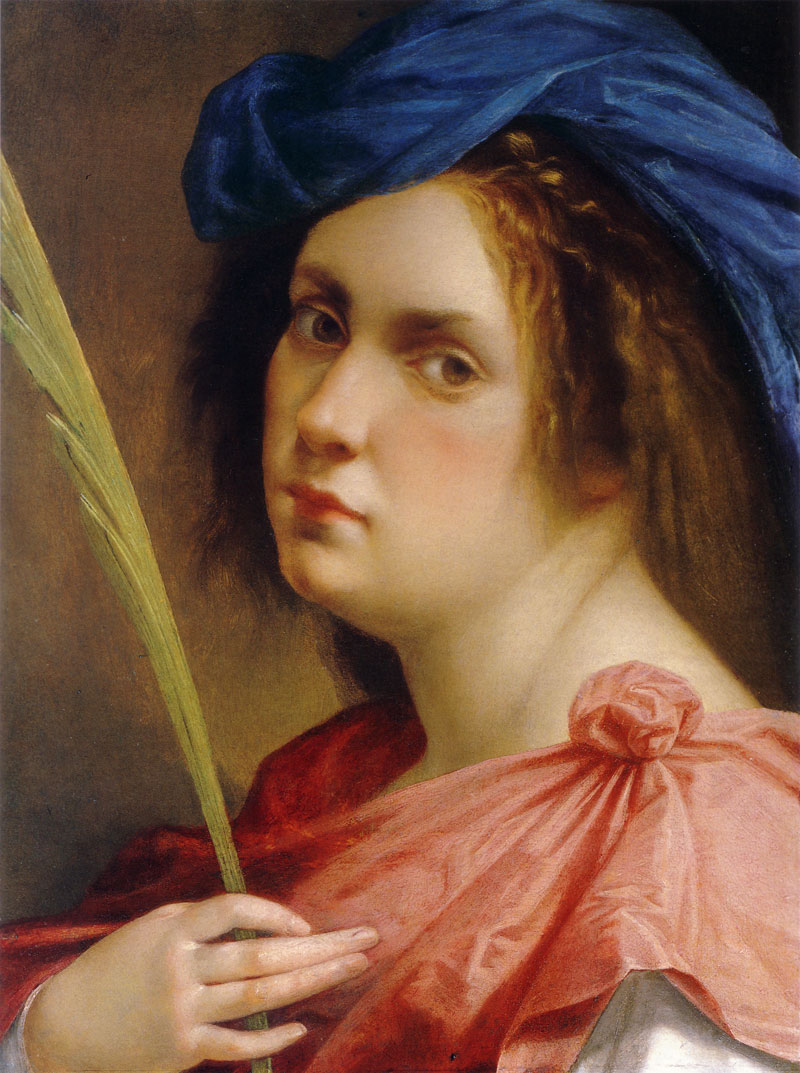
Artemisia Gentileschi
Its biblical heroines, its chiaroscuro and its sense of drama impose a major voice of European Baroque.
See the Artemisia Gentileschi collection #2
#2
Élisabeth Vigée Le Brun
She renews the aristocratic portrait with a living presence, flexible light and a remarkable mastery of self-portraiture.
See the Élisabeth Vigée Le Brun collection #3
#3
Berthe Morisot
A central figure in Impressionism, she captures modern life, gardens and family intimacy in a quick and bright touch.
See the Berthe Morisot collection #4
#4
Mary Cassatt
Her mother, child and theater scenes combine modern observation, bold composition and the influence of Japanese printmaking.
See the Mary Cassatt collection #5
#5
Frida Kahlo
His self-portraits transform pain, identity, desire and Mexican culture into an instantly recognizable language.
See the Frida Kahlo collection #6
#6
Georgia O'Keeffe
Enlarged flowers, bones and landscapes of New Mexico allow him to invent a truly American organic abstraction.
Read Georgia O'Keeffe's biography on Wikipedia #7
#7
Hilma af Klint
His spiritual and symbolic series led painting very early on towards a monumental abstraction.
See the Hilma af Klint collection #8
#8
Sofonisba Anguissola
At the Spanish court as in her self-portraits, she asserted a psychological intelligence and autonomy rare during the Renaissance.
See the Sofonisba Anguissola collection #9
#9
Lavinia Fontana
A sought-after portraitist and history painter, she obtained large public commissions in Italy at the end of the 16th century.
See the Lavinia Fontana collection #10
#10
Rosa Happiness
His knowledge of animal movement gives horses, cattle and rural scenes monumental power.
See the Rosa Bonheur collectionAvant-gardes and pioneers
From surrealism to the workshops of the Ancien Régime
This chapter brings the great modernists closer to the artists who had already opened academies, courses and the art market.
 #11
#11
Leonora Carrington
His surrealism mixes metamorphoses, Celtic legends and Mexican mythologies in deeply personal worlds.
Read Leonora Carrington's biography on Wikipedia #12
#12
Tamara de Lempicka
His geometric and sensual portraits have become one of the most famous signatures of Art Deco.
Read Tamara de Lempicka's biography on Wikipedia #13
#13
Suzanne Valadon
Self-taught from the world of Montmartre, she paints nudes, portraits and interiors with a singular physical frankness.
See the Suzanne Valadon collection #14
#14
Paula Modersohn-Becker
Her self-portraits and female figures condense emotion into simplified forms that announce expressionism.
See the Paula Modersohn-Becker collection #15
#15
Sonia Delaunay
She circulates color between paint, textile, fashion and design, transforming orphism into an everyday environment.
Read Sonia Delaunay's biography on Wikipedia #16
#16
Natalia Goncharova
It links Russian popular traditions, cubo-futurism and decorative energy in a radical avant-garde.
Read Natalia Goncharova's biography on Wikipedia #17
#17
Käthe Kollwitz
His drawings and engravings give unforgettable strength to mourning, poverty, work and solidarity.
See the Käthe Kollwitz collection #18
#18
Marie Laurencin
Her pale-toned portraits invent a dreamy femininity that has become emblematic of the School of Paris.
See the Marie Laurencin collection #19
#19
Remedios Varo
His impossible architectures and hybrid characters construct a precise, scholarly and mysterious surrealism.
Read Remedios Varo's biography on Wikipedia #20
#20
Angelica Kauffmann
A history painter and cosmopolitan portraitist, she helped define European neoclassicism.
See the Angelica Kauffmann collection #21
#21
Clara Peeters
Its tables of cheese, fish and precious objects are among the most subtle still lifes of the 17th century.
See the Clara Peeters collection #22
#22
Judith Leyster
Musicians, drinkers and genre scenes reveal a vivid touch and independence noted in the Dutch Golden Age.
See the Judith Leyster collection #23
#23
Rachel Ruysch
His bouquets combine botanical precision, sumptuous compositions and technical virtuosity.
See the Rachel Ruysch collection #24
#24
Rosalba Carriera
Queen of European pastel, she gives faces and fabrics a light grace that announces rococo.
See the Rosalba Carriera collection #25
#25
Adelaide Labille-Guiard
Her large self-portrait with two students transforms pedagogy and solidarity between women into a pictorial manifesto.
See the Adélaïde Labille-Guiard collectionPlural modernities
Portrait, abstraction and new international scenes
From Paris to New York, from Moscow to Helsinki, painting becomes a space of autonomy, memory and experimentation.
 #26
#26
Marie-Guillemine Benoist
Her Portrait of a Black Woman confronts the neoclassical ideal with questions of emancipation and representation.
See the Marie-Guillemine Benoist collection #27
#27
Marie-Denise Villers
His intimate and silent portraits occupied an essential place in French painting around 1800.
See the Marie-Denise Villers collection #28
#28
Anna Ancher
In the light of Skagen, she transforms domestic interiors and family scenes into chromatic studies.
See the Anna Ancher collection #29
#29
Helene Schjerfbeck
His late self-portraits gradually strip the face to an almost abstract modernity.
See the Helene Schjerfbeck collection #30
#30
Gwen John
Its silent figures, its rooms and its landscapes rest on a restrained palette of great intensity.
See the Gwen John collection #31
#31
Vanessa Bell
Within Bloomsbury, she combines portraits, interiors and decorations with a free color inherited from post-impressionism.
Read Vanessa Bell's biography on Wikipedia #32
#32
Lyubov Popova
His architectural compositions make Cubo-Futurism and Constructivism a laboratory of dynamic forms.
See the Lyubov Popova collection #33
#33
Sophie Taeuber-Arp
Painting, dance, textiles and puppetry come together in a fully modern geometric abstraction.
See the Sophie Taeuber-Arp collection #34
#34
Gabriele Muenter
His Bavarian landscapes and portraits in bold colors give an essential voice to German expressionism.
Read Gabriele Münter's biography on Wikipedia #35
#35
Marianne von Werefkin
His colorful and psychological visions prepare the Blaue Reiter and give the painting an inner intensity.
See the Marianne von Werefkin collection #36
#36
Alice Neel
His portraits refuse idealization and give faces an exceptional social and psychological presence.
Read Alice Neel's biography on Wikipedia #37
#37
Elaine de Kooning
It connects the gesture of abstract expressionism to nervous portraits of painters, poets and friends.
Read Elaine de Kooning's biography on Wikipedia #38
#38
Lee Krasner
Collages, covers and large compositions allow him to construct a dense and deeply personal abstraction.
Read Lee Krasner's biography on Wikipedia #39
#39
Joan Mitchell
Its large fields of gestural color transform the landscape and memory into a lyrical painting.
Read Joan Mitchell's biography on Wikipedia #40
#40
Helen Frankenthaler
His soaked canvas technique unleashes color and plays a major role in the history of Color Field.
Read Helen Frankenthaler's biography on Wikipedia #41
#41
Agnes Martin
Grids, strips and almost silent shades make his painting a space for radical meditation.
Read Agnes Martin's biography on Wikipedia #42
#42
Yayoi Kusama
Polka dots, mirrors and infinite repetitions form a total work between painting, installation and popular culture.
Read Yayoi Kusama's biography on Wikipedia #43
#43
Faith Ringgold
Her story quilts combine painting, fabric and storytelling to convey African-American history and feminist engagement.
Read Faith Ringgold's biography on Wikipedia #44
#44
Alma Thomas
Its mosaics of colorful touches transform gardens, music and light into jubilant abstraction.
Read the biography of Alma Thomas on Wikipedia #45
#45
Grace Hartigan
She maintains an energetic dialogue between abstract gesture, characters and references to art history.
Read Grace Hartigan's biography on Wikipedia #46
#46
Leonor Finished
Her sovereign figures, sphinxes and heroines reverse the roles assigned to women in the surrealist imagination.
Read Leonor Fini's biography on Wikipedia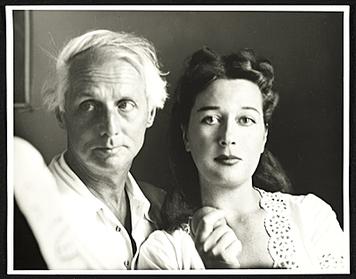 #47
#47
Dorothea Tanning
From surrealism to large organic canvases, she transforms domestic spaces into scenes of metamorphosis.
Read Dorothea Tanning's biography on Wikipedia #48
#48
Dora Maar
Photographer and painter, she explores the face, fragmentation and memory beyond her association with Picasso.
Read Dora Maar's biography on Wikipedia #49
#49
Maruja Mallo
Its Spanish avant-garde combines popular energy, geometry and feminine imagination in powerful images.
Read Maruja Mallo's biography on Wikipedia #50
#50
Lois Mailou Jones
From Harlem to Haiti, she developed an elegant painting that linked portraiture, modernism and black culture.
Read the biography of Lois Mailou Jones on WikipediaPioneers found
From baroque workshops to impressionisms
Long-decreased careers reappear in all their diversity: still life, portraiture, history, landscape and modern life.
 #51
#51
Elisabetta Sirani
She runs a thriving workshop in Bologna and gives biblical heroines a direct and monumental presence.
See the Elisabetta Sirani collection #52
#52
Fede Galizia
Precise portraits and rigorous still lifes make her a pioneer of the genre in Italy.
See the Fede Galizia collection #53
#53
Louise Moillon
Its fruit baskets combine Protestant sobriety, tactile precision and silent balance.
See the Louise Moillon collection #54
#54
Anne Vallayer-Coster
His virtuosity in still life opened the doors of the Royal Academy and the court to him.
See the Anne Vallayer-Coster collection #55
#55
Marie-Gabrielle Capet
She asserts her place in Labille-Guiard's workshop with pastel portraits of great finesse.
See the Marie-Gabrielle Capet collection #56
#56
Marguerite Gérard
His interior scenes accurately observe education, music and family relationships.
See the Marguerite Gérard collection #57
#57
Constance Mayer
His sentimental allegories and portraits contribute to the transition from neoclassicism to romanticism.
See the Constance Mayer collection #58
#58
Barbara Krafft
A portraitist active in several Central European cities, she combines sobriety and psychological presence.
See the Barbara Krafft collection #59
#59
Marie Bashkirtseff
Her brief work observes the streets, workshops and female artistic ambition with modern frankness.
See the Marie Bashkirtseff collection #60
#60
Eva Gonzales
Close to Manet, she painted portraits and domestic scenes with clear light and refined composition.
See the Eva Gonzalès collection #61
#61
Marie Bracquemond
His open-air figures and luminous harmonies gave him an essential place among the Impressionists.
See the Marie Bracquemond collection #62
#62
Lilla Cabot Perry
She spread impressionism in the United States and Japan in portraits and luminous landscapes.
See the Lilla Cabot Perry collection #63
#63
Cecilia Beaux
His portraits combine international elegance, model authority and freedom of touch.
See the Cecilia Beaux collection #64
#64
Elizabeth Nourse
She paints work, motherhood and rural life without sentimentalism, with remarkable dignity.
See the Elizabeth Nourse collection #65
#65
Harriet Backer
Its interiors make colored light a real subject and mark Norwegian painting.
See the Harriet Backer collection #66
#66
Kitty Kielland
Its Jæren moors renew the Norwegian landscape through demanding atmospheric observation.
See the Kitty Kielland collection #67
#67
Olga Boznaranska
His portraits with muted tones dissolve the contours to better bring out the interior life.
See the Olga Boznaÿska collection #68
#68
Olga Rozanova
It accelerates cubo-futurism towards an abstraction where color and energy become autonomous.
See the Olga Rozanova collection #69
#69
Alexandra Exter
Painting, theater and decor intersect in a cubo-futuristic work with dynamic constructions.
See the Alexandra Exter collection #70
#70
Maria Blanchard
His dense and sensitive cubism gives figures and still lifes a strong emotional charge.
See the Maria Blanchard collection #71
#71
Laura Muntz Lyall
His portraits of children and intimate scenes combine luminous softness and attentive observation.
See the Laura Muntz Lyall collection #72
#72
Ethel Carrick
Markets, beaches and crowds become modern colored mosaics under its lively touch.
See the Ethel Carrick collection #73
#73
Venny Soldan-Brofeldt
Painter and illustrator, she observes daily life and Nordic landscapes with robust freedom.
See the Venny Soldan-Brofeldt collection #74
#74
Alice Bailly
She crosses cubism, futurism and wool painting in an independent and experimental modernity.
See the Alice Bailly collection #75
#75
Anna Boch
Painter and collector, she gives the neo-impressionist landscape a clear light while supporting the avant-garde.
See the Anna Boch collectionA world story
Northern Europe, Americas, Asia and the Avant-Gardes
The last part expands the map to national modernisms and artists whose recognition continues to transform museums.
 #76
#76
Catharina van Hemessen
Her self-portrait on the easel is among the first visual assertions of a woman as a professional artist.
See the Catharina van Hemessen collection #77
#77
Giovanna Garzoni
Its fruits, flowers and insects painted on parchment combine science, luxury and miniaturist delicacy.
See the Giovanna Garzoni collection #78
#78
Michaelina Wautier
Portraits, genre scenes and major historical subjects reveal exceptional ambition in Flemish Baroque.
See the Michaelina Wautier collection #79
#79
Josefa de Obidos
It gives Portuguese still lifes and religious subjects precious material and an intense presence.
See the Josefa de Obidos collection #80
#80
Maria Sibylla Merian
It unites painting and science by directly observing the metamorphosis of insects and the plants that feed them.
See the Maria Sibylla Merian collection #81
#81
Marie Ellenrieder
The first woman admitted to the Munich Academy, she renewed portraiture and religious painting in the Germanic space.
See the Marie Ellenrieder collection #82
#82
Hortense Haudebourt-Lescot
His Italian stays nourish genre scenes attentive to gestures, costumes and daily life.
See the Hortense Haudebourt-Lescot collectionTherese Schwartze
A portrait virtuoso, she captures faces and fabrics with brilliant speed, particularly with pastel.
See the Thérèse Schwartze collection #84
#84
Louise Abbéma
Portraitist of the Belle Époque, she connects worldliness, theater, large sets and the affirmation of a modern identity.
See the Louise Abbéma collection #85
#85
Marianne North
A tireless traveler, she paints the flora of the world on the motif and builds an unparalleled botanical archive.
See the Marianne North collection #86
#86
Evelyn De Morgan
His Pre-Raphaelite allegories transform mythology, spirituality and social criticism into luminous images.
See the Evelyn De Morgan collection #87
#87
Anna Biliÿnska-Bohdanowicz
His great self-portrait and his character studies imposed a realistic mastery recognized in Paris in the 1880s.
See the Anna Biliÿnska-Bohdanowicz collection #88
#88
Emily Carr
Forests, villages and totems on the Pacific coast become powerful forms of a singular Canadian modernism.
See the Emily Carr collection #89
#89
Dora Carrington
His intimate portraits and silent landscapes give the Bloomsbury circle a personal and melancholy tone.
See the Dora Carrington collection #90
#90
Florine Stettheimer
She paints New York society as a lively, decorative and subtly ironic theater.
See the Florine Stettheimer collection #91
#91
Nadezda Petrovic
Its expressive color and nervous landscapes make it a founder of Serbian modernity.
See the Nadezda Petrovic collection #92
#92
Amrita Sher-Gil
It brings together European training and observation of Indian life in a modern painting of exceptional gravity.
See the Amrita Sher-Gil collection #93
#93
Uemura Shoen
Her female figures renew the nihonga through the elegance of the drawing, the color and a strong autonomy of the gaze.
See the Uemura Shoen collection #94
#94
Lluïsa Vidal
The only major professional woman in Catalan modernism, she excels in portraiture and intimate scenes.
See the Lluïsa Vidal collection #95
#95
Ellen Thesleff
From symbolist light to an almost abstract touch, his long career accompanied the birth of Finnish modernism.
See the Ellen Thesleff collection #96
#96
Jeanne Hébuterne
His portraits with soft lines reveal their own sensitivity, long eclipsed by his relationship with Modigliani.
See the Jeanne Hébuterne collection #97
#97
Marie Spartali Stillman
His literary watercolors extend Pre-Raphaelitism with meditative figures and settings of great finesse.
See the Marie Spartali Stillman collection #98
#98
Emilie Charmy
A rare and powerful figure in Fauvist modernism, she paints nudes, flowers and portraits with free, direct and deliberately anti-academic material.
Read the biography of Émilie Charmy on Wikipedia.jpg?width=960) #99
#99
Anita Malfatti
His painting introduces to Brazil an expressive modernity nourished by Germany, Paris and New York.
Read Anita Malfatti's biography on Wikipedia #100
#100
Tarsila do Amaral
It combines bright flat areas, simplified shapes and Brazilian imagination in an immediately recognizable modernity.
Read the biography of Tarsila do Amaral on WikipediaBrowse the works
How the 100 artists were selected
The first ranks bring together figures whose recognition is now international. The following chapters broaden the perspective of court painters, still life specialists, impressionists, modernists from different national scenes and artists rediscovered by recent research.
The order does not claim to include five centuries in a definitive list. It offers a readable journey which combines influence, quality of works, historical importance, geographical diversity and the capacity to transform the possibilities offered to subsequent generations.
Links & Collections
The 1956 rule is applied to all files
For the 26 artists who died after 1956 or are still alive, both links lead to their French Wikipedia biography. No new collection has been created for the latter.
Twenty-two missing collections have been added for eligible artists in the second half of the ranking. They are published with an image and remain without products until a corresponding reproduction is available.
Choose a reproduction
Start with the look, color or atmosphere you are looking for
For a vivid portrait, explore Vigée Le Brun, Cassatt, Beaux, Schwartze or Biliÿnska-Bohdanowicz. For a narrative and dramatic presence, look at Gentileschi, Sirani, De Morgan or Kahlo. The landscapes of Anna Ancher, Harriet Backer, Emily Carr and Ellen Thesleff install a more meditative light, while Delaunay, Popova, Taeuber-Arp and Rozanova suit an interior constructed by color and rhythm.
Continue the discovery
Guides, collections and references
Explore Alpha Reproduction
Specialized references
- National Museum of Women in the Arts
- AWARE - Archives of Women Artists
- Tate - Women Artists
- Musée d'Orsay
Essential benchmarks
These painters do not complete the history of art: they constitute it
Looking at these hundred works and these hundred trajectories together changes the map of painting. Women did not only emerge in the 20th century with progressive access to schools: they were present in Renaissance courtyards, baroque workshops, Salons, artists' colonies, avant-gardes and the great debates of the post-war.
Their rediscovery therefore does not consist of adding a few names to an unchanged story. It requires reviewing hierarchies, affiliations and the very way in which a reputation is built. Start with the ten essential figures, then follow the periods and movements according to the portrait, color, narration or atmosphere you wish to explore.
0 comments