

Top 50 — Renaissance
Famous Renaissance painters
Leonardo da Vinci, Michelangelo, Raphael, Botticelli, Titian and 45 other geniuses of Italian and Northern light
The Renaissance is the birth of modern painting: perspective, light, anatomy, and the individuality of the artist. From Giotto reinventing volume, to Leonardo observing the soul beneath a smile, to Titian liberating color — this Top 50 covers two centuries of Italian, Flemish, and German invention, from the Trecento to the early 16th century.
From Giotto to Veronese, from Florence to Bruges
Context
What makes these painters essential?
The Renaissance is that moment when Western painting shifts from symbol to reality. Giotto draws volume, Masaccio establishes perspective, Van Eyck observes light with astonishing optical precision, Leonardo da Vinci unites science and poetry in a single smile — and two centuries later, European art will never be the same.
The ranking below combines three criteria: technical innovation (perspective, sfumato, Flemish oil), current museum circulation (Louvre, Uffizi, Prado, National Gallery), and the ability to still speak to us today. Each entry offers a portrait, a signature work, and a direct link to the corresponding collection of reproductions in our shop.
This page is designed as a visitor's guide, not a hit parade. The painters are grouped by schools and generations to make the Florentine, Venetian, Flemish, and German lineages visible. The numbers are indicative — a rank of 28 is not "worse" than a rank of 3; it is simply later or more peripheral.
Italy — Florence, Siena and the Birth (1300-1500)
The Fathers of the Italian Renaissance
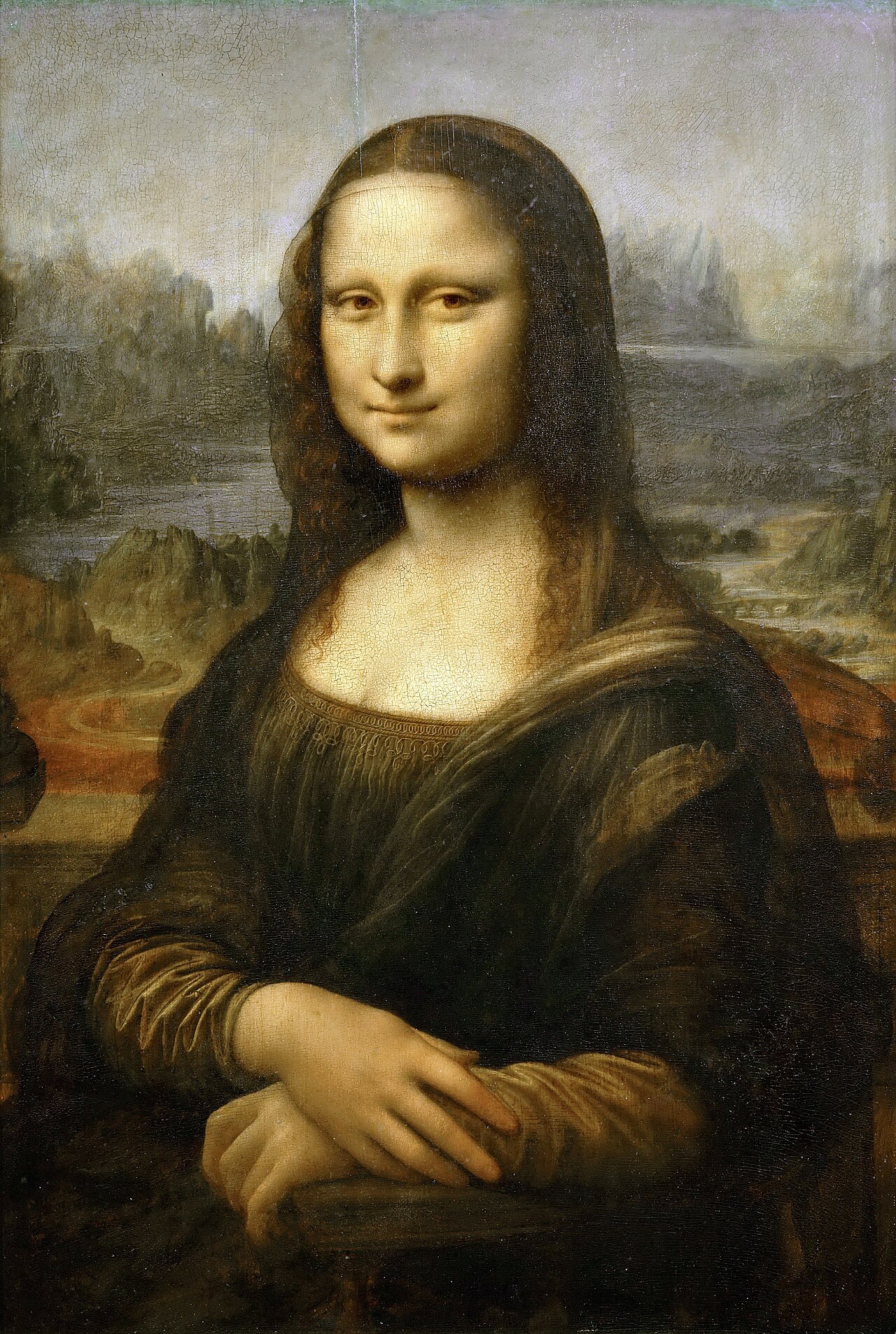
It all begins in Florence: Giotto (1267–1337) reintroduces volume and human emotion into Western painting. A century later, Masaccio (1401–1428) establishes linear perspective, and Botticelli (1445–1510) reconciles pagan mythology with Florentine grace. Leonardo da Vinci (1452–1519), Raphael (1483–1520) and Michelangelo (1475–1564) bring this Renaissance to its universal peak.


#1Leonardo da Vinci

.jpg)
#2Michelangelo


#3Raphael Sanzio


#5Sandro Botticelli


#8Giotto di Bondone


#9Masaccio


#10Piero della Francesca


#11Andrea Mantegna


#12Fra Angelico


#22Pietro Perugino


#23Domenico Ghirlandaio

#24Fra Filippo Lippi


#25Paolo Uccello


#26Andrea del Sarto
.jpg)

#34Fra Bartolomeo


#35Benozzo Gozzoli


#42Rosso Fiorentino


#43Il Sodoma


#45Andrea del Castagno


#46Piero di Cosimo


#47Cosimo Tura


#50Andrea del Verrocchio
Italy — Venice and Color (1450-1580)
The Venetian Splendor and Its Geniuses
Venice counters Florentine rigor with a school of color and light. Giovanni Bellini (1430-1516) establishes the Venetian tradition, Giorgione (1477-1510) invents the tonal landscape, Titian (1488-1576) liberates the brushstroke and the palette. Alongside them, Veronese (1528-1588) and Tintoretto (1518-1594) carry Venetian painting to its flamboyant baroque, a direct transition into the following century.


#4Titian (Tiziano Vecellio)


#13Giovanni Bellini


#18Paul Veronese


#19Jacopo Tintoretto


#20Giorgione


#21Antonio da Correggio


#27Parmigianino


#28Pontormo


#29Bronzino


#30Luca Signorelli


#31Antonello da Messina


#32Lorenzo Lotto


#33Sebastiano del Piombo


#36Vittore Carpaccio


#37Gentile Bellini


#38Cima da Conegliano


#39Jacopo Bassano


#48Carlo Crivelli
The Flanders and the Oil Revolution (1420-1568)
Van Eyck, Van der Weyden, Bosch, and Brueghel
In the Burgundian Netherlands, Jan van Eyck (1390-1441) perfected oil painting and observed reality with an optical precision that rivaled the Italians. Rogier van der Weyden (1400-1464) dramatized the Flemish Pietà. Later, Hieronymus Bosch (1450-1516) invented the nightmarish imaginary, and Pieter Bruegel the Elder (1525-1569) painted peasant life with unparalleled narrative verve.


#6Jan van Eyck


#14Rogier van der Weyden


#16Hieronymus Bosch

_-_Google_Art_Project.jpg)
#17Pieter Bruegel the Elder
Germany and the Northern Renaissance (1450–1550)
Dürer, Holbein and the Rhenish North
Germany imports the Italian Renaissance through engravings and travels (Dürer goes to Venice in 1494–95 and 1505–07). Albrecht Dürer (1471–1528) adds to it a graphic power and a sense of detail that define the Northern school. Hans Holbein the Younger (1497–1543) paints the court of Henry VIII of England with an unmatched psychological realism — two solitary geniuses who sum up Germanic singularity.


#7Albrecht Dürer


#15Hans Holbein the Younger
The Pioneer Women of the Renaissance (1550-1614)
Sofonisba Anguissola and Lavinia Fontana
The Renaissance is also the story of women painters who managed to emerge despite the considerable obstacles of their time. Sofonisba Anguissola (1532-1625), trained in Cremona, became the official portraitist at the court of Philip II of Spain. Lavinia Fontana (1552-1614), from Bologna, was one of the first women to paint historical and religious subjects with public recognition. Two pioneering careers in a world of male workshops.


#40Sofonisba Anguissola


#41Lavinia Fontana
Late Mannerism (1520–1600)
Between grace and strangeness
After the High Renaissance, the Mannerist generation sought to surpass Raphael and Michelangelo through elegance, strangeness, and formal sophistication. Parmigianino (1503–1540) elongated bodies, Pontormo (1494–1557) dissolved contours in fluid colors, Bronzino (1503–1572) imposed an aristocratic coldness. This is the Florentine school between 1520 and 1560, a transition toward the Baroque.


#44Domenico Veneziano


#49Gentile da Fabriano
To continue the visit
Sources, collections, and paths truly connected to the subject
A few useful references to verify the information, compare free images, and extend the reading without wandering off into a museum that asked for nothing.
Painters to (re)discover in this Renaissance top
Useful blog hubs
Useful sources on this topic
- Wikipedia FR — Renaissance
- Wikipedia EN — Renaissance
- Louvre — Renaissance collections
- Uffizi — collections
- Wikidata — Renaissance (Q4692)
- The Met — Heilbrunn Timeline (Renaissance)
- Web Gallery of Art — Renaissance
- National Gallery — Renaissance collections
- Borghese Gallery
- Kunsthistorisches Museum Vienna
Bring a little of that light into your home
The Renaissance transformed Western painting: perspective, light, humanity. A quality reproduction, placed in the right spot, is enough to bring that revolution into your home: the Mona Lisa in an office, the Last Supper above a fireplace, the Birth of Venus in a bedroom. All the works in this Top 50 are available as canvas reproductions in our collection — with particular care given to color fidelity and original formats.
0 comments