

Top 100 · French painting
The 100 French painters who shaped art history
From Poussin to Matisse, from Monet to Soulages: four centuries of masterpieces, schools and visual revolutions.
French painting is not a unique style but a succession of debates: classical order or romantic freedom, workshop or outdoors, drawing or color, figuration or abstraction. This Top 100 connects court masters, independents, avant-gardes and post-war scenes in a clear, illustrated and documented journey.

Classicism, romanticism, impressionism, modernities and abstraction.
Understand before classifying
French painting is constructed through schools, institutions and oppositions
From the 17th century to the contemporary era, Paris occupies a central place without summarizing all of French creation in itself. The Academy, royal commissions, the Salon, museums and then galleries structure careers and tastes. Facing them, independent workshops, Barbizon, impressionist exhibitions and the avant-gardes invent other ways of showing and looking.
This story rarely moves in a straight line. Poussin and Le Brun defend the clarity of composition; Delacroix releases color; Courbet imposes the ordinary present; Monet makes light a subject; Cézanne reconstructs nature; Matisse, Duchamp, Dubuffet or Soulages then move the very limits of painting.
An open geography
Being a French painter goes beyond the sole question of place of birth
Several artists in this ranking were born outside France, acquired French nationality or built most of their work in Paris. Camille Pissarro, Alfred Sisley, Sonia Delaunay, Félix Vallotton, Kees van Dongen and Hervé Télémaque recall that the French school was also nourished by circulations, exiles and meetings.
The choice therefore retains artists lastingly associated with French pictorial history, its institutions and its networks. This definition avoids reducing an international tradition to a passport, while maintaining a precise artistic and historical link with France.
Top 100 criteria
Influence, invention, quality of work and historical significance
The ranking crosses four criteria: the importance of the work, the invention of a language, the influence exerted on other artists and the ability to represent a decisive stage. The first ranks bring together the most structuring figures; the following open the story to painters who are less immediately famous but essential to understanding a school, a transition or a generation.
This is not a definitive list. The Top 100 works like a map: it allows you to recognize major landmarks, then move between portrait, landscape, genre scene, abstraction, social painting and contemporary experiments.
Chapter I · 1 -20
The essential figures
From Matisse to Moreau, the painters who structure the great stories of French art and its major ruptures.
 #1
#1
Henri Matisse
Master of color, he renews modern painting through simplification and decorative intensity.
See the collection #2
#2
Claude Monet
Leader of impressionism, he transformed light and the seasons into true pictorial subjects.
See the collection #3
#3
Paul Cezanne
An essential bridge between impressionism and modernity, he prepares Cubism through his construction of forms.
See the collection #4
#4
Eugene Delacroix
A romantic leader, he magnifies dramatic energy through color and movement.
See the collection #5
#5
Nicolas Poussin
A reference in French classicism, he composes historical scenes with order and measure.
See the collection #6
#6
Édouard Manet
A pivotal figure, he opens the way to modernity by shaking up academic rules.
See the collection #7
#7
Edgar Degas
An observer of the movement, he made famous dancers, urban scenes and modern framing.
See the collection #8
#8
Pierre-Auguste Renoir
A major impressionist, he celebrates the human figure and the vibrant warmth of color.
See the collection #9
#9
Jean-Auguste-Dominique Ingres
Master of neoclassical drawing, he imposes an ideal of pure line.
See the collection #10
#10
Jacques-Louis David
Jacques-Louis David makes portraiture, the gallant scene or the grand decor an art of elegance, light and presence.
See the collection #11
#11
Gustave Courbet
A figure of realism, he asserts a direct, social and anti-academic painting.
See the collection #12
#12
Georges Seurat
Inventor of pointillism, he constructs his images through a rigorous science of color.
See the collection #13
#13
Paul Gauguin
A daring post-impressionist, he sought a symbolic painting with colorful solid colors.
See the collection #14
#14
Georges Braque
Before Cubism, it went through a decisive tawny phase where the landscapes of the estaque became blocks of warm, constructed color.
Read the biography #15
#15
Fernand Léger
A French modernist, he celebrates the machine, tubular shapes and monumental color.
See the collection #16
#16
Antoine Watteau
Painter of gallant festivals, he installs a melancholic poetry in the elegance of the 18th century.
See the collection #17
#17
Théodore Géricault
Intense romantic, it gives the body, drama and current events a new force.
See the collection #18
#18
Jean-Baptiste-Camille Corot
Born in Paris into a family of drapers, he was a late painter: he did not enter Achille Etna Michallon's house until 1822, after the death of his father, then in the studio of Jean-Victor Bertin.
See the collection #19
#19
Jean-Francois Millet
Painter of peasant life, he gives rural workers monumental dignity.
See the collection #20
#20
Gustave Moreau
A master symbolist, he transforms myths and sacred stories into precious visions.
See the collectionChapter II · 21-40
Symbolism, modernities and great voices
Symbolists, impressionists, nabis and realists broaden the field of color, perception and the modern subject.
 #21
#21
Odilon Redon
Artist of dreams and symbols, he opens an inner world made of flowers and apparitions.
See the collection #22
#22
Pierre Bonnard
Pierre Bonnard frees color and simplifies shapes in the extension of Fauvism, symbolism and modern research.
See the collection #23
#23
Henri de Toulouse-Lautrec
Posters, cabarets and nocturnal portraits become, beneath his nervous trait, an incomparable chronicle of modern Parisian life.
See the collection #24
#24
Berthe Morisot
A great impressionist, she paints modern intimacy with a light and luminous touch.
See the collection #25
#25
Gustave Caillebotte
Its bold perspectives, Parisian streets and work scenes connect realistic precision to the modern experience of the city.
See the collection #26
#26
Paul Signac
A great theorist of neo-impressionism, he developed pointillism with rigor.
See the collection #27
#27
Robert Delaunay
Inventor of Orphism, he constructs modernity through circular rhythm.
See the collection #28
#28
Raoul Dufy
Raoul Dufy frees color and simplifies shapes in the extension of Fauvism, symbolism and modern research.
See the collection #29
#29
 #30
#30
Maurice de Vlaminck
It embodies the instinctive side of Fauvism: thick paste, acidic reds, electric greens and suburban landscapes painted like a discharge of energy.
Read the biography #31
#31
Jean-Baptiste-Siméon Chardin
It gives still lifes and domestic gestures a silent gravity based on matter, balance and light.
See the collection #32
#32
François Boucher
A major Rococo painter, he combines sensuality, decor and refined mythology.
See the collection #33
#33
Jean-Honoré Fragonard
A rococo virtuoso, he celebrates the movement and free spirit of the 18th century.
See the collection #34
#34
Georges de La Tour
Georges de La Tour makes light, movement and presence the driving forces of an immediately recognizable pictorial experience.
See the collection #35
#35
Claude Lorrain
A great classic landscaper, he transforms the sun and horizons into ideal scenes.
See the collection #36
#36
Camille Pissarro
A pillar of Impressionism, it explores landscapes, towns and rural scenes with a vibrant touch.
See the collection #37
#37
Élisabeth Vigée Le Brun
Élisabeth Vigée Le Brun makes portraiture, the gallant scene or the grand decor an art of elegance, light and presence.
See the collection #38
#38
Rosa Happiness
Its monumental animals combine exact observation, career freedom and epic grandeur of the natural world.
See the collection #39
#39
Honoré Daumier
Honoré Daumier frees color and simplifies shapes in the extension of Fauvism, symbolism and modern research.
See the collection #40
#40
Suzanne Valadon
Self-taught from the world of Montmartre, she paints nudes, portraits and interiors with a singular physical frankness.
See the collectionChapter III · 41-60
School of Paris, abstraction and ancient roots
The avant-gardes of the 20th century dialogue here with the foundations of the Renaissance and the French Grand Siècle.
 #41
#41
Maurice utrillo
His views of Montmartre transform white walls, deserted streets and popular facades into a sensitive memory of modern Paris.
See the collection #42
#42
Édouard Vuillard
Édouard Vuillard brings color, posters, intimacy and decorative arts into dialogue in French modernity at the end of the century.
See the collection #43
#43
Maurice Denis
Maurice Denis frees color and simplifies shapes in the extension of Fauvism, symbolism and modern research.
See the collection #44
#44
Georges Rouault
Student of Gustave Moreau with Matisse, he shares the expressive intensity of the wild animals while charging it with spiritual gravity.
Read the biography #45
#45
Francis Picabia
Francis Picabia frees color and simplifies shapes in the extension of Fauvism, symbolism and modern research.
See the collection #46
#46
Jean Dubuffet
By celebrating raw materials, graffiti and indocile forms, he radically challenges the hierarchies of good taste.
Read the biography #47
#47
Jean Fautrier
Its thick and wounded material makes the pictorial surface a place of memory, particularly in the Hostages series.
Read the biography #48
#48
Nicholas of Stael
Nicolas de Staël frees color and simplifies shapes in the extension of Fauvism, symbolism and modern research.
See the collection #49
#49
Yves Klein
IKB blue, monochromes and Anthropometries make color, emptiness and gesture the very subjects of the work.
Read the biography #50
#50
Pierre Soulages
With the outrenoir, it transforms black into a space of light, modulated by streaks, reflections and the movement of the gaze.
Read the biography #51
#51
François Clouet
He pushes the art of French portraiture towards a refined accuracy where psychology and fabrics respond to each other.
See the collection #52
#52
Jean Clouet
His court portraits define a sober presence, attentive to the face, costume and social rank.
See the collection #53
#53
Simon Vouet
Simon Vouet balances baroque eloquence with clarity of composition and a very French mastery of narrative.
See the collection #54
#54
Valentin de Boulogne
Valentin de Boulogne balances baroque eloquence with clarity of composition and a very French mastery of narrative.
See the collection #55
#55
Louis the Dwarf
Its peasant families, dignified and silent, impose an unemphasized monumentality at the heart of French realism.
See the collection #56
#56
Philippe de Champaigne
Philippe de Champaigne balances baroque eloquence with clarity of composition and a very French mastery of narrative.
See the collection #57
#57
Charles Le Brun
Charles Le Brun balances baroque eloquence with clarity of composition and a very French mastery of narrative.
See the collection #58
#58
Hyacinthe Rigaud
His art of ceremonial portraiture established the vocabulary of majesty, draping and presence that the 18th century would inherit.
See the collection #59
#59
Nicolas de Largillière
Between baroque splendor and new elegance, he transforms worldly portraiture into a spectacle of color, texture and presence.
See the collection #60
#60
Jean Baptiste Greuze
Jean-Baptiste Greuze makes portraiture, the gallant scene or grand decor an art of elegance, light and presence.
See the collectionChapter IV · 61-80
From the Enlightenment to Impressionism
Portrait, landscape, gender scene and modern life draw another genealogy, from the 18th century to the independents.
 #61
#61
Hubert Robert
Ruins, gardens and imaginary architecture allow it to combine elegance, memory and the pleasure of walking.
See the collection #62
#62
Louis Boilly
Louis Boilly makes portraiture, the gallant scene or grand decor an art of elegance, light and presence.
See the collection #63
#63
Horace Vernet
His grandfather Joseph had immortalized Mediterranean ports, his father Carle reigned over equestrian painting.
See the collection #64
#64
Theodore Rousseau
It gives Barbizon's oaks, marshes and skies an almost moral gravity, inherited from the romantic sublime.
See the collection #65
#65
Narcisse Diaz de la Pena
Under the trees of Fontainebleau, its luminous material transforms the forest into a sensual and mysterious space.
See the collection #66
#66
William-Adolphe Bouguereau
His mythological female nudes, his biblical scenes, his portraits of children and his religious compositions achieve an unparalleled technical virtuosity, which earned him immense fame during his lifetime - he is a member of the Institute, Commander of the Legion of Honor, exhibited all over the world.
See the collection #67
#67
Alexandre Cabanel
French academic painter, he embodies the elegance of drawing in the 19th century.
See the collection #68
#68
James Tissot
James Tissot makes portraiture, the gallant scene or the grand decor an art of elegance, light and presence.
See the collection #69
#69
Henri Fantin-Latour
Henri Fantin-Latour brings color, posters, intimacy and decorative arts into dialogue in French modernity at the end of the century.
See the collection #70
#70
Alfred Sisley
An impressionist of the landscape, he captures rivers, roads and seasons.
See the collection #71
#71
Eva Gonzales
Close to Manet, she painted portraits and domestic scenes with clear light and refined composition.
See the collection #72
#72
Marie Bracquemond
His open-air figures and luminous harmonies gave him an essential place among the Impressionists.
See the collection #73
#73
Armand Guillaumin
An impressionist close to Pissarro and Cézanne, he is distinguished by colorful landscapes.
See the collection #74
#74
Henri Rousseau
A self-taught painter, he creates imaginary jungles and a recognizable naive universe.
See the collection #75
#75
Paul Sérusier
The Talisman and its teaching make color laid flat a founding principle for the Nabis.
See the collection #76
#76
Emile Bernard
Synthetism and partitionism allow him to simplify figures and landscapes into strongly colored signs.
See the collection #77
#77
Henri Edmond Cross
The divided touch transforms the Mediterranean landscape into a luminous mosaic and gradually releases color.
See the collection #78
#78
Maximilian Luce
His neo-impressionist research shows how urban light and divided touch can intensify sensation.
See the collection #79
#79
Paul Ranson
Plant arabesques, myths and decorative arts give his Nabi work a natural proximity to Art Nouveau.
See the collection #80
#80
Ker-Xavier Roussel
Its luminous mythologies install fauns and nymphs in a modern landscape inherited from the Nabi aesthetic.
See the collectionChapter V · 81 -100
Nabis, avant-gardes and post-war scenes
The decorative line, abstraction, New Realism and narrative Figuration extend French painting until today.
 #81
#81
Aristide Maillol
In his Mediterranean paintings, the clarity of the masses and the decorative simplification join the fawn ideal.
See the collection #82
#82
Felix Vallotton
Félix Vallotton frees color and simplifies shapes in the extension of Fauvism, symbolism and modern research.
See the collection #83
#83
Albert Marquet
Ports, quays and towns are built by a few sure lines and colorful harmonies of remarkable economy.
See the collection #84
#84
Otto Friesz
From Fauvism to more classical construction, he retains a powerful sense of volume, landscape and color.
See the collection #85
#85
Henri Manguin
Mediterranean light, nudes and bold colors give his Fauvism a clear and balanced sensuality.
See the collection #86
#86
Marie Laurencin
Her pale-toned portraits invent a dreamy femininity that has become emblematic of the School of Paris.
See the collection #87
#87
Albert Gleizes
Albert Gleizes frees color and simplifies shapes in the extension of Fauvism, symbolism and modern research.
See the collection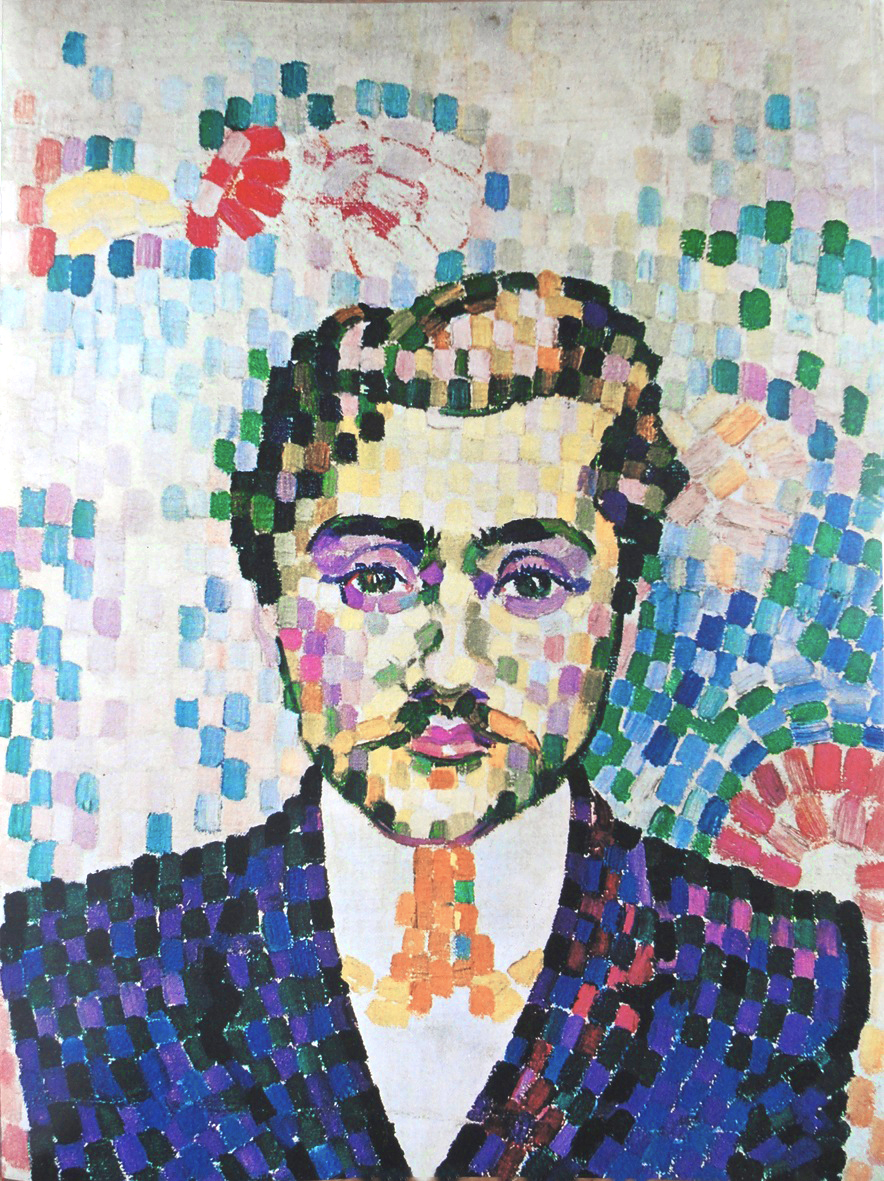 #88
#88
Jean Metzinger
Before theoretical cubism, he explored divisionism, flat areas and modern color in the wake of wild research.
See the collection #89
#89
Frantisek Kupka
František Kupka frees color and simplifies shapes in the extension of Fauvism, symbolism and modern research.
Read the biography #90
#90
Kees van Dongen
He electrifies the modern portrait with orange flesh, smoky eyes and a worldly sensuality that transforms Fauvism into a nocturnal spectacle.
Read the biography #91
#91
Charles Camoin
Member of the Matisse circle at the Moreau workshop, he combines solid drawing, clear palette and southern landscapes crossed by the tawny elk.
Read the biography #92
#92
Sonia Delaunay
It circulates the simultaneous contrasts between painting, textiles, books and fashion, expanding the territory of color.
Read the biography #93
#93
Marcel Duchamp
Its ready-made shifts the artistic value of manufacturing towards choice, context and idea.
Read the biography #94
#94
Niki de Saint Phalle
From Tirs aux Nanas, she transforms violence, color and the female body into a collective and political celebration.
Read the biography #95
#95
Arman
Accumulations of identical objects and cut objects reveal the industrial logic of consumption.
Read the biography #96
#96
Caesar
Its body compressions transform metal scrap into dense blocks of color and memory.
Read the biography #97
#97
Martial Raysse
Neon lights, portraits and beauty products give French New Realism a deliberately artificial seduction.
Read the biography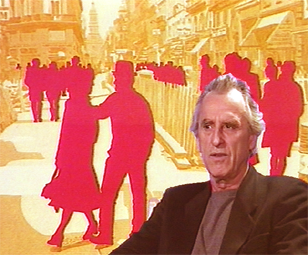 #98
#98
Gérard Fromanger
Its colorful silhouettes and media images combine narrative figuration and political commentary.
Read the biography #99
#99
Jacques Monory
His blue scenes, framing and accidents invent a pictorial noir novel nourished by cinema.
Read the biography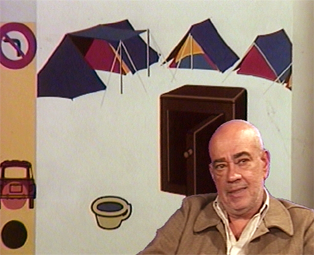 #100
#100
Hervé Télémaque
Objects, words and autobiographical fragments construct a narrative figuration marked by exile and decolonization.
Read the biographyClassification method
A history of French painting in three movements
The Top 100 connects academic foundations, 19th century revolutions and modern experiments. This construction allows us to understand the connections rather than isolating each painter in a simple biographical note.
Renaissance, Grand Siècle, Rococo and neoclassicism build genres, institutions and models.
Romanticism, realism and impressionism shift the subject, the light and the social gaze.
Nabis, Fauvism, Cubism, Abstraction and Post-War Art bring painting back into play.
Links and availability
Why some names open a collection and others Wikipedia
Painters who died in 1956 or before refer to their collection of reproductions on Alpha Reproduction. Artists who died after 1956, alive or still active, refer to their biography Wikipedia in French. This rule provides a coherent path and respects the editorial availability of the works.
This edition has 81 verified internal collections and 19 external biographical resources. No artificial collections have been created to complete the ranking.
Choose a reproduction
Start with the work, then think about the format and the light
A successful reproduction is not chosen only according to the painter's fame. Observe the composition, the colorful dominants, the density of details and the reading distance. An impressionist landscape easily accompanies a bright room; a classic portrait requires more presence; a large format abstraction can structure an entire wall.
The relationship between the original format and the available space is essential. The quality of the support, the fidelity of the colors and the precision of the contrasts must preserve the specific logic of the work, whether it is a chiaroscuro of La Tour, a light of Monet or a black by Soulages.
Documentary benchmarks
Deepen French painting
These large museum bases make it possible to continue research based on works, origins and scientific notices.
Conclusion
French painting remains alive because it has never ceased to contradict itself
It advances through loyalty and refusal: drawing dialogues with color, tradition with the street, the visible subject with the material alone. From Poussin to Monet, from Morisot to Matisse, from Dubuffet to Soulages, each generation transforms the rules received into new possibilities. This Top 100 invites us to look at French painting as a network of voices, places and experiences - one history less national than continually open to the world.
0 comments