

Top 30 · Suprematism
Malevich and radical abstraction
When square, color and white cease to represent the world to become the very subject of painting.
Suprematism was born in Russia in the 1910s, at the crossroads of cubo-futurism, zaoum poetry and a desire to liberate the art of the object. Malevich presented his new system in Petrograd in 1915 during the exhibition 0.10, then developed it in Vitebsk with UNOVIS. This classification distinguishes the historical core, the students and direct collaborators, the neighboring avant-gardes who debated with him, and the European legacies of this radical geometric abstraction.

Colorful planes, diagonals and elementary shapes float in a white designed as infinite space.
Petrograd, 1915
0.10: the Black Square becomes a threshold
During the Last Futuristic Exhibition of 0.10 Paintings, Malevich places his Black Square high up, in the angle traditionally reserved for icons. The gesture does not offer a simple decorative style: it asserts that a surface, a color and a position can produce a complete experience without describing an object.
Vitebsk, 1920
UNOVIS transforms a theory into collective work
At the Vitebsk Art School, Malevich brings together teachers and students under the name UNOVIS, the "Affirmators of the New Art". The black square becomes their common signature while painting, poster, book, theater, porcelain and urban project serve as experimental grounds.
Classification method
Influence, invention and fidelity to radical abstraction
The ranks evaluate the historical proximity to suprematism, the plastic force of the works, the role in its diffusion and the fertility of the extensions. Constructivist or neoplastic artists are only included when their dialogue with Malevich, UNOVIS or non-objective geometry directly sheds light on the history of the movement.
Founding rupture
Top 10 - Malevich, 0.10 and Vitebsk
The inventors and first relays transformed square, color and white into an entirely new pictorial system.
 #1
#1
Kazimir Malevich
Malevich breaks with representation to make form and color autonomous realities. From Black Square to White on White, he transforms the canvas into a field of mental energy and gives suprematism its radical scope.
See the Kazimir Malevich collection #2
#2
El Lissitzky
Lissitzky converts suprematist vocabulary into spatial, typographic and architectural systems. His Prouns serve as a crossing station between painting and construction, preparing a modern language spread from Vitebsk to Berlin.
See the El Lissitzky collection #3
#3
Olga Rozanova
Rozanova pushes color towards an almost immaterial intensity. His non-objective compositions, more chromatic than doctrinal, give the floating planes a speed and freedom which very early broaden the suprematist field.
See the Olga Rozanova collection #4
#4
Ivan Kliun
Kliun participated in the first supremacist demonstrations before exploring light, spheres and color. His work reveals the movement's internal debates: how to maintain geometric purity while renewing pictorial sensation.
See the Ivan Kliun collection #5
#5
Lyubov Popova
Popova constructs painting as a crossroads of forces. His pictorial Architectonics superimpose planes, diagonals and textures, then open towards textiles and theater without losing the abstract demands of his research.
See the Lyubov Popova collection #6
#6
Ivan Punished
Puni organizes with Ksenia Bogouslavskaya the exhibition 0.10 where suprematism is publicly revealed. His paintings-reliefs and assemblages question the border between surface, real object and geometric sign.
See the Ivan Puni collection #7
#7
Ilia Chashnik
Tchachnik is one of Malevich's most precise interpreters. Its rectangles and circles stretched in white extend suprematism in painting, in drawing and even in porcelain decorations.
See the Ilia Tchachnik collection #8
#8
Nikolai Suetin
Souétine transposes suprematist language onto plates, services and architectural projects. Close collaborator of Malevich, he shows how an abstraction born on canvas can become decor, object and environment.
See the Nikolai Souetine collection #9
#9
Vera Ermolaeva
Ermolaeva runs the Vitebsk school and facilitates the arrival of Malevich. Painter, editor and scenographer, she gives the new language an educational and collective dimension essential to the formation of UNOVIS.
See the Vera Ermolaeva collection #10
#10
Nadezhda Udaltsova
Oudaltsova participates in the decisive exhibitions of the Russian avant-garde and develops constructions where the plans seem subject to opposing forces. However, it retains critical independence from Malevich's system.
Read the Wikipedia entryThe non-objective field
Ranks 11 to 15 - Scene, material and counter-models
Around suprematism, geometry meets theater, productive culture, unism and debates on construction.
 #11
#11
Alexandra Exter
Exter circulates cubism, futurism and abstraction between kyiv, Moscow and Paris. Its sets and costumes deploy geometry in the living space of the stage, in direct contact with the body and movement.
See the Alexandra Exter collectionAlexander Rodchenko
Rodchenko confronts suprematism with a materialist and analytical abstraction. His Black on Black, then his move to construction, shifts the question from pure form to processes, materials and production.
See the Alexander Rodchenko collection #13
#13
Varvara Stepanova
Stepanova experimented with non-objective painting before devoting her energy to textiles, clothing and graphics. His journey embodies the shift from easel abstraction to a visual culture intended for modern life.
Read the Wikipedia entry #14
#14
Władysław Strzemiransski
Strzemiÿski transports Malevich's lessons to Poland, where he founds his own system, Unism. He thinks of the canvas as a homogeneous totality and becomes a major relay between the Russian avant-garde and European abstraction.
See the Władysław Strzemiÿski collection #15
#15
Ksenia Bogouslavskaya
Bogouslavskaya plays a decisive role in the organization of the Tramway V and 0.10 exhibitions. His drawing, textile and distribution work accompanies the public emergence of suprematism alongside Ivan Puni.
Read the Wikipedia entryThe Collective Workshop
Ranks 16 to 20 - UNOVIS, ballet and pedagogy
In Vitebsk then Leningrad, students and collaborators took theory into teaching, stage and applied arts.
 #16
#16
Nina Kogan
Kogan taught at Vitebsk and in 1920 designed a Suprematist Ballet where geometric figures became actors. His compositions combine formal economy, stage rhythm and a keen sense of contrast.
See the Nina Kogan collection #17
#17
Lev Yudin
Yudin belongs to the inner circle of students of Vitebsk and then to the GINKhUK of Leningrad. His work links suprematist discipline, study of volume and attentive return to motif without losing the sense of construction.
See the Lev Ioudine collection #18
#18
David Iakerson
Iakerson taught in the Vitebsk school and participated in the collective experiments surrounding UNOVIS. His 1920 compositions organize some colored shapes in a highly polarized white space.
See the David Iakerson collection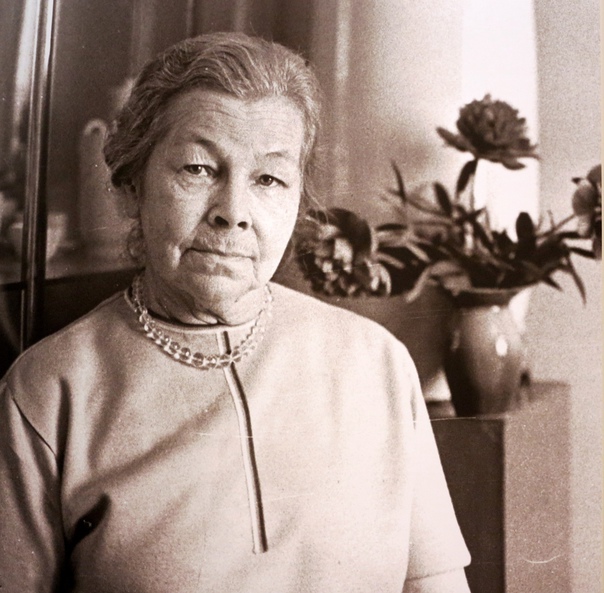 #19
#19
Anna Leporskaya
Leporskaya studies with Malevich, becomes his collaborator and preserves an essential part of his archives. She then transposes her culture of pure form into white porcelain of great sobriety.
Read the Wikipedia entry #20
#20
Vera Pestel
Pestel participates in the networks of the Moscow avant-garde and transforms objects into assemblages of firm plans. His compositions from 1916 to 1917 bear witness to the fruitful neighborhood between cubism, suprematism and constructivism.
See the Vera Pestel collectionTowards construction
Ranks 21 to 25 - Architecture, color and rivalries
Neighboring research sheds light on the shift from painted space to real materials, decor and revolutionary communication.
 #21
#21
Alexander Vesnin
Vesnine explored abstract painting before becoming a central figure in constructivist architecture. His compositions and theater sets make the diagonal a tool for thinking about rhythm, space and modern dynamics.
Read the Wikipedia entry #22
#22
Alexei Morgunov
Morgunov worked with Malevich in the years before the birth of suprematism. His journey from Cubo-Futurism to non-objective art sheds light on the experiments from which the new system emerged.
See the Alexei Morgunov collection #23
#23
Mikhail Matyushin
Matiouchine composes the music for Victoire sur le soleil, a show where one of the prototypes of the Black Square appears. His research on expanded vision and color offers another path, physiological and cosmic, towards abstraction.
See the Mikhail Matiushin collection #24
#24
Gustav Klucis
Klucis went through Malevich's teaching before developing kiosks, photomontages and posters. It converts suprematist diagonals and energy into communication devices in the service of revolutionary culture.
See the Gustav Klucis collection #25
#25
Vladimir Tatlin
Tatlin is Malevich's great rival at the 0.10 exhibition. His counter-reliefs refuse illusionist space in favor of real materials, offering the essential counterpoint to any history of Russian radical abstraction.
See the Vladimir Tatlin collectionAn international geometry
Ranks 26 to 30 - Poland, Europe and real space
Russian radicalism extends into space sculpture, image-architecture and European constructed abstractions.
 #26
#26
Katarzyna Kobro
Kobro conceives of sculpture as a continuous organization of space rather than a closed volume. With Strzemiÿski, she continued Russian debates on geometry, construction and modern experience in Poland.
See the Katarzyna Kobro collection #27
#27
Naum Gabo
Gabo replaces the sculpted mass with transparent planes, lines and materials. His realistic Manifesto extends the ambitions of the Russian avant-garde towards a rational construction of space and movement.
Read the Wikipedia entry #28
#28
Antoine Pevsner
Pevsner shares with his brother Naum Gabo a mathematical and spatial conception of art. Its developable metal surfaces move the geometric abstraction of the plane to a physical presence open to space.
Read the Wikipedia entry #29
#29
Lajos Kassak
Kassak disseminates constructivist and suprematist languages in Vienna and Budapest through his journals and image-architectures. His compositions make publishing a European laboratory of modern geometry.
Read the Wikipedia entry #30
#30
Jean Gorin
Gorin develops in France a constructed abstraction which gradually leaves the surface for relief. Its diagonals and volumes show how the radical geometric ideal extends into space after the Russian avant-gardes.
Read the Wikipedia entrySources and extensions
Understanding suprematism in public collections
Manifestos, paintings, studio photographs and objects allow you to follow the movement from the surface of the painting to the constructed space.
Course on Alpha Reproduction
Black square is not an end, but a beginning
Suprematism deliberately reduces the vocabulary of painting to enlarge its ambition. A square can become a modern icon, a diagonal a sensation of flight, and white a space without horizon where form escapes gravity.
From Rozanova to Lissitzky, from Tchachnik to Strzemiÿski, these thirty journeys show that Malevich's invention never remained locked in a painting. It circulated towards books, stage, porcelain, architecture and constructed abstractions which marked the entire 20th century.
0 comments