

Top 100 · Fauvism
The 100 artists who liberated color
From Matisse to Derain, from Vlaminck to Dufy: a century of liberated color, from Collioure to international modernities.
Fauvism broke out in Paris in 1905 as a brief and decisive revolution. Pure tones no longer obediently describe nature: they construct space, amplify sensation and give the painting its own light. This Top 100 places the tawny core in a larger story, between precursors, companions and heirs.

Landscapes, portraits and workshops on the threshold of modern art.
Understand before classifying
Fauvism is a brief moment with immense consequences
In the fall of 1905, the Salon d'Automne brought together in the same room paintings by Matisse, Derain, Vlaminck, Manguin, Marquet and Camoin. Their violent flat areas, their green shadows and their red skies seem to break with all measure. The word "fauves", initially critical, quickly became the name of a collective adventure.
However, this adventure is neither an organized school nor a uniform program. In Collioure, Matisse and Derain confront the complementary ones in the Mediterranean light. In Chatou, Vlaminck and Derain favor a more striking touch. In Le Havre, Dufy, Friesz and Braque in turn discover what pure color can do to the landscape.
The ranking therefore distinguishes three circles: the historical protagonists, the precursors who make their rupture possible and the artists who extend this chromatic freedom. The order combines influence, quality of the work, proximity to Fauvism and international reach.
Simplify
The shape condenses to make the color more active
Strong contours, flattened volumes and deleted details do not signal a flashback. They allow colored chords to directly organize the surface.
Intensify
A shadow can be green and a sea can turn red
The tawny color does not copy local light. It translates a sensation, balances the masses and invents a harmony capable of holding together without naturalistic illusion.
Connect
Fauvism links the 19th century to the avant-gardes
From Delacroix to Gauguin, from Van Gogh to Signac, several generations prepared his freedom. Expressionism, cubism and abstraction then collect his heritage.
The tawny core
The ten artists who give Fauvism its decisive brilliance
Matisse, Derain, Vlaminck and their companions place pure color in the center of the painting.
 #1
#1
Henri Matisse
Leader of Fauvism, he transformed pure color into sensitive architecture and gave modern painting its great decorative shock.
See the Henri Matisse collection #2
#2
André Derain
Companion of Matisse in Collioure, he pushes the ports, trees and streets towards violent contrasts which sign the fawn birth certificate.
See the André Derain collection #3
#3
Maurice de Vlaminck
It embodies the instinctive side of Fauvism: thick paste, acidic reds, electric greens and suburban landscapes painted like a discharge of energy.
Read the biography of Maurice de Vlaminck on Wikipedia #4
#4
Georges Braque
Before Cubism, it went through a decisive tawny phase where the landscapes of the estaque became blocks of warm, constructed color.
Read the biography of Georges Braque on Wikipedia #5
#5
Raoul Dufy
It gives Fauvism a light, musical and decorative version, made of fast lines, bright beaches and colorful parties.
See the Raoul Dufy collection #6
#6
Kees van Dongen
He electrifies the modern portrait with orange flesh, smoky eyes and a worldly sensuality that transforms Fauvism into a nocturnal spectacle.
Read Kees van Dongen's biography on Wikipedia #7
#7
Albert Marquet
Friend of Matisse, he remains the most sober beast: ports, quays and silhouettes are simplified with calm authority and very safe light.
See the Albert Marquet collection #8
#8
Henri Manguin
It installs the fawn color in Mediterranean intimacy, with nudes, gardens and terraces bathed in gentle warmth.
See the Henri Manguin collection #9
#9
Charles Camoin
Member of the Matisse circle at the Moreau workshop, he combines solid drawing, clear palette and southern landscapes crossed by the tawny elk.
Read the biography of Charles Camoin on Wikipedia #10
#10
Otto Friesz
Coming from the haven like dufy and braque, it adopts wild contrasts before returning to a more classic construction.
See the Othon Friesz collectionCircles and companions
From Parisian workshops to the first avant-gardes
Around the historical core, Nabis painters, independents and experimenters broaden the field of color.
 #11
#11
Louis Valtat
A direct precursor with its saturated Mediterranean landscapes, it announces the tawny chromatic violence even before 1905.
See the Louis Valtat collection #12
#12
Jean Puy
Close to Matisse and independents, it defends a frank, sensual and readable color, happier than noisy.
Read Jean Puy's biography on Wikipedia #13
#13
Georges Rouault
Student of Gustave Moreau with Matisse, he shares the expressive intensity of the wild animals while charging it with spiritual gravity.
Read the biography of Georges Rouault on Wikipedia #14
#14
Emilie Charmy
A rare and powerful figure in Fauvist modernism, she paints nudes, flowers and portraits with free, direct and deliberately anti-academic material.
Read the biography of Émilie Charmy on Wikipedia #15
#15
Robert Delaunay
Heir to the tawny shock, he pushes color towards orphism, circular rhythms and a light that has become an autonomous subject.
See the Robert Delaunay collection #16
#16
Auguste Herbin
Having gone through Fauvism before abstraction, from 1905 he retained a taste for frank tones and strongly architectural forms.
Read the biography of Auguste Herbin on Wikipedia #17
#17
Pierre Girieud
Companion of the avant-gardes of the autumn living room, it connects symbolism, fauvism and great decoration through intense flat areas.
See the Pierre Girieud collection #18
#18
Henry Ottmann
It contributes to the wild climate with its landscapes, its stations and its modern scenes crossed by colorful light.
See the Henri Ottmann collection #19
#19
Henri Lebasque
Close to wild animals in the warmth of his palette, he transforms family scenes and gardens into southern harmonies.
See the Henri Lebasque collection #20
#20
André Dunoyer de Segonzac
He crosses fawn modernity before asserting a more earthy painting, structured by drawing and muted tones.
Read the biography of André Dunoyer de Segonzac on Wikipedia #21
#21
Maurice Marinot
Painter and glassmaker, he crosses Fauvism with massive colors and a simplification which announces his art of glass.
Read the biography of Maurice Marinot on Wikipedia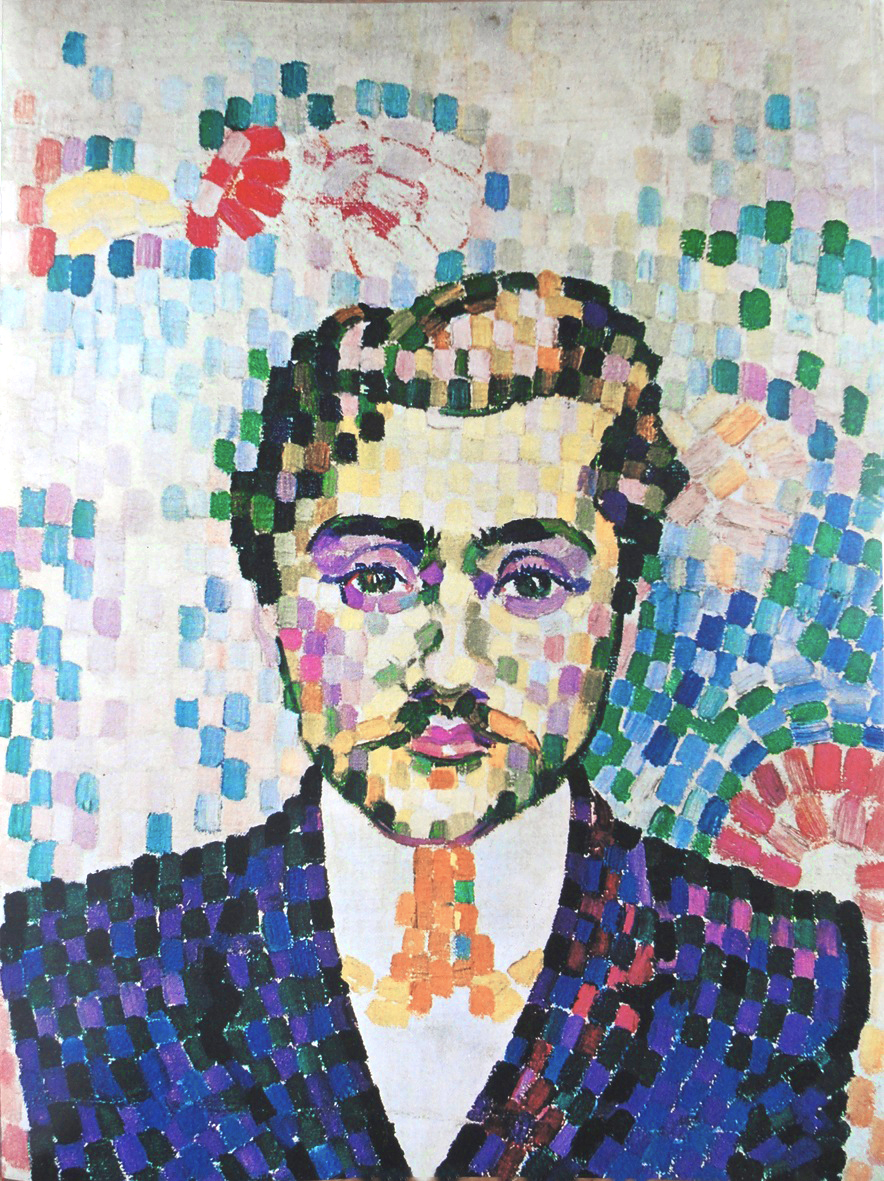 #22
#22
Jean Metzinger
Before theoretical cubism, he explored divisionism, flat areas and modern color in the wake of wild research.
See the Jean Metzinger collection #23
#23
Henri Le Fauconnier
A transitional painter, he links wild simplification to the volumes of living room cubism.
See the Henri Le Fauconnier collection #24
#24
Francis Picabia
Before Dada, he crossed the colorful avant-gardes with a freedom that prolonged the wild insolence.
See the Francis Picabia collection #25
#25
Paul Sérusier
With Nabi synthetism, he prepares the autonomous color that the wild animals will push to the point of fire.
See the Paul Sérusier collectionThe sources of the rupture
From romanticism to post-impressionism, color conquers its autonomy
Delacroix, Gauguin, Van Gogh, Seurat and Cézanne constitute the active memory whose discoveries the Fauves accelerate.
 #26
#26
Henri Edmond Cross
A major neo-impressionist, he released the Mediterranean touch and color from which Matisse and Drain learned a direct lesson.
See the Henri-Edmond Cross collection #27
#27
Felix Vallotton
Through its flat areas, its sharp blacks and its graphic sense, it offers wild animals a model of radical simplification.
See the Félix Vallotton collection #28
#28
Emile Bernard
Its partitionism and its flat pavement areas give a theoretical basis to the synthetic color used by wild animals.
See the Émile Bernard collection #29
#29
Paul Gauguin
An essential precursor, he wrests color from naturalist imitation and imposes the idea of a decorative and mental painting.
See the Paul Gauguin collection #30
#30
Vincent van Gogh
Its chromatic intensity, its nervous touch and its fiery landscapes open the way to the colorful expression of 1905.
See the Vincent van Gogh collection #31
#31
Georges Seurat
Its methodical division of tones prepares the optical brilliance which the Beasts will experience more instinctively.
See the Georges Seurat collection #32
#32
Paul Signac
Its mosaics of pure touches and its Mediterranean landscapes offer Fauvism a true grammar of color.
See the Paul Signac collection #33
#33
Paul Cezanne
Its construction using colored plans teaches young painters to build the painting without depending on academic modeling.
See the Paul Cézanne collection #34
#34
Odilon Redon
His symbolist visions and saturated pastels open a path where color becomes mental, poetic and autonomous.
See the Odilon Redon collection #35
#35
Pierre Bonnard
Its enveloping color transforms daily intimacy into a vibrant surface, close to wild research.
See the Pierre Bonnard collection #36
#36
Édouard Vuillard
It densifies interiors with patterns, flat areas and muted accords, announcing a painting designed as a decor.
See the Édouard Vuillard collection #37
#37
Maurice Denis
His theory of the painted surface and his synthetic harmonies provide a decisive basis for the Fauvist generation.
See the Maurice Denis collection #38
#38
Aristide Maillol
In his Mediterranean paintings, the clarity of the masses and the decorative simplification join the fawn ideal.
See the Aristide Maillol collection #39
#39
Ker-Xavier Roussel
Its luminous mythologies unite Nabi heritage, dreamed nature and decorative freedom of color.
See the Ker-Xavier Roussel collection #40
#40
Maximilian Luce
His neo-impressionist research shows how urban light and divided touch can intensify sensation.
See the Maximilien Luce collection #41
#41
Lucien Pissarro
Between France and England, he spread neo-impressionism and a structured conception of pure color.
See the Lucien Pissarro collection #42
#42
Henri Rousseau
His jungles and portraits without academic perspective fascinate the avant-gardes with their visual frankness.
See the Henri Rousseau collection #43
#43
Gustave Moreau
His workshop trains Matisse, Rouault, Manguin and Camoin by encouraging imagination and chromatic independence.
See the Gustave Moreau collection #44
#44
Eugene Delacroix
Its complementary contrasts make color a dramatic force that the Fauves claim as their ancestor.
See the Eugène Delacroix collection #45
#45
Claude Monet
His series demonstrate that light can dissolve the pattern and release ever-renewed colored chords.
See the Claude Monet collection #46
#46
Pierre-Auguste Renoir
Its chromatic sensuality and taste for warm tones nourish the Mediterranean painting of the Fauves.
See the Pierre-Auguste Renoir collection #47
#47
Camille Pissarro
His openness to new experiences links impressionism, divisionism and the modern conquest of color.
See the Camille Pissarro collection #48
#48
Édouard Manet
Its sharp flat areas and dark contrasts reduce depth in favor of an immediate presence of the surface.
See the Édouard Manet collection #49
#49
Alexej von Jawlensky
Its frontal faces and fiery colors prolong the Fauvist liberation in European expressionism.
See the Alexej von Jawlensky collection #50
#50
Wassily Kandinsky
It transforms the chromatic intensity discovered in front of the motif into spiritual and then abstract language.
See the Wassily Kandinsky collectionA European wave
Expressionism, abstraction and new geometries
The wild lesson circulates to Germany, Vienna, Russia and Italy, where it encounters other ways of transforming the visible.
 #51
#51
Franz Marc
His animals with symbolic colors show how the tawny palette can become inner vision.
See the Franz Marc collection #52
#52
August Macke
Its luminous scenes combine French clarity, decorative rhythm and Blaue Reiter energy.
See the August Macke collection #53
#53
Ernst ludwig kirchner
Its nervous line and acidic tones transpose wild violence into the great modern city.
See the Ernst Ludwig Kirchner collection #54
#54
Erich Heckel
Its angular figures and simplified landscapes give color a new psychological tension.
Read the biography of Erich Heckel on Wikipedia #55
#55
Karl Schmidt-Rottluff
Its abrupt contrasts and vigorously cut shapes bring Die Brücke closer to wild audacity.
Read Karl Schmidt-Rottluff's biography on Wikipedia #56
#56
Emil Nolde
Its flowers, seas and figures burn with an emotional color that goes beyond any naturalistic description.
See the Emil Nolde collection #57
#57
Gabriele Muenter
His Murnau landscapes condense the motif into sharp flat areas, dark contours and luminous accords.
Read Gabriele Münter's biography on Wikipedia #58
#58
Marianne von Werefkin
Its night scenes and colorful roads make color a dramatic and spiritual instrument.
See the Marianne von Werefkin collection #59
#59
Paula Modersohn-Becker
His simplified and matte portraits announce a modernity where color supports presence rather than illusion.
See the Paula Modersohn-Becker collection #60
#60
Lovis Corinth
His increasingly free touch connects German impressionism to an intensely expressive pictorial material.
See the Lovis Corinth collection #61
#61
Max Pechstein
It unites exoticism, monumental figures and powerful flat areas in a solar version of expressionism.
See the Max Pechstein collection #62
#62
Otto Mueller
Its bathers and landscapes reduce shapes to a supple, matte and deeply human harmony.
See the Otto Mueller collection #63
#63
Max Beckmann
Its dense composition and severe contrasts give the Fauvist heritage a tragic power.
See the Max Beckmann collection #64
#64
Oskar Kokoschka
His portraits explore psychology through striking colors and a touch that always seems to be in motion.
Read Oskar Kokoschka's biography on Wikipedia #65
#65
Egon Schiele
Its incisive line and unreal skin tones radicalize the break with naturalist representation.
See the Egon Schiele collection #66
#66
Gustav Klimt
Its ornamental surfaces demonstrate that figure, pattern and color can share the same decorative space.
See the Gustav Klimt collection #67
#67
Amedeo Modigliani
His elongated portraits balance simplification, continuous outline and muffled color in an immediately modern formula.
See the Amedeo Modigliani collection #68
#68
Pablo Picasso
His passage through pure colors and then Cubism shows the speed with which the avant-gardes surpass Fauvism.
Read the biography of Pablo Picasso on Wikipedia #69
#69
Juan Grey
His cubist rigor retains exceptional attention to colorful accords and decorative clarity.
See the Juan Gris collection #70
#70
Fernand Léger
Its tubular shapes and bold colors transport the wild lesson into the mechanical universe.
See the Fernand Léger collection #71
#71
Sonia Delaunay
It circulates the simultaneous contrasts between painting, textiles, books and fashion, expanding the territory of color.
Read Sonia Delaunay's biography on Wikipedia #72
#72
Natalia Goncharova
It combines icon, popular art, fauvism and futurism in a Russian synthesis of great vigor.
Read Natalia Goncharova's biography on Wikipedia.jpg?width=960) #73
#73
Mikhail Larionov
From neoprimitivism to rayonism, he transforms color into energy which passes through and reconstructs the motif.
Read Mikhail Larionov's biography on Wikipedia #74
#74
Kazimir Malevich
Its colorful and synthetic beginnings precede an abstraction where the surface becomes an absolute space.
See the Kazimir Malevich collection #75
#75
Frantisek Kupka
His research on chromatic rhythms leads the color of the visible pattern towards abstraction.
Read František Kupka's biography on WikipediaColor without borders
School of Paris, Scottish colorists and international modernities
From Mexico to Brazil, from Spain to Scotland, liberated color is becoming a global language.
 #76
#76
Umberto Boccioni
It combines fragmentation, speed and intense colors to give a pictorial shape to modern dynamism.
See the Umberto Boccioni collection #77
#77
Giacomo Balla
His analysis of light and movement makes color vibrate until it transforms it into a futuristic rhythm.
Read Giacomo Balla's biography on Wikipedia #78
#78
Gino Severini
Her dancers and urban scenes combine divisionism, movement and colorful bursts in a futuristic syntax.
Read Gino Severini's biography on Wikipedia #79
#79
Carlo Carrà
From futuristic turbulence to metaphysical painting, it shows several possible destinies of modern color.
Read Carlo Carrà's biography on Wikipedia.jpg?width=960) #80
#80
Giorgio de Chirico
Its silent squares use unreal chords to transform the city into a mental enigma.
Read the biography of Giorgio de Chirico on Wikipedia #81
#81
Marc Chagall
Its free palette suspends memories, figures and villages in a poetic space freed from naturalist logic.
Read Marc Chagall's biography on Wikipedia #82
#82
Chaïm Soutine
Its tormented material and deep reds prolong the expressive violence of the tawny color.
See the Chaïm Soutine collection #83
#83
Nicholas of Stael
Its monumental color blocks show how color can still construct the landscape after abstraction.
See the Nicolas de Staël collection #84
#84
Frida Kahlo
His self-portraits combine precision, personal symbols and Mexican colors in a singular modernity.
See the Frida Kahlo collection #85
#85
Diego Rivera
His wall compositions give color a monumental, historical and collective scope.
Read Diego Rivera's biography on Wikipedia #86
#86
Joaquin Sorolla
Its Mediterranean light and colorful shadows offer a Spanish parallel to the Fauves' research.
See the Joaquin Sorolla collection #87
#87
Ramon Casas
His portraits and urban scenes connect modernist elegance, graphic synthesis and social observation.
See the Ramon Casas collection #88
#88
Joaquin Torres-Garcia
It moves from colorful Mediterraneanism to a constructive order that retains the clarity of the solid colors.
See the Joaquin Torres-Garcia collection #89
#89
Tadeusz Makowski
Its simplified figures and constructed tones bring the School of Paris closer to tender primitivism.
See the Tadeusz Makowski collection #90
#90
Nils Dardel
Its elegant design and acidic colors make up a modern, ironic and decorative theater.
See the Nils Dardel collection #91
#91
Samuel Peploe
His still lifes and landscapes bring together Cézannian structure, Scottish light and tawny colors.
See the Samuel Peploe collection #92
#92
Francis Cadell
Its refined interiors and landscapes of Iona transform the bright areas into decorative architecture.
See the Francis Cadell collection #93
#93
John Duncan Fergusson
In Paris, he directly assimilated the Fauvist lesson and became one of the great transmitters of Scottish colorism.
Read the biography of John Duncan Fergusson on Wikipedia #94
#94
Leslie Hunter
His thick and luminous still lifes make color the main material of the painting.
See the Leslie Hunter collectionCuno Amiet
His Swiss landscapes and portraits combine divisionism, simplification and expressionist intensity.
Read the biography of Cuno Amiet on Wikipedia #96
#96
Giovanni Giacometti
Its solar palette transposes post-impressionism into Alpine landscapes and family life.
See the Giovanni Giacometti collection #97
#97
Ferdinand Hodler
Its parallel rhythms and its large symbolic flat areas prepare a European decorative modernity.
See the Ferdinand Hodler collection #98
#98
Amadeo de Souza-Cardoso
He condenses Fauvism, Cubism and Futurism into a brief work with extraordinarily inventive colors.
See the Amadeo collection by Souza-Cardoso.jpg?width=960) #99
#99
Anita Malfatti
His painting introduces to Brazil an expressive modernity nourished by Germany, Paris and New York.
Read Anita Malfatti's biography on Wikipedia #100
#100
Tarsila do Amaral
It combines bright flat areas, simplified shapes and Brazilian imagination in an immediately recognizable modernity.
Read the biography of Tarsila do Amaral on WikipediaRead the ranking
How the 100 artists were selected
The first ranks go to the historical actors of Fauvism and to those who immediately define its perception. The following ranks broaden the view to neighboring workshops, post-impressionist sources and movements which take up color as an autonomous force.
This choice does not affirm that the hundred artists all belonged to the Fauve group. Rather, it shows a genealogy and circulation: what the Fauves receive, what they transform and what other artists then take to new territories.
Choose a reproduction
Look at the colorful chord and tension of the pattern first
For a solar and decorative presence, start with Matisse, Marquet, Manguin or Dufy. For a more conflicting energy, observe Derain, Vlaminck, Nolde or Kirchner. The landscapes of Signac, Cross, Amiet and Peploe are particularly suitable for bright spaces, while Rouault, Soutine and Beckmann produce a denser atmosphere.
For artists who died after this date, the link leads to their French Wikipedia biography.
Continue the discovery
Guides, rankings and references
Explore Alpha Reproduction
Museum references
Essential benchmarks
Fauvism made color irreversible
The historical movement only lasted a few years, but it definitively modified painting. After 1905, color could contradict the motif, distort the space, carry an emotion or itself become the subject of the painting. Matisse continued this freedom for half a century, while his companions and heirs directed him towards expressionism, cubism, abstraction and national modernities.
These hundred artists thus allow us to look at Fauvism as a crossroads rather than as a parenthesis. Start with the ten essential protagonists, then follow the links to the precursors or international scenes depending on the light, tension and colorful harmony you are looking for.
0 comments