

100 artists · a world history
Top 100 famous abstract painters
From the first visions of Hilma af Klint and Kandinsky to the colorful fields of Rothko, the blacks of Soulages and the spaces of Zao Wou-Ki: a century of liberated forms.

From vibration to outrenoir
Abstraction has not erased the world: it has invented other ways of making it visible
When Kandinsky compares colors to musical instruments, he does not seek to make reality disappear. He wants to achieve what lies behind his appearance: a tension, a rhythm, an inner necessity. At the same time, Hilma af Klint paints monumental cycles nourished by science and spirituality, Kupka transforms movement into colorful planes, while Mondrian seeks in the grid a balance capable of overcoming the accidents of the landscape.
After the Second World War, the canvas changed scale again. Pollock inscribes the movements of his body, Rothko constructs spaces of color which seem to breathe, Soulages makes black a source of light and Gutai's artists directly engage the material. Abstraction is no longer a single destination: it becomes a set of methods for experiencing space, time and presence.
This Top 100 follows these connections without reducing history in Paris or New York. Zao Wou-Ki, SH Raza, Kim Whanki, Ibrahim El-Salahi, Lygia Clark and Ernest Mancoba remind us that modernisms circulate, translate and transform through contact with very different traditions.
Switch to artistsThe pioneers · #1 -20
Birth and first revolutions
From the first spiritual abstractions to the geometric avant-gardes, these artists made possible an art freed from imitation.
 #1
#1
Wassily Kandinsky
It makes color, line and rhythm an autonomous language, often compared to a musical composition.
Discover the Wassily Kandinsky collection #2
#2
Piet Mondrian
Its grids, black lines and primary colors give neoplasticism its clearest and most influential form.
Discover the Piet Mondrian collection #3
#3
Kazimir Malevich
With suprematism and the Black Square, he pushed painting towards an unprecedented geometric radicality.
Discover the Kazimir Malevich collection #4
#4
Hilma af Klint
Its monumental cycles, nourished by spirituality and science, precede several traditional stories of the birth of abstraction.
Discover the Hilma af Klint collection #5
#5
Frantisek Kupka
Colors, movement and cosmic rhythms make him one of the essential pioneers of European abstraction.
See Frantisek Kupka on Wikipedia #6
#6
Robert Delaunay
His Orphism transforms the modern city, light and colorful records into vibrant painting.
Discover the Robert Delaunay collection #7
#7
Sonia Delaunay
She extends simultaneous abstraction to painting, textiles, fashion and books with remarkable inventiveness.
See Sonia Delaunay on Wikipedia #8
#8
Paul Klee
His universe of signs, music and poetry links abstract experimentation and figurative imagination.
Discover the Paul Klee collection #9
#9
Theo van Doesburg
Founder of De Stijl, he imposes a vocabulary of planes, diagonals and elementary colors.
Discover the Theo van Doesburg collection #10
#10
Laszlo Moholy-Nagy
At the Bauhaus, he explored light, photography, typography and painting as a single modern laboratory.
Discover the Laszló Moholy-Nagy collection #11
#11
Lyubov Popova
His cubo-futurism then his constructivism give the geometric form a mechanical and revolutionary energy.
Discover the Lyubov Popova collection #12
#12
Alexandra Exter
It connects cubism, futurism, theater and applied arts in a work of exceptional mobility.
Discover the Alexandra Exter collection #13
#13
Sophie Taeuber-Arp
Geometry, dance, textiles and hobby meet in a precise, playful and deeply modern art.
Discover the Sophie Taeuber-Arp collection #14
#14
Joaquin Torres Garcia
Its universal constructivism mixes modern grid, archaic symbols and Latin American identity.
Discover the Joaquin Torres Garcia collection #15
#15
Jackson Pollock
Dripping transforms the canvas into a direct trace of movement and becomes the emblem of action painting.
Discover the Jackson Pollock collection #16
#16
Barnett Newman
Its vast colorful fields crossed by zips give the painting an almost architectural presence.
See Barnett Newman on Wikipedia #17
#17
Arshile Gorky
Its biomorphic language forms a decisive bridge between European surrealism and American abstract expressionism.
Discover the Arshile Gorky collection #18
#18
Nicholas of Stael
Its blocks of colored material maintain a unique balance between landscape, sensation and abstraction.
Discover the Nicolas de Staël collection #19
#19
Arthur Dove
Among the first American abstracts, he condensed the forces of nature into organic forms and colorful rhythms.
Discover the Arthur Dove collection #20
#20
Patrick henry bruce
Synchromism allows him to organize color as a musical and architectural structure.
Discover the Patrick Henry Bruce collectionModernisms and the New York School · #21 -40
From Cubism to Abstract Expressionism
Color, gesture and material take over: abstraction becomes one of the great international languages of the 20th century.
 #21
#21
Morgan Russell
Co-founder of synchromism, he constructs his paintings from moving chromatic volumes.
Discover the Morgan Russell collection #22
#22
Francis Picabia
His unpredictable journey crosses cubism, abstraction, hobby and imaginary machines without ever freezing.
Discover the Francis Picabia collection #23
#23
Albert Gleizes
Painter and theorist of Cubism, he developed a rhythmic construction which gradually led towards abstraction.
Discover the Albert Gleizes collection #24
#24
Fernand Léger
Mechanical volumes, frank contrasts and urban modernity give his painting monumental power.
Discover the Fernand Léger collection #25
#25
Jean Metzinger
His cubist reflection on multiple points of view opens the representation towards a more abstract organization.
Discover the Jean Metzinger collection #26
#26
Juan Grey
His synthetic cubism combines rigor, clarity and colorful subtlety in perfectly constructed compositions.
Discover the Juan Gris collection #27
#27
Henri Le Fauconnier
Its powerful volumes and cubist landscapes participate in the first ruptures which lead towards abstraction.
Discover the Henri Le Fauconnier collection #28
#28
Luigi Russolo
Futurist painter and sound inventor, he translates speed, urban energy and vibration into the visual arts.
Discover the Luigi Russolo collection #29
#29
Lyonel Feininger
Its crystalline architecture and prismatic light bring cubism, expressionism and Bauhaus into dialogue.
Discover the Lyonel Feininger collection #30
#30
Marsden Hartley
Landscapes, symbols and personal memory condense in him into daring surfaces of American modernism.
Discover the Marsden Hartley collection #31
#31
Mark Rothko
Its vast, colorful fields transform the canvas into a meditative experience, where light seems to come from within.
See Mark Rothko on Wikipedia #32
#32
Willem de Kooning
His painting combines gesture, material and fragments of figure in a tension which remains one of the signatures of the New York School.
See Willem de Kooning on Wikipedia #33
#33
Franz Kline
Its large black signs, rapid and architectural, gave the pictorial gesture an almost monumental force.
See Franz Kline on Wikipedia #34
#34
Lee Krasner
She constantly renews her language, from collage to broad chromatic rhythms, with a rigor long underestimated.
See Lee Krasner on Wikipedia #35
#35
Clyfford Still
Its colored cliffs with torn contours make the surface an immense, tense and almost geological space.
See Clyfford Still on Wikipedia #36
#36
Ad Reinhardt
His black paintings reduce the composition to tiny differences and invite the eye to slow down.
See Ad Reinhardt on Wikipedia #37
#37
Helen Frankenthaler
With the fluid color absorbed by the canvas, it opens a decisive path between expressionist gesture and chromatic fields.
See Helen Frankenthaler on Wikipedia #38
#38
Joan Mitchell
Its key beams translate the memory of landscapes into intense, luminous and emotional rhythms.
See Joan Mitchell on Wikipedia #39
#39
Hans Hofmann
Painter and teacher, he theorizes the play of pushing and removing which gives color an active depth.
See Hans Hofmann on Wikipedia #40
#40
Robert Motherwell
Its black shapes and collages give abstraction an immediately recognizable intellectual gravity.
See Robert Motherwell on WikipediaColor, sign and construction · #41-60
The new surface territories
Color Field, lyrical abstraction and concrete art show that a canvas can be space, light, rhythm and system at the same time.
 #41
#41
Sam Francis
Splashes, white reserves and saturated colors create an open, airy and vibrant space for him.
See Sam Francis on Wikipedia #42
#42
Morris Louis
Its pigment flows make unprepared canvas a place of transparency, speed and balance.
See Morris Louis on Wikipedia #43
#43
Kenneth Noland
Targets, rafters and bands explore color perception and painting structure with great clarity.
See Kenneth Noland on Wikipedia #44
#44
Ellsworth Kelly
It isolates shapes, curves and bold colors to construct an abstraction of precise and physical simplicity.
See Ellsworth Kelly on Wikipedia #45
#45
Agnes Martin
Its delicate grids and pale bands combine order, silence and emotion in a painting of rare restraint.
See Agnes Martin on Wikipedia #46
#46
Cy Twombly
Writing, scratching and ancient memory mingle in surfaces where the sign becomes both gesture and poetry.
See Cy Twombly on Wikipedia #47
#47
Pierre Soulages
By working with light reflected by black, he transforms a color known to be dark into a changing space.
See Pierre Soulages on Wikipedia #48
#48
Hans Hartung
Streaks, flashes and rapid gestures condense the energy of the drawing into an incisive and controlled abstraction.
See Hans Hartung on Wikipedia #49
#49
Georges Mathieu
His spectacular painting unleashes sign and speed, often during public executions that have become famous.
See Georges Mathieu on Wikipedia #50
#50
Jean Paul Riopelle
Its mosaics of material applied with a knife construct dense, colorful and powerfully rhythmic surfaces.
See Jean-Paul Riopelle on Wikipedia #51
#51
Zao Wou-Ki
It brings ink and Chinese tradition into dialogue with the wide open spaces of Western abstract painting.
See Zao Wou-Ki on Wikipedia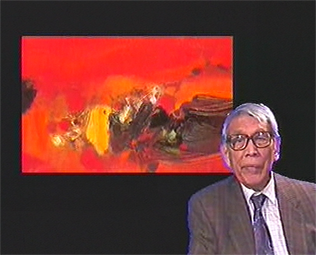 #52
#52
Chu Teh-Chun
His luminous compositions translate mountains, mists and natural forces into a fully abstract language.
See Chu Teh-Chun on Wikipedia #53
#53
Maria Helena Vieira da Silva
Networks, unstable perspectives and mental cities give his paintings a labyrinthine depth.
See Maria Helena Vieira da Silva on Wikipedia #54
#54
Serge Poliakoff
Its interlocking colored shapes build silent, dense and immediately identifiable balances.
See Serge Poliakoff on Wikipedia #55
#55
Auguste Herbin
Its plastic alphabet combines geometric shapes, colors and sounds in a rigorous visual system.
See Auguste Herbin on Wikipedia #56
#56
Jean Helion
A figure of Abstraction-Creation, in the 1930s he developed a language of curved volumes and spatial tensions.
See Jean Hélion on Wikipedia #57
#57
Otto Freundlich
Its chromatic mosaics carry a humanist vision where each form participates in a collective totality.
Discover the Otto Freundlich collection #58
#58
Jean Arp
Its flexible and biomorphic shapes erase the border between painting, relief and sculpture.
See Jean Arp on Wikipedia #59
#59
Josef Albers
With his Tributes to the Square, he demonstrates that color constantly changes depending on its neighborhood.
See Josef Albers on Wikipedia #60
#60
Max Bill
His concrete art unites mathematical precision, color and visual clarity in perfectly constructed compositions.
See Max Bill on WikipediaA global abstraction · #61-80
Optics, geometry and continents in dialogue
Abstraction unfolds from Europe to the Americas, from the Middle East to Asia, reinventing traditions, architectures and perceptions.
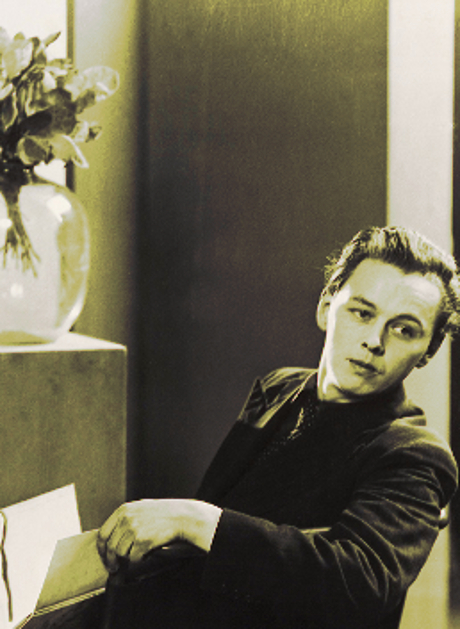 #61
#61
Victor Vasarely
His geometric networks and optical illusions popularized an abstraction based on perception.
See Victor Vasarely on Wikipedia #62
#62
Bridget Riley
Lines, contrasts and repetitions set the vision in motion and literally vibrate the surface.
See Bridget Riley on Wikipedia #63
#63
Frank Stella
From Black Paintings to exuberant reliefs, he constantly rethinks what a painting can be.
See Frank Stella on Wikipedia #64
#64
Carmen Herrera
Its sharp diagonals and sharp flat areas prove the expressive power of a radical economy.
See Carmen Herrera on Wikipedia #65
#65
Alma Thomas
Its colorful touches, inspired by nature and the cosmos, compose luminous and generous rhythms.
See Alma Thomas on Wikipedia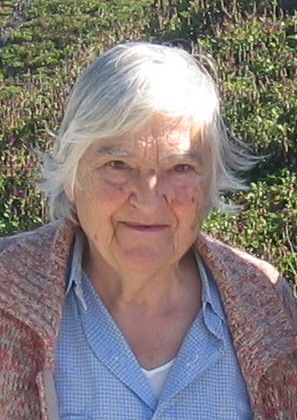 #66
#66
Etel Adnan
Mountains, sun and blocks of color condense the landscape into simple, direct and intensely poetic signs.
See Etel Adnan on Wikipedia #67
#67
Fahrelnissa Zeid
His vast kaleidoscopic compositions combine European modernism, mosaic and Byzantine memory.
See Fahrelnissa Zeid on Wikipedia #68
#68
Monir Shahroudy Farmanfarmaian
She reinvents Persian geometries and the mirror to produce dazzling abstract works.
See Monir Shahroudy Farmanfarmaian on Wikipedia #69
#69
Wifredo Lam
His hybrid language mixes cubism, surrealism and Afro-Caribbean spiritualities in totemic forms.
See Wifredo Lam on Wikipedia #70
#70
Roberto Matta
His psychological landscapes open cosmic spaces where organic forms and energy seem to be changing.
See Roberto Matta on Wikipedia #71
#71
Carlos Merida
It unites geometric modernism and Mesoamerican heritage in a clear, colorful and monumental work.
See Carlos Mérida on Wikipedia#72
Gunther Gerzso
Nested shots and mineral colors evoke secret architecture and archaeological landscapes.
See Gunther Gerzso on Wikipedia #73
#73
Tomas Maldonado
Painter and theorist, he defends a constructed, rational abstraction linked to modern design.
See Tomás Maldonado on Wikipedia #74
#74
Lygia Clark
It releases the geometric shape of the wall and gradually transforms the work into a participatory experience.
See Lygia Clark on Wikipedia #75
#75
Helio Oiticica
Color, space and movement leave the painting to become environments, capes and real-life situations.
See Hélio Oiticica on Wikipedia #76
#76
Mira Schendel
His fragile works bring lines, letters, transparency and silence into dialogue with exceptional subtlety.
See Mira Schendel on Wikipedia #77
#77
Judith Lauand
Its dynamic geometric structures establish him as a major and long-lost figure in Brazilian concrete art.
See Judith Lauand on Wikipedia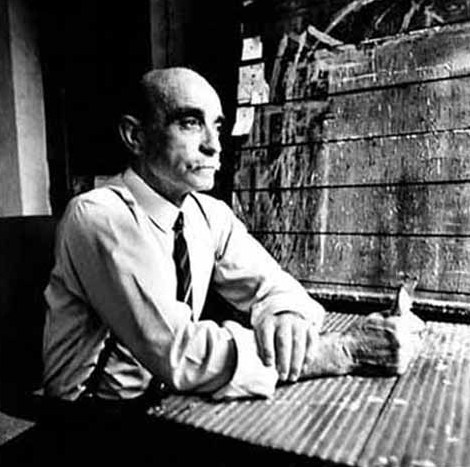 #78
#78
Lucio Fontana
By splitting the canvas, he literally opens the painting onto real space and changes its status.
See Lucio Fontana on Wikipedia #79
#79
Alberto Burri
Bags, burnt plastics and cracks make the material itself the subject of the painting.
See Alberto Burri on Wikipedia #80
#80
Antoni Tàpies
Poor walls, signs and materials give his works a physical, historical and spiritual presence.
See Antoni Tàpies on WikipediaMatter, gesture and legacies · #81 -100
Postwar international paths
Informal, CoBrA, Gutai and non-Western modernisms expand the narrative with new materials, new bodies and new signs.
 #81
#81
Manolo Millares
His lacerated and knotted burlap transforms the material wound into pictorial language.
See Manolo Millares on Wikipedia #82
#82
Antonio Saura
His nervous black and white maintains a tense link between figure, gesture and abstraction.
See Antonio Saura on Wikipedia #83
#83
Ben Nicholson
Its white reliefs and refined compositions create a subtle balance between form, light and space.
See Ben Nicholson on Wikipedia#84
Terry Frost
Bows, discs and bold colors translate the coastal landscape into joyful and direct rhythms.
See Terry Frost on Wikipedia #85
#85
Patrick Heron
Its floating shapes and bright colors affirm the expressive autonomy of the painting.
See Patrick Heron on Wikipedia #86
#86
Victor Pasmore
Moving from landscape to abstraction, he explores relief, construction and balance with great coherence.
See Victor Pasmore on Wikipedia #87
#87
William scott
It reduces still lifes and figures to flat, sober and sensual signs.
See William Scott on Wikipedia #88
#88
Asger Jorn
Wild color, humor and collective energy nourish a free, irreverent and deeply European painting.
See Asger Jorn on Wikipedia #89
#89
Karel Appel
Its thick material and primitive colors give the shapes immediate vitality.
See Karel Appel on Wikipedia #90
#90
Peter Alechinsky
It combines gesture, ink, drawn margins and narration in a flexible language between abstraction and sign.
See Pierre Alechinsky on Wikipedia #91
#91
Kazuo Shiraga
Painting with his feet suspended from a rope, he makes the body and the material the driving forces of the work.
See Kazuo Shiraga on Wikipedia#92
Atsuko Tanaka
Circles, wires and electric colors translate networks, light and energy into a singular abstraction.
See Atsuko Tanaka on Wikipedia#93
Jiro Yoshihara
Founder of Gutai, he is looking for a creation without imitation, famous for its calligraphic circles.
See Jiro Yoshihara on Wikipedia #94
#94
Toko Shinoda
It unites calligraphy and modernism in ink compositions reduced to the essential.
See Toko Shinoda on Wikipedia#95
Kim Whanki
Its constellations of blue dots connect Korean memories, night sky and abstract meditation.
See Kim Whanki on Wikipedia#96
VS Gaitonde
Its silent surfaces, worked by layers, signs and erasures, are among the peaks of Indian modernism.
See VS Gaitonde on Wikipedia #97
#97
SH Raza
The bindu, geometry and colors of the earth make its abstraction a cosmic meditation.
See SH Raza on Wikipedia#98
Nasreen Mohamedi
Its fine lines and frames construct a mental space of remarkable precision and restraint.
See Nasreen Mohamedi on Wikipedia#99
Ibrahim El-Salahi
It combines Arabic calligraphy, plant forms and modernism to create a deeply personal abstract language.
See Ibrahim El-Salahi on Wikipedia#100
Ernest Mancoba
His sober painting connects figure, sign and spirituality, at the crossroads of African and European modernism.
See Ernest Mancoba on WikipediaWhat the ranking reveals
One hundred artists, four ways to shift the gaze
Geometry, color, gesture and global circulation do not form watertight boxes. These are four forces that intersect, sometimes contradict each other and give abstraction its capacity for renewal.
Color becomes a subject
From Delaunay to Rothko, from Frankenthaler to Alma Thomas, color no longer fills a form: it organizes space, duration and emotion.
The form constructs its own world
Malevich, Mondrian, Albers or Herrera prove that a square, diagonal or grid can produce as much tension as a narrative scene.
The gesture retains the trace of the body
Pollock, Mitchell, Hartung and Shiraga make the act of painting a visible part of the work: speed, hesitation, pressure and energy remain inscribed in the material.
Abstraction speaks several languages
Calligraphy, cosmologies, landscapes and constructive traditions give rise to distinct modernisms, from Zao Wou-Ki to Raza, from Kim Whanki to El-Salahi.
Chronology of ruptures
Five dates to see abstraction change scale
These landmarks do not tell the whole story, but they show how a private intuition successively becomes movement, international method and new way of inhabiting the surface.
The Paintings for the Temple combine geometry, symbols and spirituality before the most famous manifestos of abstraction.
Suprematism asserts that an elementary form can carry a complete pictorial experience.
The canvas placed on the ground becomes the space of a movement and the painting, the direct memory of an action.
The group engages the body, time and the properties of matter in experimentation without imitation.
Black is no longer just a color: its streaked or smooth surface becomes an instrument for capturing light.
Abstraction in depth
Why has it changed the way we look?
Because she no longer just asks "what does this painting represent?", but "what happens when I look at it?"
Western painting had long perfected illusion: depth, anatomy, light and narrative made it possible to open an imaginary window in the wall. Abstraction shifts the question. The canvas is no longer obliged to make us forget that it is flat; it can assume its edges, its grain, its pigments and its tensions.
This freedom also transforms the place of the spectator. In front of Mondrian, the eye measures intervals. In front of Rothko, he experiences slow light. In front of Pollock, he reconstructs trajectories. In front of Soulages, he moves to see the dark change with the lighting. Watching becomes an activity, not the simple recognition of a subject.
Abstraction has finally made numerous cultural translations possible. Ink, calligraphy, textiles, vernacular architectures or cosmologies can dialogue with the grid and the colored field without dissolving into a single model. Its modernity comes precisely from this ability to accommodate several memories of the form.
Four reading keys
Look at an abstract work without looking too quickly for "what it represents"
A line, a white reserve or a thick material are not clues to solve. These are choices that organize the sensation.
Observe tensions
Locate solid areas, gaps, diagonals and edges. They determine the stability or imbalance of the table.
Follow the neighborhoods
The same color appears warmer, darker or more intense depending on those around it.
Read the surface
Flow, impasto, raw canvas or incision tell the story of the making of the image as much as its composition.
Let the painting act
Some works strike immediately; others reveal their deviations and rhythms after several minutes.
Abstract library
Continue after the hundredth artist
Historical collections allow you to explore available works; encyclopedic resources place movements in context.
In Alpha Reproduction
Frequently asked questions
Abstract art without shortcuts
Some essential answers to understand its pioneers, its currents and the hundred artists in the ranking.
Who painted the first abstract works?
Kandinsky is often presented as the founder of the movement, but Hilma af Klint, František Kupka, Robert Delaunay and several avant-gardes explored non-figurative paths almost simultaneously. The birth of abstraction is therefore collective.
What is the difference between geometric abstraction and lyrical abstraction?
The first favors constructed shapes, lines and measured relationships. The second places more emphasis on gesture, spontaneity, material and the emotional intensity of color.
Is Abstract Expressionism Only American?
The term mainly refers to the post-war New York scene, but comparable gestural and lyrical research also appears in Europe, Canada, Asia and Latin America.
How to look at an abstract painting?
First observe colors, directions, voids, textures and scale. An abstract work is often discovered like music: through its rhythms, its tensions and its breathing.
Why are some artists linked to Wikipedia?
For artists who died after 1956 or are still alive, the link leads to a Wikipedia biographical resource. Older artists remain linked to the collections of reproductions available on the store.
Why does abstraction remain current?
Because it offers a language capable of crossing cultures without imposing a single narrative. It continues to influence painting, design, architecture, fashion and our visual environment.
0 comments