

Top 100 · Modern art
The great shift in modern painting
Cézanne, Matisse, Picasso, Kandinsky, Mondrian, Kahlo and a hundred ways to reinvent the image.
Between the 1860s and the mid-20th century, painting gradually ceased to be defined by the faithful imitation of the visible. Paris remains a decisive center, but Vienna, Munich, Berlin, Moscow, Mexico, New York, Montevideo and Bombay participate in the same upheaval: autonomous color, fragmented space, gesture, dream, abstraction, montage and political commitment.
Color, cubism, abstraction, dreams and global modernities.
Context
When painting no longer has the sole mission of copying the world
Photography, industrialization and social transformations force artists to redefine their role. Manet exposes the surface of the painting; Monet studies perception; Cézanne reconstructs the volumes. Following them, the avant-gardes made subjects in their own right from color, sign, material and even choice of object.
Artistic homes
Paris, Vienna, Munich, Berlin, Moscow, Mexico and New York
Modernism is formed by circulation rather than in a single capital. The Parisian Salons, the Viennese Secession, the Blue Rider, the Bauhaus, the Russian avant-garde, Mexican muralism and the American Armory Show create networks where manifestos, magazines, galleries and workshops accelerate exchanges.
References for looking at the works
Influence, invention, work and international scope
The original fifty artists are preserved; fifty names complete the panorama, notably women and modernisms long told from the margins.
The founding ruptures
Top 10 - Artists who change the definition of painting
From Cézanne to Gauguin, these ten trajectories shift the canvas from representation towards construction, expression and idea.
 #1
#1
Paul Cezanne
Cézanne reconstructs landscape, portrait and still life in relation to unstable tones and volumes. La Montagne Sainte-Victoire becomes a laboratory for him which prepares cubism and abstraction without renouncing sensation.
See the Paul Cézanne collection #2
#2
Henri Matisse
Matisse makes color a space of freedom rather than a simple attribute of objects. From Dance to cut-out papers, he seeks a decorative clarity capable of carrying movement, joy and tension.
See the Henri Matisse collection #3
#3
Pablo Picasso
Picasso crossed and transformed almost all the languages of the 20th century, from analytical cubism to political painting. The Demoiselles d'Avignon and Guernica show his ability to make distortion a thought of history.
Read the biography of Pablo Picasso #4
#4
Wassily Kandinsky
Kandinsky frees line and color from the obligation to represent the visible. His Improvisations and then his geometric compositions seek a pictorial equivalence to rhythm, sound and inner emotion.
See the Wassily Kandinsky collection #5
#5
Marcel Duchamp
Duchamp shifts the artistic question from manufacturing to choice, context and idea. The ready-made and Le Grand Verre make possible a conceptual modernity that goes far beyond painting.
Read the biography of Marcel Duchamp #6
#6
Piet Mondrian
Mondrian gradually reduces tree, facade and landscape to a balance of verticals, horizontals and primary colors. His neoplasticism aims for a dynamic order whose influence extends to architecture and design.
See the Piet Mondrian collection #7
#7
Kasimir Malevich
Malevich pushes painting to the Black Square, the limit image and starting point of suprematism. Its floating shapes offer a space without objects where sensation becomes the only measure.
See the Kasimir Malevich collection #8
#8
Edvard Munch
Munch transforms anxiety, desire, jealousy and mourning into undulating lines and psychic colors. The Cry belongs to a vast Frieze of life where intimate experience takes on a universal scope.
See the Edvard Munch collection #9
#9
Vincent van Gogh
Van Gogh charges each touch with an intensity that animates the sky, field, face and everyday object. His letters illuminate a conscious search for expressive color, far from the sole myth of the cursed artist.
See the Vincent van Gogh collection #10
#10
Paul Gauguin
Gauguin simplifies shapes and separates colors to construct mental and symbolic images. His work remains essential but must also be looked at through the colonial relationships and stories he created around Tahiti.
See the Paul Gauguin collectionColor, geometry and speed
Ranks 11 to 25 - The avant-gardes are taking shape
Neo-impressionism, Fauvism, Cubism, Futurism and the School of Paris invent competing responses to the modern world.
 #11
#11
Georges Seurat
Seurat organizes the divided color with methodical slowness and almost classic ambition. A Sunday at Grande Jatte transforms modern leisure into a silent scene made of calculated light and social distances.
See the Georges Seurat collection #12
#12
Henri de Toulouse-Lautrec
Toulouse-Lautrec captures cabarets, posters and behind the scenes of the show with an incisive line inherited from the print. Its framing makes Montmartre a modern theater where fame and solitude coexist.
See the Henri de Toulouse-Lautrec collection #13
#13
André Derain
Derain shatters the views of Collioure and London into pure contrasts which refuse local color. His later, more classic journey reveals the hesitations of modernism in the face of its own radicalism.
See the André Derain collection #14
#14
Georges Braque
Braque constructed with Picasso the vocabulary of Cubism through fragmentation, signs and pasted papers. His still lifes then maintain a tactile sobriety where space bends around objects.
Read the biography of Georges Braque #15
#15
Juan Grey
Gray gives cubism a clear logic: abstract composition often precedes the identification of objects. Glasses, newspapers and guitars fit into luminous structures of great precision.
See the Juan Gris collection #16
#16
Fernand Léger
Léger transforms machines, bodies and city into cylinders, flat areas and contrasting rhythms. His painting celebrates the collective energy of the industrial world while seeking an accessible and monumental image.
See the Fernand Léger collection #17
#17
Robert Delaunay
Delaunay rotates Eiffel Tower, windows and discs in a light constructed by simultaneous contrasts. His orphism places color at the center of an abstraction linked to urban speed.
See the Robert Delaunay collection #18
#18
Sonia Delaunay
Sonia Delaunay extends the simultaneous color of canvas to books, clothing, textiles and the stage. This circulation abolishes the boundary between fine arts, design and everyday experience.
Read the biography of Sonia Delaunay #19
#19
Frantisek Kupka
Kupka moves from symbolism to colorful shots freed from any recognizable narrative. Amorpha, a two-color fugue combines circular movement and musical analogy in one of the first abstractions on display.
Read the biography of František Kupka #20
#20
Umberto Boccioni
Boccioni seeks to simultaneously represent body, speed and environment in the industrial city. His paintings and sculptures give futurism a plastic energy that his early death abruptly interrupts.
See the Umberto Boccioni collection #21
#21
Giacomo Balla
Balla breaks down light, gait and race into rhythmic sequences close to chronophotography. He then extends futurism to furniture, clothing and a true colorful reconstruction of life.
Read the biography of Giacomo Balla #22
#22
Amedeo Modigliani
Modigliani lengthens faces and bodies in a continuous line nourished by sculpture and ancient traditions. His stripped-down portraits favor the silent presence of the model over the worldly anecdote.
See the Amedeo Modigliani collection #23
#23
Marc Chagall
Chagall floats Vitebsk lovers, animals and memories in a space where color replaces ordinary logic. His poetic language links Jewish traditions, the Russian avant-garde and the School of Paris.
Read the biography of Marc Chagall #24
#24
Giorgio de Chirico
De Chirico empties squares, arcades and stations to install mannequins, shadows and enigmatic objects. His metaphysical painting invents a calm anxiety which directly nourishes surrealism.
Read the biography of Giorgio de Chirico #25
#25
Joan Miro
Miro transforms Catalan land, bodies and constellations into an alphabet of moving signs. Its apparent simplicity results from precise work on emptiness, matter and poetic rhythm.
Read Joan Miro's biographyDreams and tensions of the century
Ranks 26 to 50 - Surrealism, expressionism and abstraction
The body, the dream, the city and the war shift the center of gravity of painting between Europe and the United States.
 #26
#26
Salvador Dali
Dalí applies illusionistic virtuosity to images derived from dreams, desire and critical paranoia. Soft watches and desert landscapes become visual machines that are as popular as they are ambiguous.
Read the biography of Salvador Dalí #27
#27
René Magritte
Magritte disrupts the habits of the gaze with perfectly readable but logically impossible images. Between words, objects and representations, he shows that seeing is never an innocent operation.
Read the biography of René Magritte #28
#28
Max Ernst
Ernst invents rubbing, scraping and collage to reveal forests, birds and mental landscapes. His work maintains a fruitful balance between automatism, dark humor and traumatic memory.
Read the biography of Max Ernst #29
#29
Paul Klee
Klee observes growth, music and language as processes that painting can make visible. Its small formats combine Bauhaus experimentation, humor and poetry without settling between figuration and abstraction.
See the Paul Klee collection #30
#30
Egon Schiele
Schiele subjects the body to a sharp line, unstable poses and voids that intensify its fragility. Self-portraits and nudes confront desire, illness and mortality without academic idealization.
See the Egon Schiele collection #31
#31
Oskar Kokoschka
Kokoschka treats the portrait as a field of energy where gestures and material reveal the tension of the model. The Bride of the Wind condenses intimate passion and European turmoil in a continuous movement.
Read the biography of Oskar Kokoschka #32
#32
Ernst ludwig kirchner
Kirchner accelerates streets, bodies and landscapes through nervous angles and discordant colors. His Berlin scenes show modernity as visual excitement as well as isolation.
See the Ernst Ludwig Kirchner collection #33
#33
Franz Marc
Marc entrusts animals with a spirituality that the modern world seems to have lost. Blue, yellow and red structure his compositions before the war breaks the momentum of the Blue Rider.
See the Franz Marc collection #34
#34
August Macke
Macke translates walks, windows and gardens into colorful rhythms of serene clarity. His dialogue with Delaunay brings the Blue Rider particular attention to urban light.
See the August Macke collection #35
#35
Gabriele Muenter
Münter simplifies Bavarian houses, interiors and portraits with firm contours and autonomous color. His work and the preservation of the Blue Rider archives played a major role in the history of expressionism.
Read the biography of Gabriele Münter #36
#36
Natalia Goncharova
Goncharova combines icon, popular art, cubism and futurism in a work of exceptional mobility. Painting, book and decor by the Ballets Russes allow him to build modernity that is both local and international.
Read the biography of Natalia Goncharova #37
#37
Lyubov Popova
Popova moves from Cubo-Futurism to pictorial architectures where planes and colors seem to produce their own energy. She then applies this research to theater, textiles and revolutionary material culture.
See the Lyubov Popova collectionEl Lissitzky
Lissitzky transforms suprematism into a space built thanks to his Prouns, between painting and architecture. Poster, exhibition and book become for him tools capable of organizing a collective perspective.
See the El Lissitzky collectionAlexander Rodchenko
Rodchenko abandoned easel painting after experiencing its monochrome limits. Photography, graphics and design allow him to make constructivism a method for seeing and communicating differently.
See the Alexander Rodchenko collection #40
#40
Francis Picabia
Picabia deliberately changes style, from Dada machines to transparencies and then popular figures. This ironic instability makes his work a permanent critique of artistic identity and good taste.
See the Francis Picabia collection #41
#41
Jean Arp
Arp lets organic growth and chance direct reliefs, collages and biomorphic forms. Between dada and abstraction, his vocabulary retains the calm humor of a reinvented nature.
Read the biography of Jean Arp #42
#42
Sophie Taeuber-Arp
Taeuber-Arp connects dance, textiles, puppetry, interior architecture and geometric abstraction. The precision of its rhythms demonstrates that applied arts were at the heart, and not at the margins, of modernity.
See the Sophie Taeuber-Arp collection #43
#43
Georgia O'Keeffe
O'Keeffe enlarges flowers, bones and landscapes to the point of making the border between observation and abstraction ambiguous. The New Mexico desert becomes the place of American modernism independent of European models.
Read Georgia O'Keeffe's biography #44
#44
Edward Hopper
Hopper builds hotels, gas stations and windows like hanging scenes. Its clear light and its distances between characters give American life a solitude that has become emblematic.
Read Edward Hopper's biography #45
#45
Jackson Pollock
Pollock moves the canvas to the ground and makes gesture, gravity and time the visible materials of the painting. Drippings are not improvised chaos but dense networks where every trajectory counts.
See the Jackson Pollock collection #46
#46
Mark Rothko
Rothko superimposes vast colorful fields with vibrant edges to produce a slow, enveloping experience. His paintings require proximity and silence, far from their reduction to simple decorative rectangles.
Read Mark Rothko's biography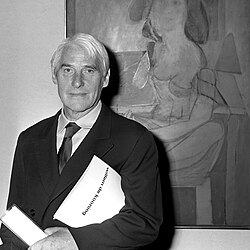 #47
#47
Willem de Kooning
De Kooning maintains a fruitful conflict between figure and abstraction in a constantly repeated subject. The Women series and its late landscapes make the painting a place of energy, erasure and return.
Read the biography of Willem de Kooning #48
#48
Barnett Newman
Newman organizes large areas of color with fine verticals which he calls zips. This radical economy aims less at minimalism than at the physical experience of the sublime in front of the canvas.
Read Barnett Newman's biography #49
#49
Yves Klein
Klein makes monochrome blue, emptiness and body imprint of events rather than simple images. His Anthropometries move painting towards performance and New Realism.
Read the biography of Yves Klein #50
#50
Frida Kahlo
Kahlo constructs his self-portraits as spaces where wounded bodies, identity, politics and Mexican culture respond to each other. The precision of its symbols goes far beyond the reductive reading of an illustrated biography.
See the Frida Kahlo collectionThe essential connections
Ranks 51 to 75 - From Impressionism to the Nabis
These artists show that modernism does not arise from a single manifesto: it is formed through networks, workshops, exhibitions and transmissions.
 #51
#51
Claude Monet
Monet makes light an autonomous subject, observed by series and atmospheric variations. The Meules, the Cathedrals of Rouen and the Water Lilies open directly onto modern perception.
See the Claude Monet collection #52
#52
Pierre-Auguste Renoir
Renoir combines impressionist vibration and a lasting taste for the figure. His outdoor scenes and portraits give modern life an instantly recognizable sensual warmth.
See the Pierre-Auguste Renoir collection #53
#53
Edgar Degas
Degas builds dancers, cafes and racetracks with abrupt framing nourished by photography and Japanese prints. Its rigorous drawing reveals the mechanics of the gestures behind the apparent spontaneity.
See the Edgar Degas collection #54
#54
Édouard Manet
Manet confronts the tradition of the museum with contemporary Paris with a new pictorial franchise. Olympia and Le Déjeuner sur l'herbe make the surface, the look and the scandal modern issues.
See the Édouard Manet collection #55
#55
Camille Pissarro
Pissarro connects the Impressionist and Neo-Impressionist generations with intact curiosity. Its rural and then urban landscapes pay the same attention to work, air and social transformations.
See the Camille Pissarro collection #56
#56
Berthe Morisot
Morisot captures domestic spaces, gardens and female figures with a quick touch that lets the canvas breathe. His gaze shifts the social and pictorial conventions of his time from within.
See the Berthe Morisot collection #57
#57
Mary Cassatt
Cassatt combines intimate observation and daring construction, particularly in her maternity and theater scenes. Japanese prints help him renew the framing, flat areas and autonomy of female figures.
See the Mary Cassatt collection #58
#58
Gustav Klimt
Klimt envelops the portrait and allegory in surfaces of gold, motifs and erotic tensions. Its golden period transforms ornament into a psychological structure as much as a visual spectacle.
See the Gustav Klimt collection #59
#59
Hilma af Klint
Since 1906, Af Klint has been developing vast abstract cycles linked to science, spirituality and symbolic systems. Long kept outside the canonical narrative, it forces us to rethink the origins of abstraction.
See the Hilma af Klint collection #60
#60
Henri Rousseau
Rousseau invents mental jungles from plants observed in Paris and an imagination without academic complexes. The frontality of his figures fascinates the avant-gardes with his direct poetic power.
See the Henri Rousseau collection #61
#61
Odilon Redon
Redon brings out eyes, flowers, profiles and creatures from an interior space. The transition from its blacks to the dazzling pastel shows how symbolism can renew color without abandoning mystery.
See the Odilon Redon collection #62
#62
James Ensor
Ensor populates bourgeois society with masks, skeletons and acid crowds. His pictorial satire announces expressionism while retaining an almost carnivalesque light.
See the James Ensor collection #63
#63
Raoul Dufy
Dufy transforms ports, regattas and parties into scores of flexible lines and luminous flats. Its apparent lightness is based on a very constructed separation between drawing and color.
See the Raoul Dufy collection #64
#64
Maurice Utrillo
Utrillo makes the streets of Montmartre a repertoire of walls, squares and silent perspectives. Its white period gives the city a dull and melancholy material.
See the Maurice Utrillo collection #65
#65
Suzanne Valadon
Valadon goes from the status of a model to that of a recognized painter by imposing frank and powerfully drawn nudes. Its dense color refuses idealization and affirms the autonomy of the female gaze.
See the Suzanne Valadon collection #66
#66
Alexej von Jawlensky
Jawlensky concentrates landscape and face in increasingly meditative colored areas. His series of heads show how expressionism can tend towards icon and abstraction.
See the Alexej von Jawlensky collection #67
#67
Marianne von Werefkin
Werefkin combines symbolic narration, unreal colors and social tension in very composed night scenes. His intellectual role within the Blue Rider was as decisive as his painting.
See the Marianne von Werefkin collection #68
#68
Emil Nolde
Nolde pushes watercolor and oil painting towards almost incandescent contrasts. Its flowers, maritime landscapes and religious scenes remain inseparable from a deeply problematic political journey.
See the Emil Nolde collection #69
#69
Käthe Kollwitz
Kollwitz gives workers, mothers and war victims an unemphasized monumentality. Drawing, engraving and sculpture become instruments of mourning and social conscience for her.
See the Käthe Kollwitz collection #70
#70
Paula Modersohn-Becker
Modersohn-Becker simplified bodies, faces and landscapes into massive shapes even before the expressionist boom. His female self-portraits, sometimes naked, are among the newest statements of the beginning of the century.
See the Paula Modersohn-Becker collection #71
#71
Chaïm Soutine
Soutine twists houses, trees, portraits and carcasses in a material that seems alive. Its feverish touch gives the School of Paris a singular physical and tragic intensity.
See the Chaïm Soutine collection #72
#72
Jean Metzinger
Metzinger theorizes with Gleizes a cubism readable as a multiplication of points of view. His portraits and compositions maintain a precise dialogue between geometry and decorative elegance.
See the Jean Metzinger collection #73
#73
Albert Gleizes
Gleizes gives Cubism a theoretical, collective and monumental ambition. His rotating plans seek less to fragment reality than to reconstruct a rhythmic order.
See the Albert Gleizes collection #74
#74
Roger de La Fresnaye
La Fresnaye softens the cubist construction with a light color and a classic sense of figure. The Conquest of the Air sums up its balance between technical modernity, portrait and monumental stability.
See the Roger de La Fresnaye collection #75
#75
Albert Marquet
Marquet purifies ports, quays and rivers in a measured range, far from the chromatic explosion of his wild companions. Its line organizes space with an economy that announces many modern landscapes.
See the Albert Marquet collectionA global modernity
Ranks 76 to 100 - Bauhaus, muralism and off-center stories
Latin America, India, the United States and the Bauhaus workshops expand a story long told from Paris alone.
 #76
#76
Maurice Denis
Denis recalls that a painting is first of all an organized surface before being a story. Its intimate settings and scenes put this idea at the service of a clear, rhythmic and deeply constructed symbolism.
See the Maurice Denis collection #77
#77
Pierre Bonnard
Bonnard transforms bathroom, table and garden into spaces of chromatic memory. Its unstable framing and delayed color make everyday life a mental experience rather than a simple observation.
See the Pierre Bonnard collection #78
#78
Édouard Vuillard
Vuillard background figures, wallpapers and fabrics in interiors where depth becomes motif. He thus captures the emotional density of familiar places and the theatricality of bourgeois life.
See the Édouard Vuillard collection #79
#79
Felix Vallotton
Vallotton carves the image with the clarity of his engraved wood, even when he paints. Tense interiors, cold nudes and synthetic landscapes reveal a psychological modernity without superfluous effects.
See the Félix Vallotton collection #80
#80
Paul Signac
Signac systematizes the division of color while giving ports and sailboats a decorative amplitude. His critical and militant activity also ensured the international diffusion of neo-impressionism.
See the Paul Signac collection #81
#81
Henri Edmond Cross
Cross gradually releases the touch divided into large luminous mosaics. Its Mediterranean shores prepare the tawny color without losing the balance of a contemplative landscape.
See the Henri-Edmond Cross collection #82
#82
Theo van Rysselberghe
Van Rysselberghe adapts divisionism to Mediterranean portraits, groups and landscapes. Its colorful precision connects Belgian artistic networks to Parisian modernity.
See the Théo van Rysselberghe collection #83
#83
Joaquin Sorolla
Sorolla paints beaches, work and portraits with a speed capable of capturing solar glare. Its colorful whites and large formats give Spanish luminism an international reach.
See the Joaquin Sorolla collection #84
#84
Joaquin Torres Garcia
Torres Garcia combines modern grid, archaic signs and Latin American thought in his universal constructivism. His return to Montevideo founded a school which lastingly decentered the European narrative.
See the Joaquin Torres Garcia collection #85
#85
Jose Clemente Orozco
Orozco treats revolution, violence and human destiny with dark monumentality. His frescoes refuse easy optimism and give Mexican muralism its most tragic voice.
See the José Clemente Orozco collection #86
#86
Diego Rivera
Rivera composes the social history of Mexico on the scale of public architecture. His readable drawing, nourished by Renaissance, Cubism and pre-Columbian art, transforms the fresco into a political tool.
Read Diego Rivera's biography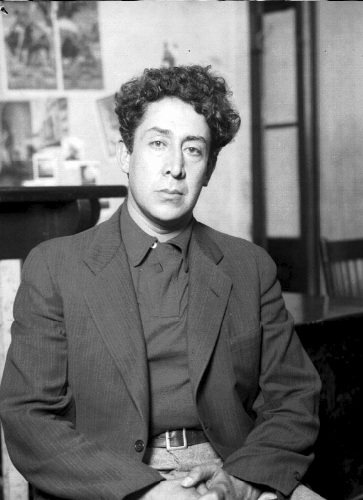 #87
#87
David alfaro siqueiros
Siqueiros experiments with projection, photography, industrial painting and dynamic perspectives to envelop the viewer. Its radical muralism unites technical innovation and revolutionary commitment.
Read the biography of David Alfaro Siqueiros #88
#88
Amrita Sher-Gil
Sher-Gil confronts his Parisian training with the bodies, villages and colors of India. In a brief career, she built a postcolonial modernism attentive to the silent dignity of her models.
See the Amrita Sher-Gil collection #89
#89
Tamara de Lempicka
Lempicka sculpts his social portraits in metallic volumes, tight framing and polished colors. Her style condenses speed, luxury and feminine independence into the Art Deco imagination.
Read Tamara de Lempicka's biography #90
#90
Wifredo Lam
Lam combines cubist fragmentation, surrealist automatism and Afro-Cuban cosmologies without reducing them to folklore. The Jungle invents a hybrid space where bodies, sugar cane and spirits merge.
Read Wifredo Lam's biography #91
#91
Arshile Gorky
Gorky transforms memories of Armenia, biomorphic shapes and automatic drawing into interior landscapes. His work establishes a decisive bridge between European surrealism and American abstract expressionism.
See the Arshile Gorky collection #92
#92
Stuart Davis
Davis translates jazz, advertising and urban signage into flat syncopated areas. His American cubism anticipates Pop Art while maintaining a very personal musical structure.
Read the biography of Stuart Davis #93
#93
Charles Demuth
Demuth combines delicate watercolor and industrial geometry in Lancaster's cityscapes. I Saw the Figure 5 in Gold shows how typography, speed and literary homage become painting.
See the Charles Demuth collection #94
#94
Marsden Hartley
Hartley crosses symbolism, Berlin abstraction and Maine landscapes while maintaining a strong autobiographical charge. Its military emblems and mountains transform identity into pictorial structure.
See the Marsden Hartley collection #95
#95
Arthur Dove
Dove reduces wind, water, sound and plant growth to organic forms among early American abstractions. Its small formats seek less for the object than for the energy that passes through it.
See the Arthur Dove collection #96
#96
Otto Dix
Dix observes war, mutilation, prostitution and the bourgeoisie with deliberately abrasive precision. His portraits and the triptych War dismantle the heroism and masks of Weimar society.
Read Otto Dix's biography #97
#97
George Grosz
Grosz caricatures military, financiers and night owls in a Berlin given over to cynicism. His nervous trait makes satire a political anatomy of the Weimar Republic.
Read the biography of George Grosz #98
#98
Hannah Hoch
Höch cuts press, bodies and machines to expose the contradictions of modernity and gender roles. His photomontages give the Berlin hobby a critical intelligence that has long been diminished.
Read the biography of Hannah Höch #99
#99
Laszlo Moholy-Nagy
Moholy-Nagy treats light, photography, typography and painting as the same laboratory. At the Bauhaus then in Chicago, he made technical experimentation a pedagogy of modern vision.
See the Laszló Moholy-Nagy collection #100
#100
Lyonel Feininger
Feininger transforms churches, villages and ships into prismatic architecture crossed by light. His cartoonist drawing and his teaching at the Bauhaus nourish a very personal synthesis of Cubism.
See the Lyonel Feininger collectionSources and extensions
Return to the works and institutions that preserve them
The dates, movements and landmark works were cross-checked with museum catalogs.
Modern art is a constellation, not a triumphant march
Its strength comes from disagreements: Matisse releases color when Picasso fragments space; Duchamp challenges the art object while Kandinsky and Mondrian seek opposing abstract orders. Mexican muralism, Indian modernism and the American avant-gardes also show that there is more to history than Paris.
To choose a work, start from the experience sought: the construction of Cézanne, the color of Matisse, the intensity of Munch, the silence of Rothko or the affirmation of Kahlo. The linked historical collections allow you to directly continue the discovery of eligible painters.
0 comments