

Top 100 · Romanticism
The 100 painters who made the world an inner drama
From Goya to Delacroix, from Friedrich to Turner: a great journey between sublime, revolutions, night and imagination.
Romanticism is neither about anger nor ruins under the moon. From the end of the 18th century, he moved the center of painting towards lived experience: dizziness in the face of nature, violence of history, force of dreams and affirmation of individual sensitivity. This Top 100 connects its historical core to its precursors, its national extensions and its symbolist heirs.

Sublime landscapes, historical dramas and visions on the threshold of modernity.
Understand before classifying
Romanticism puts experience before rule
At the turn of the 19th century, many artists refused to allow a work to be judged solely by the balance, verisimilitude or imitation of Antiquity. They seek a more unstable truth: that of sensation, memory, fear and desire. Goya and Fuseli give shape to the nightmare, Friedrich transforms contemplation into spiritual experience, while Géricault and Delacroix bring political urgency into great painting.
This story has neither a single capital nor perfectly clear borders. British romanticism focuses on the sky, light and landscape; German artists question nature and interiority; France often favors drama, color and contemporary history. In Russia, Italy, Spain and the Americas, these principles nourish other national narratives.
The ranking therefore distinguishes the historical heart of the movement, its precursors, its neighboring schools and its heirs. The order combines influence, quality of the work, role in the dissemination of romanticism and the ability to extend one's vision of the world.
To experience
The sublime transforms the landscape
For Friedrich, Turner, Constable, Dahl and the painters of the Hudson River School, nature is no longer a simple setting. Mist, storm, mountain and immensity confront the viewer with what is beyond them, between wonder, worry and meditation.
Tell
Contemporary history becomes a visual shock
Géricault, Delacroix, Gros, Goya and Daumier abandon heroic distance to show the bodies, crowds and wounds of their time. The history painting becomes a position as much as a spectacle.
Imagine
At night, the fantastic and the myth become laboratories
From Blake to Moreau, from Böcklin to Redon, romanticism opens painting to dreams, the strange and legends. This sovereignty of the imagination directly prepares symbolism and several avant-gardes of the 20th century.
The founding figures
The ten painters who gave romanticism its decisive power
Goya, Friedrich, Turner, Géricault and Delacroix place imagination, the sublime and lived history at the center of the painting.
 #1
#1
Francisco Goya
From court portraits to black paintings, Goya shifts the Enlightenment towards a world of violence, fear and modern lucidity.
See the Francisco Goya collection #2
#2
Henry Fuseli
His nightmares, tense bodies and Shakespearean visions give the imagination new sovereignty.
See the Henry Fuseli collection #3
#3
William blake
Visionary poet, engraver and painter, Blake constructs a personal mythology where text and image become inseparable.
See the William Blake collection #4
#4
Caspar david friedrich
Its travelers, ruins and silent horizons make the landscape the mirror of an interior and spiritual experience.
See the Caspar David Friedrich collection #5
#5
Philipp Otto Runge
His Hours of the Day and his theory of colors seek a symbolic totality linking nature, light and spirituality.
See the Philipp Otto Runge collection #6
#6
JMW Turner
It dissolves ships, cities and mountains in light, steam and storm to the limits of abstraction.
See the JMW Turner collection #7
#7
John Constable
Its Suffolk clouds and countryside make weather observation an emotional experience of the landscape.
See the John Constable collection #8
#8
Antoine-Jean Gros
His Napoleonic battles replaced the heroic ideal with crowds, illness, speed and violence experienced.
See the Antoine-Jean Gros collection #9
#9
Carl Gustav Carus
Doctor, naturalist and painter, he combines scientific precision and meditation in front of mountains, the moon and ruins.
See the Carl Gustav Carus collection #10
#10
Théodore Géricault
From the Raft of the Medusa to horse studies, he imposes a physical painting of crisis, effort and catastrophe.
See the Théodore Géricault collectionThe European heart
From revolutions to inner visions
The Romantic generation transforms historical drama, portraiture and landscape into sensitive experiences.
 #11
#11
Eugene Delacroix
From his Salon of 1822 with Dante and Virgil, he established himself as the herald of a new painting, against the neoclassical rigidity of Ingres.
See the Eugène Delacroix collection #12
#12
Ary Scheffer
He became the portraitist attracted to the Orléans family and the Belgian royal family.
See the Ary Scheffer collection #13
#13
Paul Delaroche
The user wants me to narrate the end of life of the Romantic painter Paul Delaroche in French literary style, 200-250 characters, no list, no title, no introduction.
See the Paul Delaroche collection #14
#14
Horace Vernet
His grandfather Joseph had immortalized Mediterranean ports, his father Carle reigned over equestrian painting.
See the Horace Vernet collection #15
#15
Richard Parkes Bonington
Placed very early in a school in Nottingham where he learned the basics of the landscape, the teenager soon showed an precocity which pushed those around him to envisage for him a destiny more ambitious than the provincial workshops.
See the Richard Parkes Bonington collection #16
#16
Eugene Isabey
Very early on, he abandoned the miniere and precious universe of his father's portrait to embrace storms, shipwrecks and naval battles: from 1820, at seventeen, his Shipwreck attracted the attention of the Salon and made him, alongside by Géricault, one of the champions of maritime romanticism.
See the Eugène Isabey collection #17
#17
Eugene Lami
His illustrations for Shakespeare's Book of Sonnets (1828) and for Balzac's Contes drolatiques are landmarks in the history of French romantic lithography.
See the Eugène Lami collection #18
#18
John Martin
Son of a modest schoolmaster, he grew up in a landscape of moors and river valleys which would sustainably nourish his imagination.
See the John Martin collection #19
#19
Samuel Palmer
At thirteen, the young prodigy entered the Royal Academy, where he quickly became noticed by John Linnell, a generous painter-engraver, who would become his mentor, his lender and ultimately his father-in-law, since Palmer married Hannah Linnell in 1837.
See the Samuel Palmer collection #20
#20
Francis Danby
Son of a small landowner, he grew up in a landscape of peat bogs and changing skies which early nourished his sensitivity to the natural sublime.
See the Francis Danby collection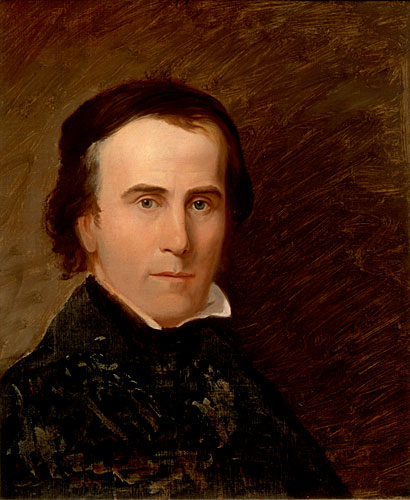 #21
#21
Thomas Cole
Taken by his family to Ohio in 1818, this son of a self-taught Anglican did not imagine himself a painter: he first learned wood engraving before learning, almost by chance, about painting in the traveling studio of 'a traveling artist.
See the Thomas Cole collection #22
#22
Asher Brown Durand
Born in Maplewood, New Jersey, he first apprenticed to an engraver, then trained in painting with Thomas Cole.
See the Asher Brown Durand collection #23
#23
Ford Madox Brown
Today, Manchester dedicates the Work mural to him as a manifesto of social commitment through painting.
See the Ford Madox Brown collection #24
#24
Carl Blechen
His Italian landscapes, painted during a stay in Rome in 1828-1829, break with Friedrichian idealism with a vibrant, almost expressionist touch, and a new attention to lighting effects and industrial architecture.
See the Carl Blechen collection #25
#25
Julius Schnorr von Carolsfeld
A reproduction of Schnorr is the Germany of the Holy Roman Empire seen by a romantic who believed in angels.
See the Julius Schnorr von Carolsfeld collectionCirculations and extensions
Romanticism travels, mixes with realism and changes scale
From Russia to the United States, the movement is fueling new schools and vast national imaginations.
 #26
#26
Karl Friedrich Lessing
His large painting Martino Luther at the Synod of Worms (1837) made him the torchbearer of historical Protestantism, exhibited at the Nationalgalerie in Berlin.
See the Karl Friedrich Lessing collection #27
#27
Karl Bryullov
The Last Day of Pompeii (1830-1833), his monumental canvas, caused a sensation throughout Europe: it showed the eruption of Vesuvius in the midst of tragedy, with incredible archaeological precision and a sense of pathos that reconnected with Michelangelo.
See the Karl Bryullov collection #28
#28
Orest Kiprensky
In 1805, he won the grand gold medal for a Portrait of the Actor Vakhtangov, a distinction which opened the doors of the imperial pension in Saint Petersburg to him.
See the Orest Kiprensky collection #29
#29
Vasily Tropinin
This prolonged servitude did not prevent him from developing a singularly free art, made of bourgeois intimacy and daily tenderness.
See the Vasily Tropinin collection #30
#30
Ivan Aivazovsky
Born in Theodosia in Crimea into an Armenian family, he entered the Imperial Academy of Fine Arts in Saint Petersburg at the age of 17, then left for Italy where he became an official painter of the Neapolitan navy.
See the Ivan Aivazovsky collection #31
#31
Théodore Chassériau
From this double heredity - Ingres for the line, Delacroix for the color - a style is born which belongs only to him: drawings of goldsmith's precision, orientalizing palettes, easel which refuses to choose between drawing and color.
See the Théodore Chassériau collection #32
#32
François-Auguste Biard
From these expeditions he brings back exotic landscapes, polar scenes and portraits of distant peoples which fascinate the Parisian public.
See the François-Auguste Biard collection #33
#33
Honoré Daumier
Alongside this weekly production (nearly 4,000 lithographs in forty years), Daumier painted street scenes, portraits, theater scenes and court hearings in oil which are absolute masterpieces.
See the Honoré Daumier collection #34
#34
Jean-Baptiste-Camille Corot
Born in Paris into a family of drapers, he was a late painter: he did not enter Achille Etna Michallon's house until 1822, after the death of his father, then in the studio of Jean-Victor Bertin.
See the Jean-Baptiste-Camille Corot collection #35
#35
William holman hunt
Faith will never leave his painting - he would later say that each painting was to be "an evangelical mission in the form of an image".
See the William Holman Hunt collection #36
#36
Thomas Couture
This painting becomes an ambiguous manifesto, both praise and criticism of the Roman Empire, which inspired an entire generation of painters.
See the Thomas Couture collection #37
#37
Gustave Doré
His style is characterized by exceptional graphic virtuosity, a keen sense of dramatism and an abundant visual imagination.
See the Gustave Doré collection #38
#38
Ferdinand Georg Waldmüller
An imperial scholarship then allowed him to stay in Italy, Rome, Naples and Florence, where he immersed himself in the Mediterranean light - an experience which would soon sharpen his palette and definitively distance him from the academic grisennel in force in Vienna.
See the Ferdinand Georg Waldmüller collection #39
#39
Leonardo Alenza
Alenza's style is in a costumbrist vein tinged with black romanticism: scenes of bulls, Andalusian bandits, gypsies, student masquerades, portraits of conspirators.
See the Leonardo Alenza collection #40
#40
Eugenio Lucas Velazquez
Back in Spain, he specialized in popular Madrid scenes: bullfights, street scenes, night parties, hangings, tavern scenes, which he painted with a vibrant touch, halfway between Goya and Manet.
See the Eugenio Lucas Velazquez collection #41
#41
Francesco Hayez
Orphaned at a very young age, he was taken in by an uncle who enrolled him at the Academy of Fine Arts in Venice - a decisive choice in the training of the man who would become the father of Italian romanticism.
See the Francesco Hayez collection #42
#42
Albert bierstadt
The kid pencils rather than counting cotton balls, and around 1853 he leaves to perfect his technique in Düsseldorf, then the educational capital of late romanticism.
See the Albert Bierstadt collection #43
#43
Thomas Moran
Turner at the Pennsylvania Academy of the Fine Arts struck him down: he decided that he would paint American landscapes with the same visionary breadth.
See the Thomas Moran collection #44
#44
Alexandre Cabanel
This detail, which biographers pass on with tender satisfaction, perhaps announces the manual precision of the future painter.
See the Alexandre Cabanel collection #45
#45
William-Adolphe Bouguereau
His mythological female nudes, his biblical scenes, his portraits of children and his religious compositions achieve an unparalleled technical virtuosity, which earned him immense fame during his lifetime - he is a member of the Institute, Commander of the Legion of Honor, exhibited all over the world.
See the William-Adolphe Bouguereau collection #46
#46
Gustave Moreau
Born in Paris in 1826, Gustave Moreau grew up in a family where art flowed more through veins than it was poured into them: his father, an architect, and his mother, a musician, offered him ideal breeding ground to flourish as an upset esthete.
See the Gustave Moreau collection #47
#47
Odilon Redon
Enrolled at the École des Beaux-Arts in Paris in 1864, he received academic teaching from Rodolphe Bresdin, a whimsical and bohemian engraver, who inoculated him with the virus of the dark and the fantastic.
See the Odilon Redon collection #48
#48
Mikhail Vrubel
After the Omsk gymnasium, he joined the Imperial Academy of Fine Arts in Saint Petersburg, where the painter Pavel Chistiakov taught him the rigor of line and submission to motif.
See the Mikhail Vrubel collection #49
#49
Dante Gabriel Rossetti
Painter as much as poet, he draws his inspiration from Dante, Tennyson and medieval legends, which he transposes into a universe of opulent, sleepy and tragic women, with lips heavy with desire.
See the Dante Gabriel Rossetti collection #50
#50
John Everett Millais
The first painter elevated to the dignity of baronet in 1885, he received the supreme honor of being buried in Saint-Paul Cathedral, alongside the glories of the Empire.
See the John Everett Millais collectionLandscapes, lounges and symbols
A second romantic constellation
Barbizon, Pre-Raphaelitism and symbolism extend the primacy of sensation and vision.
 #51
#51
Anne-Louis Girodet
His refined chiaroscuro and literary subjects slide neoclassicism towards dreams, the strange and passion.
See the Anne-Louis Girodet collection #52
#52
Pierre-Narcisse Guérin
His heroic theater forms several romantic futures and gives the ancient story a new psychological intensity.
See the Pierre-Narcisse Guérin collection #53
#53
Pierre-Paul Prud'hon
His figures bathed in lunar shadow establish a melancholic poetry which fully announces romantic sensitivity.
See the Pierre-Paul Prud'hon collection #54
#54
Louis Boulanger
Close to Victor Hugo, he translates literary drama into ardent, colorful and willingly fantastic scenes.
See the Louis Boulanger collection #55
#55
Henri Fantin-Latour
His collective portraits and musical evocations give romanticism an intimate, silent and meditative form.
See the Henri Fantin-Latour collection #56
#56
Albert Besnard
His sets and portraits use colorful light that extends the romantic taste for atmosphere and movement.
See the Albert Besnard collection #57
#57
Eugene Fromentin
Its riders and landscapes of North Africa unite observation, memory of travel and orientalist breath.
See the Eugène Fromentin collection #58
#58
Narcissus Diaz de la Pena
Under the trees of Fontainebleau, its luminous material transforms the forest into a sensual and mysterious space.
See the Narcisse Diaz de la Pena collection #59
#59
Theodore Rousseau
It gives Barbizon's oaks, marshes and skies an almost moral gravity, inherited from the romantic sublime.
See the Théodore Rousseau collection #60
#60
Jules Dupré
Its windswept campaigns make the sky and light the real actors of the landscape.
See the Jules Dupré collection #61
#61
Charles-Francois Daubigny
By painting from his boat-workshop, he brings romantic immersion in nature closer to impressionist research.
See the Charles-François Daubigny collection #62
#62
Akseli Gallen-Kallela
It translates the Finnish epic into landscapes, heroes and symbols which underpin a powerful national romanticism.
See the Akseli Gallen-Kallela collection #63
#63
Rosa Happiness
Its monumental animals combine exact observation, career freedom and epic grandeur of the natural world.
See the Rosa Bonheur collection #64
#64
Johan Christian Dahl
Its mountains, waterfalls and Nordic nights give the Norwegian landscape a founding romantic identity.
See the Johan Christian Dahl collection #65
#65
Ferdinand Hodler
Its parallel figures and alpine lakes transform the feeling of the sublime into a monumental rhythm.
See the Ferdinand Hodler collection #66
#66
Friedrich Overbeck
A Nazarene leader, he sought an alternative to the modern present in the Renaissance and Christian spirituality.
See the Friedrich Overbeck collection #67
#67
Arnold Boecklin
Its islands, centaurs and haunted landscapes make myth a psychological space between dream and worry.
See the Arnold Böcklin collection #68
#68
Franz von Stuck
Its dark mythological figures give the ending romanticism a symbolist and theatrical sensuality.
See the Franz von Stuck collectionErnst Ferdinand Oehme
Its ruins, forests and winter landscapes continue the silent interiority of the romantic school of Dresden.
See the Ernst Ferdinand Oehme collection #70
#70
Carlos Schwabe
Its precise line and feverish allegories combine ideal beauty, death and symbolist spirituality.
See the Carlos Schwabe collection #71
#71
Anna Boch
Its luminous landscapes show how the romantic heritage of the outdoors opens up to post-impressionist colors.
See the Anna Boch collection #72
#72
Vilhelm Hammershøi
Its empty interiors and gray tones make domestic silence a mental landscape.
See the Vilhelm Hammershøi collection #73
#73
John Crome
Founder of the Norwich school, he gave the English countryside a sober scale inspired by the Dutch masters.
See the John Crome collection #74
#74
David Cox
His fast-paced watercolors capture wind, rain and changes in the sky with a deeply romantic freedom.
See the David Cox collection #75
#75
Theodor kittelsen
Its trolls and forest creatures bring fantasy straight from Norwegian landscapes.
See the Theodor Kittelsen collectionInternational legacies
Romanticism survives in dreams, nature and myth
These artists show how the romantic momentum spanned the 19th century and prepared for several modernities.
 #76
#76
Hugo Simberg
His wounded angels, gardens and figures of death combine innocence, irony and symbolist concern.
See the Hugo Simberg collection #77
#77
William etty
Its sensual color and large nude scenes defend the emotional power of history painting.
See the William Etty collection #78
#78
Jean Delville
His idealist compositions seek a spiritual, monumental and initiatory truth behind the visible world.
See the Jean Delville collection #79
#79
Leon Spilliaert
Its nocturnal quays, self-portraits and empty staircases transform Ostend into a theater of inner solitude.
See the Léon Spilliaert collection #80
#80
Nicholas Roerich
Its mountains and ancient cities give the landscape an archaeological, spiritual and prophetic dimension.
See the Nicholas Roerich collection #81
#81
Edward Burne-Jones
Its dreamy heroes and medieval cycles establish Pre-Raphaelitism in suspended time.
See the Edward Burne-Jones collection #82
#82
Fernand Khnopff
Its silent women, mirrors and deserted cities make the image a closed space of memory and desire.
See the Fernand Khnopff collection #83
#83
Mikhail Nesterov
Its Russian hermits and forests combine national feeling, nature and spiritual quest.
See the Mikhail Nesterov collection #84
#84
John william waterhouse
He transforms myths, poems and legends into sensual scenes where the story seems stopped at its decisive moment.
See the John William Waterhouse collection #85
#85
Leon Bakst
Its sumptuous colors and costumes for the Ballets Russes extend the romantic dream onto the modern scene.
See the Léon Bakst collection #86
#86
Frederic Edwin Church
Its immense panoramas carry the sublime American romantic from the Andes to the ice of the Arctic.
See the Frederic Edwin Church collection #87
#87
John Frederick Kensett
Its calm and bright horizons make the American landscape an almost abstract space for contemplation.
See the John Frederick Kensett Collection #88
#88
Jasper francis cropsey
Its flamboyant autumns celebrate the American territory with ample and theatrical color.
See the Jasper Francis Cropsey collection #89
#89
Sanford Robinson Gifford
Its golden mists and distant mountains transform the journey into a luminous experience.
See the Sanford Robinson Gifford collection #90
#90
George Inness
Its atmospheric matter makes the landscape a spiritual state rather than a simple topographical description.
See the George Inness collection #91
#91
Martin Johnson Heade
Its marshes, storms and tropical birds combine natural precision and poetic tension.
See the Martin Johnson Heade collection #92
#92
Fitz Henry Lane
Its silent ports and still seas give American luminism meditative clarity.
See the Fitz Henry Lane collection #93
#93
Edvard Munch
It converts romantic anguish, desire and loneliness into the direct language of modernity.
See the Edvard Munch collection #94
#94
Dario de Regoyos
His landscapes of Spain combine social shadow, divided light and sensitivity from the European avant-gardes.
See the Dario de Regoyos collection #95
#95
Jacek Malczewski
His self-portraits and allegories give Polish history an intimate, mythical and haunting dimension.
See the Jacek Malczewski collection #96
#96
Stanisław Wyspiaransski
His portraits, stained glass windows and national dramas bring together decorative line, memory and romantic ambition.
See the Stanislaw Wyspiahnski collection #97
#97
Giovanni Segantini
Its luminous Alps elevate pastoral life towards a symbolic vision of nature and existence.
See the Giovanni Segantini collection #98
#98
Hilma af Klint
His spiritual diagrams lead the romantic aspiration towards an entirely new visionary abstraction.
See the Hilma af Klint collection #99
#99
Magnus Enckell
Its refined figures and Nordic landscapes combine interiority, clear light and Finnish symbolism.
See the Magnus Enckell collection #100
#100
Viktor Vasnetsov
Its heroes of tales and epics give a monumental form to the Russian national imagination.
See the Viktor Vasnetsov collectionBrowse the works
How the 100 artists were selected
The first ranks go to the artists who immediately defined European romanticism: Goya, Friedrich, Turner, Constable, Géricault and Delacroix. The following ranks broaden the focus to national schools, Pre-Raphaelitism, Barbizon, the Hudson River School and symbolist artists who retain the romantic ambition of dreams, nature and myth.
This choice does not affirm that the hundred painters all belonged to a established romantic school. It makes visible a genealogy: what the movement receives from the Enlightenment and neoclassicism, what it transformed in the 19th century, then what it transmitted to realism, symbolism and modernity.
Choose a reproduction
Start with the atmosphere that the work must install
For a dramatic and historical presence, look at Géricault, Delacroix, Gros or Goya. For a contemplative space, favor Friedrich, Corot, Dahl or Hammershøi. Turner, Aivazovsky, Church and Bierstadt are suitable for interiors that call for light and breadth, while Blake, Moreau, Redon or Böcklin create a more dreamlike atmosphere.
Continue the discovery
Guides, rankings and references
Explore Alpha Reproduction
Museum references
Essential benchmarks
Romanticism has changed the way we look at the world
Historical romanticism belongs to the 19th century, but its gesture remains profoundly current. He affirms that a landscape can become a state of mind, that a contemporary event deserves great painting and that the imagination has its own truth. Its storms, its ruins, its crowds and its visions do not flee reality: they reveal its most intense part.
These hundred painters thus draw an open history, from Goya to the symbolists and from the British coasts to the great American spaces. Start with the ten essential figures, then follow the schools and atmospheres according to the type of presence you want to give to your interior.
0 comments