

Academicism, Trade Shows and Fine Arts
Top 50 famous academic painters: Cabanel, Bouguereau and the Salons
A guide to understanding Cabanel, Bouguereau, Gérôme, Delaroche, Meissonier, Leighton, Alma-Tadema and the great Salon artists.
Academic painting is not only the convenient adversary of impressionism. It was for a long time the heart of the European artistic system: competitions, Prix de Rome, workshops, trade fairs, public commissions, official portraits, idealized nudes, great historical machines and spectacular mythologies. This Top 50 gives a clear map of this immense, brilliant, codified and sometimes world unfairly simplified.

Before the grid
Why academic painters still matter
In the 19th century, succeeding at the Salon could make a career. Academic painters master drawing, anatomy, composition, perspective, narration and finishing with rarely equaled standards. Their art speaks of prestige, institutions, official taste, but also of an immense desire for readable, virtuoso and memorable images.
Cabanel, Bouguereau and Gérôme often dominate the French academic imagination. But the phenomenon goes far beyond Paris: the British Royal Academy, the Munich school, historicist Vienna, Madrid, Rome, Warsaw and Saint Petersburg each invent their version of the great style. Some artists remain strictly academic; others slide towards naturalism, symbolism, realism or worldly modernity.
Top 1 to 10
The stars of the Salons and the great French academicism
Cabanel, Bouguereau, Gérôme, Delaroche and Couture embody history painting, mythology, the ideal nude and the official success of the Salon.
#1
Alexandre Cabanel
Cabanel embodies the official taste of the Second Empire: polished drawing, seductive mythology, pearly skin tones and resounding success at the Salon.
See the Alexandre Cabanel collection #2
#2
William-Adolphe Bouguereau
Bouguereau takes academic painting to a peak of virtuosity: ideal figures, perfect modeling, mythological and pastoral subjects.
See the William-Adolphe Bouguereau collection #3
#3
Jean-Leon Gérôme
Gérôme combines archaeological precision, theatricality, ancient Orient and spectacular composition, becoming one of the absolute masters of the Salon.
See the Jean-Léon Gérôme collection #4
#4
Paul Delaroche
Delaroche brings about a readable, dramatic and emotional story, between classical tradition and modern sense of the stage.
See the Paul Delaroche collection #5
#5
Thomas Couture
Couture trains an entire generation and gives the Salon a moral, theatrical art, nourished by Antiquity and social criticism.
See the Thomas Couture collection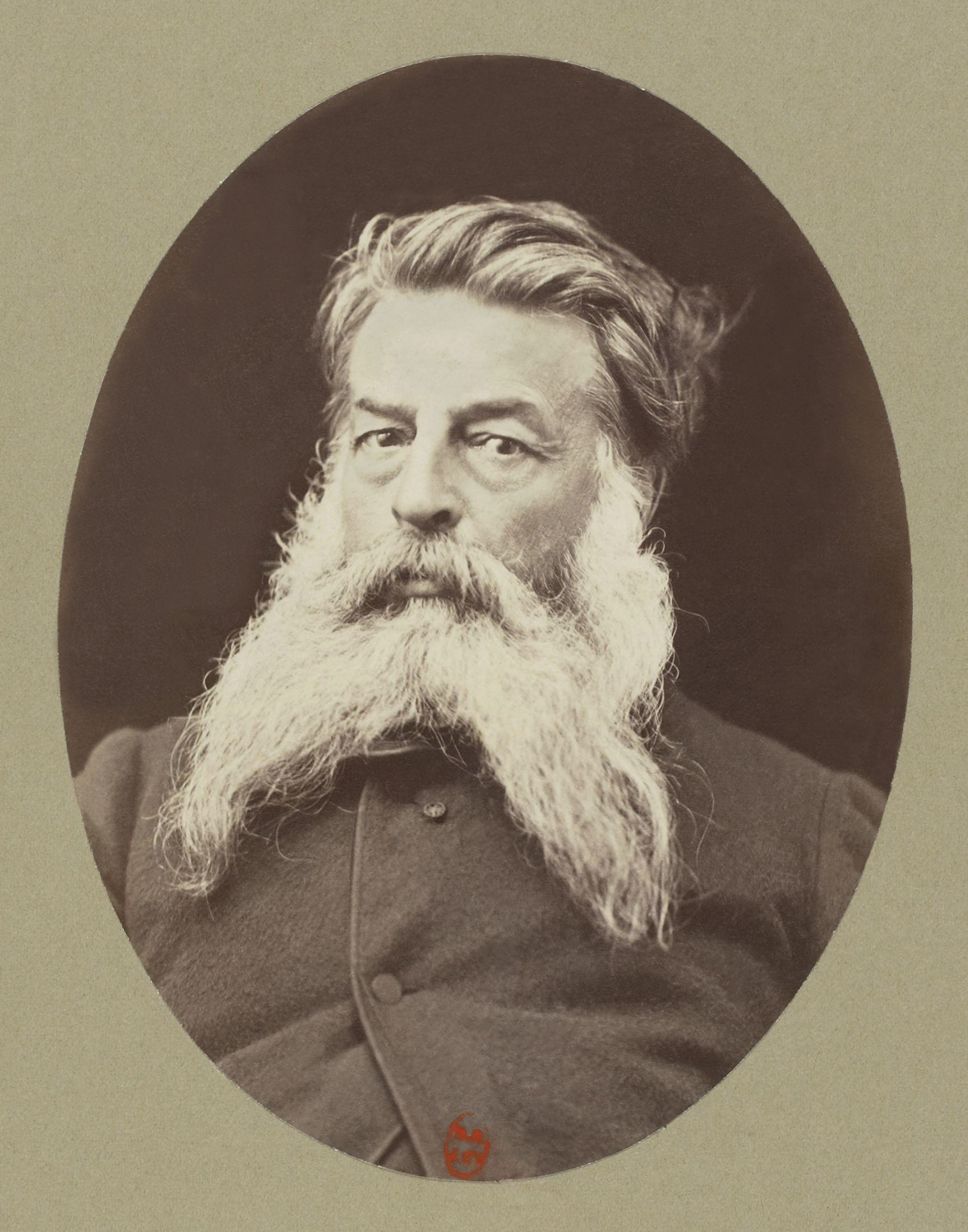 #6
#6
Ernest Meissonier
Meissonier impresses with his historical meticulousness, his Napoleonic scenes and a finish that made him a star of the academic market.
See the Ernest Meissonier collection%2C%20peintre%2C%20PH41709.jpg) #7
#7
Paul Baudry
Baudry unites Venetian sensuality, academic drawing and decorative ambition, particularly in large official Parisian ensembles.
See the Paul Baudry collection #8
#8
Leon Bonnat
Bonnat imposes a vigorous, dark, solid portrait, highly sought after by political, artistic and intellectual elites.
See the Léon Bonnat collection #9
#9
Jules Lefebvre
Lefebvre became one of the great teachers of academicism, famous for his idealized nudes and his rigor in drawing.
See the Jules Lefebvre collection #10
#10
Henri Gervex
Gervex brings a worldly modernity to the Salon: contemporary subjects, academic virtuosity and a taste for measured scandal.
See the Henri Gervex collectionRanks 11 to 20
Naturalism, worldliness and national history
This part follows the Salon after the Second Empire: worldly portraits, military painting, rural naturalism and great republican stories.
 #11
#11
Jean Jacques Henner
Henner is recognizable by his pale figures, his dark backgrounds and a silent poetry between academicism and symbolism.
See the Jean-Jacques Henner collection #12
#12
Carolus-Duran
Carolus-Duran renews the academic portrait with a freer touch, brilliant elegance and a strong social presence.
See the Carolus-Duran collection #13
#13
Fernand Cormon
Cormon is a painter and central teacher, famous for his great prehistoric subjects and his studio frequented by future moderns.
See the Fernand Cormon collection #14
#14
Pascal Dagnan-Bouveret
Dagnan-Bouveret combines academic precision, rural naturalism and a photographic sense of composition.
See the Pascal Dagnan-Bouveret collection #15
#15
Jules Bastien-Lepage
Bastien-Lepage transforms the Salon with a clear, rural, emotional naturalism, very influential on European painting.
See the Jules Bastien-Lepage collection #16
#16
James Tissot
Tissot applies academic precision to modern life, fabrics, elegant silhouettes and social scenes.
See the James Tissot collection #17
#17
Édouard Detaille
Detaille makes military painting an exact, documented, patriotic art and very appreciated by the Salons public.
See the Édouard Detaille collection #18
#18
Alphonse de Neuville
De Neuville dramatizes recent military episodes with a narrative intensity that marks the national imagination.
See the Alphonse de Neuville collection #19
#19
Jean Paul Laurens
Laurens paints the story with gravity, political tensions and austere decor, far from simple mythological seduction.
See the Jean-Paul Laurens collection #20
#20
Georges Rochegrosse
Rochegrosse pushes academicism towards orientalist, biblical and ancient theater, with spectacular energy.
See the Georges Rochegrosse collectionRanks 21 to 30
Workshops, women artists and Royal Academy
Around Paris and London, academicism became an international language: private workshops, Royal Academy, Victorian antiquity and difficult female careers.
 #21
#21
Gustave Boulanger
Boulanger illustrates the Pompeian and ancient taste of the Second Empire, between archaeological settings and idealized scenes.
See the Gustave Boulanger collection #22
#22
Tony Robert-Fleury
Robert-Fleury combines history painting, political drama and academic teaching in Paris des Salons.
See the Tony Robert-Fleury collection #23
#23
François Flameng
Flameng moves from elegant portraiture to historical scenes with brilliant technique and strong official recognition.
See the François Flameng collection #24
#24
Alfred Roll
Roll adapts great painting to the modern world: work, Republic, public portraits and contemporary ceremonies.
See the Alfred Roll collection #25
#25
Albert Besnard
Besnard crosses academicism, symbolism and monumental decor with vibrant color and an institutional career.
See the Albert Besnard collection #26
#26
Elizabeth jane gardner
Gardner, trained in Paris and wife of Bouguereau, defends a precise, elegant and ambitious academicism in a very masculine environment.
See the Elizabeth Jane Gardner collection #27
#27
Frederic Leighton
Leighton gives England a great classic, decorative and refined style, closely linked to the Victorian ideal of beauty.
See the Frederic Leighton collection #28
#28
Lawrence Alma-Tadema
Alma-Tadema makes Rome and Greece almost tactile: marble, light, domestic luxury and archaeological precision.
See the Lawrence Alma-Tadema collection #29
#29
Edward poynter
Poynter unites Parisian training, the discipline of drawing and great ancient subjects in British academicism.
See the Edward Poynter collection #30
#30
John william waterhouse
Waterhouse connects Salon, late Pre-Raphaelitism and literary mythology, with heroines who have become emblematic.
See the John William Waterhouse collectionRanks 31 to 40
London, Vienna, Munich and historicist Europe
Academic taste is displayed in European capitals: large decor, official portrait, Munich school, history painting and national allegory.
 #31
#31
John william godward
Godward extends ancient academicism into the 20th century with still figures, precise marbles and suspended beauties.
See the John William Godward Collection #32
#32
Frank Dicksee
Dicksee embodies the British academic taste for storytelling, costume, romance and official portraiture.
See the Frank Dicksee collection #33
#33
Hans Makart
Makart reigns over historicist Vienna with its large settings, its sumptuous colors and its sense of staging.
See the Hans Makart collection #34
#34
Karl von Piloty
Piloty imposed on Munich a theatrical, dark and meticulous history painting, capital for Germanic academicism.
See the Karl von Piloty collection #35
#35
Franz von Lenbach
Lenbach becomes the portraitist of the powerful, mixing ancient tradition, psychology and social authority.
See the Franz von Lenbach collection #36
#36
Anselm Feuerbach
Feuerbach seeks a serious, melancholic, very structured ancient beauty, close to the great classical ideal.
See the Anselm Feuerbach collection #37
#37
Wilhelm von Kaulbach
Kaulbach represents the monumental ambition of German academicism: frescoes, universal history and great intellectual cycles.
See the Wilhelm von Kaulbach collection #38
#38
Francesco Hayez
Hayez combines historical romanticism, academic drawing and national construction in 19th century Italy.
See the Francesco Hayez collection #39
#39
Domenico Morelli
Morelli renews religious and oriental history with a freedom of color which remains anchored in the great academic formation.
See the Domenico Morelli collection #40
#40
Giulio Aristide Sartorio
Sartorio extends the great Italian setting, between mythology, symbolism, national allegory and official virtuosity.
See the Giulio Aristide Sartorio collectionRanks 41 to 50
Spain, Poland, Russia and the latest great stories
The final section expands the Salon to Madrid, Warsaw and St. Petersburg: virtuosity, national history, imperial painting and academic realism.
 #41
#41
Antonio Ciseri
Ciseri paints sacred history with precision, dramatic clarity and an almost theatrical staging.
See the Antonio Ciseri collection%20Mari%C3%A0%20Fortuny%20-%20Autoretrat%20-%20Museu%20Nacional%20d'Art%20de%20Catalunya.jpg) #42
#42
Mariano Fortuny
Fortuny fascinates Europe with its brilliant virtuosity, orientalist scenes, precious details and influence on the Salons.
See the Mariano Fortuny collection #43
#43
Francisco Pradilla
Pradilla gives Spanish history a dramatic and academic breadth, with a remarkable sense of the stage.
See the Francisco Pradilla collection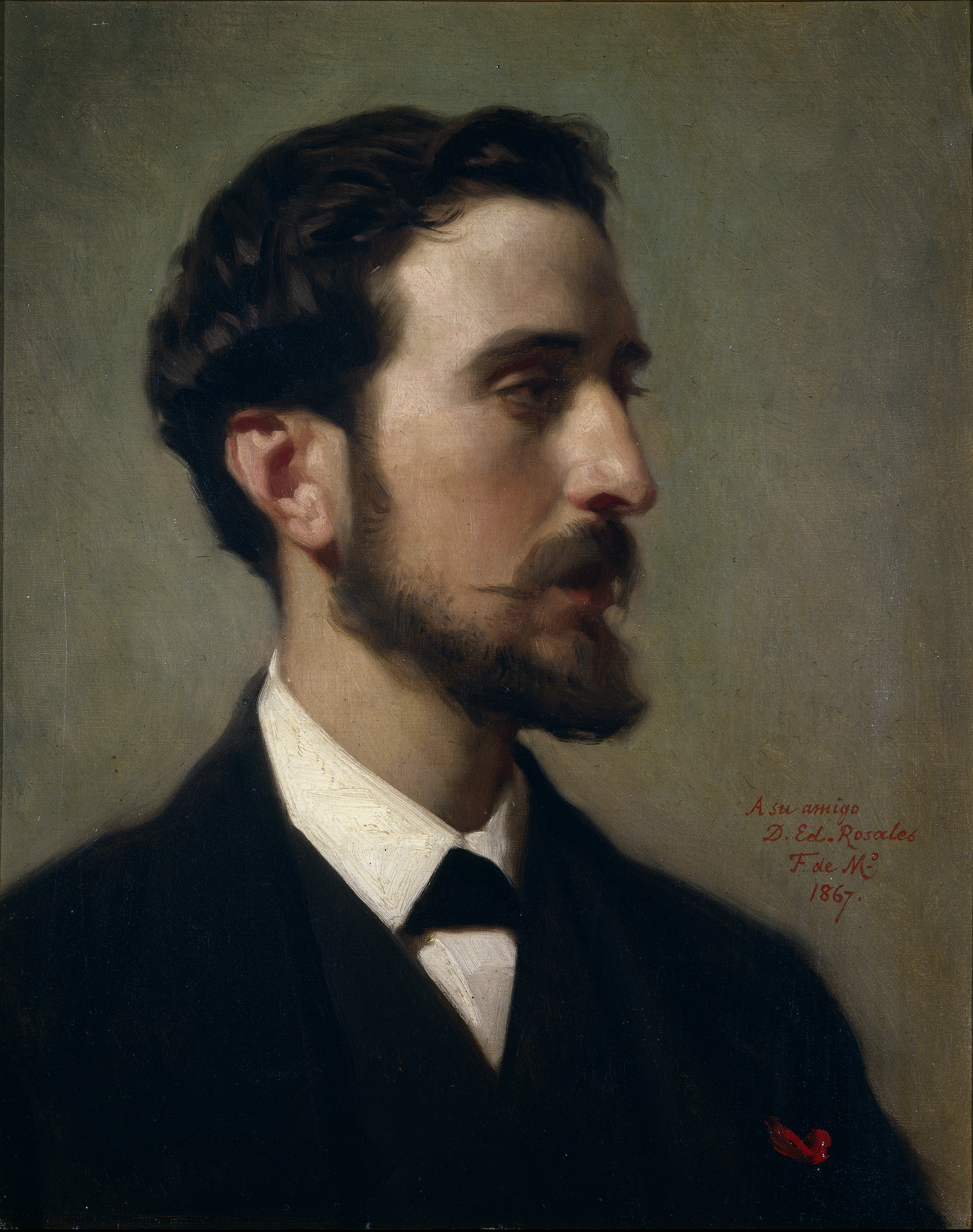 #44
#44
Eduardo Rosales
Rosales modernizes Spanish history painting with psychological intensity and monumental construction.
See the Eduardo Rosales collection%20Autoportrait%20de%20Frederico%20de%20Madrazo%20y%20Kunz%20-%20Mus%C3%A9e%20Goya.jpg) #45
#45
Federico de Madrazo
Madrazo dominates the official Spanish portrait, with an elegance inherited from the great European tradition.
See the Federico de Madrazo collection #46
#46
Henryk Siemiradzki
Siemiradzki paints Antiquity with luxury, theatrical light and cosmopolitan virtuosity, much appreciated in Europe.
See the Henryk Siemiradzki collection #47
#47
Jan Matejko
Matejko makes history painting a monumental, dense, erudite and deeply patriotic national theater.
See the Jan Matejko collection #48
#48
Anna Biliÿnska-Bohdanowicz
Biliÿnska-Bohdanowicz stands out with sober and powerful portraits, trained in Parisian academic standards.
See the Anna Biliÿnska-Bohdanowicz collection #49
#49
Karl Bryullov
Bryullov unites great historical spectacle, Italian virtuosity and prestige of the Imperial Russian Academy.
See the Karl Bryullov collection #50
#50
Ilya Repin
Repin goes beyond strict academicism, but his training and mastery of large composition make him an essential figure in the Russian Salon.
See the Ilya Repin collectionMethod
How the 50 artists were selected
The selection favors importance in the academic system, presence at Salons or national academies, technical mastery, workshop influence, public reception and the ability to represent major genres: history, myth, portrait, nude, military scene, monumental decor and official painting.
The ranking begins with the most emblematic figures of the French Salon, then opens to academic naturalists, the Royal Academy, the Munich school, Austrian historicism, Spanish, Polish and Russian painters. The objective is not to reduce academicism to a fixed style, but to show a very vast European visual system.
Choose a reproduction
Where to start?
For the most famous academicism, start with Cabanel, Bouguereau and Gérôme: three different responses to the same desire for beauty, virtuosity and great spectacle. For history painting, Delaroche, Couture, Laurens, Matejko, Pradilla and Bryullov give a very narrative vision of the 19th century.
If you like ancient scenes and marbles, Alma-Tadema, Leighton, Godward, Siemiradzki and Boulanger are essential. For portraiture and social prestige, Bonnat, Carolus-Duran, Lenbach, Madrazo and Flameng show how academicism shaped the image of elites.
Continue
Guides, rankings and references
Explore Alpha Reproduction
Museum landmarks
The great style before and after modernity
Academic painters were admired, challenged, forgotten and then rediscovered. Their strength lies in a fascinating contradiction: they represent official taste, but often produce images of extraordinary virtuosity, ambition and narrative power.
Returning to Cabanel, Bouguereau, Gérôme and the Salons is not turning your back on modernity. It is understanding the visual world against which modernity was built - and recognizing that this world also has its masterpieces.
0 comments