
Couronnement de la Vierge - Gentile da Fabriano - Alpha Reproduction
Top 100 most famous religious, Christian, and biblical painters in the history of art

From the first Byzantine icons to the monumental frescoes of the Renaissance, religious painting has always been at the heart of art history. Guided by faith, devotion, or spiritual quest, many artists dedicated their lives to representing Christian mysteries, biblical figures, and visions of the divine.

In this Top 100 of the most famous religious, Christian, and biblical painters, discover the masters who transformed prayer into color, faith into light, and the sacred into universal beauty. From Giotto to Michelangelo, from Fra Angelico to Chagall, these artists shaped a spiritual aesthetic that transcends the centuries and continues to inspire believers and art lovers around the world.

Leonardo da Vinci (1452–1519)

Leonardo da Vinci (1452–1519)

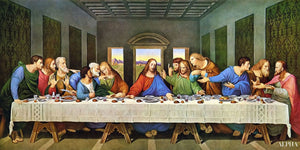
Leonardo da Vinci (1452–1519) is an Italian genius of the Renaissance, both a painter, inventor, and scientist, famous for masterpieces like The Mona Lisa and The Last Supper and for his universal mind.

See the collection - 29 works
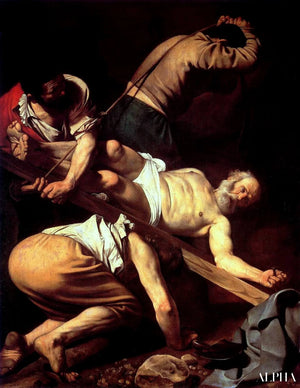
2- Caravaggio (1571–1610)

2- Caravaggio (1571–1610)

Revolutionary of chiaroscuro, he introduced a dramatic and raw realism that permanently transformed baroque painting.
See the collection - 101 works
3- Raphael (Raffaello Sanzio) (1483–1520)

3- Raphael (Raffaello Sanzio) (1483–1520)

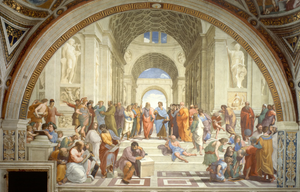
Painter of classical grace, he composed harmonious and balanced scenes that embody the humanist ideal of the Renaissance.
See the collection - 192 works
4- Michelangelo Buonarroti (1475–1564)

4- Michelangelo Buonarroti (1475–1564)

Master of the Renaissance, he excelled in sculpture as well as in painting and architecture, creating works of unmatched anatomical power.
See the collection - 37 works
5- Rembrandt van Rijn (1606–1669)

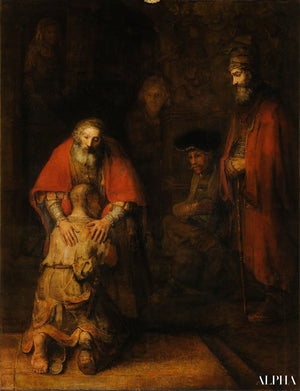
5- Rembrandt van Rijn (1606–1669)

Rembrandt van Rijn (1606–1669) is a major Dutch painter and engraver of the Golden Age, famous for his portraits, biblical scenes, and exceptional mastery of light and human emotion.

See the collection - 619 works
6- Fra Angelico (circa 1395–1455)

6- Fra Angelico (circa 1395–1455)

< p>Monk-painter, he created paintings imbued with mystical softness and a unique spiritual brightness.< /p>
See the collection - 149 works
7- El Greco (1541–1614)

7- El Greco (1541–1614)

A singular figure of mannerism, he fused Byzantine tradition and Western modernity in elongated and visionary compositions.
See the collection - 390 works
8- Matthias Grünewald (circa 1470–1528)

8- Matthias Grünewald (circa 1470–1528)

German painter of intense mysticism, he created expressive works of striking emotional power.
See the collection -27 works

9- Francisco de Zurbarán (1598–1664)

9- Francisco de Zurbarán (1598–1664)

Master of Spanish tenebrism, he excelled in austere religious scenes and portraits of meditative saints.
See the collection - 311 works
10- Bartolomé Esteban Murillo (1617–1682)

10- Bartolomé Esteban Murillo (1617–1682)

Major painter of the Golden Age, he is renowned for his soft and luminous Virgins and his scenes imbued with tenderness.

See the collection - 286 works
11- Guido Reni (1575–1642)

11- Guido Reni (1575–1642)

As a figure of baroque classicism, he favored elegance, clarity, and idealization in his religious compositions.

See the collection - 248 works
12- Giovanni Bellini (circa 1430–1516)

12- Giovanni Bellini (circa 1430–1516)

Pillar of the Venetian school, he introduced a new sensitivity to color and light.
See the collection - 160 works
13- Sandro Botticelli (1445–1510)

13- Sandro Botticelli (1445–1510)

Sandro Botticelli (1445–1510) is an Italian painter of the Florentine Renaissance, famous for his mythological and religious works imbued with linear grace and poetry, such as The Birth of Venus.

See the collection - 134 works
14- Rogier van der Weyden (circa 1399–1464)

14- Rogier van der Weyden (circa 1399–1464)

Flemish master of sacred emotion, he created religious scenes of remarkable expressive intensity.
See the collection - 90 works
15- Hans Memling (circa 1430–1494)

15- Hans Memling (circa 1430–1494)

Refined Flemish painter, he combined grace, precision, and spirituality in his portraits and altarpieces.
See the collection - 154 works
16- Peter Paul Rubens (1577–1640)

16- Peter Paul Rubens (1577–1640)

Pierre Paul Rubens (1577–1640) is a major Flemish Baroque painter, famous for his dynamic compositions, sense of movement, and opulent figures with vibrant colors.

See the collection - 1288 works

17- Piero della Francesca (circa 1415–1492)

17- Piero della Francesca (circa 1415–1492)

Theorist of perspective, he created works of calm monumentality and luminous geometry.

See the collection - 29 works
18- Andrea Mantegna (circa 1431–1506)

18- Andrea Mantegna (circa 1431–1506)

Humanist and pioneer of the perspective shortcut, he introduced striking sculptural realism into Italian painting.
See the collection - 85 works
19- Hieronymus Bosch (circa 1450–1516)

19- Hieronymus Bosch (circa 1450–1516)

Hieronymus Bosch (circa 1450–1516) is a visionary Flemish painter of the late Middle Ages, famous for his fantastic and moral scenes populated by strange and symbolic creatures.

See the collection - 91 works
20- Simone Martini (circa 1284–1344)

20- Simone Martini (circa 1284–1344)

Flower of international Gothic, it stood out for the refined elegance of its lines and the delicacy of its colors.

See the collection - 31 works
21- Georges de La Tour (1593–1652)

21- Georges de La Tour (1593–1652)

Great painter of chiaroscuro, he depicted minimalist night scenes bathed in a calm and inner light.
See the collection - 51 works
22- José de Ribera (Lo Spagnoletto) (1591–1652)

22- José de Ribera (Lo Spagnoletto) (1591–1652)

Major artist of Neapolitan tenebrism, he painted vigorous and dramatic religious figures inspired by Caravaggio's naturalism.

See the collection - 207 works
23- Philippe de Champaigne (1602–1674)

23- Philippe de Champaigne (1602–1674)

Franco-Flemish classical painter, he distinguished himself by the sobriety, precision, and spiritual depth of his portraits and religious compositions.

See the collection - 181 works
24- Guercino (Giovanni Francesco Barbieri) (1591–1666)

24- Guercino (Giovanni Francesco Barbieri) (1591–1666)

Italian Baroque master, he combined expressive vigor, dynamism, and a warm chiaroscuro in his sacred scenes.
See the collection - 163 works

25- Domenichino (1581–1641)

25- Domenichino (1581–1641)

A major figure of Bolognese classicism, he favored harmony, narrative clarity, and balance in his religious paintings.
See the collection - 85 works
26- Federico Barocci (1535–1612)

26- Federico Barocci (1535–1612)

Precursor of the baroque, he introduced vibrant colors and emotionally intense compositions in sacred painting.
See the collection - 70 works
27- Annibale Carracci (1560–1609)

27- Annibale Carracci (1560–1609)

Co-founder of the Bolognese pictorial reform, he combines nature, classical balance, and observation of reality, inaugurating the baroque.
See the collection - 194 works
28- Perugino (Pietro Vannucci) (circa 1448–1523)

28- Perugino (Pietro Vannucci) (circa 1448–1523)

Master of serene softness, he shaped a harmonious and clear style that profoundly influenced the early Renaissance.
See the collection - 131 works
29- Carlo Crivelli (circa 1430–1495)

29- Carlo Crivelli (circa 1430–1495)

Singular Venetian painter, he created altarpieces rich in details, precious textures, and refined decorative effects.
See the collection - 207 works
30- Benozzo Gozzoli (1420–1497)

30- Benozzo Gozzoli (1420–1497)

Florentine fresco painter, he is famous for his abundant narrative scenes and his bright colors imbued with cheerfulness.
See the collection - 50 works
31- Filippo Lippi (1406–1469)

31- Filippo Lippi (1406–1469)

Painter of linear grace, he brought a soft and luminous sensuality to Florentine religious painting.
See the collection - 71 works
32- Gerard David (circa 1460–1523)

32- Gerard David (circa 1460–1523)

Late Flemish master, he combines meticulous precision and meditative atmospheres in his sacred scenes and landscapes.
See the collection - 90 works

33- Hugo van der Goes (circa 1440–1482)

33- Hugo van der Goes (circa 1440–1482)

Visionary Flemish painter, he marked his time with powerful, emotional, and deeply original compositions.
See the collection - 36 works
34- Dieric Bouts (circa 1415–1475)

34- Dieric Bouts (circa 1415–1475)

A major artist from the North, he developed a calm and rigorous style, characterized by sobriety and contemplative depth.

See the collection - 63 works
35- Giovanni Battista Tiepolo (1696–1770)

35- Giovanni Battista Tiepolo (1696–1770)

Great master of Venetian rococo, he created immense luminous frescoes full of movement and theatricality.
See the collection - 214 works
36- Correggio (Antonio Allegri) (circa 1489–1534)

36- Correggio (Antonio Allegri) (circa 1489–1534)

Precursor of the baroque, he blended luminous softness, sensuality, and illusionistic virtuosity in his compositions.
See the collection - 125 works
37- Lorenzo Lotto (circa 1480–1556)

37- Lorenzo Lotto (circa 1480–1556)

Painter with an introspective and inventive style, he created psychological portraits and original, expressive religious paintings.

See the collection - 142 works
38- Giotto di Bondone (circa 1267–1337)

38- Giotto di Bondone (circa 1267–1337)

Giotto di Bondone (circa 1267–1337) is an Italian painter and architect of the proto-Renaissance, considered the founder of modern painting for his naturalism and his break with medieval art.

See the collection - 40 works
39- Gentile da Fabriano (circa 1370–1427)

39- Gentile da Fabriano (circa 1370–1427)

Iconic figure of international Gothic, he distinguished himself by his sumptuous refinement and precious details.

See the collection - 31 works
40- Francesco Francia (circa 1450–1517)

40- Francesco Francia (circa 1450–1517)

Bolognese painter and goldsmith, he developed a harmonious and soft style with careful contours and clear colors.

See the collection - 44 works

41- Luca Signorelli (circa 1445–1523)

41- Luca Signorelli (circa 1445–1523)

Forerunner of mannerism, he was famous for his powerful bodies, his drama, and his mastery of anatomy.

See the collection - 61 works
42- Moretto da Brescia (Alessandro Bonvicino) (circa 1498–1554)

42- Moretto da Brescia (Alessandro Bonvicino) (circa 1498–1554)

Refined Lombard painter, he blended Northern realism, Venetian softness, and serene spirituality.
See the collection - 78 works
43- William Holman Hunt (1827–1910)

43- William Holman Hunt (1827–1910)

Co-founder of the Pre-Raphaelites, he sought an intense spiritual truth through meticulous and symbolic realism.

See the collection - 59 works
44- Jan van Eyck (circa 1390–1441)

44- Jan van Eyck (circa 1390–1441)

Jan van Eyck (circa 1390–1441) is a Flemish primitive painter, a pioneer of oil painting, famous for his meticulous realism and exceptional mastery of detail and light.

See the collection - 40 works
45- Dante Gabriel Rossetti (1828–1882)

45- Dante Gabriel Rossetti (1828–1882)

Central figure of the Pre-Raphaelites, he blended mysticism, sensuality, and poetry in images of great emotional intensity.
See the collection - 97 works
46- Eustache Le Sueur (1616–1655)

46- Eustache Le Sueur (1616–1655)

Eustache Le Sueur (1616–1655) is a French classical painter of the 17th century, nicknamed the "French Raphael," known for his religious and mythological compositions imbued with clarity and harmony.

See the collection - 83 works
47- Cimabue (circa 1240–1302)

47- Cimabue (circa 1240–1302)

Cimabue (circa 1240–1302) is a Florentine painter of the Middle Ages, a major figure in the transition between Byzantine art and the Renaissance, and the presumed master of Giotto.

See the collection - 10 works
48- Bernardino Luini (circa 1480–1532)

48- Bernardino Luini (circa 1480–1532)

A disciple of Leonardo, he adopted a soft, harmonious, and graceful style in his numerous religious compositions.
See the collection - 86 works

49- Quentin Metsys (1466–1530)

49- Quentin Metsys (1466–1530)

Flemish transitional painter, he blended medieval tradition and the first realistic impulses of the Northern Renaissance.
See the collection - 137 works
50- Andrea del Sarto (1486–1530)

50- Andrea del Sarto (1486–1530)

Florentine master of classicism, he combined perfection of drawing, balance, and chromatic softness in his religious works.
See the collection - 96 works
51- Giovanni Lanfranco (1582–1647)

51- Giovanni Lanfranco (1582–1647)

Baroque virtuoso fresco painter, he distinguished himself by his dynamic compositions and spectacular light effects.
See the collection - 41 works
52- Sebastiano Ricci (1659–1734)

52- Sebastiano Ricci (1659–1734)

Venetian pre-Rococo painter, he brought an elegant, bright, and theatrical style to the pictorial revival of the 18th century.
See the collection - 138 works
53- Giambattista Pittoni (1687–1767)

53- Giambattista Pittoni (1687–1767)

A major representative of Venetian rococo, he painted graceful religious scenes in shimmering colors.
See the collection - 76 works
54- Pompeo Batoni (1708–1787)

54- Pompeo Batoni (1708–1787)

Neoclassical painter, he executed numerous religious canvases characterized by the clarity, precision, and dignity of the figures.
See the collection - 167 works
55- Anton Raphael Mengs (1728–1779)

55- Anton Raphael Mengs (1728–1779)

Theorist and painter of neoclassicism, he sought to rediscover the ideal purity of the ancient and Renaissance masters.

See the collection - 131 works
56- Antonello da Messina (circa 1430–1479)

56- Antonello da Messina (circa 1430–1479)

Antonello da Messina (circa 1430–1479) is an Italian Renaissance painter, famous for introducing and perfecting the oil painting technique in Italy and for his highly realistic portraits.

See the collection - 23 works

57- Parmigianino (1503–1540)

57- Parmigianino (1503–1540)

His slender and mystical art, particularly in his Madonnas, expresses a celestial and supernatural grace.

See the collection - 69 works
58- Alonso Cano (1601–1667)

58- Alonso Cano (1601–1667)

Versatile artist of the Golden Age, he combined mystical depth and delicacy in his paintings marked by great sensitivity.

See the collection - 309 works
59- Paolo Veronese (1528–1588)

59- Paolo Veronese (1528–1588)

Painter of splendor and divine light, he celebrated the great biblical feasts in sumptuous brilliance.
See the collection - 293 works
60- Claudio Coello (1642–1693)

60- Claudio Coello (1642–1693)

Last great master of Spanish baroque, he created monumental religious compositions with vibrant realism.
See the collection - 29 works
61- Juan de Valdés Leal (1622–1690)

61- Juan de Valdés Leal (1622–1690)

Sevillian painter of the late Baroque, he excelled in dramatic visions and macabre themes filled with spirituality.

See the collection - 63 works
62- Il Sodoma (Giovanni Antonio Bazzi) (1477–1549)

62- Il Sodoma (Giovanni Antonio Bazzi) (1477–1549)

Eccentric artist of the Renaissance, he blended expressive softness and inventive fantasy in his religious scenes.
See the collection - 47 works
63- Bernardo Strozzi (1581–1644)

63- Bernardo Strozzi (1581–1644)

Bernardo Strozzi (1581–1644) is an Italian painter of the Genoese Baroque, famous for his vigorous and warm style that blends Caravaggesque naturalism with rich color.

See the collection - 167 works
64- Charles Le Brun (1619–1690)

64- Charles Le Brun (1619–1690)

Charles Le Brun (1619–1690) is a classical French painter, the first painter of Louis XIV, famous for his central role in the official art of the reign and for the artistic direction of Versailles.

See the collection - 90 works

65- Lorenzo Lotto (1480–1556)

65- Lorenzo Lotto (1480–1556)

Introspective and devout painter, he blended psychology and faith in his portraits and altarpieces.

See the collection - 142 works
66- Francesco Salviati (1510–1563)

66- Francesco Salviati (1510–1563)

Refined mannerist painter, he expressed the grandeur of the sacred in intellectual and elegant compositions.
See the collection - 26 works
67- Annibale Carracci (1560–1609)

67- Annibale Carracci (1560–1609)

Founder of Baroque classicism, he united realism and spirituality in his biblical frescoes and his Assumptions.

See the collection - 194 works
68- Ludovico Carracci (1555–1619)

68- Ludovico Carracci (1555–1619)

Uncle of Hannibal, he dedicated most of his work to the Christian faith and the spiritual reform of art.
See the collection - 47 works
69- Titian (circa 1488/90–1576)

69- Titian (circa 1488/90–1576)

Absolute master of Venetian color, he revolutionized painting by developing a vibrant palette, free textures, and compositions of unprecedented emotional depth.
See the collection - 377 works
70- Albrecht Dürer (1471–1528)

70- Albrecht Dürer (1471–1528)

Genius of the German Renaissance, he excelled in engraving and painting, combining scientific precision, technical virtuosity, and remarkable intellectual depth.
See the collection - 126 works
71- Artemisia Gentileschi (1593–1653)

71- Artemisia Gentileschi (1593–1653)

Baroque painter of faith and courage, she powerfully depicted biblical heroines and divine justice.
See the collection - 48 works
72- Orazio Gentileschi (1563–1639)

72- Orazio Gentileschi (1563–1639)

Father of Artemisia, he blended classical elegance and spirituality in his Marian and angelic canvases.
See the collection - 61 works

73- Pietro da Cortona (1596–1669)

73- Pietro da Cortona (1596–1669)

Monumental fresco artist, he exalted the glory of God and the Church in triumphant compositions.
See the collection - 64 works
74- Hans Holbein the Younger (circa 1497–1543)

74- Hans Holbein the Younger (circa 1497–1543)

Master of Northern Renaissance portraiture, he distinguished himself by his incisive realism, the precision of his details, and the psychological strength of his subjects.
See the collection - 144 works
75- Gustave Doré (1832–1883)

75- Gustave Doré (1832–1883)

Gustave Doré (1832–1883) is a versatile French artist, famous as an illustrator of literary masterpieces and as a painter and engraver, recognized for his powerful imagination and dramatic sense.

See the collection - 67 works
76- Anthony van Dyck (1599–1641)

76- Anthony van Dyck (1599–1641)

Student of Rubens, he painted Christ and the saints with noble elegance and an internalized spirituality.

See the collection - 1166 works
77- William-Adolphe Bouguereau (1825–1905)

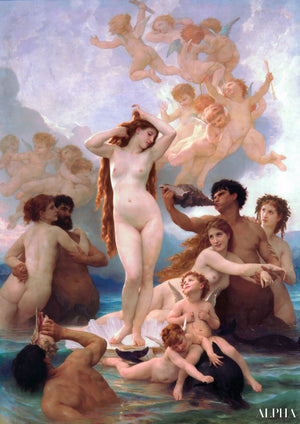
77- William-Adolphe Bouguereau (1825–1905)

William-Adolphe Bouguereau (1825–1905) is a major French academic painter, famous for the perfection of his drawing, his classical idealism, and his mythological and allegorical scenes.

See the collection - 220 works
78- Gerrit van Honthorst (1592–1656)

78- Gerrit van Honthorst (1592–1656)

Influenced by Caravaggio, he illuminated his religious works with the gentle light of faith.

See the collection - 190 works
79- Nicolas Poussin (1594–1665)

79- Nicolas Poussin (1594–1665)

Painter of reason and faith, he translated biblical narratives into compositions of divine order and balance.
See the collection - 233 works
80- Diego Velázquez (1599–1660)

80- Diego Velázquez (1599–1660)

Master of the Spanish Golden Age, he married truth and mystery in his rare but powerful religious works.
See the collection - 180 works

81- Lucas Cranach the Elder (1472–1553)

81- Lucas Cranach the Elder (1472–1553)

A major painter of the German Renaissance, he was famous for his vivid portraits, his religious scenes of the Reformation, and his elegant style with sinuous lines.

See the collection - 789 works
82- Carl Bloch (1834–1890)

82- Carl Bloch (1834–1890)

Danish painter of the sacred, he embodied Lutheran faith in works of luminous and emotional intensity.
See the collection - 45 works
83- Johann Friedrich Overbeck (1789–1869)

83- Johann Friedrich Overbeck (1789–1869)

Founder of the Nazarenes, he dedicated his life to restoring the purity of primitive Christian art.
See the collection - 18 works
84- Alexandre Ivanov (1806–1858)

84- Alexandre Ivanov (1806–1858)

Alexandre Ivanov (1806–1858) is a Russian neoclassical and romantic painter, famous for his large religious compositions, particularly The Appearance of Christ to the People.

See the collection - 15 works
85- Léon Bonnat (1833–1922)

85- Léon Bonnat (1833–1922)

Renowned portraitist, he also painted powerful religious scenes imbued with realism and contemplation.
See the collection - 112 works
86- Ary Scheffer (1795–1858)

86- Ary Scheffer (1795–1858)

Romantic painter of compassion, he translated the tenderness of Christ into works imbued with faith and humanity.

See the collection - 190 works
87- Giunta Pisano (active around 1229–1250)

87- Giunta Pisano (active around 1229–1250)

Forerunner of Italian Christian art, he gave humanity and emotion to the crucified Christ in his large painted crosses.

See the collection - 2 works
88- Coppo di Marcovaldo (1225–1276)

88- Coppo di Marcovaldo (1225–1276)

Florentine master of the Byzantine style, he painted Virgins and Christs imbued with majesty and contemplation.
See the collection - 4 works

89- Berlinghiero (active around 1220)

89- Berlinghiero (active around 1220)

Pisan artist of the Byzantine transition, he conveyed the solemnity of icons at the heart of Tuscan painting.
See the collection - 167 works
90- Filippino Lippi (1457–1504)

90- Filippino Lippi (1457–1504)

Son of Fra Filippo, he blended grace, emotion, and spiritual complexity in his religious works full of movement.

See the collection - 61 works
91- Bronzino (1503–1572)

91- Bronzino (1503–1572)

Florentine mannerist painter, he expressed faith with a frosty elegance and an almost mystical rigor.
See the collection - 46 works
92- Tintoretto (circa 1518–1594)

92- Tintoretto (circa 1518–1594)

Fiery genius of the Venetian Renaissance, he combined dramatic energy, bold perspectives, and dazzling light in compositions of spectacular intensity.
See the collection - 309 works
93- Denis Calvaert (1540–1619)

93- Denis Calvaert (1540–1619)

Flemish painter active in Bologna, he devoted almost all of his work to biblically themed subjects of great formal purity.
See the collection - 33 works
94- Mattia Preti (1613–1699)

94- Mattia Preti (1613–1699)

Disciple of Caravaggio, he dedicated his life to painting saints and miracles with dramatic intensity.

See the collection - 70 works
95- Luca Giordano (1634–1705)

95- Luca Giordano (1634–1705)

Neapolitan virtuoso painter, he illuminated his religious frescoes with vibrant energy and joy.
See the collection - 290 works
96- Andrea Sacchi (1599–1661)

96- Andrea Sacchi (1599–1661)

Master of Roman classicism, he gave the sacred a clear and meditative composition.
See the collection - 23 works

97- Frans Hals (circa 1582–1666)

97- Frans Hals (circa 1582–1666)

Master of the Dutch Golden Age, he excelled in lively and spontaneous portraiture, capturing the expression, movement, and vitality of his subjects with a quick and vibrant touch.
See the collection - 304 works
98- Cosmè Tura (circa 1430–1495)

98- Cosmè Tura (circa 1430–1495)

Cosmè Tura (circa 1430–1495) is an Italian painter of the Ferrarese Renaissance, a major figure of the Ferrara school, known for his expressive, angular, and intensely spiritual style.

See the collection - 35 works
99- Giambattista Piazzetta (1682–1754)

99- Giambattista Piazzetta (1682–1754)

Late Venetian Baroque, he painted religious scenes with a shaded tenderness and great emotional depth.
See the collection - 49 works
100- Jean Jouvenet (1644–1717)

100- Jean Jouvenet (1644–1717)

Painter of the French Grand Century, he united classical power and fervor in his large compositions for churches.

See the collection - 35 works