

Top 100 · Russian painting
One hundred artists, from icon to avant-garde
Rublev, Repin, Kandinsky, Malevich, Chagall and the voices that remained outside the story for a long time.
Russian painting is formed at the crossroads of the Byzantine icon, the European opening of Saint Petersburg and a new attention to the people and the territory. In the 19th century, the Ambulants opposed their realism to the academy; around 1900, Moscow, Saint Petersburg, Paris and the Ballets Russes became the centers of an upheaval which led from symbolism to suprematism, constructivism and abstraction.
Icons, realism, avant-gardes, diaspora and contemporary creation.
Context
From sacred image to social consciousness
The icon imposed for centuries a frontal, spiritual and symbolic relationship with the image. Peter the Great's reforms then brought Russian workshops closer to European academies; history portraiture and painting flourished in Saint Petersburg. In the 19th century, Ambulants - Repin, Kramskoy, Shishkin, Surikov - carried their exhibitions across the country and made the canvas a place for social debate.
Artistic homes
Moscow, St. Petersburg, Paris and the roads of exile
Russian capitals concentrate schools, collections and manifestos, but the story quickly goes beyond their borders. Paris welcomes Chagall, Soutine, Poliakoff, Lanskoy and de Staël; Munich accompanies Kandinsky and Jawlensky; New York becomes another center after Soviet migrations. This circulation explains why "Russian" here designates a formation, a visual culture or an origin, rather than a single nationality.
References for looking at the works
Influence, invention, work and transmission
It retains the fifty artists from the original article, then broadens the panorama to diasporas, Soviet and non-conformist artists, as well as women whose roles have long been downplayed.
Cardinal figures
Top 10 - The masters who define Russian painting
From icon to abstraction, ten world-works summarize the spiritual, social and formal power of Russia.
 #1
#1
Ilya Repin
The decisive point in Ilya Repin is its pictorial axis: social drama. The Boatmen of the Volga serves as the most direct entry point; Ivan the Terrible and his son exposes the method; Religious procession in the province of Kursk opens the broader ambition of the artist.
See the Ilya Repin collection #2
#2
Wassily Kandinsky
The decisive point in Wassily Kandinsky is his pictorial axis: music of color. Composition VII serves as the most direct entry point; Spiritual in art exposes the method; Yellow-red-blue opens the artist's broader ambition.
See the Wassily Kandinsky collection #3
#3
Kazimir Malevich
The decisive point in Kazimir Malevich is his pictorial axis: radicality of the sign. Black square serves as the most direct entry point; White square on white background exposes the method; Suprematist composition opens up the artist's broader ambition.
See the Kazimir Malevich collection #4
#4
Marc Chagall
The decisive point for Marc Chagall is his pictorial axis: floating memory. Above the city serves as the most direct entry point; Me and the village exposes the method; The Brides of the Eiffel Tower opens up the artist's broader ambition.
Read the biography of Marc Chagall #5
#5
Ivan Aivazovsky
The decisive point in Ivan Aivazovsky is his pictorial axis: maritime sublime. The Ninth Wave serves as the most direct entry point; Black Sea exposes the method; Battle of Tchesmé opens the artist's broader ambition.
See the Ivan Aivazovsky collection #6
#6
Andrei Rublev
The decisive point in Andrei Rublev is his pictorial axis: spiritual silence. The Trinity serves as the most direct entry point; Icons of the Cathedral of the Annunciation exposes the method; Vladimir's frescoes open up the artist's broader ambition.
See the Andrei Rublev collection #7
#7
Valentin Serov
The decisive point in Valentin Serov is his pictorial axis: luminous psychology. Young girl with peaches serves as the most direct entry point; Portrait of Ida Rubinstein exposes the method; Portrait of Mika Morozov opens up the artist's broader ambition.
See the Valentin Serov collection #8
#8
Vasily Surikov
The decisive point in Vasily Surikov is his pictorial axis: popular fresco. The Morning of the Streltsy Execution serves as the most direct entry point; Boyarine Morozova exposes the method; Ermak's Conquest of Siberia opens up the artist's broader ambition.
See the Vasily Surikov collection #9
#9
Viktor Vasnetsov
The decisive point in Viktor Vasnetsov is his pictorial axis: national myth. The Bogatyrs serve as the most direct entry point; Alionushka exposes the method; Ivan Tsarevich on the gray wolf opens the artist's broader ambition.
See the Viktor Vasnetsov collection #10
#10
Mikhail Vrubel
The decisive point in Mikhail Vrubel is his pictorial axis: tragic crystal. The Seated Demon serves as the most direct entry point; The Swan Princess explains the method; Pan opens up the artist's broader ambition.
See the Mikhail Vrubel collectionTerritories and revolutions
Ranks 11 to 25 - Landscape, realism and avant-garde
Nature becomes national identity while the workshops of Moscow and Saint Petersburg invent new languages.
 #11
#11
Isaac Levitan
The decisive point in Isaac Levitan is his pictorial axis: soul of the landscape. Above eternal peace serves as the most direct entry point; Mars exposes the method; Evening on the Volga opens the artist's broader ambition.
See the Isaac Levitan collection #12
#12
Ivan Shishkin
The decisive point in Ivan Shishkin is his pictorial axis: monumental forest. Morning in a pine forest serves as the most direct entry point; Rye exposes the method; In the Wild North opens the artist's broader ambition.
See the Ivan Shishkin collection #13
#13
Karl Bryullov
The decisive point in Karl Bryullov is his pictorial axis: historical theater. The Last Day of Pompeii serves as the most direct entry point; Portrait of Countess Samoilova sets out the method; The Italian in the morning opens up the artist's broader ambition.
See the Karl Bryullov collection #14
#14
Alexei Savrasov
The decisive point in Alexei Savrasov is his pictorial axis: melancholy of the thaw. The Rookies are back serves as the most direct entry point; Spring exposes the method; Country Route opens up the artist's broader ambition.
See the Alexei Savrasov collection #15
#15
Vasily Polenov
The decisive point in Vasily Polenov is his pictorial axis: narrative clarity. Moscow court serves as the most direct entry point; Christ and the sinner exposes the method; The Invaded Pond opens up the artist's broader ambition.
See the Vasily Polenov collection #16
#16
Ivan Kramskoi
The decisive point in Ivan Kramskoi is his pictorial axis: moral conscience. Christ in the desert serves as the most direct entry point; The Unknown exposes the method; Portrait of Tolstoy opens the artist's broader ambition.
See the Ivan Kramskoi collection #17
#17
Natalia Goncharova
The decisive point in Natalia Goncharova is her pictorial axis: popular energy. Cyclist serves as the most direct entry point; The Evangelists exposes the method; Peacocks opens the artist's broader ambition.
Read Natalia Goncharova's biography #18
#18
Mikhail Larionov
The decisive point in Mikhail Larionov is his pictorial axis: luminous decomposition. Red rayism serves as the most direct entry point; Soldier at rest exposes the method; Spring opens up the artist's broader ambition.
Read the biography of Mikhail Larionov #19
#19
Lyubov Popova
The decisive point in Lyubov Popova is its pictorial axis: architecture of color. Pictorial architecture serves as the most direct entry point; Composition with figures exposes the method; Decors for The Magnificent Cuckold opens up the artist's broader ambition.
See the Lyubov Popova collectionAlexander Rodchenko
The decisive point in Alexander Rodchenko is his pictorial axis: revolutionary angle. Line serves as the most direct entry point; Non-objective composition exposes the method; Constructivist posters opens up the artist's broader ambition.
See the Alexander Rodchenko collectionEl Lissitzky
The decisive point in El Lissitzky is his pictorial axis: propagated space. Proun serves as the most direct entry point; Beat the Whites with the Red Corner exposes the method; Cabinet of Abstracts opens up the artist's broader ambition.
See the El Lissitzky collection #22
#22
Vladimir Tatlin
The decisive point in Vladimir Tatlin is his pictorial axis: material in tension. Counter-reliefs serve as the most direct entry point; Monument to the Third International exposes the method; Letatlin opens the artist's broader ambition.
See the Vladimir Tatlin collection #23
#23
Pavel Filonov
The decisive point in Pavel Filonov is his pictorial axis: organic vision. Spring formula serves as the most direct entry point; Heads exposes the method; Twelfth Day opens up the artist's broader ambition.
See the Pavel Filonov collection #24
#24
Kuzma Petrov-Vodkin
The decisive point in Kuzma Petrov-Vodkin is its pictorial axis: inner sphere. The Red Horse Bath serves as the most direct entry point; 1918 in Petrograd exposes the method; Still life with herring opens up the artist's broader ambition.
See the Kuzma Petrov-Vodkin collection #25
#25
Zinaida Serebriakova
The decisive point in Zinaida Serebriakova is her pictorial axis: clear intimacy. The toilet serves as the most direct entry point; The House of Cards exposes the method; Peasant women opens up the artist's broader ambition.
Read the biography of Zinaida SerebriakovaA plural modernity
Ranks 26 to 50 - Portrait, scene and experiments
Ambulants, symbolists, constructivists and decorators reveal a more diverse history than just manifestos.
 #26
#26
Nicholas Roerich
The decisive point in Nicholas Roerich is his pictorial axis: mystical mountain. Overseas Guests serves as the most direct entry point; Himalayas exposes the method; Saints of Russia opens the artist's broader ambition.
See the Nicholas Roerich collection #27
#27
Boris Kustodiev
The decisive point in Boris Kustodiev is his pictorial axis: popular festival. The Tea Merchant serves as the most direct entry point; Maslenitsa explains the method; Portrait of Chaliapin opens the artist's broader ambition.
See the Boris Kustodiev collection #28
#28
Arkhip Kuindzhi
The decisive point in Arkhip Kuindzhi is its pictorial axis: supernatural light. Moonlight on the Dnieper serves as the most direct entry point; After the rain explains the method; The Birch Grove opens up the artist's broader ambition.
See the Arkhip Kuindzhi collection #29
#29
Vasily Perov
The decisive point in Vasily Perov is his pictorial axis: social irony. The Troika serves as the most direct entry point; Resting Hunters explains the method; Tea in Mytishchi opens up the artist's broader ambition.
See the Vasily Perov collection #30
#30
Konstantin Korovin
The decisive point in Konstantin Korovin is his pictorial axis: theatrical vibration. Paris at night serves as the most direct entry point; On the balcony exposes the method; Port de Gurzuf opens up the artist's broader ambition.
See the Konstantin Korovin collection #31
#31
Alexej von Jawlensky
The decisive point in Alexej von Jawlensky is his pictorial axis: expressionist icon. Abstract heads serve as the most direct entry point; Meditations exposes the method; Portrait of a dancer opens up the artist's broader ambition.
See the Alexej von Jawlensky collection #32
#32
Marianne von Werefkin
The decisive point in Marianne von Werefkin is her pictorial axis: psychic night. Self-portrait serves as the most direct entry point; Tempête exposes the method; Nocturnal City opens up the artist's broader ambition.
See the Marianne von Werefkin collection #33
#33
Aristarkh Lentulov
The decisive point in Aristarkh Lentulov is his pictorial axis: fragmented city. Saint Basil the Blessed serves as the most direct entry point; Moscow exposes the method; Family portrait opens up the artist's broader ambition.
See the Aristarkh Lentulov collection #34
#34
Alexander Deineka
The decisive point for Alexander Deineka is his pictorial axis: collective body. The Petrograd Defense serves as the most direct entry point; Future pilots exposes the method; Textile workers opens up the artist's broader ambition.
Read the biography of Alexander Deineka #35
#35
Alexander Ivanov
The decisive point in Alexander Ivanov is his pictorial axis: sacred expectation. The Apparition of Christ to the people serves as the most direct entry point; Biblical studies exposes the method; Apparition of Christ to Mary Magdalene opens the artist's broader ambition.
See the Alexander Ivanov collection #36
#36
Fyodor Rokotov
The decisive point in Fyodor Rokotov is his pictorial axis: aristocratic blur. Portrait of Alexandra Struyskaya serves as the most direct entry point; Portrait of Catherine II exposes the method; Aristocratic portraits opens up the artist's broader ambition.
See the Fyodor Rokotov collection #37
#37
Dmitry Levitzky
The decisive point in Dmitry Levitzky is his pictorial axis: theater of rank. Portrait of Prokofie Demidov serves as the most direct entry point; Smolny Institute exposes the method; Court portraits opens up the artist's broader ambition.
See the Dmitry Levitzky collection #38
#38
Vladimir Borovikovsky
The decisive point in Vladimir Borovikovsky is his pictorial axis: psychological gentleness. Portrait of Lopukhina serves as the most direct entry point; Portrait of Catherine II exposes the method; Madonnas opens the artist's broader ambition.
See the Vladimir Borovikovsky collection #39
#39
Orest Kiprensky
The decisive point in Orest Kiprensky is his pictorial axis: romantic impulse. Portrait of Pushkin serves as the most direct entry point; Portrait of hussar Davydov exposes the method; Self-portrait opens up the artist's broader ambition.
See the Orest Kiprensky collection #40
#40
Konstantin Makovsky
The decisive point in Konstantin Makovsky is his pictorial axis: decorative splendor. The Bride's Choice serves as the most direct entry point; Boyard wedding party exposes the method; Social portraits opens up the artist's broader ambition.
See the Konstantin Makovsky collection #41
#41
Vasily Vereshchagin
The decisive point in Vasily Vereshchagin is his pictorial axis: anti-epic. The Apotheosis of War serves as the most direct entry point; The Prisoners' Route sets out the method; Turkestan series opens up the artist's broader ambition.
See the Vasily Vereshchagin collection #42
#42
Nikolai Ge
The decisive point in Nikolai Ge is his pictorial axis: drama of consciousness. What is truth?
See the Nikolai Ge collection #43
#43
Mstislav Dobuzhinsky
The decisive point in Mstislav Dobuzhinsky is his pictorial axis: worried city. The Man with Glasses serves as the most direct entry point; Cities of St. Petersburg exposes the method; Theater sets opens up the artist's broader ambition.
Read the biography of Mstislav Dobuzhinsky #44
#44
Leon Bakst
The decisive point in Léon Bakst is his pictorial axis: theatrical line. Scheherazade serves as the most direct entry point; Nijinsky in L'Afternoon d'un Faune exposes the method; Costumes des Ballets Russes opens up the artist's broader ambition.
See the Léon Bakst collection #45
#45
Ivan Bilibin
The decisive point in Ivan Bilibin is his pictorial axis: narrative ornament. Vassilissa the Beautiful serves as the most direct entry point; Russian tales exposes the method; Decors for The Golden Rooster opens up the artist's broader ambition.
See the Ivan Bilibin collection #46
#46
Alexandra Exter
The decisive point for Alexandra Exter is her pictorial axis: geometric scene. Construction serves as the most direct entry point; Venice exposes the method; Theater sets opens up the artist's broader ambition.
See the Alexandra Exter collection #47
#47
Varvara Stepanova
The decisive point in Varvara Stepanova is its pictorial axis: useful form. Figures serves as the most direct entry point; Constructivist textiles exposes the method; Posters opens up the artist's broader ambition.
Read Varvara Stepanova's biography #48
#48
Olga Rozanova
The decisive point in Olga Rozanova is her pictorial axis: absolute color. Green ray serves as the most direct entry point; Playing cards exposes the method; Non-objective compositions open up the artist's broader ambition.
See the Olga Rozanova collection #49
#49
Erik Bulatov
The decisive point in Erik Bulatov is his pictorial axis: text-space. Glory to the CPSU serves as the most direct entry point; Horizon exposes the method; I live, I see opens up the artist's broader ambition.
Read the biography of Erik Bulatov #50
#50
Ilya Kabakov
The decisive point in Ilya Kabakov is his pictorial axis: installed memory. The Man who flew into space serves as the most direct entry point; The toilets expose the method; Albums opens up the artist's broader ambition.
Read the biography of Ilya KabakovExiles and transmissions
Ranks 51 to 75 - From Montparnasse to Soviet art
Russian artists move their research to Paris, New York or Soviet institutions, with opposing responses.
 #51
#51
Mikhail Nesterov
Nesterov unites landscape and spirituality in silent scenes where the figures seem to listen to the Russian land. His late portraits also reveal remarkable psychological acuity.
See the Mikhail Nesterov collection #52
#52
Abram Arkhipov
Arkhipov paints peasant life with dense material and bright reds. Its Washerwomen make you feel both the fatigue of the body and the strength of a collective presence.
See the Abram Arkhipov collection #53
#53
Nikolai Bogdanov-Belsky
Bogdanov-Belsky observes peasant school and childhood without easy anecdote. Mental Calculation becomes a precise image of emancipation through knowledge in rural Russia.
See the Nikolai Bogdanov-Belsky collection #54
#54
Boris Grigoriev
Grigoriev constructs angular faces that condense the social harshness and anxiety of exile. His Rasse cycle offers a harsh, theatrical and modern vision of Russia.
See the Boris Grigoriev collection #55
#55
Ivan Kliun
Close to Malevich, Kliun moved from cubo-futurism to rigorous suprematist compositions. He then explored color, light and matter with increasing independence.
See the Ivan Kliun collection #56
#56
Ivan Punished
Puni orchestrated the first Russian futuristic exhibitions before developing a more intimate painting in Paris. His work links radical experimentation, everyday objects and the memory of exile.
See the Ivan Puni collection #57
#57
Nicholas of Stael
De Staël compresses landscapes, workshops and football fields into tense color blocks. His painting maintains a rare balance between abstraction, sensation and physical density.
See the Nicolas de Staël collection #58
#58
Chaïm Soutine
Soutine twists bodies, houses and trees in a material that seems alive. His portraits and still lifes give the School of Paris an immediately recognizable tragic intensity.
See the Chaïm Soutine collection #59
#59
Vera Rockline
Rockline combines cubist construction, softness of modeling and melancholy elegance. His nudes and portraits bear witness to a singular voice among Russian artists based in Paris.
See the Vera Rockline collection #60
#60
David Burliuk
Burliuk transforms futuristic provocation into international artistic strategy. Painter, poet and organizer, he diffuses the energy of the Russian avant-garde to the United States.
Read the biography of David Burliuk #61
#61
Robert Falk
Falk combines Cézanne's structures with a deep, tactile color. His portraits and interiors show a modernity that is more meditative than spectacular.
Read Robert Falk's biography #62
#62
Nadezhda Udaltsova
Udaltsova takes Cubo-Futurism towards a powerful geometry, then returns to the landscape without renouncing the tension of forms. Her journey illuminates the central place of women in the avant-garde.
Read the biography of Nadezhda Udaltsova #63
#63
Marie Vassilieff
Vassilieff runs the Paris workshops while developing a colorful cubism, nourished by theater and decorative arts. Its academy becomes an essential crossroads in Montparnasse.
Read the biography of Marie Vassilieff #64
#64
Sonia Delaunay
Delaunay releases simultaneous color on canvas, textiles, books and stage. His work abolishes the boundary between fine arts and modern life.
Read the biography of Sonia Delaunay #65
#65
Serge Poliakoff
Poliakoff interweaves fields of color whose tensions are enough to construct space. His silent compositions are among the major signatures of Parisian abstraction.
Read the biography of Serge Poliakoff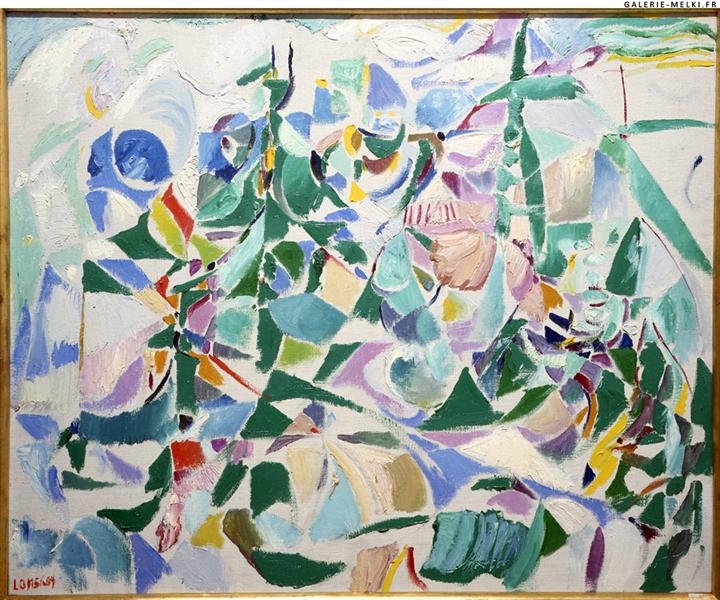 #66
#66
Andre Lanskoy
Lanskoy vibrates the surface with colorful fragments, signs and interlocking rhythms. His painting transforms the Cubist heritage into lyrical language.
Read the biography of André Lanskoy #67
#67
Leopold Survival
Survage imagines colorful rhythms intended for abstract cinema very early on. His landscapes and figures combine geometry, dreams and inner movement.
Read the biography of Léopold Survage #68
#68
Michel Kikoïne
Kikoïne gives landscapes and portraits a generous paste and a warm color. His expressionism remains attentive to light and human presence.
Read the biography of Michel Kikoïne #69
#69
Pinchus Kremègne
Krémègne develops a sensual painting of landscapes, nudes and still lifes. The deep reds and tight shapes give his work a carnal gravity.
Read the biography of Pinchus Krémègne #70
#70
Serge Charchoune
Charchoune crosses Dada, ornamental cubism and musical abstraction without attaching himself to a school. His series translate sound rhythm into pictorial material.
Read the biography of Serge Charchoune #71
#71
Alexander Benois
Benois reinvents Russian history through decor, books and stage. With Mir Iskusstva and the Ballets Russes, he imposes a refined and erudite visual culture.
Read the biography of Alexander Benois #72
#72
Boris Anisfeld
Anisfeld unites symbolism, sumptuous color and theatrical invention. Its ballet sets and landscapes extend the imagination of the Russian scene to the United States.
Read the biography of Boris Anisfeld #73
#73
Konstantin Yuon
Yuon paints the seasons, domes and crowds with a very personal decorative clarity. He knows how to make national tradition and the upheavals of the 20th century coexist.
Read the biography of Konstantin Yuon #74
#74
Aleksandr Gerasimov
Gerasimov becomes one of the official portraitists of Soviet power. His works reveal the codes, visual effectiveness and ambiguities of socialist realism.
Read the biography of Aleksandr Gerasimov #75
#75
Arkady Plastov
Plastov devotes his painting to working in the fields, seasons and villages. Its chromatic warmth preserves human observation within official Soviet art.
Read the biography of Arkady PlastovAfter the avant-gardes
Ranks 76 to 100 - Non-conformism and contemporary creation
Under surveillance then after the USSR, abstraction, conceptualism, realism and irony renewed the Russian outlook.
 #76
#76
Yuri Pimenov
Pimenov captures Moscow in motion, its avenues, its automobiles and its daily lives. A light touch renews Soviet urban optimism in him.
Read the biography of Yuri Pimenov #77
#77
Boris Ioganson
Ioganson composes vast historical scenes as well as readable dramas. His narrative mastery makes him a major landmark of institutional Soviet painting.
Read the biography of Boris Ioganson #78
#78
Georgy Nissky
Nissky transforms ports, railways and airfields into geometric landscapes. His view gives modern infrastructure a cold and monumental poetry.
Read Georgy Nissky's biography #79
#79
Tatyana Yablonskaya
Yablonskaya renews her manner several times, from luminous realism to almost decorative simplifications. His scenes of work and intimacy escape repeated formulas.
Read Tatyana Yablonskaya's biography #80
#80
Geliy Korzhev
Korzhev confronts the viewer with heavy bodies, war and Soviet disillusionment. Its severe realism rejects flawless heroism.
Read Geliy Korzhev's biography #81
#81
Tair Salakhov
Salakhov paints oil workers and cultural figures with stripped-down construction. It brings a clear and meditative monumentality to severe realism.
Read Tair Salakhov's biography #82
#82
Anatoly Zverev
Zverev paints at lightning speed, between calligraphic gesture and acute resemblance. His portraits embody the fragile freedom of unofficial Moscow art.
Read the biography of Anatoly Zverev #83
#83
Eduard Steinberg
Steinberg uses squares, crosses and colored planes as a spiritual alphabet. It links suprematism, religious memory and meditation on absence.
Read the biography of Eduard Steinberg #84
#84
Vladimir Yankilevsky
Yankilevsky builds triptychs and environments around the individual compressed by systems. His painting articulates body, energy and social criticism.
Read the biography of Vladimir Yankilevsky #85
#85
Leonid Sokov
Sokov confronts Soviet emblems and popular culture with biting humor. His sculptures and paintings dismantle ideological solemnity through the clash of signs.
Read the biography of Leonid Sokov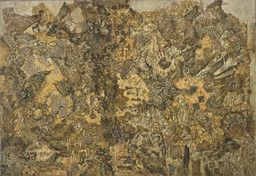 #86
#86
Dmitry Plavinsky
Plavinsky superimposes fossils, maps, writings and architecture on archaeological surfaces. Each work questions the survival of civilizations and their traces.
Read the biography of Dmitri Plavinsky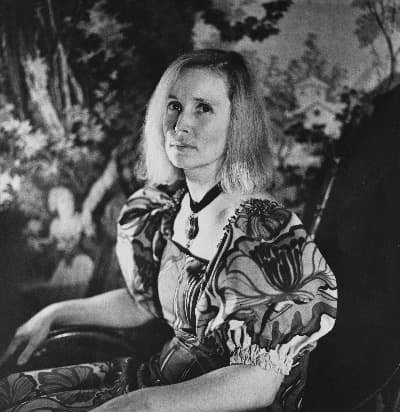 #87
#87
Lydia Masterkova
Masterkova is among the pioneers of non-conformist abstraction in Moscow. His dark collages and compositions give the circle a cosmic force.
Read Lydia Masterkova's biography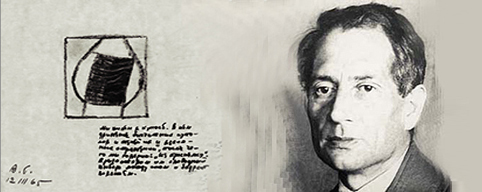 #88
#88
Vladimir Sterligov
A student of Malevich, Sterligov developed a geometry of curves and domes after 1960. He extended the avant-garde in a context where his heritage remained monitored.
Read the biography of Vladimir Sterligov #89
#89
Oleg Vasilyev
Vasiliev opens his pictorial spaces with powerful beams of light. Private memory, Soviet landscape and conceptual construction overlap.
Read the biography of Oleg Vasilyev #90
#90
Vladimir Lebedev
Lebedev revolutionized children's books with simple shapes, flat areas and a precise rhythm. Its graphics make the principles of the avant-garde immediately readable.
Read the biography of Vladimir Lebedev #91
#91
Vladimir Favorsky
Favorsky thinks of engraving as an architecture of the page. Its engraved woods unite text, visual rhythm and symbolic density.
Read the biography of Vladimir Favorsky #92
#92
George Annenkov
Annenkov captures literary and political circles in nervous portraits. Decorator and filmmaker, he circulates the Russian avant-garde between Paris, stage and screen.
Read the biography of George Annenkov #93
#93
Martiros Saryan
Saryan builds Armenia with wide, bright areas, mountains and saturated fruits. Its color transforms the landscape into a founding image.
Read the biography of Martiros Saryan #94
#94
Mikhail Chemiakin
Chemiakin people painting, sculpture and theater of metamorphic figures. His system of metaphysical synthesis compares forms across cultures and centuries.
Read the biography of Mikhail Chemiakin #95
#95
Dmitry Prigov
Prigov treats texts, drawings and performances as pieces of the same critique of official language. His character as an artist himself becomes a material.
Read the biography of Dmitri Prigov #96
#96
Ilya Glazunov
Glazunov brings together history, religion and national identity in vast and abundant compositions. His popularity and ideological choices make him a figure as influential as he is discussed.
Read the biography of Ilya Glazunov #97
#97
Nikas Safronov
Safronov developed a career as a highly publicized portrait painter, between public commissions, celebrities and fantastic images. Its success sheds light on the post-Soviet Russian art market.
Read the biography of Nikas Safronov #98
#98
Pyotr Ossovsky
Ossovsky reduces landscapes and figures to calm and monumental masses. Its severe realism favors restraint, earth and human continuity.
Read the biography of Pyotr Ossovsky #99
#99
Ivan Lubennikov
Lubennikov mixes Soviet monumentality, irony and everyday sensuality. His paintings, like his metro sets, are based on a frank silhouette and direct color.
Read the biography of Ivan Lubennikov #100
#100
Erté
Erté transforms silhouette, costume and letter into Art Deco icons. His designs for fashion and stage give Russian elegance a global reach.
Read Erté’s biographySources and extensions
Return to public works and collections
The dates, attributions and movements were cross-checked with the catalogs of major museums.
Explore Alpha Reproduction
Museum references
- Tretyakov Gallery - collection
- Russian Museum - collections
- Hermitage Museum - collections
- MoMA - modern collection
Russian painting is not a straight line
It advances through ruptures, returns and movements: the icon remains present in Malevich's frontality, the landscape of the Ambulants reappears in the memory of the exiles, and official Soviet language becomes the critical material of Sots Art. This Top 100 shows less a uniform school than a field of tensions between faith and modernity, people and power, territory and diaspora.
To choose a work, start from the desired sensation: the spiritual depth of Rublev, the social consciousness of Repin, the light of Aivazovsky, the interior color of Kandinsky or the radicality of Malevich. The linked collections allow you to directly continue the discovery of historical artists.
0 comments